
Entertainment
Kenyan Rapper Trapped In The Black Market
How a suspended California shell company rode Kenya’s gengetone wave, plundered 63 songs from rapper Fathermoh, and then sued him in America for a million dollars when he dared to fight back

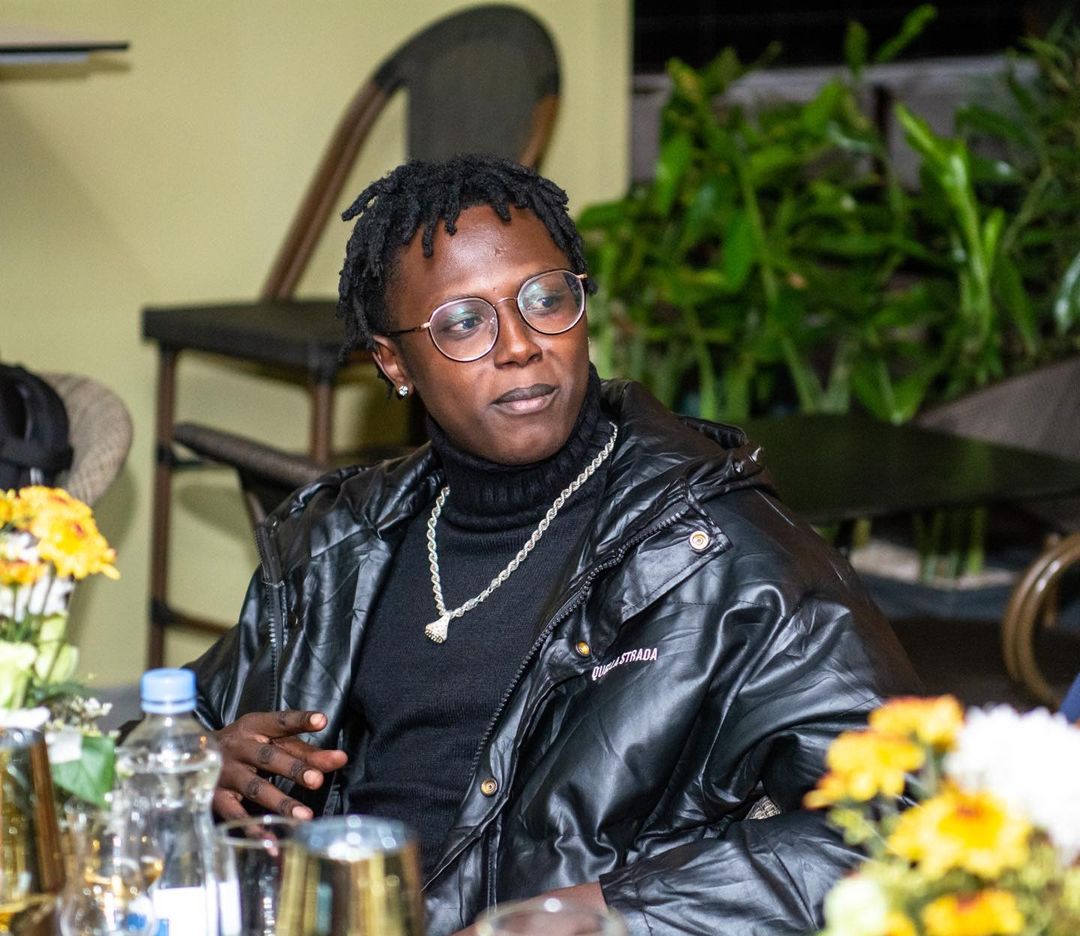
Moses Otieno Ojwang was twenty-something, chasing the music, burning studio hours on gengetone tracks that streamed millions of times and pushed him into a generation of young Kenyan artists rewriting what African hip-hop could sound like. He had the voice, he had the crowd, he had the TikTok trends. What he did not have, it turns out, was a legitimate record deal.
The man who sold him that deal, a Sacramento-born promoter named Cedric Singleton, had been operating in Kenya under a company banner that California authorities had stripped of its legal standing years before Fathermoh signed a single page.
Documents attached to Kenya’s Copyright Tribunal now confirm what should have been a disqualifying fact: Black Market Records LLC, the US entity at the centre of this dispute, has been listed as “Suspended – FTB/SOS” by the California Secretary of State since March 2013. A suspended company cannot legally contract, cannot sue, and cannot enforce copyrights. Yet according to Fathermoh’s filings, Singleton and his related entities signed the young artist to an exclusive recording agreement in 2021, collected his work, monetised his catalogue across every major streaming platform on earth, and remitted nothing back to the man who made the music.
Fathermoh is now before the Copyright Tribunal seeking Sh87.6 million in unpaid royalties, publishing revenue, special damages, and reimbursement for personal production costs he poured into a label that he says took everything and gave him silence in return.
The company had been legally dead for eight years before it signed Fathermoh. In California, a suspended entity cannot contract, cannot litigate, and cannot hold copyrights. Yet it claimed to own sixty-three of his songs.
THE LURE
To understand how this happened, you have to understand what Black Market Records looked like from the outside, especially from inside the Eastlands estates where gengetone was born.
Cedric Singleton founded Black Market Records in Sacramento in 1989, building it into a respectable West Coast hip-hop imprint that launched Brotha Lynch Hung and X-Raided in the 1990s. The label had genuine pedigree in its day. By the 2010s Singleton pivoted toward digital distribution and social media promotion to stay relevant, and somewhere in that reinvention he discovered East Africa.
Around 2018 and 2019, Black Market Records began signing Kenyan and Ugandan acts at a pace that raised few eyebrows at the time. The label’s African subsidiary, styled as Black Market Afrika, brought in Rico Gang, The Boondocks, Mbuzi Gang, Exray Taniua, and a constellation of others. The names that emerged from that roster became household brands in Kenya: Sipangwingwi, Shamra Shamra, Kuna Kuna. Singleton flew to Nairobi on business trips, posed for photos, and spoke at music industry events. The label had Instagram pages, press releases, and what looked like an international distribution infrastructure.
For young artists from backgrounds where legal counsel was not a standard feature of music deals, the pitch was irresistible. An American label with thirty years of history wanted to sign you. It would handle production, distribution, and marketing. You gave up twenty percent of royalties and fifty percent of publishing rights. In exchange, your music would reach the world.
Fathermoh signed in 2021, both as a solo artist and as a member of Mbuzi Gang. Between 2020 and 2024 he delivered at least sixty-three tracks: solo works, Mbuzi Gang anthems, and collaborative efforts including Shamra Shamra, Bambi, Taki Taki, Kwata, and the widely streamed Laaana. The albums Three Wise Goats and Kelele followed. He invested his own money in recording sessions, video productions, and high-profile collaborations, expecting that investment to generate returns through the royalty and streaming revenue structures the label had promised.
He invested his own money in sixty-three songs. The label took the songs, registered them under different names, monetised them on every platform, and sent back nothing. When he tried to release new music independently, they hit him with copyright strikes.
THE TRAP CLOSES
Somewhere between the signing and the streaming millions, the relationship curdled. According to court documents, the label took control of Fathermoh’s entire catalogue and began monetising his work aggressively across YouTube, Spotify, and Boomplay without providing verifiable financial statements or remitting royalties. When Fathermoh requested accounting, he received either stonewalling or documents he could not verify.
The situation escalated when he attempted to exercise his most basic right as a creator: releasing new music and managing his own digital presence. The label’s response, according to his filings, was swift and deliberately destructive. Copyright strikes and takedown notices flooded his channels. His content was pulled. His growth stalled.
The numbers in the court filings are specific and damning. Spotify monthly listeners collapsed from approximately 80,000 to 46,000 within a single month. YouTube subscriber counts fell sharply, and advertising revenue that had been accumulating on his channel dried up. Fathermoh reportedly attempted to escape the situation by opening a new YouTube account to continue releasing music. The label found it and struck that too.
This is not the conduct of a label managing contractual disagreements in good faith. This is a digital siege: weaponising the copyright infrastructure of major platforms to silence a creator, destroy his audience, and choke off his income until he either capitulated or collapsed.
The filings further allege that the label falsely registered his songs under different names, falsely claimed full ownership of compositions to which it had no legitimate title, and systematically denied him access to his own catalogue. The effect was to render him a ghost in his own catalogue, present in the revenue streams but absent from the accounting.
THE SUSPENDED GHOST
Here is where the story moves from exploitation to fraud, and from fraud to farce.
Documents filed before the tribunal establish that Black Market Records LLC has carried the classification “Suspended – FTB/SOS” from the California Secretary of State since 2013. The FTB designation means suspension by the Franchise Tax Board, typically for failure to file tax returns or pay taxes. The SOS designation means suspension by the Secretary of State. A company carrying both designations is, under California law, stripped of its powers, rights, and privileges. It cannot enter binding contracts. It cannot initiate or maintain lawsuits. It cannot hold or enforce intellectual property rights.
Singleton signed Fathermoh, Mbuzi Gang, Harry Craze’s Rico Gang, and numerous other Kenyan and Ugandan artists under this entity or entities bearing its name, years after that suspension took effect. Harry Craze’s filings confirm that his Rico Gang arrangement dates to 2019, six years after Black Market Records LLC was suspended in California.
Fathermoh’s legal argument is therefore foundational: the agreement is not merely unfair or imbalanced. It is null and void from inception, because the counterparty lacked the legal capacity to contract. Any copyright ownership purportedly transferred to or claimed by the label under that void agreement is equally without legal foundation.
A void contract transfers nothing. Every copyright claim the label is asserting over Fathermoh’s catalogue rests on an agreement that Californian law says never legally existed.
The respondents named in the Kenyan filings are Black Market Records LLC, Black Market Media LLC, and Cedric Singleton personally. The tribunal, chaired by Elizabeth Lenjo, certified both the Fathermoh and Harry Craze matters as urgent on May 22 and issued interim ex parte orders that same day barring the respondents from claiming ownership, monetising, publishing, or otherwise commercially exploiting the artists’ works. The orders also bar the label from interfering with their live performances, concerts, and promotional activities pending a full inter partes hearing scheduled for June 4.
THE CALIFORNIA COUNTERSTRIKE
Singleton did not wait for Nairobi to move against him. Reports indicate that before the Kenyan tribunal proceedings were filed, Black Market Records had already dragged the artists into California courts, suing them for one million US dollars. The lawsuit reportedly claims breach of contract and seeks to enforce the very agreements that Kenyan lawyers are now arguing were void from the beginning.
The asymmetry of this legal warfare is deliberate and well understood in the music industry. An American company suing broke young artists from Nairobi’s Eastlands in a California court knows exactly what it is doing. Trans-Pacific litigation is ruinously expensive. The artists cannot easily afford US counsel, cannot easily attend California hearings, and face the prospect of default judgments being enforced against them in Kenya if the California court rules in the label’s favour unchallenged.
The situation became so severe that Fathermoh, Vic West, and Harry Craze made their way to State House in Nairobi earlier this year, seeking the intervention of President William Ruto. The government, through Dennis Itumbi, confirmed that it had stepped in. Ezra Chiloba, Kenya’s Consul General in Los Angeles, took up their cause pro bono, providing a measure of diplomatic and legal firepower in the California proceedings that the artists could not have marshalled alone.

Fathermoh with President Ruto when he hosted the artists in State House.
Itumbi, in public statements, also pointed to structural problems beyond the suspended LLC. He noted that the contracts themselves contained provisions of infinite duration and perpetual rights assignments that are unlawful under Kenyan law regardless of the LLC’s status. Artists were signed to arrangements with no exit clause and no defined contractual end, meaning the label claimed their music forever.
THE PATTERN ACROSS BORDERS
Kenya is not the only jurisdiction where Black Market Records has been put on blast. Harry Craze’s filings before the Copyright Tribunal cite a landmark judgment from Uganda dated April 1, 2025. In Kiggundu alias Bruno K versus Black Market Records Entertainment, the Ugandan High Court ruled against the label on similar facts: void agreements, unlawful exploitation of artistic revenue, and copyright plunder. The court ordered the label to pay 130 million Ugandan shillings in damages.
The pattern is therefore not an accident. It is a strategy. Black Market Records appears to have systematically signed artists across East Africa under identical structural arrangements: agreements that surrendered masters and publishing rights, offered royalties that never arrived, and backed the whole arrangement with copyright strike mechanisms that could be triggered the moment an artist pushed back. Uganda fought back and won. Kenya is now fighting.
The label’s roster, as documented across multiple sources, included Mbuzi Gang, Rico Gang, The Boondocks, Exray Taniua, Unspoken Salaton, Teslah Kenya, Johnny Benzx, Nande Boyz, Kwesi Mafia, Tarel Tala, Vic West, and numerous Ugandan artists including Daddy Andre. Many of these artists may still be bound, or believe themselves bound, by the same class of agreements that Fathermoh and Harry Craze are now fighting to void.
Uganda’s High Court already ruled against the label in 2025 for the same conduct. Kenya’s Copyright Tribunal is next. The question is how many other artists across eleven African countries are still trapped inside the machine.
Strip away the legal architecture and what you find is a young man from Nairobi who made music, invested his own money, built an audience of hundreds of thousands of people, and then watched it all get systematically dismantled by a label he could not escape.
The court documents record that Fathermoh’s YouTube subscriber count fell from 228,000 during the period of the dispute. His Spotify monthly listeners were halved within weeks. Every time he attempted to relaunch, he ran into another copyright strike. He could not perform in advertising campaigns because the label claimed his image rights. He could not place music on bills because the label claimed ownership. When he opened a fresh YouTube channel hoping to start over, the label found it and struck again.
He spent money he is now demanding back: recording budgets, video production costs, collaboration fees, all expended in good faith under a contract that his lawyers now argue was never legally binding to begin with. The Sh87.6 million he is seeking includes unpaid royalties, publishing revenue, special damages, and reimbursement of those personal production costs across a catalogue of sixty-three songs that generated streaming revenue running to millions of plays.
Harry Craze’s story runs parallel. Rico Gang, the group he was part of since 2019, broke up in December 2023 partly because of the financial hardships inflicted by this arrangement. Even after the group dissolved, the label continued asserting ownership over both the group’s catalogue and Craze’s solo works including Matopare, Luku Ni Pyam, and Diglo. The label removed some of his songs from streaming platforms while simultaneously monetising others without his consent. He is seeking Sh5.79 million in damages, and the interim orders he secured are identical in scope to Fathermoh’s.
WHAT THE TRIBUNAL MUST DECIDE
The Copyright Tribunal’s immediate task, when it convenes for directions on June 4, is to manage the transition from interim to full inter partes orders and set a timetable for hearing the substantive claims. Respondents have been directed to file and serve their responses by May 28.
The deeper questions before the tribunal will take longer. Did a suspended LLC have any legal capacity to contract with these artists? If the agreements are void, does any copyright ownership validly rest with the label or does it revert in its entirety to the creators? What royalty accounting does the label owe, and over what period? What damages flow from the deliberately weaponised copyright strikes that destroyed audience reach and advertising revenue? And what remedy exists for the moral rights violations under the Copyright Act that come from falsely registering works under different names?
There is also the question of the California proceedings. Kenya’s Copyright Tribunal cannot directly enjoin a California court. But a Kenyan finding that the underlying contracts are void ab initio would be a powerful piece of evidence for the Consul General’s team to place before any US judge asked to enforce those same contracts against the artists.
A WARNING TO EVERY KENYAN ARTIST
This story is not finished. The tribunal hearings will run for months. The California proceedings will run in parallel. Dozens of other artists on the Black Market Africa roster have not yet moved legally and face a choice between fighting and continuing to live inside arrangements that may be unenforceable but are practically suffocating.
But even at this midpoint, the Fathermoh case offers a complete masterclass in how predatory international label deals operate in emerging markets. The playbook is consistent: find hungry, talented artists in a booming scene where legal infrastructure is thin and contract literacy is low. Offer the glamour of international distribution. Structure the deal to surrender masters, publishing, and image rights with no defined exit. Include royalty provisions that never trigger payment. Build in digital distribution control that can be weaponised as a strike mechanism. Back the whole arrangement with a US LLC that the artist cannot realistically sue across an ocean. Then, when the artist fights back, flip to California courts and demand seven figures.
Fathermoh knew none of this in 2021. He knew he had songs that Kenya was streaming. He knew a label wanted him. He signed.
What every artist in Kenya, Uganda, Tanzania, Nigeria, and every other market where Black Market Records has signed talent needs to know right now is simple. Before you sign anything: verify that the counterparty company is in good legal standing in its home jurisdiction. Obtain a copy of the company’s registration certificate and check its status with the relevant authority, whether California’s Secretary of State, Companies House in the UK, or any other registry. Demand transparency on royalty accounting mechanisms before a single track is delivered. Ensure the contract has a defined term and clear exit provisions. Never surrender your masters without ironclad reversion clauses. And engage independent legal counsel, not the label’s lawyer, not a friend with a law degree, but a music industry specialist who owes you, not the label, their duty of care.
The gengetone generation built something extraordinary out of estates, phones, and raw talent. They deserve an industry that serves them rather than feeds on them. Fathermoh has drawn the line. The Copyright Tribunal is watching. So is the rest of East Africa.
The Copyright Tribunal matter is scheduled for directions on June 4, 2026. The respondents were directed to file responses by May 28, 2026. The California proceedings are ongoing.
Kenya Insights allows guest blogging, if you want to be published on Kenya’s most authoritative and accurate blog, have an expose, news TIPS, story angles, human interest stories, drop us an email on [email protected] or via Telegram






MR. NO SHOW: Finance Bill 2026 Exposes Ndindi Nyoro’s Political Conmanship

Billionaire Eric Muli Rebukes Musalia Mudavadi Over Nairobi Capital Relocation Debate

Lawyer Cliff Ombeta Warns Against Taking Insurance Cover With Old Mutual: “Talk to Me Before You Do, Their Imara Cover Is a Fraud”

My Life Is In Danger: Investor Drops Bombshell Expose On Thomas Ogutu CEO VeGrid Ltd And Fugitive Nairobi CEC Charles Kerich – DCI Inaction And Corruption Network Exposed

City Tycoon Chris Obure Returns To Senteu Plaza After Court Victory

NCBA’s Repossession Empire: How Borrowers Lose Their Cars While the Bank Profits at Every Step

Ex-First Lady Margaret Kenyatta and Siblings Move to Block Widow from Late Brother’s Sh50 Million Estate

Inside the Billion-Shilling Betrayal: How Senior Treasury Officials Plundered a UN Poverty Fund and Built a Real Estate Empire on the Backs of Kenya’s Rural Poor

Tribunal Allows ODM To Take Disciplinary Action Against Sifuna

The Shadow Banker of Harare

Businessman Philip Waithaka Kinuthia’s Minor Son Allegedly Drove Drunk, Killed Two Peponi Students in Ngong Road Horror Crash as Claims of Cover-Up Intensify

Inside NCBA’s Decline: How a Banking Giant Lost Its Strategic Edge

Cement, Cash and Courts: How the Hashu Dynasty Crushed the Ramji Brothers for Fourteen Years and Why the Walls Are Now Closing In

Standard Chartered Ghosts Haunt Joshua Oigara At Stanbic As Whistleblower Spills Beans

Inside The Urban Planning Cartel That Owns Nairobi

South Sudan: Adut Salva Kiir’s Shadow Treasury Exposed

How Adil Popat Saved His Empire On The Eve Of Imperial Bank Collapse and Why Kenya’s Mainstream Media Buried The Story

Why John Ngumi Is Running From the EACC and Why the Sh415 Million Payday May Be the Least of His Worries

The President’s Daughter and The Missing Witness: How Adut Salva Kiir’s Shadow Treasury Silenced Its Most Dangerous Critic

Betika Faces DCI Probe, Directors Arrest and License Revocation Over Massive 29.5 Million Safaricom Customers’ Data Breach
-
 News5 days ago
Businessman Philip Waithaka Kinuthia’s Minor Son Allegedly Drove Drunk, Killed Two Peponi Students in Ngong Road Horror Crash as Claims of Cover-Up Intensify
-
 Business1 week ago
Inside NCBA’s Decline: How a Banking Giant Lost Its Strategic Edge
-
 Business1 week ago
Standard Chartered Ghosts Haunt Joshua Oigara At Stanbic As Whistleblower Spills Beans
-
 Africa1 week ago
South Sudan: Adut Salva Kiir’s Shadow Treasury Exposed
-
 Business1 week ago
How Adil Popat Saved His Empire On The Eve Of Imperial Bank Collapse and Why Kenya’s Mainstream Media Buried The Story
-
 Business1 week ago
Why John Ngumi Is Running From the EACC and Why the Sh415 Million Payday May Be the Least of His Worries
-
 Africa1 week ago
The President’s Daughter and The Missing Witness: How Adut Salva Kiir’s Shadow Treasury Silenced Its Most Dangerous Critic
-

 Investigations1 day ago
THE VULTURE AND THE SCHEME How Nairobi West Hospital Became the Most Dangerous Institution in Kenya’s SHA Ecosystem and Why the Books Must Be Audited Now