THE NUMBER NOBODY AT KPA WANTS TO EXPLAIN
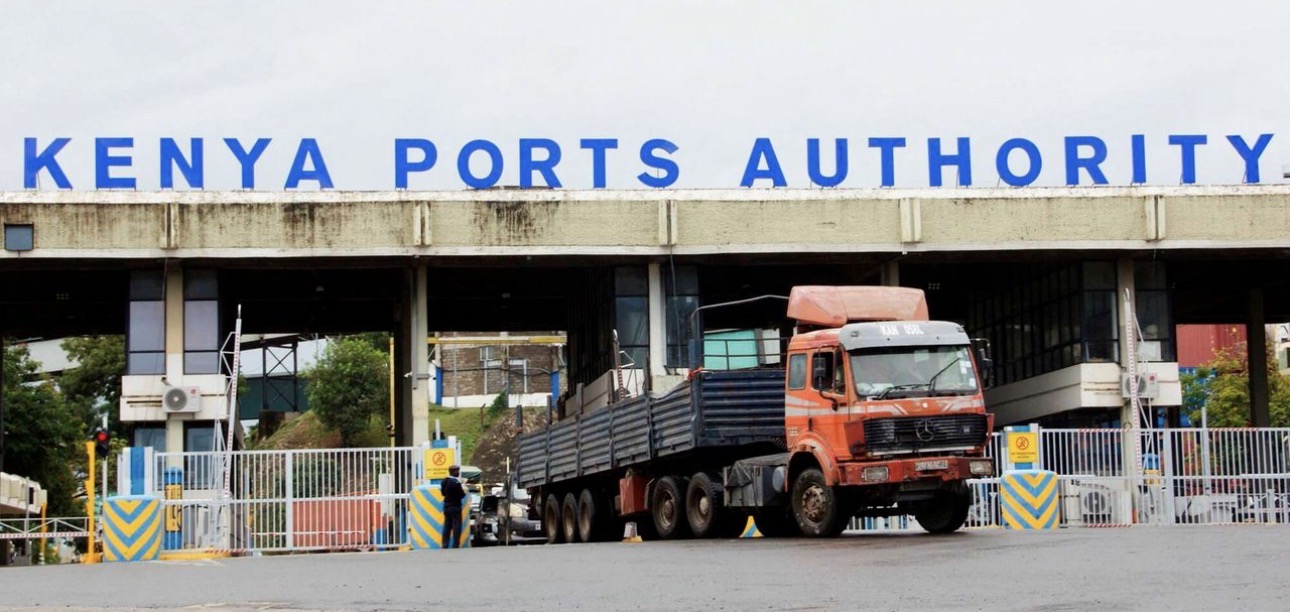
Strip away the engineering jargon and the Kenya Ports Authority’s most expensive road in the country reduces to one uncomfortable figure. Sh5.96 billion. That is what KPA’s own contract documents say it will cost to build a single kilometre of Port Road, the short stretch running from the Gantry Workshop to Gate 18/20 inside the Port of Mombasa. The full job, 1.4 kilometres of tarmac, carries a Sh8.3 billion price tag.
Set beside anything else built on Kenyan soil in the same period, the number does not simply look high. It looks anomalous. The Dongo Kundu bypass, a genuinely complex piece of engineering skirting a creek on the south coast, came in at roughly Sh1.8 billion per kilometre. The Kwa Jomvu to Mariakani Road cost about Sh342 million per kilometre. Even the Rironi to Mau Summit highway, a multi-lane national trunk road climbing the Rift Valley escarpment, averages Sh807 million per kilometre. KPA’s internal port road costs between seven and seventeen times more per kilometre than each of those projects.
An anonymous structural engineer who reviewed the contract for this investigation, and who works regularly on government road tenders, put the anomaly in blunt terms. Ordinary road construction in Kenya runs between Sh20 million and Sh250 million per kilometre depending on terrain, he said, and even Mombasa’s difficult coastal soils and heavy earthworks should not push a properly costed kilometre past the Sh250 million mark.
“The list of costs classified in this project, while lacking a bill of quantities with particular costing to items, suggests that bridge works dominate more than half of this project.”
That single observation, from the same structural engineer, is where this investigation begins to depart from what has already been reported. Because nowhere in KPA’s own description of the project, not in the August 2024 tender award, not in the 2024/25 annual report, not in the contract’s stated scope of works, does the word “bridge” appear.
THE BRIDGE THAT ISN’T IN THE SCOPE
KPA’s 2024/25 annual report describes the project simply as provision of an approximately 1.4 kilometre road extending from the Gantry Workshop to Gate 18 via the one stop centre. The signed contract itself uses different language again, describing the works as widening of Port Road from Gantry Workshop to Gate No. 18/20. Neither description mentions a bridge, a viaduct, an overpass or any structure requiring piling and structural concrete on the scale the budget implies.
Yet buried inside the cost breakdown are line items that, added together, tell a different story. Concrete works carry a budget of Sh2.9 billion. Piling works are budgeted at Sh687 million. A further Sh223 million is set aside for what the contract labels miscellaneous bridge works. Combined, these three items alone account for more than Sh4 billion, nearly half the entire Sh8.3 billion contract value, and they describe the kind of structural work associated with elevated crossings, not the widening of an existing at-grade port access road.
If a bridge, flyover or elevated structure is in fact part of what KPA is building at Gate 18, taxpayers and the port’s own oversight board are entitled to know it, what it will look like, why it was not disclosed in the project’s public scope, and how its costing was arrived at without a bill of quantities. If it is not part of the works, then Kenyans are entitled to know what, precisely, four billion shillings of concrete, piling and bridge-classified spending is actually paying for on a flat access road inside a working port.
KPA did not answer this question when it was put to the authority directly. Nor did it answer when the same question was raised about the discrepancy between its own two conflicting descriptions of the project’s scope.
ANDROID PHONES, AIR-CONDITIONED SUITES AND A FLEET OF DIESEL 4WDS
The contract’s preliminary and general items, ostensibly the administrative cost of running a construction site, carry a budget of Sh686.7 million. Reading the technical specifications line by line, it becomes clear why.
The contractors, a joint arrangement between Chinese state-linked firm Stecol Corporation and Kenyan company Miliki Development Company, are required under the contract to construct and furnish an air-conditioned main office for KPA-appointed engineers, complete with its own paved access road at least three metres wide and a hundred square metre covered car park. Toilets and washrooms inside these offices must be graded according to staff seniority. Electricity and bottled water must run twenty-four hours a day, with the contractor absorbing every statutory charge.
The contract does not stop at office furniture. It specifies ten of the latest Android smartphones for the exclusive use of KPA as employer, and a further ten of the latest Android smartphones for the exclusive use of the engineer’s representative, with the contractor liable for every call and data charge, reimbursed on production of receipts.
Transport is treated with the same generosity. The contractor must supply a brand new, diesel-powered, air-conditioned seven-seater four wheel drive station wagon fitted with a 3.0 litre turbo-diesel engine, four double-cab 4WD pick-ups and two fourteen-seater vans, each comprehensively insured and each driven by a competent driver approved by the engineer, on call whenever required.
Housing follows the same pattern. The resident engineer, assistant resident engineer, materials engineer, highway engineer, senior surveyor and three support staff are entitled to temporary accommodation for the duration of the mobilisation period, whether in high-end hotels or in purpose-built staff houses, with no separate payment required because the cost is already folded into the contractor’s rates.
An anonymous structural engineer who reviewed the contract said items of this kind are common in Kenyan government contracts precisely because they are absent from private sector deals. Private clients and individuals, he said, routinely refuse to fund this scale of contractor comfort. Government tenders, by contrast, tend to absorb it without objection.
THE SH1.89 BILLION NOBODY HAS TO ACCOUNT FOR
Beyond the furnished offices and the diesel fleet lies a second, larger concern. The contract sets aside Sh968 million for what it calls variations and contingencies, on top of a further Sh645.5 million allocated specifically to variations and Sh322.7 million to physical contingencies. Add the Sh1.6 billion booked as general contingencies and preliminary items, and the total value of the contract that is not tied to a specific, verifiable unit of work climbs to roughly Sh1.89 billion, close to twenty-three per cent of the entire Sh8.3 billion project.
Commercial law practitioner Ndong Evance, who reviewed the contract’s structure, said variations clauses of this kind are the most frequently abused mechanism in Kenyan public procurement precisely because they permit change after the fact. Variations, under the contract, can be triggered by omission of work, inclusion of additional works, or changes to the sequence or timing of execution, each of which can raise the final cost without the underlying scope ever having been competitively re-tendered.
“The easiest way that government tenders and contracts manufacture wastage is through avoiding particularity and precision. What they have done in this contract is to have a plethora of general items that have a potential of hiding a lot of human intervention within.”
Mr Ndong also flagged the contract’s treatment of unforeseeable physical conditions and delayed payment clauses as additional areas where costs can be inflated after signing, largely outside public view and without a fresh competitive process.
KPA has already advanced Sh1.67 billion to the contractors, more than a fifth of the total contract value, even though the authority’s own 2024/25 annual report records the project as only 1.2 per cent complete by the end of June 2025. The two-year contract was signed on November 21, 2024, with completion originally scheduled for this month.
THE SILENCE FROM KILINDINI HOUSE
This investigation put a detailed set of questions to KPA, seeking a breakdown of what the Sh1.67 billion advance payment has been spent on, an explanation for the bridge-classified budget items in a project with no disclosed bridge, justification for the preliminary, miscellaneous and variation allowances, and an update on the contract’s current physical progress.
KPA’s senior communication officer, Aaron Mutiso, acknowledged receipt of the questions and said some required additional time to compile accurate and comprehensive information, promising a complete response in due course. No further response had been issued by the time of publication. Separate questions sent directly to Captain Ruto’s mobile phone went unanswered, and calls to him rang out.
THE MAN AT THE HELM: A PATTERN, NOT AN INCIDENT
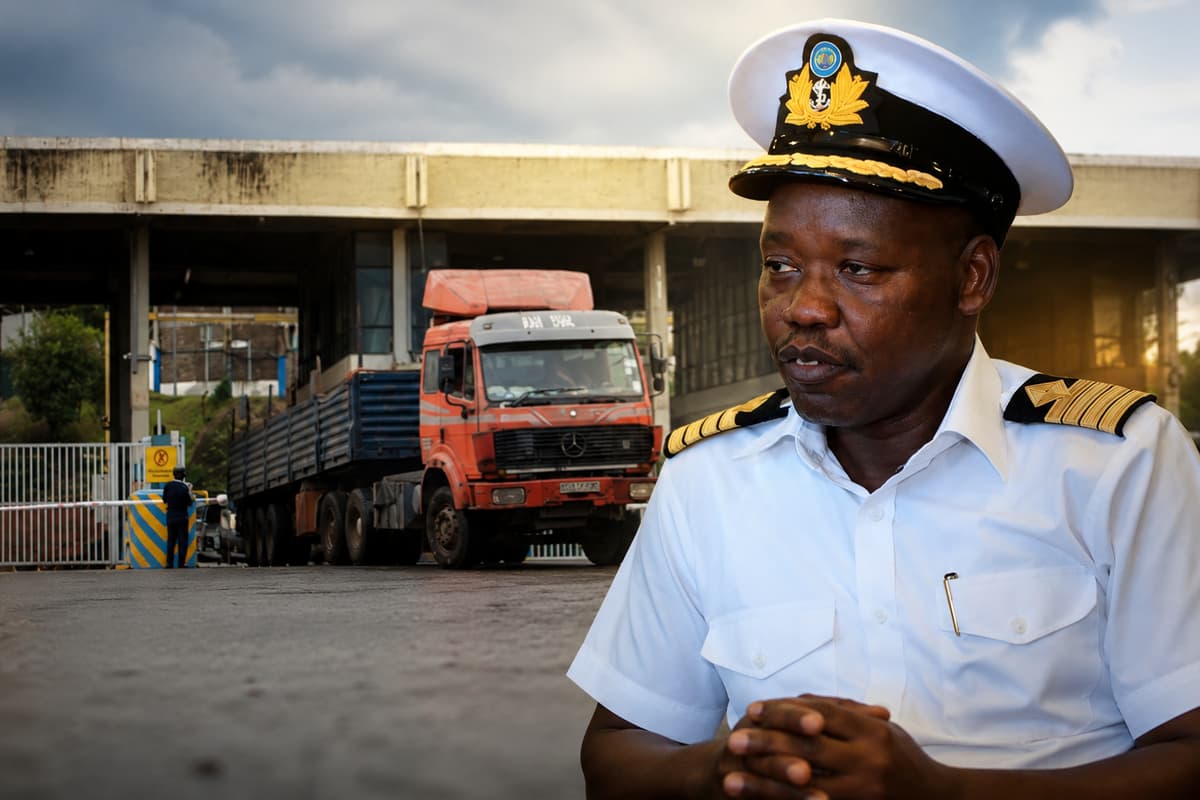
Captain William Ruto was appointed KPA Managing Director on March 10, 2023, by then Transport Cabinet Secretary Kipchumba Murkomen, taking over an authority that has pushed out or seen off nearly every substantive holder of the office before him. His immediate predecessor as a substantive appointee, Architect Daniel Manduku, was removed in 2020 amid corruption allegations and now sits in Parliament as Nyaribari Masaba MP. Manduku’s own tenure was shadowed by a Sh2.7 billion scandal in which investigations found KPA had poured at least Sh506 million into a container yard the authority did not even own.
Captain Ruto’s own record predates his appointment as MD. In 2019, while a senior operations official at the authority, he was accused of engineering the loss of Sh21 million at the port. In 2023, months into his tenure as Managing Director, he was summoned by Members of Parliament to answer questions over a Sh1.9 billion discrepancy flagged by the Auditor General’s office.
Neither of those episodes compares in scale to what followed. In July 2025, Bunge la Mwananchi president Francis Awino filed a petition at the High Court in Mombasa accusing Captain Ruto of Chapter Six violations tied to the award of a Sh31.2 billion tender to Japanese firm Toa Corporation for the Mombasa Special Economic Zone, a project financed through a Japan International Cooperation Agency loan. The petition seeks a declaration that Captain Ruto is unfit to hold public office, an order compelling the Public Procurement Regulatory Authority to conduct a compliance audit at KPA, and an order forcing the National Treasury to disclose the full financial terms of the JICA-backed deal.
The petition accuses KPA’s leadership under Captain Ruto of failing to disclose repayment terms, sub-contractor arrangements and potential conflicts of interest connected to the Toa Corporation award, and raises the question of whether local contractors were technically excluded from competing for the work. Captain Ruto, through his lawyer Augustus Wafula, has denied the claims and argued that the petition does not meet the legal threshold for the orders sought.
“The storm around William K. Ruto is far from over, and its outcome could reshape not just a career, but confidence in how billions of public funds are managed at Kenya’s busiest port.”
That storm was already building when Captain Ruto’s first three-year term approached its expiry in early 2026, reopening a debate that has attended almost every KPA leadership transition of the past decade. Under the KPA Act a managing director may serve a maximum of two terms, and Coast-based port users credited Captain Ruto with genuine operational gains, including a reported 10.9 per cent rise in cargo volumes in 2025 and continued automation of port processes. Whether those gains are enough to outweigh a mounting procurement record is now, in effect, being litigated in two places at once, in the High Court over the Sh31.2 billion Toa Corporation tender, and in the paperwork of a Sh8.3 billion road contract that has not yet drawn the same public attention.
THE CONTRACTOR WITH A HISTORY
Stecol Corporation, the lead contractor on the Sh8.3 billion port road, arrives at Gate 18 with a corporate history that Kenyan procurement officials have had reason to scrutinise before. The firm operated for years under the name Sinohydro Corporation before rebranding. In June 2017, the African Development Bank concluded a settlement agreement with Sinohydro after its own Office of Integrity and Anti-Corruption found the company had engaged in fraudulent bidding practices on an AfDB-financed road project in Uganda. The bank imposed a conditional non-debarment, requiring the firm to overhaul its global compliance programme.
Rebranded as Stecol, the company went on to win an estimated 160 million US dollars in Kenyan contracts, prompting the AfDB’s Nairobi office to raise concerns about what it described as the firm’s overwhelming presence in Kenyan construction, according to reporting at the time. Kenya’s Ethics and Anti-Corruption Commission has separately received complaints from rival construction firms alleging that Stecol has secured tenders through bribery.
More recently, Stecol has been named in reporting on the Kenya Urban Roads Authority, where Director General Silas Kinoti faces allegations of running an alleged multi-billion shilling network of proxy companies and contractor intimidation. Stecol’s contracts under Kinoti’s tenure at KURA, worth billions of shillings, sit among the projects cited in that unfolding scandal. In Kenyan courts, the company is currently party to multiple active disputes, including a Nyeri application in which a contracting partner sought a directive compelling the Directorate of Criminal Investigations to probe what the applicant described as fraudulent and corrupt conduct in breach of their contract.
Its Kenyan partner on the port road contract, Miliki Development Company, maintains a far lower public profile, appearing chiefly in import and trade registries rather than in the scale of infrastructure work now assigned to it under KPA’s Sh8.3 billion budget.
WHAT HAPPENS NEXT
None of this proves criminal wrongdoing. KPA has not yet responded in full to the questions this investigation put to it, and Captain Ruto has not personally addressed the port road contract at all. But the pattern documented here, a per-kilometre cost seven to seventeen times the national norm, budget lines for bridge work in a project with no disclosed bridge, nearly a quarter of the contract value parked in variation and contingency allowances a commercial lawyer says are built to absorb human intervention, and a lead contractor with a documented history of fraud findings and ongoing corruption-linked litigation, is not the profile of a routine port upgrade.
It is the profile of a file that belongs in front of the Public Procurement Regulatory Authority, the Ethics and Anti-Corruption Commission and the Office of the Auditor General, and it lands on Captain Ruto’s desk at the exact moment his own leadership of Kenya’s busiest port is already under separate High Court scrutiny over a different multi-billion shilling tender.
This publication has formally requested a full account from the Kenya Ports Authority of the Sh1.67 billion already disbursed, the bridge-classified spending inside a bridge-free scope, and the current physical completion status of the Port Road contract. Should KPA or Captain Ruto respond, that response will be published in full.








Comments