
News
CS Wandayi Convenes An Emergency Meeting With Oil Marketers Amid Fears Of Fuel Shortages in Kenya
The government on Monday had already moved to reassure Kenyans that the country holds sufficient petroleum stocks to cushion it against immediate supply disruptions linked to the unfolding crisis in the Middle East.

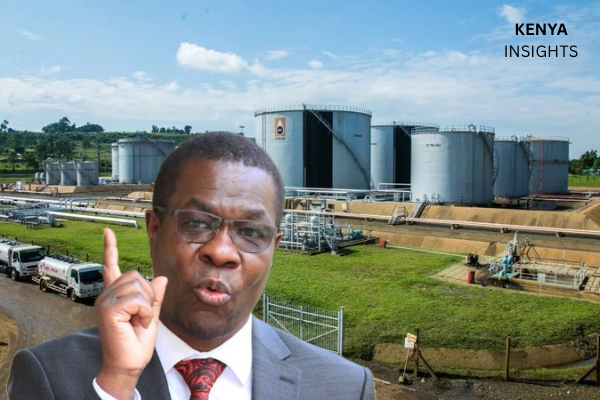
Nairobi, March 10 — Energy Cabinet Secretary Opiyo Wandayi has summoned oil marketers for an emergency meeting as the government races to contain fears of a potential fuel shortage triggered by escalating disruptions in global petroleum supply chains.
The urgent consultations come just hours after Wandayi held discussions with companies supplying fuel to Kenya under the government-to-government (G-2-G) petroleum import arrangement, which anchors the country’s fuel procurement system.
Speaking in Nairobi on Tuesday during the official listing of shares for Kenya Pipeline Company at the Nairobi Securities Exchange, the CS sought to calm mounting anxiety among consumers and transport operators who fear that the turmoil in global energy markets could spill over into local pump prices or supply disruptions.
Wandayi said Kenya remains in close contact with its key suppliers under the G-2-G framework, including Saudi Aramco, Abu Dhabi National Oil Company and Emirates National Oil Company, as part of contingency planning aimed at protecting the country’s fuel supply.
“We continue to engage very closely with our government-to-government suppliers in terms of contingency planning,” Wandayi said, adding that current stock levels remain stable.
“For that reason, there is really no cause for alarm. In the short to medium term we have security of supply and we continue to monitor the situation very closely,” he said.
The emergency meeting with oil marketing companies, scheduled for later Tuesday, is expected to review supply flows, stock levels and potential response measures should the international crisis deepen.
“From here I am going to a meeting with oil marketers to continue close review and monitoring of the situation,” Wandayi said.
The government on Monday had already moved to reassure Kenyans that the country holds sufficient petroleum stocks to cushion it against immediate supply disruptions linked to the unfolding crisis in the Middle East.
According to Wandayi, Kenya has secured scheduled petroleum imports through to the end of April 2026, a move designed to guarantee stable supply even as geopolitical tensions rattle global oil markets.
“Kenya has sufficient petroleum products to cover both the country and the region in the wake of the crisis in the Middle East,” he said.
Kenya relies almost entirely on imported refined petroleum products, leaving the economy exposed to external shocks whenever geopolitical conflicts disrupt supply chains or trigger price spikes.
The current turmoil follows a wave of military escalation in the Gulf region, where coordinated airstrikes by the United States and Israel on Iran — and Tehran’s retaliatory missile attacks — have shaken energy markets and threatened exports from one of the world’s most critical oil-producing corridors.
Energy analysts warn that prolonged disruption could tighten global supply and drive up prices, a scenario that would quickly filter through to import-dependent economies such as Kenya.
For now, officials insist the country’s forward-contracting strategy and the G-2-G supply arrangement are providing a buffer against immediate shortages, even as authorities intensify monitoring of the volatile global oil market.
Kenya Insights allows guest blogging, if you want to be published on Kenya’s most authoritative and accurate blog, have an expose, news TIPS, story angles, human interest stories, drop us an email on [email protected] or via Telegram


Karua Detained at Entebbe as Uganda Blocks Besigye Lawyer From Entering Country

How KCB and Airtel Turned Kenya’s Unbanked Into a Data Goldmine Behind a ‘Financial Inclusion’ Deal

The Chivayo Network: How a Convicted Fraudster Won Access to Presidents, Passports and Billion-Dollar Deals Across Africa

BURRIED TWICE: The Victoria Bank CEO Yogesh Pattni Files

Court Stops Transfer Of EABL Shares To Asahi By Diageo In A Fresh Snag

Death Before Justice: Stephen Ngei, Victim of Sh180 Million Laptop Tender Scam Linked to Allan Chesang, Killed in Highway Crash

Court Brands Sh1.1 Billion Fee Demand by Lawyer Victor Swanya “Excessive and Exorbitant,” Exposes How City Hall Lets Public Money Bleed Through Legal Bills

Trump Unveils New Air Force One

MR. NO SHOW: Finance Bill 2026 Exposes Ndindi Nyoro’s Political Conmanship

Billionaire Eric Muli Rebukes Musalia Mudavadi Over Nairobi Capital Relocation Debate

Businessman Philip Waithaka Kinuthia’s Minor Son Allegedly Drove Drunk, Killed Two Peponi Students in Ngong Road Horror Crash as Claims of Cover-Up Intensify

Inside NCBA’s Decline: How a Banking Giant Lost Its Strategic Edge

Cement, Cash and Courts: How the Hashu Dynasty Crushed the Ramji Brothers for Fourteen Years and Why the Walls Are Now Closing In

Standard Chartered Ghosts Haunt Joshua Oigara At Stanbic As Whistleblower Spills Beans

South Sudan: Adut Salva Kiir’s Shadow Treasury Exposed

Inside The Urban Planning Cartel That Owns Nairobi

THE VULTURE AND THE SCHEME How Nairobi West Hospital Became the Most Dangerous Institution in Kenya’s SHA Ecosystem and Why the Books Must Be Audited Now

How Adil Popat Saved His Empire On The Eve Of Imperial Bank Collapse and Why Kenya’s Mainstream Media Buried The Story

The President’s Daughter and The Missing Witness: How Adut Salva Kiir’s Shadow Treasury Silenced Its Most Dangerous Critic

Why John Ngumi Is Running From the EACC and Why the Sh415 Million Payday May Be the Least of His Worries
-
 News1 week ago
Businessman Philip Waithaka Kinuthia’s Minor Son Allegedly Drove Drunk, Killed Two Peponi Students in Ngong Road Horror Crash as Claims of Cover-Up Intensify
-
 Business2 weeks ago
Inside NCBA’s Decline: How a Banking Giant Lost Its Strategic Edge
-
 Business2 weeks ago
Standard Chartered Ghosts Haunt Joshua Oigara At Stanbic As Whistleblower Spills Beans
-
 Africa2 weeks ago
South Sudan: Adut Salva Kiir’s Shadow Treasury Exposed
-
 Investigations4 days ago
THE VULTURE AND THE SCHEME How Nairobi West Hospital Became the Most Dangerous Institution in Kenya’s SHA Ecosystem and Why the Books Must Be Audited Now
-
 Business2 weeks ago
How Adil Popat Saved His Empire On The Eve Of Imperial Bank Collapse and Why Kenya’s Mainstream Media Buried The Story
-
 Africa2 weeks ago
The President’s Daughter and The Missing Witness: How Adut Salva Kiir’s Shadow Treasury Silenced Its Most Dangerous Critic
-
 Business2 weeks ago
Why John Ngumi Is Running From the EACC and Why the Sh415 Million Payday May Be the Least of His Worries