
Economy
Cabinet Approves Sh4.2 Trillion 2025/26 Budget
It includes Sh3.09 trillion for recurrent spending and Sh725.1 billion for development.

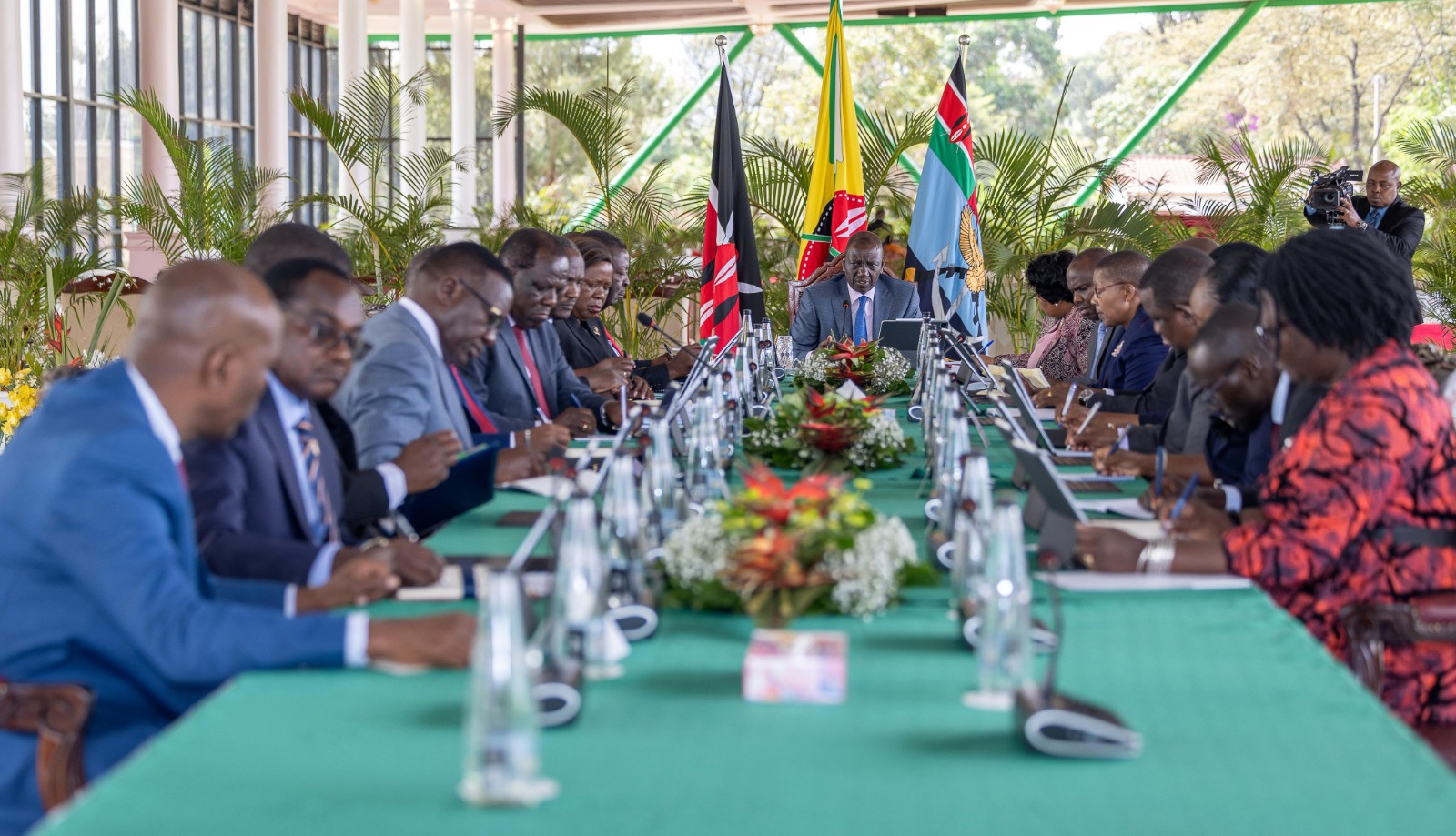
The Cabinet has approved the 2025 Budget Policy Statement (BPS).
The statement, which will now be forwarded to Parliament, sets a Sh4.2 trillion budget for the 2025/26 financial year.
Cabinet said the total expenditure, equivalent to 22.1 per cent of GDP, includes Sh3.09 trillion for recurrent spending, Sh725.1 billion for development, Sh436.7 billion in county transfers, and Sh5 billion for the Contingency Fund.
Under the Division of Revenue Bill 2025, the national government proposes a shareable revenue of Sh2.8 trillion, with Sh405.1 billion allocated to county governments as an equitable share and Sh10.6 billion for the Equalization Fund.
According to Cabinet, the county allocation represents 25.8 per cent of the most recent audited revenue (Sh1.57 trillion from the 2020/21 financial year), aligning with constitutional requirements.
The County Allocation Revenue Bill 2025 will distribute the county share based on the Third Basis Formula, while the c county government Additional Allocation Bill 2025 proposes an extra Sh69.8 billion – Sh12.89 billion from the National Government and Sh56.91 billion from development partners.
With the additional funds, total county transfers for 2025/26 will amount to Sh474.87 billion.
The 2025 BPS outlines the government’s economic priorities, focusing on sustaining growth, ensuring fiscal stability, and promoting inclusive green development.
To maintain economic momentum, the government has outlined six key priorities.
They are reducing the cost of living, eradicating hunger, creating jobs, expanding the tax base, improving foreign exchange balances, and fostering inclusive growth.
These will be achieved through strategic investments in key economic sectors, strengthening production and market access, and attracting local and foreign investments.
Cabinet said the government’s fiscal policy for 2025/26 prioritises fiscal consolidation to reduce debt vulnerability while ensuring adequate funding for essential public services.
This will be achieved through expenditure rationalisation, revenue mobilisation, and enhanced tax compliance.
The Medium-Term Revenue Strategy will guide tax reforms, ensuring efficiency, fairness, and progressivity while balancing revenue generation with social protection.
Key measures include expanding the tax base, leveraging technology for tax efficiency, sealing revenue loopholes, and maximising non-tax revenues from ministries, departments, and agencies.
President William Ruto chaired a Special Cabinet meeting on Tuesday at State House, Nairobi.
Kenya Insights allows guest blogging, if you want to be published on Kenya’s most authoritative and accurate blog, have an expose, news TIPS, story angles, human interest stories, drop us an email on [email protected] or via Telegram



Treasury CS Mbadi Unveils Sh4.8 Trillion Budget Estimates

Fraud, Misrepresentation and A Decade Of Evasion: How Indo Africa Finance Pocketed Sh150 Million Youth Funds and Fought To Keep Every Cent

Kenya Picks Chinese Firm For Sh375 Billion JKIA Upgrade Project After Adani Fallout

The President’s Daughter and The Missing Witness: How Adut Salva Kiir’s Shadow Treasury Silenced Its Most Dangerous Critic

Kisii Under Siege: Governor Arati’s Wife Accused of Hijacking IFMIS and Running a Parallel Government

Al-Shabaab Issues Statement Defending Omar Artan, Accuses U.S. of Discrimination After Referee’s Deportation

Netanyahu To Run For Re-Election, His Party Says, After Trump Raises Doubts

US Cracks Down on Birth Tourism Schemes

Microsoft Limits Employee Use Of Anthropic’s Claude Fable 5 Over Data Retention Concerns, The Verge Reports

Standard Chartered Ghosts Haunt Joshua Oigara At Stanbic As Whistleblower Spills Beans

Cement, Cash and Courts: How the Hashu Dynasty Crushed the Ramji Brothers for Fourteen Years and Why the Walls Are Now Closing In

Inside The Urban Planning Cartel That Owns Nairobi

Why Ruto’s Favourite Candidate Adan Mohammed Could Be Locked Out of the KRA Top Job

LifeCare on the Brink: SHA Fraud, Stolen Wages, and the Rotten Empire Jayesh Saini Built

Betika Faces DCI Probe, Directors Arrest and License Revocation Over Massive 29.5 Million Safaricom Customers’ Data Breach

Este Medical Kenya Fights American’s Explosive Complaints

Fresh Move Launched to Remove Kenya Railways MD Mainga From Office After Awarding Sh817 Million Consultancy Contract

The Rot Inside Absa: How Bank Insiders Are Looting Nairobi’s Customers

Inside FAFSA Fraud: How Kenyan Cybercriminals Siphoned Millions from America’s Sh12 Billion Student Loan System

Court Confirms Safaricom Customers Data Was Sold To Betting Companies In Seven-Year Cover-Up
-
 Investigations7 days ago
Cement, Cash and Courts: How the Hashu Dynasty Crushed the Ramji Brothers for Fourteen Years and Why the Walls Are Now Closing In
-
 Investigations5 days ago
Inside The Urban Planning Cartel That Owns Nairobi
-
 Investigations1 week ago
Betika Faces DCI Probe, Directors Arrest and License Revocation Over Massive 29.5 Million Safaricom Customers’ Data Breach
-
 Investigations7 days ago
Fresh Move Launched to Remove Kenya Railways MD Mainga From Office After Awarding Sh817 Million Consultancy Contract
-

 News2 weeks ago
Eight Students Arrested In Kenya After Suspected Deadly School Arson Attack
-
 News2 weeks ago
How Uhuru’s Deal With Obama In 2015 Paved Way For America’s Ebola Plan In Kenya
-

 Business1 week ago
TRUST BETRAYED: How Senior DTB Bank Insiders Allegedly Looted Sh149 Million From a Customer’s Account Over Five Years
-
 Business1 day ago
Inside NCBA’s Decline: How a Banking Giant Lost Its Strategic Edge