
There is a particular species of Kenyan politician who treats the court system as an inconvenient hobby, the DCI as a public relations problem, and the treasury of foreign investors as a personal ATM.
Trans Nzoia Senator Allan Kiprotich Chesang has, with remarkable consistency, embodied all three.
By the time the ink was dry on the latest scandal to bear his name, a Sh60.08 million fake ambulance tender engineered from the very heart of Harambee House, Kenya’s corridors of power were buzzing with a question that is no longer rhetorical: is this man constitutionally incapable of staying out of a con?
The allegations are serious, specific and, for anyone who has been paying attention, depressingly familiar.
Chesang, alongside Interior Principal Secretary Raymond Omollo, has been named in connection with a fraud that targeted Talal Yousef Yousef Zaitoun, a Swedish businessman who arrived in Kenya in January 2026 believing he was about to secure a legitimate government contract for 500 high-roof diesel Toyota Hiace ambulances.
What he actually walked into, investigators allege, was an elaborate wash-wash theatre staged across multiple floors of a government building that is supposed to represent the highest authority of the Kenyan state.
Seven suspects were arrested on March 10, 2026, in a DCI sting that caught them mid-negotiation on the 12th floor of Harambee House.
The eight accused were arraigned on March 17. Chesang and Omollo, the alleged architects of the enterprise, remained free. The impunity was, for anyone who has followed this senator’s career, entirely on brand.

The Laptop Scam That Started It All
To understand what Chesang has allegedly done now, you have to understand what courts allege he did before.
In 2018, long before anyone had heard of Senator Chesang, a businessman named Charles Musinga of Makindu Motors walked into Harambee House Annex believing he had won a genuine government tender to supply 2,800 HP laptops to the Ministry of Devolution.
He lost Sh181 million. The people he trusted turned out to be operating an elaborate fraud ring linked to then-Deputy President William Ruto’s office. And the person courts say drove to collect those laptops, flanked by a police escort in a Range Rover bearing stickers from Parliament and the Office of the Deputy President, was Allan Chesang.
The charges laid against Chesang and six co-accused, namely Teddy Awiti, Kevin Matundura Nyongesa, Augustine Wambua Matata, Joy Wangari Kamau, James William Makokha alias Mr. Wanyonyi, and Johan Ochieng Osore, included conspiracy to defraud, making a document without authority, obtaining goods by false pretences, handling stolen goods, and abuse of office.
Seven counts in total. The case has wound its way through Milimani Law Courts for years.
As recently as March 2024, the Ksh221 million fraud case, the figure had grown as additional claims were assessed, was adjourned because Chesang could not be reached for the afternoon session.
He had attended the morning session virtually from Switzerland, claiming parliamentary business. His absence did not amuse the prosecution.
One witness testimony, recorded in court, described how Chesang and associates would entertain their victims at Ole Sereni Hotel and Karen before directing them into Harambee House Annex via the VIP lift.
The same witness recalled that after the laptops were successfully collected, the ring members told him that their next target would be an ambulance tender. That detail, surfacing in court proceedings from 2021, reads today like a playbook rather than a prophecy.
The Defence Tender That Would Not Die
If the laptop case is the headline crime, the Department of Defence tender saga is the subplot that reveals his character most nakedly.
Chesang and co-accused stand charged with obtaining Sh25 million from one Johnson Wambua Mwanzia by pretending they had acquired a tender to supply Jute Gunny Bags to the DoD. Standard wash-wash template. Forged documents. False pretences. The victim parted with his money.
What makes this case particularly illuminating is what happened next. Chesang did not fight the charges on the merits.
He applied to have them withdrawn on the grounds that he was prepared to repay Sh17 million, the amount deposited into his account.
When the magistrate declined to dismiss the case without confirmation of full repayment, and when the complainant disputed that the full sum had even been returned, Chesang watched the withdrawal application collapse for the third consecutive time. By May 2025, the court was still untangling the disputed payment. Three failed bids to quietly exit a fraud case is not bad luck. It is a strategy.
Gold, Syndicate, and a Billion-Shilling Problem
In September 2023, a fake gold syndicate was exposed operating from a house in Garden Estate, Nairobi. Among those linked to it were Nyaribari Chache MP Zaheer Jhanda and Lang’ata MP Felix Odiwuor, also known as Jalang’o. The senator in the same category was Chesang.
The DCI described a scheme targeting a Tunisian businessman who had been kept waiting in the country for nearly two weeks before the suspects were ready to execute the final con, at which point DCI officers moved in and arrested ten people. Two suspects fled by tearing through a shade net fence.
One month later, in October 2023, it happened again. A South African national, Ralph Manyaka, had purportedly imported 30 kilograms of gold from Sierra Leone.
He was told it had been confiscated in Nairobi and that he needed to pay Sh5.3 million to release the consignment. He flew to Kenya. He was taken to Kilimani, then driven to a palatial home in Runda.
The DCI, which had laid an ambush, arrested three suspects: Fauzia Wanjiru alias Issa, Shallo Fatma alias Tett, and Jackson Ochieng.
Investigators say the scam was connected to an international criminal ring spanning Kenya, Sierra Leone and DR Congo, with a Congolese national and a Sierra Leonean national among the masterminds being pursued.
The DCI published Chesang’s name as an associate of the arrested suspects. Within 24 hours, the senator and his lawyer, Rarieda MP Otiende Amollo, were at the DCI’s Kiambu Road headquarters brandishing a demand letter and threatening defamation suits.
Chesang has never sued the DCI. The deadline expired. The noise moved on. The senator remained.
The Harambee House Ambulance Con: How the Net Was Cast
The architecture of the latest scam is, frankly, audacious. On January 27, 2026, one day after Talal Yousef Yousef Zaitoun arrived in Kenya on a Turkish Airlines flight, he was escorted to Harambee House, where he was introduced to individuals who presented themselves as representatives of the National Treasury and the Ministry of Health.
They told him the Kenyan government required 500 high-roof diesel Toyota Hiace ambulances, that the contract was worth $36,025,000, and that before he could sign, he needed to provide either a performance bond or insurance coverage of three percent of the contract value.
Zaitoun chose the insurance option: $1,080,750. He transferred $470,750 equivalent to Sh60.08 million. It is this sum that the prosecution says was stolen.
Investigators say the scam relied on forged award letters and contracts purportedly signed by Ministry of Interior officials.
The key suspect, Michael Musyoki Ngumbi, has been charged with producing the forged documents.
Meetings were held in official government chambers to provide the impression of legitimacy. When Zaitoun returned on March 9 with his brother Hatim for the final stage of the deal, DCI officers were waiting. Seven suspects were arrested in real time, mid-transaction, on the 12th floor of Harambee House.
The whistle was blown by an aide inside the PS’s own office.
When investigators traced the chain of authority back, it led, according to the Nyakundi Report’s sources, directly to Raymond Omollo’s orbit. And entangled in that orbit, sources allege, was Senator Chesang.
The Ruto Connection: How Proximity to Power Buys Impunity
Chesang’s relationship with William Ruto predates his senatorial career and forms the backbone of the impunity his critics say he has enjoyed.
Before he became a senator, before he was elected on a UDA ticket in 2022, Chesang was already a visible fixture in Ruto’s political circuit, photographed with the then-Deputy President, close to Oscar Sudi and Caleb Kositany, operating within the orbit that would eventually form Kenya Kwanza.
The original laptop scam itself was executed from the Office of the Deputy President’s premises.
Witnesses in that case described Chesang arriving at Harambee House with police escorts, using Range Rovers fitted with DP office stickers, moving through the VIP channels of the government’s most protected address.
That proximity has never been purely ceremonial. When Ruto became President, Chesang became part of the loyalist Senate choir: endorsing the UDA-ODM pact, urging national unity, praising Ruto’s leadership at every available platform.
In March 2025, when the UDA-ODM cooperation agreement was formalised, Chesang was at the podium urging Trans Nzoia leaders to rally behind the president’s unity agenda.
He is described by his own supporters as a close ally of the head of state. The value of that proximity, in Kenya’s political economy, is not incidental.
There is a documented pattern with Chesang’s legal troubles: cases drag. Applications stall. Hearings get adjourned when the senator is conveniently abroad. Charges that should have resulted in prosecution years ago are still crawling through the courts.
Critics have long argued that his political insurance has made him effectively untouchable, that the same executive access which allegedly enabled his schemes also shields him from their consequences.
The ambulance case, in which Chesang and Omollo remained free as eight lower-level suspects were arraigned, fits that pattern with uncomfortable precision.
The Natembeya Problem: When Your Fiancee Worked for the Man You Were Attacking
Even outside the criminal courts, Chesang’s political career has been defined by a special brand of self-inflicted turbulence.
His running battle with Trans Nzoia Governor George Natembeya became a soap opera that the county could not look away from.
Chesang repeatedly alleged that over Sh800 million in devolved funds went unaccounted for under Natembeya’s watch, presenting himself as the accountability hawk, the man holding the executive to account.
Natembeya’s counter was devastating in its simplicity. While Chesang was publicly excoriating his administration, his own fiancee, Chanelle Kittony, was serving as a Cabinet Executive Committee member in Natembeya’s county government, first overseeing Gender, Sports and Youth, then Roads, Energy and Infrastructure.
The governor named the appointment publicly. The hypocrisy was naked and complete. A man attacking corruption with one hand while his future wife drew a salary from the accused government with the other.
The Luxury Fleet and the Lifestyle Questions Nobody Is Supposed to Ask
When Chesang first surfaced in public consciousness, he was a young man who liked to boast that he made his first million in Form One, playing table tennis at a tournament in Congo Brazzaville.
Whether one believes that particular origin story is, at this point, beside the question.
What is verifiable is the lifestyle that followed. Before he became a senator, he was already rotating through high-end vehicles, Range Rovers, E-class Mercedes Benzes, some fitted with stickers from the Office of the Deputy President, others bearing parliamentary plates.
He owned a share in entertainment venues including Blend Club in Nairobi and The Garage in Thika. He ran the Allan Chesang Foundation, positioning himself as a philanthropist. At 31 he was photographed in a private jet.
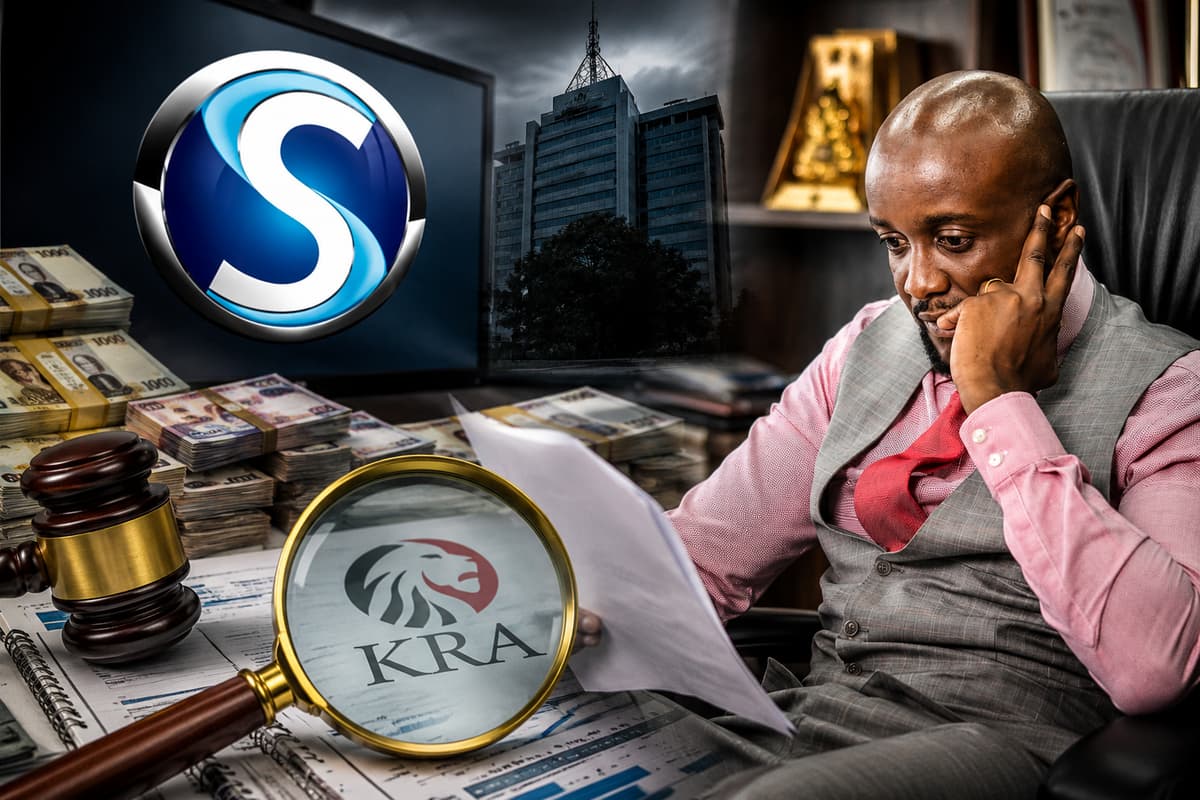
Investigators recovered DCI exhibits from his premises during the laptop case: KRA stickers, a document showing suspects had signed a deal for equipment worth Sh317 million, and 700 laptops.
Kenya Insights is aware of additional allegations, sourced from investigative accounts, that Chesang ran a network involving loan schemes operated through a company called Amspex, which banked at Standard Chartered, with proxies routing proceeds through Dubai-linked investment fronts. These allegations have not been tested in court and Chesang has denied association with such ventures.
A Pattern, Not a Coincidence
There is a consistent anatomy to what Chesang is alleged to have done across multiple cases. First, access to a government building gives the scheme its veneer of legitimacy. Second, forged documents, whether tender award letters, contracts, or purchase orders, provide the paperwork to convince the victim.
Third, a network of complicit intermediaries, lawyers, brokers, government-adjacent fixers, receive and disperse the proceeds.
Fourth, when the walls close in, legal guns come out, demand letters are fired at investigators, political friends are activated, and the matter is dragged through the courts until everyone loses interest. Fifth, the senator remains free.
The laptop tender.
The Department of Defence gunny bags. The September 2023 garden estate gold syndicate. The October 2023 Runda gold scam. Now the Harambee House ambulance fraud.
Five separate matters in which Chesang’s name has appeared, in court records or in DCI publications, in connection with the same template: forged government documents, foreign or domestic victims, large sums extracted, and the senator at or near the centre.
His consistent response to each: I know nothing, I am being persecuted, my lawyers will act. And yet the pattern accumulates.
What Happens Next
The Directorate of Criminal Investigations and the Ethics and Anti-Corruption Commission face a straightforward test. Eight people of lesser political standing have been arraigned. The two men who are alleged to have designed the system, Omollo and Chesang, have not. Legal experts have stated publicly that holding high-ranking officials accountable is essential if the ambulance case is to serve as anything more than theatre.
Pressure is mounting. International investors, and the Swedish businessman who lost his money is not the last such investor Kenya needs to attract, are watching.
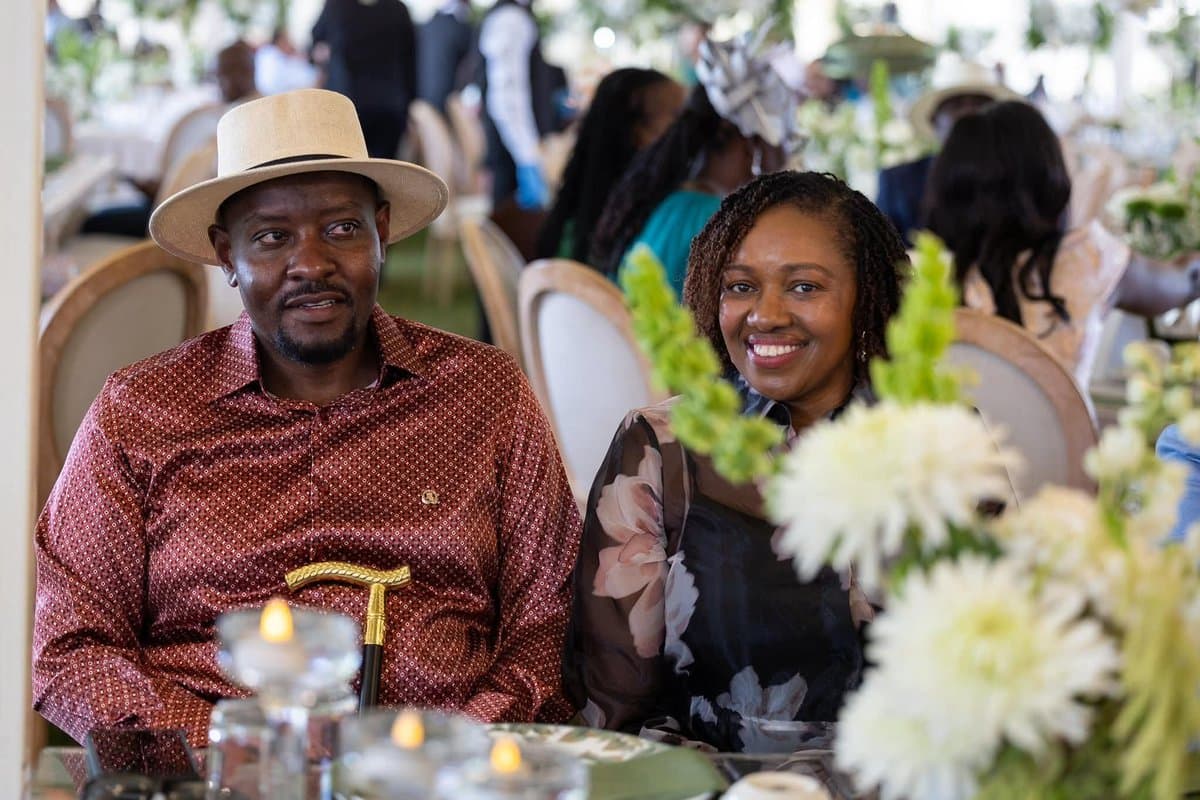
For his part, Chesang has made no public statement on the ambulance scandal at the time of publication. His Senate profile continues. His political connections remain intact. The wedding photographs from November 2025 are still up, all lilac florals and Ruto in the front row.
But the questions are louder now than they have ever been.
A man can deny one scandal. He can call the second politically motivated. By the time the fifth finds his name in the same kind of documents, featuring the same kind of forged contracts, targeting the same kind of credulous foreign investor, the denials require an audience that is running out of patience.




Comments