
Opinion
MR. NO SHOW: Finance Bill 2026 Exposes Ndindi Nyoro’s Political Conmanship
His explanation, delivered after the fact and only when journalists came calling, was that he had travelled out of the country on Wednesday evening.

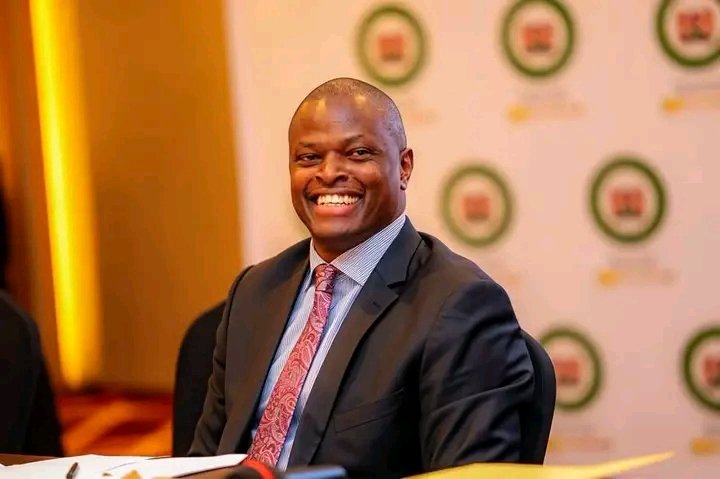
There is a particular kind of Kenyan politician who has perfected the art of being everywhere except where it matters. He is on your timeline by 6am. He is on Spice FM by noon. He is quoting debt figures with the fluency of a Treasury mandarin by evening. But when the division bell rings and his name is needed on the board, he has, quite conveniently, left the country. Meet Ndindi Nyoro, the Kiharu MP who has built a political brand on outrage and a survival strategy on absence.
On Thursday June 18, 2026, Parliament passed the Finance Bill 2026 by 122 votes to 40, with zero abstentions. Every single legislator who showed up took a position. Nyoro was not one of them. The man who had spent weeks thundering about a debt pile of over 13 trillion shillings, who told the House to its face that the government wanted to “break the record of borrowing,” who compared a single year of Ruto borrowing to a decade of Mwai Kibaki’s, was missing in action at the one moment his vote could have meant something.
His explanation, delivered after the fact and only when journalists came calling, was that he had travelled out of the country on Wednesday evening. Not it was unavoidable.
Not there was an emergency. Just travelled, as if a Finance Bill vote is a surprise pop quiz rather than the single most anticipated and most telegraphed date on the parliamentary calendar. Every MP in that House knew Thursday June 18 was the day.
The Bill had been the subject of public participation, committee hearings, and weeks of Nyoro’s own press conferences. A man this fluent in the Bill’s clause-by-clause detail did not stumble into ignorance of its voting date. He left, and he left knowing exactly what he was leaving behind.
That is not bad luck. That is the oldest trick in the Kenyan political playbook: talk like an opposition, vote like a ghost, and let the noise of your criticism stand in for the courage of your conviction.
A PATTERN, NOT AN ACCIDENT
Nyoro wants Kenyans to treat his Finance Bill absence as an isolated travel inconvenience. History says otherwise. In October 2024, when Parliament voted to impeach then Deputy President Rigathi Gachagua, Nyoro was again missing from the chamber, one of only eighteen MPs who skipped that historic vote.
At the time he offered no real explanation. It took until December 2025, more than a year later, for him to admit on national television that his absence had been entirely deliberate. He had decided, on his own, that he would not participate, and he told people so in advance.
So here is what we now know for certain: this is a man who is fully capable of sitting out a vote by design and later defending that choice as principled. Which makes the Finance Bill excuse, that he was simply travelling, that much harder to swallow. He has already shown Kenyans what a premeditated no-show from him looks like.
He knows how to plan one, how to live with one, and how to explain one a year later once the heat has died down. Ask yourself why, this time, the explanation arrived not as a statement of principle but as a logistics update.
A man who skips a Deputy President’s impeachment by design and skips the country’s most consequential tax law by claimed coincidence is not unlucky. He is consistent. The consistency is the conmanship.
Suppose, for argument’s sake, that Nyoro’s travel really was unmovable. Even then, the defence collapses under its own weight. A man who has built his entire public persona on being brave enough to ask Ruto’s government uncomfortable questions had an obligation to know precisely when the most consequential vote of the year would occur, and to arrange his life around it.
MPs far less vocal than him cleared their diaries and showed up. He, by his own admission, did not. Either he forgot, unbelievable for a man this immersed in the Bill’s clause-by-clause detail, or he chose travel over a vote that would force him to either disappoint his Mount Kenya economic-nationalist audience or disappoint the broad-based government he still needs to stay relevant in. Both readings end in the same place: comfort over the spine he sells online.
THE STATEMENT THAT CONFIRMS MORE THAN IT DENIES
Nyoro’s statement, issued in the soft, pastoral register of a man hoping contrition will substitute for accountability, deserves a closer read than the apology it pretends to be. He opens with “I come in Peace and humility,” tells Kenyans the feedback will make him “better,” then spends six paragraphs explaining why his absence does not reflect his commitment, before closing with a slogan about Africa being his business.
Strip away the diction and what remains is a man performing accountability while declining to answer the only question that matters: did you know the vote was happening when you booked that trip. He never says. That silence is the tell.
Buried inside the statement is a more interesting admission than the apology itself. Nyoro claims his push to reduce fuel prices was blocked because the Finance Committee left his proposal out of its final report, and that pursuing it as a private member’s bill was ruled out because it would be classified as a Money Bill, which cannot ride as a floor amendment.
He says parliamentary officers advised him to wait until after the Finance Bill process concluded because the Budget Office was consumed with it. If true, this is itself a confession that the legislative machinery he claims to be fighting from within had already neutralised him weeks before the vote, by his own account. He knew his amendment was dead long before Thursday. He knew the vote was coming. And he still found himself on a plane.
He also reaches for two trophies to justify his outside-the-chamber strategy: the shelved day-school fee hike and the judiciary’s intervention on the Safaricom share sale.
Both are real outcomes. Neither required him to be absent from a binding vote on a tax law reshaping rental income tax, VAT on digital financial services, capital gains on offshore share transfers, and the filing calendar for every taxpayer starting July 1. Citing two wins from a different fight does not erase a no-show on this one.
Nyoro’s absence would be a personal embarrassment if it were unique. It is not. Of the 349 members of the National Assembly, only 162 turned up to vote on Thursday. That means 187 lawmakers, more than half the House, were not in the chamber when one of the most consequential pieces of legislation of the year was decided, a Bill that touches rental income tax, KRA’s expanded surveillance powers over digital financial transactions, capital gains on offshore Kenyan assets, and the compression of the tax filing deadline from six months to four.
Only 46.4 percent of Parliament participated in deciding how every working Kenyan will be taxed for the year ahead. That is not a quorum failure on a minor procedural motion. That is mass desertion on a vote that determines the cost of living.
The arithmetic explains the politics. A broad-based arrangement has folded a senior wing of the opposition into government, leaving the Kenya Kwanza coalition with a comfortable buffer regardless of who shows up.
MPs on both sides appear to have calculated that their individual vote would not change the outcome, and chose the path of least exposure: be loud in the buildup, invisible at the reckoning.
Opposition voices like Kiambu Senator Karungo wa Thang’wa warned publicly that the Bill’s KRA data powers amounted to unconstitutional overreach and that new levies on manufacturing inputs would cost jobs. Their colleagues agreed loudly enough in press briefings. Far fewer agreed loudly enough to be counted in the chamber.
Every one of those 187 absentees deserves the same scrutiny Nyoro is getting, because an absent vote on a tax bill is not neutrality, it is a default in favour of whatever the present majority decides. An MP who skips the vote does not stay above the fray. He hands his constituents’ voice to whoever bothered to show up. The 187 did not abstain. They disappeared, and in disappearing they let 122 votes pass for a House of 349.
WHAT CONMANSHIP ACTUALLY LOOKS LIKE
Conmanship is not simply lying. It is the careful manufacture of a reputation that does not match the record behind it, sold to people who have neither the time nor the parliamentary access to check the gap themselves. Nyoro has built that reputation expertly.
He produces a steady stream of fiery floor speeches and Facebook posts quoting debt figures with precision. He postures as the one Mount Kenya MP still willing to ask Ruto hard questions in public. Kenyans, exhausted and squeezed by a cost of living crisis, want to believe someone in that chamber is fighting for them, and Nyoro has positioned himself perfectly to be that someone in their minds.
But reputation built on visibility and reputation built on votes cast are two entirely different products, and Nyoro has been selling Kenyans the first while being conspicuously short on the second.
X user Edgar Nabwire put it with brutal precision: it looks like he wanted the credit for speaking against the Bill without the responsibility of voting against it. That is not an isolated grievance.
It is a diagnosis. Talk is free, and free talk costs a politician nothing when the stakes arrive.
A real vote, cast on record, with your name attached, costs something. It can cost you a seat at the broad-based table. It can cost you standing with a government you may still need favours from before 2027.
Nyoro chose to protect the relationship rather than cash the political capital his rhetoric had been building for months. Kenyans were the ones left holding rhetoric with no vote behind it.
This is what makes the desertion unforgivable rather than merely disappointing. The Finance Bill 2026 is not an abstract ideological fight. It reinstates the residential rental income tax rate to 10 percent of gross receipts, up from 7.5 percent. It extends VAT to digital financial services, including payment gateways and money transfer platforms that ordinary Kenyans use every single day.
It hands the Kenya Revenue Authority expanded powers to monitor digital and financial transactions, a provision opposition MPs have already flagged as a privacy and constitutional concern. It applies capital gains tax to offshore share transfers tied to Kenyan assets.
It compresses the filing deadline from six months to four, moving the date every taxpayer must reckon with from June 30 to April 30. These are not abstractions for a future debate. They land on payslips, rent receipts, mobile money transfers, and tax returns starting in days.
A man who spent months telling Kenyans he understood exactly how this would hurt them had one job on Thursday: be in the room. He was not. No amount of post-facto humility changes what his absence cost the people of Kiharu and the country at large, a recorded vote that might have added one more name to the 40 who stood up to be counted against it.
Ndindi Nyoro is not the only MP guilty of converting parliamentary courage into a media performance. He is simply the most visible one, because he worked hardest to be visible in the first place. That visibility is now the trap of his own making.
You cannot spend months building a reformist brand on the back of fiery floor speeches and viral Facebook posts, then disappear at the exact moment that brand is tested, and expect Kenyans not to notice the gap between the noise and the number on the board.
He says he comes in peace and humility. Kenyans should ask him to come, instead, with an honest answer to one question: did you know, before you boarded that flight, that Thursday June 18 was the day. Everything else in his statement is decoration around an answer he has so far declined to give.
Until he does, the verdict stands. Ndindi Nyoro sold Kenyans a reformist. What showed up, or rather what failed to show up, was a no-show artist whose loudest convictions have a curious habit of evaporating exactly when a vote needs his name on it.
Kenya Insights allows guest blogging, if you want to be published on Kenya’s most authoritative and accurate blog, have an expose, news TIPS, story angles, human interest stories, drop us an email on [email protected] or via Telegram








Court Brands Sh1.1 Billion Fee Demand by Lawyer Victor Swanya “Excessive and Exorbitant,” Exposes How City Hall Lets Public Money Bleed Through Legal Bills

Trump Unveils New Air Force One

MR. NO SHOW: Finance Bill 2026 Exposes Ndindi Nyoro’s Political Conmanship

Billionaire Eric Muli Rebukes Musalia Mudavadi Over Nairobi Capital Relocation Debate

Lawyer Cliff Ombeta Warns Against Taking Insurance Cover With Old Mutual: “Talk to Me Before You Do, Their Imara Cover Is a Fraud”

My Life Is In Danger: Investor Drops Bombshell Expose On Thomas Ogutu CEO VeGrid Ltd And Fugitive Nairobi CEC Charles Kerich – DCI Inaction And Corruption Network Exposed

City Tycoon Chris Obure Returns To Senteu Plaza After Court Victory

NCBA’s Repossession Empire: How Borrowers Lose Their Cars While the Bank Profits at Every Step

Ex-First Lady Margaret Kenyatta and Siblings Move to Block Widow from Late Brother’s Sh50 Million Estate

Inside the Billion-Shilling Betrayal: How Senior Treasury Officials Plundered a UN Poverty Fund and Built a Real Estate Empire on the Backs of Kenya’s Rural Poor

Businessman Philip Waithaka Kinuthia’s Minor Son Allegedly Drove Drunk, Killed Two Peponi Students in Ngong Road Horror Crash as Claims of Cover-Up Intensify

Inside NCBA’s Decline: How a Banking Giant Lost Its Strategic Edge

Cement, Cash and Courts: How the Hashu Dynasty Crushed the Ramji Brothers for Fourteen Years and Why the Walls Are Now Closing In

Standard Chartered Ghosts Haunt Joshua Oigara At Stanbic As Whistleblower Spills Beans

Inside The Urban Planning Cartel That Owns Nairobi

South Sudan: Adut Salva Kiir’s Shadow Treasury Exposed

How Adil Popat Saved His Empire On The Eve Of Imperial Bank Collapse and Why Kenya’s Mainstream Media Buried The Story

Why John Ngumi Is Running From the EACC and Why the Sh415 Million Payday May Be the Least of His Worries

The President’s Daughter and The Missing Witness: How Adut Salva Kiir’s Shadow Treasury Silenced Its Most Dangerous Critic

Betika Faces DCI Probe, Directors Arrest and License Revocation Over Massive 29.5 Million Safaricom Customers’ Data Breach
-
 News5 days ago
Businessman Philip Waithaka Kinuthia’s Minor Son Allegedly Drove Drunk, Killed Two Peponi Students in Ngong Road Horror Crash as Claims of Cover-Up Intensify
-
 Business1 week ago
Inside NCBA’s Decline: How a Banking Giant Lost Its Strategic Edge
-
 Business1 week ago
Standard Chartered Ghosts Haunt Joshua Oigara At Stanbic As Whistleblower Spills Beans
-
 Africa1 week ago
South Sudan: Adut Salva Kiir’s Shadow Treasury Exposed
-
 Business1 week ago
How Adil Popat Saved His Empire On The Eve Of Imperial Bank Collapse and Why Kenya’s Mainstream Media Buried The Story
-
 Business1 week ago
Why John Ngumi Is Running From the EACC and Why the Sh415 Million Payday May Be the Least of His Worries
-
 Africa1 week ago
The President’s Daughter and The Missing Witness: How Adut Salva Kiir’s Shadow Treasury Silenced Its Most Dangerous Critic
-

 Investigations1 day ago
THE VULTURE AND THE SCHEME How Nairobi West Hospital Became the Most Dangerous Institution in Kenya’s SHA Ecosystem and Why the Books Must Be Audited Now