
Investigations
The Man Who Cannot Be Neutral: Peter Karimi’s Conflict of Interest Cloud Darkens As Betting Firms Fight For Their Licences
As the GRA’s June 30 licensing deadline looms, industry insiders are raising urgent questions about whether a Director General who built his career inside the betting industry can now fairly judge the companies he once stood beside. Sources with direct knowledge of the renewal process tell Kenya Insights that Karimi has cultivated proximity to at least one major operator carrying one of the most damaging compliance records in the industry’s history.

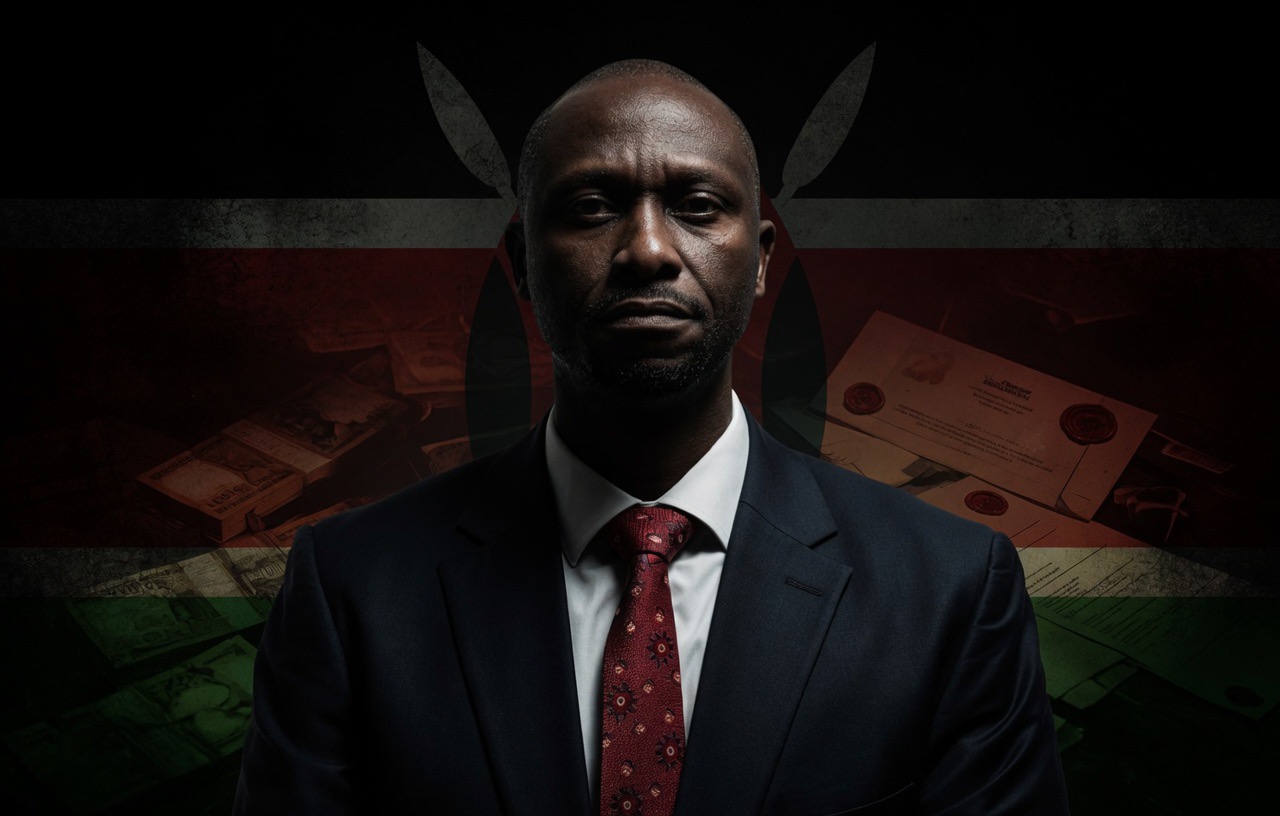
There are approximately fourteen days remaining before the Gambling Regulatory Authority publishes its June 30 licensing register.
In those fourteen days, one of the most consequential regulatory decisions in Kenya’s recent economic history will be made behind closed doors, without published criteria, without declared recusals, and by a Director General whose legal authority to hold his office is simultaneously being tested before Justice Patricia Nyaundi in the High Court.
What our investigation has established, through sources embedded at different levels of the betting industry, is that the conflict of interest concerns surrounding Peter Maina Karimi extend well beyond the question of statutory eligibility that is before the court. They extend into the active licensing cycle itself.
Multiple sources who spoke to Kenya Insights on condition of anonymity — individuals operating within or adjacent to the regulated betting sector whose livelihoods depend on the integrity of the process they are now questioning — have described a pattern of selective proximity that has created unease across a significant portion of the industry.
The pattern centres on the relationship between Karimi and at least one senior figure at a major betting operator, a company whose compliance file should, by the standards the Gambling Control Act prescribes, constitute precisely the kind of hard case that tests whether a regulator is genuinely independent or merely performing independence.
Kenya Insights does not identify the individuals who have come to us with this information, nor do we name any executive whose conduct has been described to us in terms that have not been independently corroborated through public record.
What we do is examine the structural conditions that make the concerns credible, the documented compliance histories that make the stakes clear, and the institutional failures that make accountability urgent.
The Operator in the Room
To understand what is at stake in the relationship our sources describe, it is necessary to understand the compliance landscape of the operator in question.
Kenya’s betting sector, as this publication has previously reported, is not a sector with uniform compliance histories. Some operators are domestically owned, structurally transparent, and have navigated previous regulatory crises through the courts and the Tax Appeals Tribunal. Others carry records that, properly applied, should create serious pause at any regulator conducting a genuine look-through beneficial ownership and AML compliance assessment.
MozzartBet, the Serbian-owned operation that has been one of Kenya’s most visible betting brands for nearly a decade, is in the second category. The Court of Appeal, in a judgment handed down on May 23, 2025, dismissed MozzartBet’s consolidated appeal against an earlier High Court ruling and upheld the forfeiture of funds totalling Kshs.256 million to the state. Justice Francis Toiyott, Justice Fred Ochieng and Justice Aggrey Muchelule held, by unanimous finding, that there was sufficient evidence on the balance of probabilities to implicate MozzartBet in a money laundering scheme involving a shell company called Kimaco Connections Limited that was incapable, the judges found, of delivering the software it allegedly contracted to supply. The appellate bench went further, finding that persons holding directorships or otherwise connected with MozzartBet were among the beneficiaries of the funds routed through Kimaco.
That judgment was not a preliminary finding or an interim order. It was the final appellate resolution of a case that had run through the Anti-Corruption and Economic Crimes Division of the High Court and then through a three-judge Court of Appeal panel. It represents Kenya’s highest available civil judicial finding that a current licensed betting operator was involved in a money laundering scheme and that funds connected to it were proceeds of crime. That operator’s licence renewal file is, as this publication goes to press, sitting somewhere on Peter Karimi’s desk.
“The industry made its assessment of Karimi the moment his appointment was announced. Some concluded he was reachable. What sources now tell us is that at least one major operator appears to have drawn the correct conclusion from their perspective.”
What Sources Are Saying And What They Cannot Say Openly
The people who brought this concern to Kenya Insights are not disinterested observers. They are competing operators, people who stand to lose market share if a rival with a compromised compliance record receives renewal on terms that a rigorous assessment would not support.
Their interest in raising the alarm is partly self-interested. That does not make the alarm wrong. Whistleblowers are almost never disinterested, and the question is not their motive but whether what they are describing is factually grounded and structurally plausible.
What they describe, in terms that are consistent across accounts from different corners of the industry, is a Director General who has gone beyond the professional courtesies that regulators extend to industry participants and developed a degree of personal familiarity with at least one operator’s senior leadership that has made other licensees uncomfortable.
The discomfort is not about social interaction per se.
It is about what proximity of that kind signals in an industry that has sixty years of institutional experience translating personal relationships between regulators and operators into licensing outcomes.
Several operators who were approached through their industry networks, and who speak without attribution, say the informal intelligence circulating in Nairobi’s betting sector suggests that the renewal process is not being experienced uniformly.
Firms with strong compliance records and no outstanding court findings have encountered a process that feels, at the transactional level, more demanding than firms with more complex histories might have expected.
Whether that perception reflects reality or the ordinary anxiety of people who are accustomed to a captured regulator and are unsure how to navigate a nominally reformed one, cannot be established without seeing the complete licensing file register. The GRA has not published one.
One source, whose firm has no outstanding KRA disputes and no findings against its directors in any court, put the concern in terms that were direct without being specific:
“We have done everything the law requires. We have submitted every document, paid every fee, cleared every agency. The process should be straightforward. But we are watching other files that should not be straightforward move, and we are wondering why ours feels like it is being held back while certain conversations happen at levels we are not part of.”
This publication cannot verify that characterisation. We record it because it is consistent with what other sources, independently approached, have described.
The Umsuka Thread and the Communications Authority Finding
The court challenge to Karimi’s appointment, filed by petitioner Patrick Mwashigadi and argued by Abdirahman Mohamed before Justice Nyaundi, raised a detail that the mainstream coverage of the case has largely treated as peripheral but which Kenya Insights considers material to the conflict of interest analysis.
The petition identified a financial services entity called Umsuka Capital Limited, described as connected to mCHEZA’s operations during the period Karimi was running the platform, and noted that the entity was subsequently shut down by the Communications Authority of Kenya for non-compliance.
Karimi’s own lawyers have not directly addressed the Umsuka connection in their application to strike out the petition. They have instead contested jurisdiction, argued that the petition is a labour matter, and challenged the provenance of documents relied upon by the petitioner.
What this means in evidential terms is that the Umsuka finding has not been judicially tested or resolved. It remains in the public record as an allegation, one with documentary support sufficient for it to feature in a court filing, but not yet adjudicated.
The significance of the Umsuka thread is not primarily historical. It is structural. If Karimi held a directorship in a financial services entity that was shut by the Communications Authority for non-compliance, the question that the GRA board should have asked before appointing him to head a regulator responsible for AML compliance across the betting sector is obvious. The GRA’s press release announcing his appointment did not address it. The press release did not even name his most recent employer. It described a technology company focused on financial services products and platforms, omitting any reference to the betting industry that any competent due diligence process would have surfaced within minutes.
“GRA has published no recusal protocols. It has not disclosed which licence applications Karimi is personally reviewing. In the absence of that transparency, operators, courts, and Kenya’s FATF monitoring counterparts cannot assess whether the June 2026 decisions are being made independently.”
The Structural Architecture of Capture
The relationship between a regulator and the industry it oversees is never a clean binary. Regulators need industry knowledge to do their jobs. Enforcement that is entirely adversarial tends to produce litigation rather than compliance.
The revolving door between industry and regulation exists in every jurisdiction, and the question is not whether it exists but whether the institutional safeguards that manage its risks are in place and functioning. In Kenya’s gambling sector, in June 2026, the institutional safeguards are not in place.
The Gambling Control Act’s five-year cooling-off provision was specifically designed to create a structural buffer between industry participation and regulatory authority. Whether or not the High Court ultimately finds that Karimi’s appointment violated that provision and the jurisdictional argument his lawyers are advancing may yet cause the case to be heard in a different court the legislative intent is clear.
Parliament judged that a person who had been running a licensed betting platform as recently as eighteen months before assuming the regulatory chair was too close to the industry to regulate it impartially. Parliament was right. That judgment was not about Karimi specifically. It was about the nature of the relationships that a decade in the betting industry creates, and the impossibility of those relationships not influencing, consciously or otherwise, the way a regulator reads a compliance file.
Karimi knows, from his years at mCHEZA, how Kenya’s betting operators structure their M-Pesa integrations. He knows the commercial pressure points that make operators cut AML compliance corners. He knows the industry networks, the technology vendors, the legal advisers, and the lobbyists. He knows the regulatory audit pressure points that operators fear and the ones they have historically managed through documentation that looks compliant without being so.
That knowledge can make him a better regulator, if it is applied with structural rigour. It can also make him a captured regulator, if the relationships that came with it are not formally and publicly managed.
The Finance Bill Testimony and the Question of Industry Alignment
The concern our sources raise is not solely about a personal relationship with a single operator. It is also about a pattern of public positioning that some within the industry read as signalling the kind of accommodation they have historically received from the BCLB rather than the rigorous enforcement the Gambling Control Act prescribes.
At the Finance and National Planning Committee in May 2026, Karimi appeared before MPs to oppose the Finance Bill 2026’s proposed reintroduction of a 20 percent withholding tax on gambling winnings. His arguments were technically defensible. Prize competitions, he told the committee, are primarily marketing promotions where players do not even wager a stake. Taxing non-cash prizes would be practically impossible to enforce.
The arguments Karimi made to Parliament were arguments that the betting industry’s own lobbyists would have made, and did make, in their submissions to the same committee. That alignment is not evidence of capture.
A regulator may agree with an industry position for legitimate technical reasons. What it does do is establish that on the question of tax burden, the inaugural Director General of Kenya’s new gambling regulator has taken a public position that is consistent with what the operators he is simultaneously licensing wanted him to take.
At the iGaming AFRIKA Summit in May 2026, Karimi positioned the GRA as a partner to responsible operators rather than an adversarial enforcement body, language that the industry received warmly and that competing operators have begun to read against the backdrop of what they are observing in the licensing process.
Betika, Odibets, and the Criminal Files That Must Not Be Ignored
MozzartBet is not the only operator in the current renewal pool carrying a compliance record that demands more than standard processing.
Directors of Betika, Kenya’s largest operator by market share following SportPesa’s 2019 exit, and its sister firm Odibets have faced detention and criminal prosecution proceedings in connection with the acquisition and use of Safaricom subscriber data obtained from former employees.
The allegation, as reported by iGaming Expert in May 2026, is that both companies built purpose-built marketing databases from stolen subscriber data, conduct that under Kenya’s computer crime statutes attracts potential imprisonment of up to twenty years.
SportPesa was separately fined by the Office of the Data Protection Commissioner for a major data breach in March 2025. Betika was fined by the ODPC in 2025 for excessive data collection practices.
The Gambling Control Act does not provide for automatic disqualification of operators whose directors face criminal investigations.
It provides for the GRA to conduct security checks, vetting and due diligence on licensees, shareholders, directors and beneficial owners.
The weight to be given to ongoing criminal prosecutions against an operator’s directors in the context of a licence renewal is a judgment call that the Act vests in the GRA. What it is not is an administrative oversight. An operator whose directors are in police detention for computer-related fraud on the eve of the licence renewal deadline is not a routine renewal application.
It is precisely the kind of case that tests whether the GRA is applying the law as Parliament enacted it or whether it is administering the same accommodations that made the BCLB a byword for regulatory failure.
“A regulator who cannot be seen to be independent is not independent, regardless of what his decisions ultimately show. The perception of neutrality is not vanity. It is the foundation on which every licensing decision he makes will be tested in court.”
What the GRA Must Do Before June 30
This publication is not calling for Peter Karimi’s removal from office, and we are not asserting that any specific licensing decision has been corrupted.
What we are asserting, on the basis of source intelligence that is consistent across independent accounts and against a structural backdrop that makes the concerns credible, is that the GRA under Karimi’s leadership is operating without the transparency safeguards that would allow the public, Parliament, and the courts to assess the integrity of the June 2026 licensing cycle.
The GRA must, before June 30, publish a formal conflict of interest declaration from Karimi identifying every current licence applicant with whom he had a prior commercial, professional, or personal relationship during his years at mCHEZA and Acumen Communications.
It must publish the recusal decisions, if any, that have been made in relation to specific applications. It must publish the criteria framework being applied to assess AML compliance, beneficial ownership verification, and the treatment of operators whose directors face ongoing criminal proceedings. And it must publish these things not as a post-hoc accountability exercise after the register is released, but now, while the decisions are still being made and while there is still time for Parliament and the EACC to intervene if the framework is deficient.
The Ethics and Anti-Corruption Commission has independent authority under its enabling statute to examine whether appointment processes complied with the conflict-of-interest provisions of relevant legislation.
That authority does not require it to wait for the High Court challenge to resolve. The EACC should be examining who in the GRA board approved Karimi’s appointment in full knowledge of his mCHEZA background, what due diligence was conducted on the Umsuka Capital finding, and what explanation exists for the deliberate omission of his most recent employer’s name from the official appointment announcement.
These are questions of institutional accountability that are entirely within the EACC’s mandate.
The Financial Reporting Centre, which has supervisory authority over AML compliance in the gambling sector, must exercise that authority independently of the GRA’s own assessment. An FRC review of the June 2026 licensing cycle, conducted with access to the compliance files of all 99 operators currently in the renewal pool, would both strengthen the quality of outcomes and protect Karimi from the accusation which his background makes structurally unavoidable that he applied his AML mandate selectively.
The Industry Has Already Made Its Assessment
Kenya’s betting industry is not a passive observer of the regulatory process it is navigating. It is an active participant with sixty years of experience translating regulatory relationships into business outcomes.
The operators who approached Kenya Insights did so because they have concluded that the current process is not unfolding on the terms that the Gambling Control Act prescribes.
Whether they are right or wrong will ultimately be shown by what the June 30 register contains and whether every operator on it can demonstrate, against publicly disclosed criteria, that it earned its place through compliance rather than through the kinds of relationships and resources that have historically made compliance optional in this sector.
What Kenya Insights can say, on the basis of what our sources have described and what the public record supports, is that the conditions for those relationships to operate are structurally present in a way they have never been so nakedly present before.
A Director General who spent a decade in the industry is simultaneously running its most consequential licensing cycle and facing a court challenge to his authority to do so.
He has not published recusal protocols.
He has not disclosed the beneficial ownership verification methodology for operators whose offshore structures require a look-through assessment. He has not addressed, in any public forum, how he is managing his prior relationships with the operators now before him.
The industry’s old hands, the people who remember how the BCLB was managed and what relationships meant in that institution, have been watching all of this with a practised eye. Some of them are among the rivals who reached out to us. Others are among the people who advised certain operators, in boardrooms we cannot see, about how to approach the new regime.
The question of whether Kenya’s gambling reform is genuine or cosmetic will be answered by what those advisers concluded and whether their clients have, as a result of what they concluded, been advantaged or disadvantaged in the process that closes on June 30.
Peter Karimi has, in every public appearance since assuming office, said the right things. He has spoken about tight regulation, consumer protection, AML rigour, and a regulator that is a partner to responsible operators.
Those words are on the record. What is also on the record is a money laundering judgment against one of Kenya’s major betting operators, criminal proceedings against the directors of the country’s largest operator, a Director General whose payment firm was shut for non-compliance, and a High Court petition asking whether he should be in his chair at all. The June 30 register will tell us which of these records mattered more.
This investigation is intended as a reference document for the Ethics and Anti-Corruption Commission, the Financial Reporting Centre, Parliament’s Administration and Internal Security Committee, the Directorate of Criminal Investigations, and any court conducting judicial review of GRA licensing decisions arising from the June 30, 2026 deadline.
Kenya Insights allows guest blogging, if you want to be published on Kenya’s most authoritative and accurate blog, have an expose, news TIPS, story angles, human interest stories, drop us an email on [email protected] or via Telegram




The Deal That Broke Telkom: How John Ngumi Pocketed Sh415 Million and Landed in Investigators’ Crosshairs

The Man Who Cannot Be Neutral: Peter Karimi’s Conflict of Interest Cloud Darkens As Betting Firms Fight For Their Licences

Rot From Within: How KCB Became Kenya’s Biggest Battleground for Insider Fraud

FBI Foils Drone Attack Targeting White House

Messi, Ronaldo Set To Play In World Cup For 6th Time

How Joho Brokered Deal to Free 7 Kenyan Seafarers Jailed in Tanzania for 20 Years Over Human Trafficking

Calls Mount for Probe Into Garissa Woman Rep Edo Udgoon Siyad Over Alleged Role in Controversial Land Transactions Linked to Nzoia Sugar Disputes

Embarrassing State House Gaffe as Hussein Mohamed Names Wrong Japanese Prime Minister, Then Quietly Deletes Statement

A Packet of Milk, A Public Strip Search and 26 Years Thrown Away: The Ugly Face of Lipton Teas’ Kenyan Operations Exposed

The Listing That Doesn’t Lie: What the Market Isn’t Saying About Family Bank’s NSE Debut

Inside NCBA’s Decline: How a Banking Giant Lost Its Strategic Edge

Businessman Philip Waithaka Kinuthia’s Minor Son Allegedly Drove Drunk, Killed Two Peponi Students in Ngong Road Horror Crash as Claims of Cover-Up Intensify

Cement, Cash and Courts: How the Hashu Dynasty Crushed the Ramji Brothers for Fourteen Years and Why the Walls Are Now Closing In

Standard Chartered Ghosts Haunt Joshua Oigara At Stanbic As Whistleblower Spills Beans

Inside The Urban Planning Cartel That Owns Nairobi

South Sudan: Adut Salva Kiir’s Shadow Treasury Exposed

Why Ruto’s Favourite Candidate Adan Mohammed Could Be Locked Out of the KRA Top Job

Why John Ngumi Is Running From the EACC and Why the Sh415 Million Payday May Be the Least of His Worries

The President’s Daughter and The Missing Witness: How Adut Salva Kiir’s Shadow Treasury Silenced Its Most Dangerous Critic

How Adil Popat Saved His Empire On The Eve Of Imperial Bank Collapse and Why Kenya’s Mainstream Media Buried The Story
-
 Business7 days ago
Inside NCBA’s Decline: How a Banking Giant Lost Its Strategic Edge
-
 News2 days ago
Businessman Philip Waithaka Kinuthia’s Minor Son Allegedly Drove Drunk, Killed Two Peponi Students in Ngong Road Horror Crash as Claims of Cover-Up Intensify
-
 Investigations2 weeks ago
Cement, Cash and Courts: How the Hashu Dynasty Crushed the Ramji Brothers for Fourteen Years and Why the Walls Are Now Closing In
-
 Business6 days ago
Standard Chartered Ghosts Haunt Joshua Oigara At Stanbic As Whistleblower Spills Beans
-
 Investigations2 weeks ago
Inside The Urban Planning Cartel That Owns Nairobi
-
 Africa5 days ago
South Sudan: Adut Salva Kiir’s Shadow Treasury Exposed
-
 Business5 days ago
Why John Ngumi Is Running From the EACC and Why the Sh415 Million Payday May Be the Least of His Worries
-
 Africa6 days ago
The President’s Daughter and The Missing Witness: How Adut Salva Kiir’s Shadow Treasury Silenced Its Most Dangerous Critic