
Business
The Eldoret Tax Fortress: How David Langat Turned an Industrial Park Dream Into Kenya’s Most Sophisticated Domestic Tax Haven
A close ally of President William Ruto, a 1,400-acre private Special Economic Zone in Uasin Gishu County, a legally constructed 10% tax rate in a 30% country, and a conglomerate bleeding cash while its prized fiscal shelter stands largely empty. This is the story the press releases do not tell.

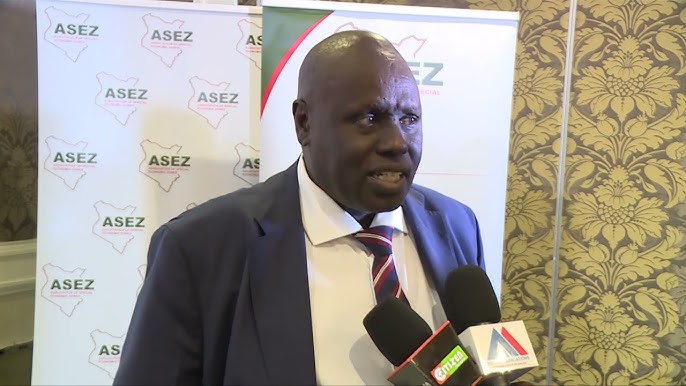
There is a version of the David Langat story that Kenya has been told repeatedly. It runs like this: a media-shy Rift Valley billionaire, inspired by the hustle of Eldoret’s youth, resolves to build a transformational industrial park, secures a Chinese joint-venture partner on the sidelines of a global forum, wins the blessing of two successive presidents, and sets about turning 1,400 acres of plateau land into East Africa’s answer to Shenzhen.
The jobs promised are 40,000 direct. The capital promised is USD 2 billion. The production value promised, once fully operational, is USD 3 billion annually. It is a compelling story of patriotic entrepreneurship. It is also a story that, when examined beneath the surface, conceals something far more significant than an industrial park.
What the press releases, groundbreaking ceremonies, and Belt and Road photo opportunities carefully omit is the fiscal architecture that makes the Africa Economic Zone (AEZ) officially known as the Pearl River Industrial Park so extraordinarily valuable to Langat and his DL Group of Companies.
Not as a manufacturing hub. Not yet, at any rate. But as a legally constructed domestic tax haven, carved from Kenyan statute, planted on the highway to the Ugandan border, and made possible by a 2015 legislative pivot that the mainstream Kenyan press has almost entirely failed to interrogate.
This is that interrogation.
THE ARCHITECTURE OF PRIVILEGE: HOW CAP 517A CHANGED EVERYTHING
Kenya’s Special Economic Zones Act, enacted in 2015 as Cap 517A, was sold to the public and to Parliament as a vehicle for foreign direct investment. Its true significance lay in a single sentence of policy departure from its predecessor, the Export Processing Zone Act (Cap 517).
Under the old EPZ model, companies operating inside gazetted zones were required to export the overwhelming majority of their output typically 80% or more to overseas markets. The fiscal incentives were generous, but the export obligation made the regime unsuitable for businesses oriented toward the domestic Kenyan consumer market.
Cap 517A abolished that constraint entirely.
Under the new law, a licensed SEZ enterprise may sell up to 100% of its goods and services directly into the Kenyan domestic market while still retaining the full suite of fiscal privileges originally designed to attract export-oriented manufacturers.
That single legislative pivot domestic sales permitted, export requirement removed transformed the SEZ framework from a niche export incentive into something far more powerful: a general-purpose domestic tax shelter available to any sufficiently connected business interest capable of satisfying, or negotiating, the zone’s substance requirements.
The incentives available to a qualifying SEZ enterprise are not marginal.
They are structural.
Corporate income tax falls from the standard 30% to 10% for the first ten years of operation, rising to 15% for the second decade before reverting to the standard rate. Withholding taxes on dividends, interest, royalties and management fees normally levied at between 5% and 20% depending on residency drop to zero for the incentive period. VAT, normally charged at 16% on supplies within Kenya, is either zero-rated or fully exempt on qualifying transactions inside the zone.
Import duties, the Import Declaration Fee, the Railway Development Levy and associated customs charges all fully applicable to businesses operating under standard Kenyan rules are waived entirely for machinery, raw materials and inputs imported into the zone. Stamp duty, normally payable at standard rates on property and asset transfers, is either exempted or reduced.
And the developer entity the SPV through which the zone is built, managed and monetised attracts the same preferential tax treatment on its own operations as any other SEZ enterprise.
You do not need to wire money to Mauritius. You simply gazette a large tract of land, satisfy the optics of jobs and investment, and route high-margin activities behind the regulatory fence.
The comparison with what ordinary Kenyan businesses face is not subtle. An SME operating outside the fence on the same road pays 30% corporate tax, 16% VAT, full import levies, standard withholding taxes, county levies enforced with growing aggression, and lives under the relentless compliance machinery of KRA’s eTIMS electronic invoicing system.
Inside the fence, a DL Group subsidiary operates at one-third the effective tax rate, imports equipment duty-free, pays no withholding tax on financial transfers, and faces a different calibre of regulatory scrutiny entirely.
The gate separating those two fiscal universes is, in the Langat case, a 1,400-acre plot of land in Uasin Gishu County. The gate does not move. What changes is which side of it you have the political capital to stand on.
THE LAND, THE LAW AND THE LAUNCH
Langat’s own account of how the AEZ came to be carries the quality of myth the kind that is useful precisely because it is not entirely false. He was, by his telling, driving through Eldoret in 2013 when the sight of industrious young people moved him to resolve that he would build an industrial park to transform their livelihoods.
What the account elides is that he had already purchased the land the 700 acres of Phase 1, situated in the plateau area roughly 40 kilometres from Eldoret town, strategically astride the Northern Corridor linking Kenya to Uganda, Rwanda and South Sudan before the SEZ Act existed. His original intention, he acknowledged in interviews, was agro-processing: value addition on the agricultural produce of the Uasin Gishu breadbasket.
It was only after the government enacted Cap 517A in 2015 that the project’s architecture changed. The SEZ licence converted a planned industrial facility into a qualifying zone.
And that conversion, in turn, changed the economics of every other DL Group activity that could plausibly be routed through or linked to the zone. The timing is not coincidental. It is the sequence that matters: land acquired, law enacted, zone licensed, fiscal fortress constructed.
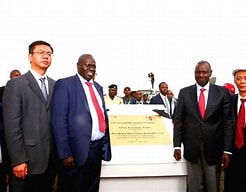
The formal launch of the project was orchestrated with considerable political pageantry. The joint venture agreement between Africa Economic Zones Ltd the Langat-controlled SPV and China’s Guangdong New South Group was signed in Beijing in May 2017, during the Belt and Road Forum for International Cooperation. Then-President Uhuru Kenyatta personally witnessed the signing.
The groundbreaking followed in July 2017.
Crucially, it was Deputy President William Ruto already Langat’s closest political ally who officiated the ground-breaking ceremony on Uasin Gishu soil: his own political heartland. The visual message was unmistakable. Ruto was not merely a guest at the ceremony. He was the anchor of its political legitimacy.
The project’s stated ambitions were staggering by any measure. Projections released by AEZ spoke of 40,000 direct jobs, 150,000 indirect ones, and annual production worth USD 3 billion once fully operational across all three planned phases.
Phase 1 the 700-acre Pearl River Industrial Park was to house agro-processing, textiles, electronics, chemicals, heavy engineering and pharmaceutical industries. Phase 2 would deliver a science and technology hub. Phase 3 would bring Olympia City: a residential and recreational development including hotels, schools, a shopping mall, a golf course, a stadium, a world-class hospital and up to 4,000 residential units.
None of the phases have reached anything close to the promised scale. As of mid-2026, infrastructure development at the site remains ongoing and incomplete. Major tenant onboarding the industrial clients who would populate the Phase 1 factories and generate the employment headline numbers has not materialised at the promised rate.
The USD 3 billion annual production figure belongs, for now, to the realm of prospectus rather than reality. The park is not yet the engine of Rift Valley industrialisation that nine years of press releases have described.
But here is the critical point that the mainstream Kenyan press has consistently missed: the tax architecture does not require the park to be operational at scale to generate financial benefit for DL Group. It requires the SEZ licence to be valid. And that it is.
THE CONGLOMERATE BEHIND THE FENCE: WHERE THE REAL MONEY FLOWS
DL Group of Companies is, in Langat’s telling, a manufacturing and development conglomerate built from trading origins in Mombasa in the 1980s.
What the corporate website describes as ‘Africa’s Most Trusted Conglomerate’ now spans eight countries Kenya, Uganda, Tanzania, Zambia, the UAE, the DRC, Switzerland and the United Kingdom with declared operations in tea, real estate, energy, security, furniture, hospitality, healthcare and logistics.
The group claims to employ more than 30,000 people and to be East Africa’s largest tea producer, with over 35,000 acres under cultivation across Kenya and Tanzania.
Those are the top-line numbers.
The sub-surface reality is considerably more turbulent. DL Group’s financial architecture the interplay between its operating subsidiaries, its debt obligations, its Tanzanian acquisitions and its Kenyan assets reveals a conglomerate under significant structural stress, held together in part by the fiscal relief that its SEZ designation provides and in part by the political proximity of its founder to successive occupants of State House.
The security arm of DL Group comprising Firefox Kenya (fire protection and CCTV automation) and Magal Solutions, a partnership with Israeli security firm Magal Security Systems holds contracts at some of Kenya’s most sensitive installations: Jomo Kenyatta International Airport and the Port of Mombasa. The Mombasa Port contract, worth USD 21.4 million and originally won through a World Bank-supervised tender process, placed Langat’s subsidiary at the perimeter of Kenya’s most critical trade gateway.
The JKIA relationship extends that footprint to the country’s busiest aviation hub. A private businessman with active SEZ licensing in the President’s home county, active security infrastructure contracts at Kenya’s two most important ports of entry, and declared proximity to the President is not an ordinary private-sector actor.
He is a conglomerate that sits at the intersection of commerce and state security a position that confers leverage, and that creates questions about procurement integrity that nobody in the Kenyan press has systematically examined.
Langat participated in the dowry negotiations for President Ruto’s daughter June. He bankrolled three consecutive campaign cycles. He was appointed to the National Investment Council. And then, something changed.
THE RUTO RELATIONSHIP: FRIENDSHIP, FINANCE AND THE FALL
The relationship between David Langat and William Ruto is the central political fact around which every other element of this story orbits. It is, by multiple accounts, a relationship of long standing, deep financial entanglement, and as recent events have demonstrated considerable mutual danger.
Langat reportedly financed Ruto’s political operations across not one but three election cycles: 2013, 2017 and 2022. Even in the 2013 and 2017 elections, in which Ruto ran as deputy rather than principal, Langat’s money was said to be flowing into campaigns that Ruto was driving from within the Jubilee machinery.
The level of personal intimacy went beyond cheque-writing. Langat was present at the dowry negotiations for Ruto’s daughter June a level of social integration that places him not in the category of political donor but in the category of inner-circle confidant.
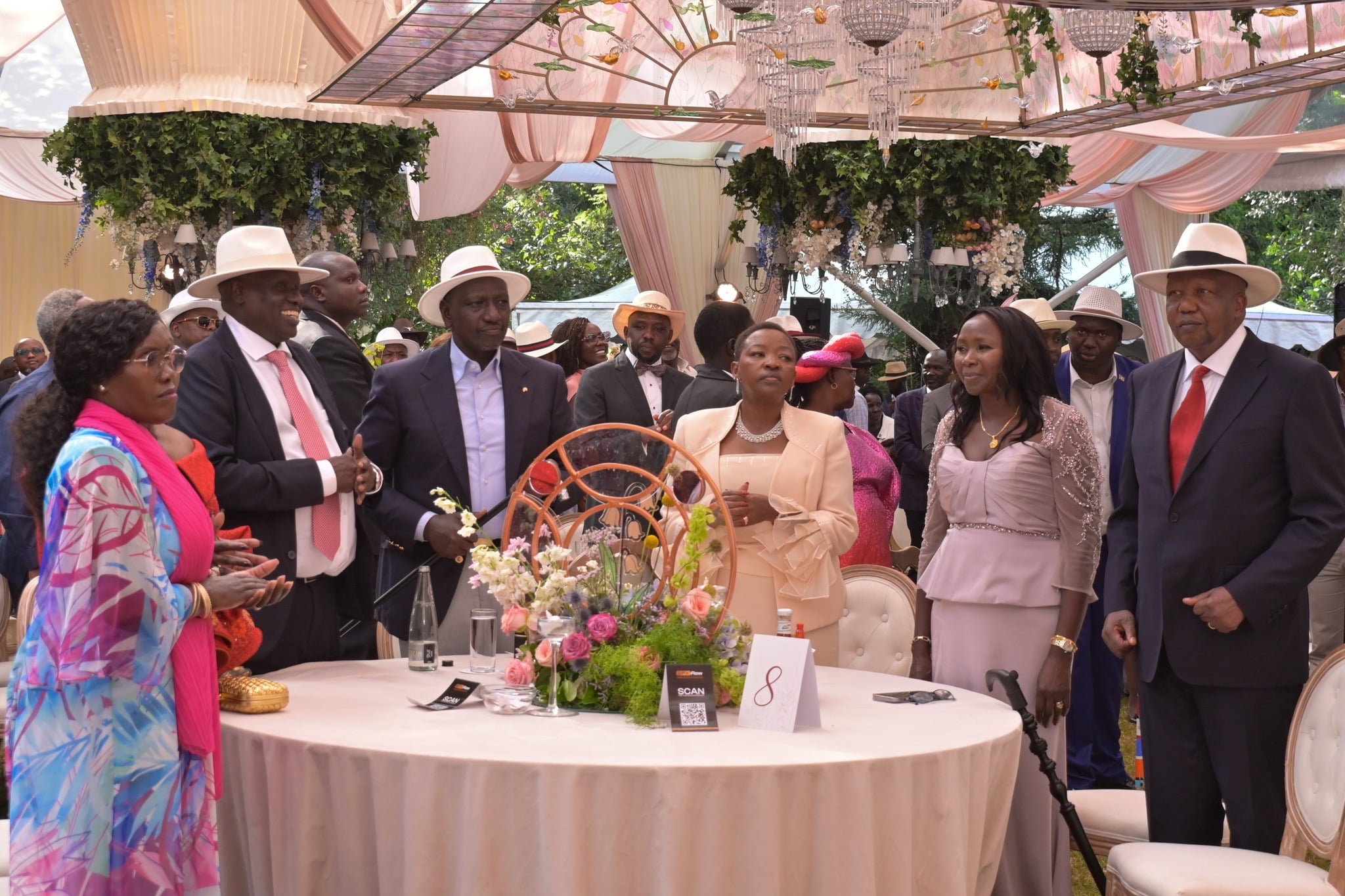
President Ruto graces the pre-wedding of Nicole Langat and Brian Belio.
After Ruto’s 2022 victory, the rewards appeared to flow in the expected direction. Langat was appointed to the National Investment Council alongside other prominent Kenyan entrepreneurs including billionaire Humphrey Kariuki and Safaricom’s Sitoyo Lopokoiyit.
In January 2024, a company linked to Langat won a Sh60 billion tender to supply machinery to the Kenya Ports Authority the same institution where his Magal Solutions subsidiary already operated critical security infrastructure.
The tender was subsequently blocked before completion, cancelled under circumstances that have never been publicly explained.
Multiple sources, speaking on condition of anonymity to Kenya Insights, allege that pressure was applied to KPA management to redirect the award.
Separately, when an Indian firm won a Kenya Revenue Authority stamp-printing tender for which Langat was positioned as the local agent, he was removed from the arrangement without explanation.
The two episodes, read together, suggest that whatever political dividend Langat had expected from the Ruto presidency was being actively withheld or actively undermined by forces inside or adjacent to the government he had financed.
The fracture became public in September 2024. At his mother’s burial, Langat made remarks that observers across Kenya’s political spectrum interpreted as a direct and deliberate reproach of President Ruto suggesting, without naming the president explicitly, that he had extended himself financially on the basis of promises that had not been honoured.
Political activist Morara Kebaso took the allegation further on X: ‘William Ruto approached DL Langat and told him he desperately needs more money for campaign. DL Langat used his properties as security and took big loans to help his friend. Right now DL Langat is being auctioned by banks and the person who is buying the properties is William Ruto.
To make it worse William Ruto has used his power to undervalue the properties to buy them at a cheaper price.’ Kebaso was arrested and arraigned at Milimani Law Courts the following month, charged with publishing false information. He was released on Ksh50,000 bail. The charges were not the state’s most effective tool; they gave the allegations an amplification that silence could not.
Langat’s company issued a statement saying he had nothing to do with the arrest. The charge sheet, however, did not contain his name as complainant.
THE DEBT SPIRAL: WHAT THE BALANCE SHEET REVEALS
While the AEZ was being presented to the world as a beacon of industrial transformation, the DL Group’s core agricultural and financial operations were quietly unravelling. The debt record is not a single default. It is a pattern.
In October 2021, Langat and members of his family were sued by a travel agency for allegedly failing to settle a USD 152,000 travel bill incurred over a twelve-month period.
The company denied there was any binding contract.
In 2016, DL Koisagat Tea Estate Ltd took vehicle loans from Synergy Industrial Credit Ltd, repayable in monthly instalments over 48 months, concluding by May 2020.
The loans were not repaid.
By the time Synergy moved to enforce the debt in 2026, interest and costs had lifted the total to Sh87 million.
A High Court order now freezes three personal land parcels belonging to Langat and his spouse in Cheptalal, Kericho County; Kiplombe, Eldoret; and Kaptel, Nandi County barring any disposal.
The tea estate at the centre of the group’s agricultural identity, DL Koisagat in Nandi Hills, tells a similar story of financial strain managed through political proximity rather than commercial resolution.
By July 2023, auctioneers acting for Transnational Bank had filed public notices to sell the estate 1,342 acres, among the first Kenyan operations to grow and process purple tea for export to Tetley UK and premium European and Chinese buyers along with a prime Mombasa property used for tea handling and packaging.
The debt cited was Sh2.1 billion. The auction was called off without any public explanation. Less than a year later, the same properties were relisted for a second forced auction, this time with the estate valued at approximately USD 14.73 million against an underlying bank debt of approximately USD 15.5 million.
The second auction also did not complete.
The Tanzanian operations compounded the picture. In 2018, at the height of his political influence, Langat spent approximately USD 46.5 million to acquire a 99% stake in three Tanzanian tea companies from British firm Rift Valley Corporation: Mufindi Tea and Coffee, Rift Valley Tea Solutions and Kibena Tea.
The deal gave DL Group an estimated 11,000-tonne annual production capacity in Tanzania, positioning it among Africa’s largest tea producers.
What followed was seven years of non-payment to Tanzanian tea farmers and factory workers in the Njombe region a crisis significant enough to attract the personal intervention of Tanzanian President Samia Suluhu Hassan, who publicly announced at a campaign rally that DL’s operation had finally secured funds to begin settling its debts. Meaningful payments only began in mid-2025. By the time the payments started, the company had been sitting on the assets for seven years without honouring the obligations that came with them.
KEY FIGURES: DL GROUP TAX BENEFIT SNAPSHOT
Standard corporate tax rate in Kenya: 30%
SEZ enterprise rate (first 10 years): 10%
Tax differential per Sh1 billion of profit: Sh200 million
Withholding tax on dividends/interest outside SEZ: 5–20%
Withholding tax inside SEZ (first 10 years): 0%
Import duty/VAT/IDF/RDL on machinery outside SEZ: Fully applicable
Import duty/VAT/IDF/RDL inside SEZ: Fully exempt
AEZ SEZ Phase 1 land area: 700 acres
DL Koisagat Tea Estate debt (Transnational Bank): Sh2.1 billion
Vehicle loan debt unpaid since 2016 (Synergy): Sh87 million (with interest)
KPA machinery tender won and blocked (2024): Sh60 billion
Tanzanian tea farmer debts (settled mid-2025): 7 years overdue
THE SEZ AS LIFELINE: HOW THE FISCAL SHELTER COMPENSATES FOR OPERATIONAL STRESS
Understanding why the AEZ’s fiscal architecture matters requires understanding DL Group not as a stable, profitable conglomerate but as a highly leveraged empire with significant capital requirements across multiple fronts simultaneously.
The group is developing a 94 MW solar power project at a declared investment of USD 170 million, described as the project that will make it the largest solar plant in East and Central Africa.
It is pursuing a planned geothermal facility in western Kenya. Through Balmer Healthcare Ltd a subsidiary it is developing the Sh26 billion Eldo Medicity tertiary hospital in partnership with Apollo Hospitals of India, a project announced at the Fourth Kenya International Investment Conference in March 2026 and certified by the Kenya Investment Authority (KenInvest).
Phase 2 and Phase 3 of the AEZ itself remain on the corporate roadmap. These are not small commitments.
Against that backdrop of capital-intensive ambition, the SEZ’s tax privileges are not peripheral. They are structural. Every shilling of corporate tax saved at the 10% rate rather than the 30% rate is a shilling available for debt service, capital expenditure or the next acquisition. Every duty-free import of solar panel equipment, construction machinery or medical equipment flowing through the SEZ framework is a cost saving that compounds across the investment lifecycle.
The developer entity Africa Economic Zones Ltd earns income from zone management, plot transactions and infrastructure services. That income is taxed at the preferential rate. Future phases of the AEZ, once operational, attract the same treatment. The Eldo Medicity hospital, if located within or sufficiently linked to the SEZ perimeter, has the potential to draw on the same fiscal shelter.
This is not tax evasion. It is tax avoidance in its most sophisticated domestic form: the use of a legally constructed regulatory enclosure to separate high-margin activities from the fiscal regime that applies to competitors operating without political access to the licensing machinery.
Ordinary Kenyan businesses the manufacturers, the service firms, the SMEs cannot gazette a private SEZ.
They do not have 1,400 acres of land on the Northern Corridor, the political relationships to fast-track approvals through a One-Stop-Shop clearing mechanism, and a Chinese joint-venture partner whose involvement confers Belt and Road credibility. They pay 30%. Langat, inside his fence, pays 10%.
THE NORTHLANDS COMPARISON: HOW KENYA’S OLIGARCHS REPLICATED THE MODEL
The DL Group’s Africa Economic Zone is not an isolated case. It is part of a pattern that Kenya Insights has mapped across the full register of gazetted private SEZs, and the pattern is striking in its consistency: large land holdings, politically connected ownership, development narratives that emphasise public benefit, and fiscal architectures that primarily serve the developer.
Northlands SEZ in Ruiru, Kiambu County, spans more than 11,000 acres and is associated with the Kenyatta family the landholdings of the family of the third and fourth presidents. It operates as a master-planned satellite city under highly favourable zone tax laws. Two Rivers TRIFIC SEZ in Nairobi was conceived and executed through Centum Investment, historically associated with the late Chris Kirubi and led by CEO James Mworia, and was aggressively repositioned under the SEZ framework as an offshore-style financial centre modelled on Dubai’s DIFC.
Tatu City in Kiambu, backed by Rendeavour and New Zealand-born billionaire Stephen Jennings, is the country’s largest and most active private SEZ. Mt Kipipiri Golf and Resort SEZ in Nyandarua perhaps the most eyebrow-raising designation on the register applies SEZ tax incentives normally reserved for industrial production to high-end real estate, luxury hospitality and tourism infrastructure, allowing wealthy holiday-resort developers to enjoy corporate tax holidays and stamp duty exemptions on high-value recreational property.
Each of these SEZs is associated with a name that commands political capital. Each is located in an area where the developer’s relationships with regulatory authorities are not adversarial.
Each presents a public narrative jobs, investment, industrial transformation that provides the essential political cover for what is, at its core, a preferential fiscal arrangement. And each was made possible by the 2015 legislative pivot that removed the export obligation and opened the domestic market to SEZ enterprises. The pivot did not create these zones. But it made them worth creating.
THE 2026 LEGISLATIVE FRONTIER: EXTENDING THE PRIVILEGE DEEPER
If the current SEZ framework is already a powerful tool for tax avoidance by the politically connected, the 2026 amendment bill currently working its way through Kenya’s legislative machinery would extend the model into territory that raises alarms among independent economists and fiscal watchdogs.
The Special Economic Zones (Amendment) Bill seeks to create a new class of ‘Petroleum Zones’ applying SEZ-style incentives to upstream and extractive sector operations, permanently rather than for the standard ten-year period.
The proposed framework would guarantee permanent withholding tax exemptions on dividends, interest and management fees paid to non-resident partners in petroleum operations.
The fiscal implications are severe.
Under existing Production Sharing Contracts governing Kenya’s oil and gas sector particularly the South Lokichar Basin developments extractive companies already recover up to 85% of operational costs before sharing ‘profit oil’ with the Kenyan state.
Layering permanent SEZ tax exemptions on top of an already generous cost-recovery model means the public’s share of national resource wealth is reduced to near-zero behind a tax-free perimeter fence. Economic watchdogs have characterised the combination as ‘double tax relief’.
Legislators backing the bill have described it as necessary to attract international upstream capital. The debate is, in its essentials, the same debate that surrounded the 2015 SEZ Act: development rhetoric deployed in service of arrangements that primarily benefit those with the scale and relationships to access the preferred structures.
The model that David Langat pioneered for private industrial zones is, if the 2026 amendment passes, about to be replicated at a dramatically larger scale in Kenya’s extractive sector. The mechanism is identical. Only the sector has changed.
THE BOTTOM LINE: WHAT THE PUBLIC IS NOT BEING TOLD
Kenya Insights put a series of questions to DL Group regarding the fiscal benefits enjoyed by Africa Economic Zones Ltd under its SEZ licence, the timeline and scale of active industrial tenants, the group’s debt position across its major obligations, and the circumstances surrounding the cancellation of the Sh60 billion KPA tender and Langat’s removal from the KRA stamp-printing agency arrangement. The group did not respond to questions submitted for this article.
What the public record, corporate filings, court documents and source interviews establish is this.
David Langat has constructed entirely within the letter of Kenyan law a domestic fiscal enclave that allows his conglomerate to operate at a corporate tax rate of 10% rather than 30%, to import capital equipment without duty, and to conduct financial transactions inside the zone without withholding tax exposure, all while selling freely into the Kenyan domestic market.
That enclave was made possible by a law enacted in 2015, an SEZ licence obtained with the active involvement of two successive political patrons, and a 1,400-acre land holding assembled before the enabling legislation even existed.
The jobs promised 40,000 direct, 150,000 indirect have not materialised at anything approaching the projected scale, nine years after the original vision was articulated and seven years after groundbreaking. The Chinese joint-venture partner has not delivered the manufacturing tenants that were central to the project’s public justification. The infrastructure remains incomplete. The park sits, largely, as a development in progress while the fiscal privileges it generates are active and accruing.
Meanwhile, the conglomerate behind the zone faces three creditors, two prior forced-auction notices on its flagship tea estate, a court freeze on personal land parcels, a seven-year history of non-payment to Tanzanian farmers, and a blocked Sh60 billion government tender that may represent the moment the Ruto relationship and its commercial dividends began to curdle.
Kipchimchim Group, one of Kenya’s most aggressive agricultural acquirers, is said by multiple intelligence sources to be in discussions to acquire DL Group’s Tanzanian tea assets. DL Group has denied the reports with notable vigour.
The portrait that emerges is of a conglomerate that leveraged political proximity to access a fiscal structure unavailable to its competitors, used that structure to retain capital that would otherwise have been paid to the Kenyan state, expanded aggressively into Tanzania and Kenyan energy and healthcare on the back of that retained capital and borrowed funds, and is now facing the consequences of leverage applied without sufficient return — while the political relationship that made the entire architecture possible shows signs of serious strain.
The new domestic tax haven is no longer a distant island bank account. It is a gated zone sitting on the highway, operating within the letter of the law. Which makes it all the more worth examining.
THE PUBLIC INTEREST QUESTION
None of what is described here is illegal.
That is precisely the problem, and precisely why it demands public examination rather than prosecutorial action. The Special Economic Zones Act is valid law.
The AEZ licence is a valid licence. The tax incentives are legitimately claimed under a legitimately enacted statutory framework. David Langat has not broken a law. He has exploited the space between what the law says and what the public was told it would achieve.
The public was told it would achieve industrial transformation, mass employment and Chinese investment in the Kenyan manufacturing base.
What it has actually produced in the Langat case and, to varying degrees, across the full register of privately held Kenyan SEZs is a system in which politically connected developers can gazette large land holdings as regulatory enclaves, claim fiscal privileges that have an economic logic at institutional scale, satisfy the substance requirements of the licensing authority to a degree sufficient to maintain the licence, and wait for the value appreciation of the land and the developer margins on plot transactions and infrastructure services to compound inside a preferential tax environment.
Ordinary Kenyan taxpayers the businesses facing KRA audits, the SMEs complying with eTIMS, the manufacturers paying 30% corporate tax and 16% VAT are not simply excluded from these arrangements.
They fund the foregone revenue that arises from them.
Every Sh200 million that DL Group saves annually by paying 10% rather than 30% on qualifying profits is Sh200 million that does not reach the Treasury.
That is money that could fund schools, roads, or the very industrial infrastructure that the AEZ was supposed to deliver but has not. The subsidy flows from the many to the politically wired few. The fence around the zone is the physical embodiment of that transfer.
David Langat’s Africa Economic Zone in Eldoret is described on DL Group’s website as ‘Kenya’s first licensed private Special Economic Zone a 700-acre industrial hub in Eldoret driving manufacturing investment, job creation, and East Africa’s industrial transformation.’
The first part of that description is accurate.
The second part remains, at this writing, an aspiration. What it has driven, with certainty, is a decade of fiscal advantage for one of Kenya’s most politically wired conglomerates in the heartland of the President of the Republic, on land purchased before the enabling law existed, under a licence obtained with the active blessing of the man who would eventually occupy State House.
That is the story behind the story.
It is told not in press releases, but in the structure of the law, the dates on the licence, the court files tracking unpaid debts, the cancelled tender that was never publicly explained, and the silence of a billionaire who prefers, above all else, to keep a low profile.
The public, for its part, has been looking at the fence for nine years and being told it is a factory. It is time to ask what is actually inside.
Kenya Insights allows guest blogging, if you want to be published on Kenya’s most authoritative and accurate blog, have an expose, news TIPS, story angles, human interest stories, drop us an email on [email protected] or via Telegram


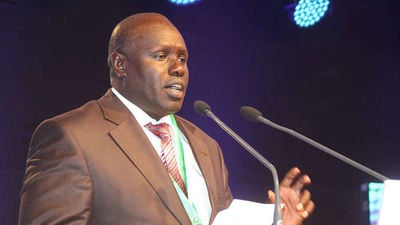


Wajir North MP Ibrahim Abdi Dissatisfied With2026/27 Budget, Claims It Totally Excludes North Eastern Region

The Eldoret Tax Fortress: How David Langat Turned an Industrial Park Dream Into Kenya’s Most Sophisticated Domestic Tax Haven

Why John Ngumi Is Running From the EACC and Why the Sh415 Million Payday May Be the Least of His Worries

Shiquo Hii Style Store Was Not Raided, Anti-Counterfeit Authority Confirms; Says Influencer Used Empty Shelves for Content as She Relocates

Treasury CS Mbadi Unveils Sh4.8 Trillion Budget Estimates

Fraud, Misrepresentation and A Decade Of Evasion: How Indo Africa Finance Pocketed Sh150 Million Youth Funds and Fought To Keep Every Cent

Kenya Picks Chinese Firm For Sh375 Billion JKIA Upgrade Project After Adani Fallout

The President’s Daughter and The Missing Witness: How Adut Salva Kiir’s Shadow Treasury Silenced Its Most Dangerous Critic

Kisii Under Siege: Governor Arati’s Wife Accused of Hijacking IFMIS and Running a Parallel Government

Al-Shabaab Issues Statement Defending Omar Artan, Accuses U.S. of Discrimination After Referee’s Deportation

Cement, Cash and Courts: How the Hashu Dynasty Crushed the Ramji Brothers for Fourteen Years and Why the Walls Are Now Closing In

Inside The Urban Planning Cartel That Owns Nairobi

Why Ruto’s Favourite Candidate Adan Mohammed Could Be Locked Out of the KRA Top Job

Standard Chartered Ghosts Haunt Joshua Oigara At Stanbic As Whistleblower Spills Beans

Inside NCBA’s Decline: How a Banking Giant Lost Its Strategic Edge

LifeCare on the Brink: SHA Fraud, Stolen Wages, and the Rotten Empire Jayesh Saini Built

Betika Faces DCI Probe, Directors Arrest and License Revocation Over Massive 29.5 Million Safaricom Customers’ Data Breach

Este Medical Kenya Fights American’s Explosive Complaints

Fresh Move Launched to Remove Kenya Railways MD Mainga From Office After Awarding Sh817 Million Consultancy Contract

The Rot Inside Absa: How Bank Insiders Are Looting Nairobi’s Customers
-
 Investigations1 week ago
Cement, Cash and Courts: How the Hashu Dynasty Crushed the Ramji Brothers for Fourteen Years and Why the Walls Are Now Closing In
-
 Investigations6 days ago
Inside The Urban Planning Cartel That Owns Nairobi
-
 Business1 day ago
Standard Chartered Ghosts Haunt Joshua Oigara At Stanbic As Whistleblower Spills Beans
-
 Business2 days ago
Inside NCBA’s Decline: How a Banking Giant Lost Its Strategic Edge
-
 Investigations2 weeks ago
Betika Faces DCI Probe, Directors Arrest and License Revocation Over Massive 29.5 Million Safaricom Customers’ Data Breach
-
 Investigations1 week ago
Fresh Move Launched to Remove Kenya Railways MD Mainga From Office After Awarding Sh817 Million Consultancy Contract
-

 Business1 week ago
TRUST BETRAYED: How Senior DTB Bank Insiders Allegedly Looted Sh149 Million From a Customer’s Account Over Five Years
-
 News2 weeks ago
How Uhuru’s Deal With Obama In 2015 Paved Way For America’s Ebola Plan In Kenya