
Investigations
The Man Who Keeps Coming Back: How a Corrupt History and a Missing Masters Degree Could Finally Lock Wamukota Out of the KETRACO Corner Office
Eng. Antony Tawayi Wamukota has made a career out of surviving suspension orders, EACC probes and parliamentary censure. As Kenya’s Sh200 billion electricity transmission monopoly hunts for a new chief executive, a convergence of academic shortfalls, a fresh corruption file that refuses to close, and questions about who is really pulling strings in this recruitment could be his undoing.

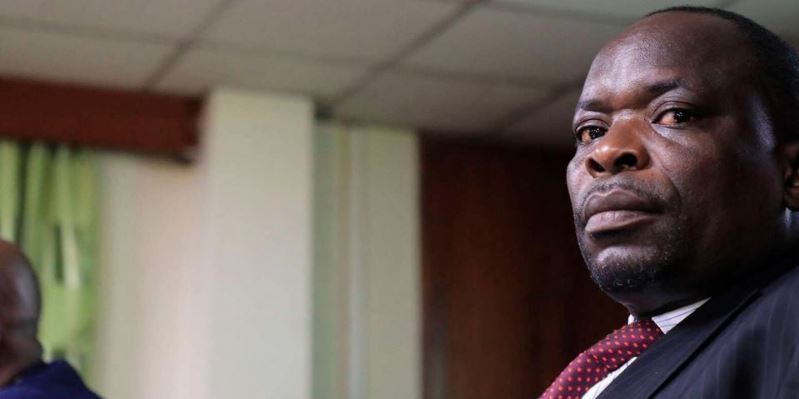
When the deadline for applications to lead the Kenya Electricity Transmission Company (KETRACO) closed on June 2, the invisible candidate in the room was already well known to most serious observers of Kenya’s energy sector. Eng. Antony Tawayi Wamukota, the long-serving General Manager for Design and Construction, a man who has twice stepped into the acting managing director role, had reportedly submitted his name for permanent consideration. His ambition is not in doubt. Neither is his record.
And it is that record that makes his candidacy one of the most consequential stories in Kenya’s public sector right now, not because he is the most qualified applicant in the field, but because, on current evidence, he may be one of the least suitable people to take charge of an institution whose reputation is already badly compromised.
“Investigations revealed procurement irregularities and fraudulent payments for the construction of the 400KV Transmission Interconnector power line from Loiyangalani to Suswa, which resulted in a loss of Sh18,499,082,672.” — EACC Report, August 2023
THE DEGREE THAT ISN’T THERE
Start with the basics.
KETRACO’s board advertised the managing director position with a clear minimum: a master’s degree, at least 15 years of relevant experience, membership in a recognised professional body, a leadership training certification, and, where applicable, a valid practising licence.
These are not frivolous requirements for an entity commanding a Sh200 billion asset base and a project pipeline that spans critical national infrastructure.
Wamukota’s publicly available and professionally documented credentials list a Bachelor of Science degree in Civil Engineering from Jomo Kenyatta University of Agriculture and Technology (JKUAT) and a CPA qualification.
No master’s degree features anywhere in his record.
Industry observers who have tracked the appointment closely say that among the serious candidates for this position, virtually every other contender carries postgraduate qualifications, with several holding multiple advanced degrees.
In a competitive field being assessed against a clearly published bar, Wamukota’s academic profile puts him on the wrong side of the advertisement from the first page of his application.
This academic gap is not new information. In 2022, when Wamukota was serving as acting MD following the departure of Fernandes Barasa, Kenya Insights was among the first outlets to raise questions about whether his academic background measured up to the role he was being handed.
Sources within the organisation at the time questioned how he had been brought in through the back door to occupy an acting leadership position given the longstanding rumours that he did not hold a master’s degree.
Those rumours, it turns out, were not unfounded.
SH18.5 BILLION AND A TANGLED WEB OF FAMILY CONNECTIONS
The degree gap would be embarrassing enough on its own. But Wamukota arrives at this recruitment carrying something far heavier: an EACC investigation into his role in one of the most costly procurement scandals in the history of Kenya’s electricity sector.
The story begins with the Loiyangalani-Suswa 400kV Transmission Interconnector, a 435-kilometre powerline designed to evacuate electricity from the Lake Turkana Wind Power plant in Marsabit and connect it to the national grid at Suswa.
The project was delayed catastrophically.
The Spanish contractor Isolux Ingenieria went bankrupt mid-construction, and the cumulative failures of contract management saw Kenya’s taxpayers absorb a penalty bill of Sh18.499 billion paid to Lake Turkana Wind Power as deemed generated energy, electricity the plant produced but could not dispatch because the transmission line was not ready.
The EACC’s investigation into who is responsible for that haemorrhage has produced a damning list of officials recommended for prosecution.
Anthony Wamukota is named alongside former Energy Principal Secretary Patrick Nyoike, fellow KETRACO officers Peter Njehia and Carol Kiara, and the officials of Luanda Concrete and Earth Movers Limited, a company whose directors include persons carrying the Wamukota family name.
Court documents from the High Court proceedings in Petition E111 of 2023 illuminate the specific evidence EACC assembled.
Investigators seized from Wamukota copies of land sale agreements and title deeds, bank transfers from his account to Luanda Concrete and Earth Movers, documents recording the purchase of construction equipment where Luanda paid on behalf of a company in which his mother and he are shareholders, and a rubber stamp for Luanda found in his possession.
According to the EACC’s documented position, this web pointed to a conflict of interest at the heart of a project on which Wamukota held direct technical oversight as head of design and construction.
EACC further established, through its investigations, that Wamukota had written a letter of introduction for the directors of Luanda Concrete and Earth Movers to the Development Bank of Kenya, facilitating financial access for a company with which he had undisclosed financial entanglements.
When investigators totted up the alleged exposure, the figure they placed before the courts was a purported loss of Sh18.5 billion. The EACC’s prosecution recommendation names Wamukota among those who should face charges including conspiracy to commit economic crimes, abuse of office, conflict of interest, fraudulent acquisition of public funds, and money laundering.
“The reinstated graft suspect is among 74 officials, including 6 Chief Executive Officers, suspended in November 2023. His reinstatement gives him leeway to conceal, alter, destroy, and remove records, documents or evidence.” — EACC Statement to the Court of Appeal, April 2024
A CAREER BUILT ON JUDICIAL REPRIEVES
Wamukota’s defenders will immediately point to his court victories, and they are real. The Employment and Labour Relations Court has, on multiple occasions, found procedural fault with the manner in which he has been disciplined or suspended.
When the KETRACO board moved at a Special General Meeting on November 15, 2023 to suspend him for twelve months on EACC’s recommendation, Justice Byram Ongaya first granted him interim orders halting the suspension and then, in April 2024, delivered a full judgment declaring the suspension irregular, unprocedural, illegal and unconstitutional.
The court found that the board had failed to follow its own human resource manual before acting. KETRACO was ordered to reinstate Wamukota and pay his outstanding salaries and benefits. This was not the first such reprieve.
A similar pattern played out when KETRACO placed him on three months’ compulsory leave in September 2025 in connection with a separate matter involving the transport of transformers from Mombasa to West Pokot.
The Employment and Labour Relations Court struck that down as double jeopardy, finding that the board had already cleared him of the same matter and had no basis to revisit it.
In March 2026, the High Court declared a subsequent interdiction served during that compulsory leave period unlawful and unfair, finding that Wamukota had been denied a show-cause letter before action was taken against him.
Each of these victories is procedural in nature.
None of the courts has examined and exonerated Wamukota on the substance of the corruption allegations.
The EACC, for its part, has not backed down.
It appealed the April 2024 reinstatement to the Court of Appeal, arguing that allowing Wamukota to return to the office while investigations were live gave him the opportunity to interfere with evidence.
That appeal was not a casual administrative step. It was a formal declaration by Kenya’s constitutional anti-graft body that it considered Wamukota a material risk to its ongoing investigation. That position has never been withdrawn.
THE CANDIDATE THE BOARD’S ADVERT WAS DESIGNED TO STOP
Into this volatile situation enters the new KETRACO board with its now-contested recruitment advertisement. The board raised the bar significantly beyond the minimum prescribed by the Government Owned Enterprises Act, adding the master’s degree requirement, lifting work experience from 10 to 15 years, and demanding professional body membership, leadership certification, and a practising licence.
The Consumer Federation of Kenya promptly filed a petition in the High Court challenging the advertisement as ultra vires, arguing that the board had imposed requirements not contemplated by law and was thereby locking out otherwise eligible candidates.
COFEK’s Secretary-General Stephen Mutoro noted in court papers that this was a re-run of a previously withdrawn advertisement that had faced similar objections, yet had reappeared in substantially identical form.
The timing of COFEK’s intervention and the precision of its targeting are matters of public record.
The petition was filed days before the application deadline. Its legal effect, if the court were to grant conservatory orders and the recruitment were ultimately invalidated, would be to dissolve a qualification framework under which Wamukota’s application would fail at the first sieve.
Strip away the master’s degree requirement, reduce the experience bar to ten years, remove the professional body and practising licence demands, and suddenly the door that was closed to him opens considerably wider.
It is worth noting that the merits of COFEK’s legal argument are genuinely contestable. The GOE Act does set a floor, not a ceiling, and state corporation boards retain discretion to set higher benchmarks commensurate with the complexity of the role they are filling.
KETRACO is not a ward administrator’s position. It is the apex leadership of an entity managing multi-billion-shilling transmission infrastructure, handling World Bank and other multilateral financing, and coordinating with regional power pools across East Africa.
Whether a board acted unlawfully in demanding more than the statutory minimum from candidates for such a role is a legitimate legal question. But legitimate legal questions and the interests that motivate their filing in court are different things entirely.
“In the absence of immediate intervention by this Honourable Court, the impugned process is likely to crystallise into an appointment made under a recruitment architecture that is prima facie inconsistent with statute and constitutionally tainted.” — COFEK Secretary-General Stephen Mutoro, affidavit in High Court, May 2026
THE INVISIBLE HAND: ETHNIC NETWORKS AND NAME-DROPPING
Beyond the courtroom, those who follow KETRACO’s internal politics closely describe a candidate who has long understood that in Kenya’s state corporation ecosystem, survival and advancement depend on more than technical competence.
Wamukota hails from the Luhya community, Kenya’s second-largest ethnic group and one with significant representation in senior government and political circles under the current administration.
Nairobi’s corridors of power have been alive in recent weeks with whispers about the names being invoked in conversations around this recruitment.
Sources in the energy sector, speaking on condition of anonymity, describe an individual who has cultivated a practiced habit of dropping the names of senior western Kenya political figures when pressing his case with decision-makers, creating an impression of backing that may or may not reflect the actual wishes of those being cited.
This is a well-documented survival tactic in Kenya’s state corporation world, where perceived political patronage often matters more than a CV’s content.
It is not possible to verify the specific names being associated with this lobbying. What is verifiable is the pattern of conduct from a career player who has demonstrated repeatedly that he knows exactly which levers exist outside the formal system and is not shy about reaching for them.
What makes this recruitment different from previous ones is that the appointing authority, in this instance, is a government that has publicly staked its credibility on fighting corruption in state corporations and on merit-based appointments.
President William Ruto’s administration launched the November 2023 suspension crackdown with considerable fanfare, with the Chief of Staff Felix Kosgei publicly directing the removal of officials under EACC investigation from their offices.
Wamukota was on that list. He survived it, as he has survived everything else. But the political cost of now elevating him to the role he has long sought would be a different order of exposure entirely.
A COMPANY THAT CANNOT AFFORD ANOTHER SCANDAL
KETRACO’s track record in recent years is not the argument its next chief executive will want to inherit without also having the credibility to clean it up.
The Loiyangalani-Suswa project, where Wamukota’s procurement conduct is under active EACC scrutiny, sits at the centre of a larger institutional failure that cost Kenyans over eighteen billion shillings in penalties and contributed directly to the high electricity tariffs that ordinary consumers have been absorbing for years.
The Auditor General’s reports on KETRACO’s project portfolio have consistently flagged uncertified works, questionable payment approvals, and contract management failures of a kind that require root-and-branch reform, not continuity of the same management culture.
The other contenders for this position are not without their own challenges. Acting General Manager Kipkemoi Kibias, Justin Muna, and Samson Akuto have all been mentioned as credible candidates with cleaner institutional profiles. At least one of them holds postgraduate qualifications and a record without the specific corruption exposure that follows Wamukota into every room he enters. The question before the appointing authority is whether KETRACO’s next chapter should be led by someone the EACC has recommended for prosecution and whose academic credentials do not meet the bar the board itself set, or by someone capable of actually rebuilding the institution’s integrity.
THE ULTIMATE DUE DILIGENCE
Public appointments in Kenya’s state corporations have too often been presented to the appointing authority as administrative formalities, with the real decisions made in private conversations shaped by ethnic lobbying, political patronage, and the kind of institutional capture that KETRACO has been battling for years. This appointment need not follow that pattern.
The archives are not ambiguous. EACC has recommended Wamukota for prosecution.
His connection to Luanda Concrete and Earth Movers, a firm whose principals share his family name and which operated in the same project environment he controlled at KETRACO, is documented in court filings that are in the public record.
He does not, on publicly available evidence, hold the master’s degree the board’s own advertisement demanded.
He has been suspended multiple times, and while courts have found procedural defects in those suspensions, the underlying investigations have not been withdrawn and the EACC’s appeal of his reinstatement remains a live expression of that body’s institutional concern.
Against that background, any conservatory order that may eventually emerge from the COFEK litigation, if it has the effect of relaxing the qualification requirements and allowing Wamukota’s application to survive the first screening, would represent not a vindication of fairness and the law but a convenient legal circumvention of the merit principles the recruitment was designed to uphold. Kenya’s electricity infrastructure cannot afford another decade of the same.
The decision ultimately rests with those holding the appointing authority. They have been warned. The file is public. The investigations continue. The question is not what Wamukota’s lawyers will argue. The question is what the country deserves.
Kenya Insights allows guest blogging, if you want to be published on Kenya’s most authoritative and accurate blog, have an expose, news TIPS, story angles, human interest stories, drop us an email on [email protected] or via Telegram



Tanzanian President Visits Russia

Safaricom Has Never Told Its 29.5 Million Customers That Their Stolen Data Is In Unauthorised Hands And The Company It Accuses Of Buying It Is Still Its Client

Why PayPal Is Freezing Kenyan Accounts in Massive Crackdown

Inside Bharat Thakrar’s Plot for a Hostile Scangroup Takeover

The Man Who Keeps Coming Back: How a Corrupt History and a Missing Masters Degree Could Finally Lock Wamukota Out of the KETRACO Corner Office

Yet Another Blow for Bia Tosha as Court Rejects Bid to Halt Diageo–Asahi Transaction

US to Slash Number of African Embassies Processing Visas from 50 to 20, Kenya Remains a Key Hub

Trump Picks Veteran Crisis Diplomat Henry Wooster as New U.S. Ambassador to Kenya

Former Catholic Priest Arrested Over Alleged Treasonous Social Media Posts

Hundreds Protest Against Planned US Ebola Quarantine Facility in Kenya

Why Ruto’s Favourite Candidate Adan Mohammed Could Be Locked Out of the KRA Top Job

Este Medical Kenya Fights American’s Explosive Complaints

Safaricom’s Sh1.4 Billion Reckoning: How Kenya’s Most Profitable Company Stole a Man’s Idea and Got Caught

LifeCare on the Brink: SHA Fraud, Stolen Wages, and the Rotten Empire Jayesh Saini Built

The Rot Inside Absa: How Bank Insiders Are Looting Nairobi’s Customers

The $24 Million Heist at the End of the World

Denial Under Duress: The Untold Collapse Threatening David Lagat’s DL Group’s Empire

THE INSURER THAT TOOK YOUR PREMIUM AND FORGOT YOUR NAME: How ICEA Lion Left a Client Begging for Sh7.8 Million Across Four Months

Court Confirms Safaricom Customers Data Was Sold To Betting Companies In Seven-Year Cover-Up

Eight Students Arrested In Kenya After Suspected Deadly School Arson Attack
-
 News1 week ago
Este Medical Kenya Fights American’s Explosive Complaints
-
 Investigations1 week ago
LifeCare on the Brink: SHA Fraud, Stolen Wages, and the Rotten Empire Jayesh Saini Built
-
 News5 days ago
Eight Students Arrested In Kenya After Suspected Deadly School Arson Attack
-
 Americas1 week ago
Inside FAFSA Fraud: How Kenyan Cybercriminals Siphoned Millions from America’s Sh12 Billion Student Loan System
-

 Investigations1 week ago
LSK On The Spot For Renewing Rogue Lawyer Dennis Onyango’s Licence Despite Mounting Evidence He Held Foreign Investors’ Millions Hostage
-

 Investigations2 days ago
Betika Faces DCI Probe, Directors Arrest and License Revocation Over Massive 29.5 Million Safaricom Customers’ Data Breach
-
 Business1 day ago
THE GREAT HOLLOWING: How James Mworia Extracted KES 750 Million While 33,000 Centum Shareholders Lost Everything
-
 Investigations3 days ago
29.5 Million Safaricom Customers’ Data Breach Lands Odibets Boss Andrew Aligula In Police Custody, Firm Now Operating On A Thin Line Of Court Order