
Africa
Crawford Capital: The Corrupt, US-Sanctioned, UK-Registered Digital Firm That Milked South Sudan Dry
How a politically connected fintech company, shielded by President Salva Kiir’s inner circle, turned South Sudan’s digital revolution into the most sophisticated looting machine in sub-Saharan Africa while millions starved.

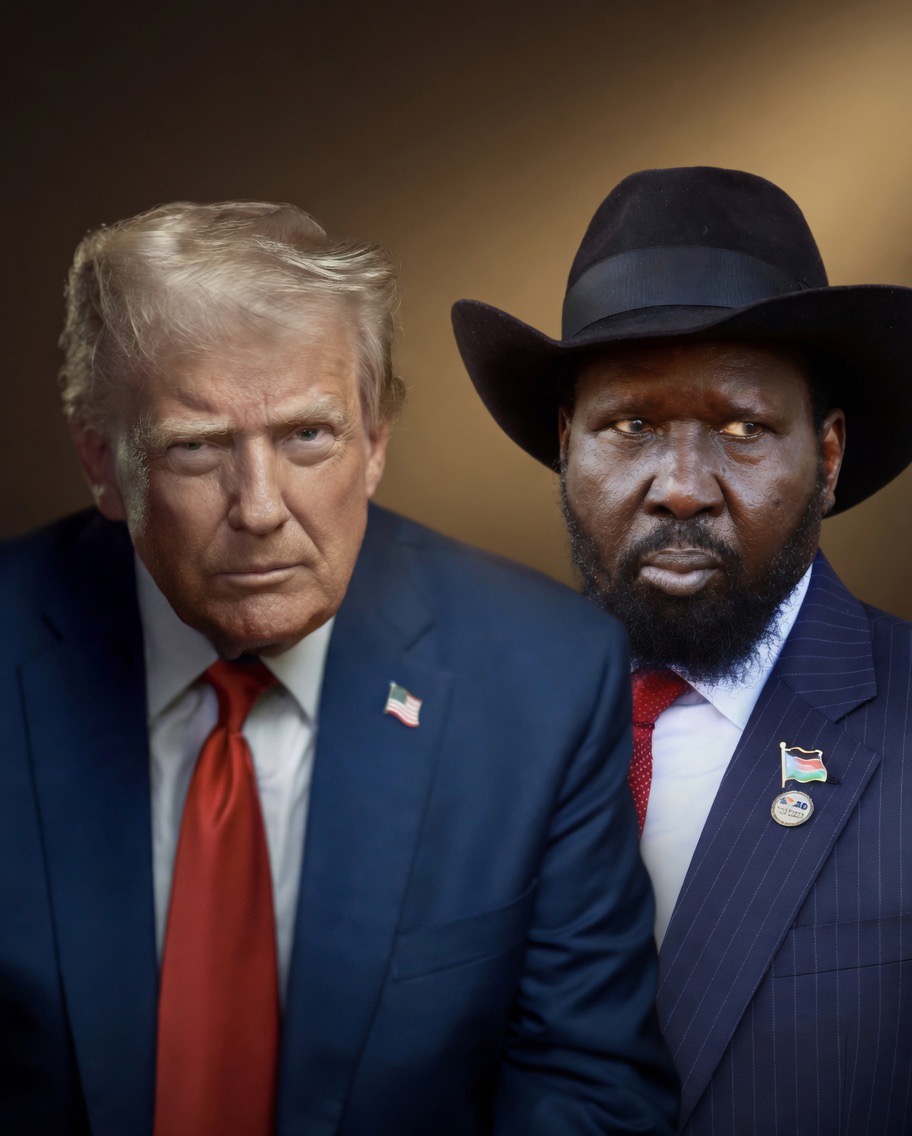
JUBA — When the United States Department of State announced sanctions against Crawford Capital Ltd. on May 12, 2026, the move sent shockwaves across Juba’s political establishment and prompted a defensive chorus from at least four government ministries and the national revenue authority. Within hours, officials who rarely agree on anything had found common cause: defend the company at all costs.
The spectacle was revealing not for what it said about Crawford Capital but for what it confirmed — that the firm’s tentacles had wound so deeply into South Sudan’s state apparatus that sanctioning it was tantamount to sanctioning the government itself. That is precisely the point. Crawford Capital Ltd. is not simply a corrupt company operating in a corrupt environment. It is the corruption, systemized and laundered through the language of digital transformation, presented to the world as a modernization initiative while stripping the country’s already catastrophic revenues bare.
The evidence assembled by the United Nations Commission on Human Rights in South Sudan, by Radio Tamazuj, by Eye Radio, and now confirmed by the United States government, paints a portrait of institutional plunder so brazen, so multi-layered, and so ruthlessly protected that it stands as one of Africa’s most documented cases of state capture in the digital age.
South Sudan ranked last — 192nd out of 192 countries on the United Nations Human Development Index. It ranked 180th out of 180 on Transparency International’s Corruption Perceptions Index. Despite receiving more than 25.2 billion dollars in oil-related inflows since independence in 2011, more than half the population faces acute food insecurity, the health system has functionally collapsed, and more than four million South Sudanese are either internally displaced or have fled as refugees to neighbouring countries. Crawford Capital did not create this catastrophe. But as the UN Commission bluntly concluded in its September 2025 report, Plundering a Nation: How Rampant Corruption Unleashed a Human Rights Crisis in South Sudan, it became one of its most efficient instruments.
THE BIRTH OF A DIGITAL RACKET
Crawford Capital Ltd. is registered in the United Kingdom, a corporate detail that has allowed it to drape itself in the veneer of respectable Western business practices while functioning as a private tax collection bureau for South Sudan’s ruling elite. Its operational arm, CapitalPay, controls the country’s e-Government service delivery infrastructure — the electronic portals through which businesses obtain trade permits, visas, crude oil accreditation certificates, tax payments, and a growing list of government services with mandatory online processing.
The architecture of the arrangement was set in November 2019, when Crawford was contracted as the exclusive provider of e-Government Services under an agreement with the Ministry of Information, Communication Technology and Postal Services, then headed by the powerful and long-serving Michael Makuei Lueth. The terms of that contract were not the result of open competitive bidding. There is no publicly available record of a tender process, despite requirements under South Sudan’s Public Procurement and Disposal of Assets Act of 2018. Instead, the UN Commission found that the procurement was endorsed by key ministries and, critically, by the National Security Service’s Internal Security Bureau, whose director general at the time, Akol Koor Kuc, personally wrote in support of the arrangement, proposing that Crawford should work in partnership with the intelligence service’s ICT department because the company was, in his assessment, aiming to create large databases and integrate online services. The intelligence service’s blessing on a commercial contract for a private fintech firm was not incidental. It was foundational.
Documents reviewed by the UN Commission reveal that Crawford itself proposed the Ministry of ICT should be the face of the project while the company remained in the background but retained its majority share of all revenues generated. This was not a service contract. It was a hostile takeover of state revenue collection, dressed in the clothes of e-governance.
“Crawford proposed the Ministry should be the face of the project, while the company remained in the background but still retaining majority shares.” — UN Commission on Human Rights in South Sudan, September 2025
Under the contract’s terms, Crawford was entitled to 75 percent of all revenues collected through its platforms. The government’s share the money meant to fund hospitals, schools, roads, and the basic machinery of a state was capped at 25 percent. This split was not limited to administrative fees. It applied to taxes, visa charges, trade permits, customs-related levies, and crude oil accreditation fees. Every South Sudanese pound that passed through Crawford’s digital gateway was, by contractual design, routed primarily to a private company registered in the United Kingdom.
The UN Commission described profit splits of this nature as unjustifiable and indicative of abuse of public office. The more apt description is highway robbery but with paperwork.
THE OWNERSHIP MAP: FOLLOW THE FAMILY CONNECTIONS
Crawford Capital Ltd. is majority owned by Garang Mayom Kuoc Malek, who holds 68 percent of the parent company and 61.2 percent of CapitalPay Ltd. He also owns 95 percent of Crawford Laboratory Ltd., a related entity. Garang Malek is the son of a former deputy minister and parliamentarian. He is not a technology entrepreneur who built something from nothing. He is a politically connected insider whose access to South Sudan’s government contracting machinery was, according to the UN Commission, a core reason the firm was able to secure a single-source government contract that should never have been awarded without open competition.
The second-largest shareholder is a Kenyan businessman, Jeremy Gisemba, who holds 26 percent of Crawford Capital Ltd. and 23.4 percent of CapitalPay Ltd. Ruey Majok Guandong, the son of South Sudan’s ambassador to Turkey, previously held 50 percent of Crawford Capital at the time of its incorporation, before the ownership structure was restructured in ways the Commission found difficult to fully trace.
But it is the company’s link to President Salva Kiir’s own family that transforms this story from a tale of ordinary elite capture into something far more disturbing. The UN Commission and multiple independent investigations have documented that Crawford Capital’s financial beneficiaries extend beyond its formal shareholders to include political elites and their close relatives. Garang Malek and Ruey Guandong previously formed another company together with Mayar Salva Kiir, the President’s son.
Most significantly, investigative reporting by Radio Tamazuj has established that Crawford Capital and CapitalPay are widely believed to be linked to Adut Salva Kiir Mayardit, the President’s daughter and Senior Presidential Envoy for Special Programs, whose photograph appears at the top of the network chart titled the Crawford/CapitalPay Looting Squad circulated by accountability researchers. The organogram shows Adut at the apex, with Garang Malek listed as CEO and Managing Director below her, and Ariech Mayar Wol listed as CFO and Chair of the Board of Crawford/CapitalPay. To the side, connections run to the National Communications Authority, headed by Brigadier General Rizik Dominic Samuel as Director General, with Biong Deng Biong listed as Director of Finance and Tejwok Simon Ajak as Chairperson of the Board.
“Both founders have deep political lineage, and Malek and Guandong have a history of forming companies with politically connected individuals.” — Radio Tamazuj investigation, March 2026
Radio Tamazuj’s investigation further noted that Crawford Capital is registered to dual South Sudanese-UK citizens, including Garang Mayom Malek, Deng Daniel, Ariech Wol Mayar, and Kurtis Lathanial Dinnall-Bateman — the last name conspicuously British, suggesting deliberate use of the UK corporate framework to provide a veneer of Western legitimacy to what is, at its operational core, a Juba-based patronage enterprise.
The company also registered Capital Pay Ltd. and Capital Pay Software Solutions Ltd. in the United Kingdom. All of these entities, according to investigative reporting, are used as business concerns to collect taxes on behalf of the South Sudan Revenue Authority and collect other monies from the public under the banner of e-Government Services.
THE NUMBERS: A REVENUE HEIST QUANTIFIED
The scale of the diversion documented by the UN Commission is staggering. Crawford began in 2020 by taking more than 75 percent of government visa fees collected through its new e-Visa portal. In 2021, it moved into e-Tax collections, receiving what the Commission described as a highly inflated proportion of taxes. In 2022, despite having demonstrably failed to deliver on a COVID-19 related project, Crawford was advanced 10 million dollars equal to 80 percent of the entire Ministry of Health’s spending for 2022 to 2023 ostensibly for Ebola preparedness.
In 2023, after then-ICT Minister Michael Makuei proposed a new fee for buyers of crude oil exports, Crawford collected a 0.3 percent levy from international oil traders seeking the mandatory Electronic Crude Oil Accreditation Permit. The UN Commission documented one specific transaction in September 2023 in which Crawford pocketed more than 1.1 million dollars from this arrangement while the Ministry of ICT received approximately 367,000 dollars a 75-25 split applied even to fees extracted from the global petroleum trade passing through South Sudan’s infrastructure.
In 2024, Crawford implemented a new fuel import levy on trucks entering the country, again proposed by Minister Makuei, again at the 75 percent profit share. This levy was extended, unlawfully, to tax-exempt humanitarian organizations UN agencies, international NGOs, and aid operations whose vehicles and logistics are protected from taxation under international legal frameworks. The result was not an administrative oversight. Crawford’s collection apparatus began imposing fees on the very trucks and organizations keeping South Sudanese alive.
The World Food Programme was forced to suspend critical food aid distributions. The UN Humanitarian Coordinator for South Sudan, speaking in April 2024 after the levy caused direct suspensions of food aid operations, described the situation plainly: it is vital that our limited funds are spent on saving lives and not bureaucratic impediments. The levy was eventually suspended in October 2024 following complaints from businesses and humanitarian agencies but not before the damage had been done, and not before Crawford had collected revenues from an operation that had no legal basis and no humanitarian justification.
The South Sudan Revenue Authority, which officially endorsed and enabled Crawford’s operations, has its own documented record of malfeasance. The Authority withholds a percentage of all collections for its operational expenses, a practice that was supposed to have ended by 2023 and was never supposed to exceed 2 percent. By 2024 to 2025, the Authority was withholding 14.5 percent. The UN Commission has on file evidence of irregular withdrawals from the Authority’s retention accounts as recently as January 2025.
NATIONAL SECURITY SERVICE AS SILENT ARCHITECT
The role of the National Security Service in Crawford’s story is perhaps the most alarming detail in the entire scandal, and the one that has received the least public scrutiny. It was not merely that security officials endorsed the contract in 2019. The UN Commission found that security service networks, including former officials from the NSS Internal Security Bureau, allegedly facilitated access to sensitive government databases and revenue systems to enable Crawford’s operations.
Akol Koor Kuc’s written endorsement proposed that Crawford work in partnership with the ISB ICT Department, citing the company’s ambition to build integrated online databases. The Commission found that the nature of the intelligence service’s involvement in the single-source procurement suggests that the e-Services infrastructure Crawford controls is likely being used without any consideration for personal data protection. In other words, the company that processes South Sudanese citizens’ visa applications, tax filings, and business permit data may be sharing that data or at minimum, integrating it with South Sudan’s domestic intelligence apparatus.
This is not an allegation that Crawford is a surveillance tool. It is a documented concern raised by one of the UN’s most authoritative human rights monitoring bodies, arising directly from written communications between intelligence officials and company executives that the Commission reviewed. The implication is grave: a private, politically connected company registered in the UK has been given not merely access to government revenue streams but potentially access to population-level data flows, with the blessing of the country’s spy chief.
THE MARCH 2026 SUSPENSION: WHEN A MINISTER TRIED TO FIGHT BACK
On March 5, 2026, Trade and Industry Minister Atong Kuol Manyang Juuk did something almost no senior South Sudanese official had done in the preceding seven years: she tried to hold Crawford Capital accountable. She issued a directive ordering a 90-day administrative and technical review of the Crawford Capital Pay Digital Payment and E-Service System, citing unreliable electricity, weak internet connectivity, poor staff training, and serious disruptions to trade licensing, permits, and daily commercial operations.
The reaction was immediate and overwhelming. Parliamentary committee chairperson Mayen Deng Alier wrote to the minister urging her to immediately reconsider the decision, invoking a presidential order requiring the use of the Revenue Authority’s e-Government system. Members of Parliament accused her of undermining revenue collection and disrupting government systems. Then came the decisive blow.
Vice President James Wani Igga, who chairs the Economic Cluster, wrote to the minister on March 6 informing her that the Crawford Capital engagement had been approved by the full Council of Ministers under Resolution No. 34/2024, presided over by the President himself, and that her directive therefore violated administrative order and could not stand. Igga warned that interfering with Crawford’s operations would create revenue disruptions with consequences too severe to contemplate.
By March 13, Minister Atong had reversed her directive. She informed her Undersecretary of the reversal, citing the Vice President’s advice, while pointedly maintaining that her underlying concerns about the system’s reliability and transparency remained valid. The episode lasted eight days. It achieved nothing, and it confirmed everything: that Crawford Capital operates under the direct protection of South Sudan’s highest political authority, that no single minister possesses the power to challenge it, and that even good-faith accountability attempts within the system are structurally impossible.
“The engagement of Crawford Capital was not a unilateral decision, but the result of extensive deliberations by the Economic Cluster, which culminated in a formal Resolution No. 34/2024 of the Council of Ministers, presided over by H.E. the President.” — Vice President James Wani Igga, March 6, 2026
US SANCTIONS AND THE GOVERNMENT’S DEFIANT RESPONSE
Secretary of State Marco Rubio’s May 12, 2026 sanctions statement against Crawford Capital Ltd. placed the company in the same category as entities that have siphoned money from South Sudan’s treasury and stolen foreign assistance funds intended to support the South Sudanese people. Washington simultaneously announced visa restrictions against members of the transitional government, accusing them of impeding implementation of the 2018 Revitalized Agreement on the Resolution of the Conflict in South Sudan, warning that the country stood on the brink of a return to all-out war. The sanctions further noted that South Sudan People’s Defense Forces under President Kiir’s command had launched a military offensive in northern Jonglei State that displaced 300,000 people and created the conditions for a potential famine.
The government’s response was unified and defiant. The Ministry of ICT, now led by Ateny Wek Ateny, issued statements framing Crawford as a legitimate digital transformation partner operating under Council of Ministers resolutions and government-approved reform priorities. The South Sudan Revenue Authority published a statement celebrating the platform’s role in raising monthly non-oil revenue collections to more than 130 billion South Sudanese pounds, with nearly one trillion pounds collected in eight months. The Authority insisted all engagements with Crawford were conducted lawfully and transparently.
Neither the Ministry nor the Authority acknowledged the 75-25 revenue split. Neither addressed the humanitarian levies. Neither commented on the UN Commission’s finding that revenues were being held in Crawford’s own private bank accounts rather than channeled through the national treasury. The defiance was itself a form of confession these officials knew exactly what the arrangement entailed and had decided that defending it was preferable to explaining it.
THE BROADER PLUNDER: WHAT CRAWFORD FITS INTO
To understand Crawford Capital is to understand South Sudan’s broader political economy of extraction. The UN Commission’s September 2025 report documents multiple parallel looting mechanisms operating simultaneously, of which Crawford represents the non-oil revenue strand.
The Oil for Roads programme, which received at least 2.2 billion dollars in government oil revenue between 2021 and 2024, is documented as South Sudan’s single largest corruption scheme. The construction companies linked to it, connected to Benjamin Bol Mel appointed as a Vice President of South Sudan in February 2025 built roads that cost twice the regional industry standard per kilometre, contracted lengths that overstated actual distances by 38 percent, built two-lane roads where four lanes were specified, and left most of the funds unaccounted for. Bol Mel-affiliated companies received between 1.5 billion and 1.7 billion dollars with no reasonable explanation given for the amounts.
The parallel exchange rate gap, reintroduced in late 2024, allowed elites with access to both official and market rates to arbitrage donor funding, with humanitarian organizations required to use the official rate losing up to 64.5 cents of every dollar they spent in South Sudanese pounds. At the gap’s peak in July 2024, one million dollars of donor aid money had the purchasing power of just 355,000 dollars after the conversion loss.
Monetary financing, the printing of currency through central bank overdrafts, generated 668 million dollars in inflationary financing in fiscal year 2022 to 2023 and 495 million dollars in 2023 to 2024, directly destroying the purchasing power of ordinary South Sudanese, driving food prices beyond the reach of millions, and contributing to the acute food insecurity affecting 7.7 million people more than half the country’s population documented in 2025.
During the four fiscal years from 2020 to 2024, less than 48 percent of total revenues and oil entitlements reached the regular national government budget for core services. The Ministry of Presidential Affairs spent 19 times more than the Ministry of Health. The entire health sector received less than 0.9 percent of the regular national budget across those four years. The Ministry of General Education received an average of 2.3 percent of total budget spending, in flagrant violation of the Education Act’s 10 percent requirement. The Government spent 2.57 dollars per school-age child on education in 2023 to 2024. Funding to the judiciary in fiscal year 2023 to 2024 fell below 0.1 percent of the regular national budget.
COUNTING THE DEAD AND THE HUNGRY
These are not abstract fiscal anomalies. They have faces and body counts. South Sudan has among the lowest life expectancy figures on earth. Women and girls face a higher risk of dying in pregnancy and childbirth there than almost anywhere else on the planet. In a country convulsed by conflict and sexual violence, giving birth has become one of the most dangerous things a woman can do. Most women cannot access trained health workers, and those who are available frequently lack medicines, reliable electricity, and basic surgical supplies. The photographed image of dogs sleeping on surgery beds at the abandoned Malakal Teaching Hospital, damaged in conflict and still unrehabilitated years after the 2018 peace agreement, is not a shocking anomaly — it is a representative snapshot of the healthcare system’s reality.
Two point three million children are acutely malnourished in South Sudan. The Ministry of Agriculture and the Ministry of Livestock and Fisheries together received less than 0.4 percent of total national spending from 2020 to 2024, despite South Sudan possessing fertile land and rich fisheries. The Ministry of Humanitarian Affairs and Disaster Management, the government body nominally responsible for addressing the hunger crisis, received across four budgets less than half the value of a single oil cargo. These are not funding shortfalls caused by poverty. South Sudan has received 25.2 billion dollars in oil-related inflows since 2011. The government simply chose to direct that money elsewhere.
The donors who have filled the gap have provided more than 27.5 billion dollars in official development assistance since independence — more than the government’s own spending on its people. And even this international support is declining as humanitarian needs continue to climb. The more South Sudan’s elites steal, the more dependent its population becomes on charity from abroad, and the less accountable the government is to those it governs. Crawford Capital’s revenue diversion is not a footnote to this story. It is a chapter in the active destruction of the state’s capacity to serve its own people.
“This is not mere mismanagement. It is a political economy of greed that has unleashed a human rights crisis.” — UN Commission on Human Rights in South Sudan
UK REGISTRATION: A CORPORATE SHIELD WITH REAL CONSEQUENCES
Crawford Capital’s UK registration is not an administrative detail. It is a deliberate strategic choice with real implications for accountability. Companies registered at Companies House in the United Kingdom are subject to British corporate law, including requirements for filing annual accounts and disclosure of persons with significant control. They can be investigated by the UK’s National Crime Agency and the Serious Fraud Office. They can, in theory, be sanctioned or de-registered.
The UK has previously sanctioned Michael Makuei Lueth the very minister who presided over Crawford’s 2019 contract — for obstructing the political process in South Sudan and impeding implementation of the peace agreement. Yet Crawford Capital’s UK entities Crawford Capital Ltd., Capital Pay Ltd., and Capital Pay Software Solutions Ltd. have faced no equivalent scrutiny from British regulators, despite the company’s principals and their connections to sanctioned individuals being a matter of documented public record. The UK government’s failure to investigate or act on the Crawford Capital network, despite abundant evidence in UN reports and investigative journalism, represents a significant gap in the West’s stated commitment to combating illicit financial flows from fragile states.
CRAWFORD’S DEFENDERS AND WHAT THEIR DEFENCE REVEALS
The South Sudan Revenue Authority’s defence of Crawford deserves particular attention. The Authority cited nearly one trillion South Sudanese pounds collected in eight months as evidence that the system works. It did not mention that the South Sudanese pound has been systematically destroyed by monetary financing, that the parallel exchange rate gap has rendered revenue figures in pounds effectively meaningless for comparative purposes, that the Authority itself has been withholding 14.5 percent of collections in excess of its legal mandate, or that the UN Commission has documented irregular withdrawals from its accounts.
Michael Makuei Lueth, who as ICT Minister designed and blessed the Crawford arrangement from 2019 onward and who as Government Spokesperson called the UN’s damning 2025 report unsubstantiated and lacking evidence, has since been reshuffled to become Minister of Justice and Constitutional Affairs — the very ministry responsible for the rule of law in a country whose laws Crawford Capital has been systematically violating. The appointment is a statement of impunity as government policy.
Vice President Igga’s March 2026 intervention, invoking the President’s personal authority to protect the Crawford contract, confirmed what accountability advocates have long argued: the company is not merely tolerated at the highest levels of government. It is protected by them. The question of whether Crawford Capital is owned by, controlled by, or simply politically operated on behalf of the Kiir family is, in practical terms, immaterial. The outcome is identical.
WHAT ACCOUNTABILITY WOULD REQUIRE
The US sanctions are a start and not an end. Sanctions without supporting action from South Sudan’s international partners, from the UK government, from regional bodies, and from the financial institutions that process Crawford’s revenues are insufficient to dislodge a company this deeply embedded in state architecture. The UN Commission has issued 54 detailed recommendations to South Sudan’s government covering budget reorientation, single-treasury accounts, cancellation of illicit contracts, and genuine accountability for corruption.
Dismantling Crawford Capital’s grip would require cancelling the 2019 contract, subjecting all revenues collected through its platforms to immediate national treasury oversight, commissioning a full and independent audit of every transaction since 2019, prosecuting those who designed and enabled the arrangement, and compensating humanitarian agencies for unlawfully imposed levies. It would also require the UK government to investigate the company’s UK-registered entities, freeze assets where evidence of criminal conduct exists, and revoke corporate registrations where the companies were used as vehicles for state theft.
None of this will happen without political will. And political will, in South Sudan, has so far proved impossible to generate from within a system that has profited so comprehensively from its absence.
CONCLUSION: DIGITIZATION AS A NEW FORM OF COLONIALISM
The audacity of Crawford Capital’s operation lies not merely in its scale but in its framing. The company was sold to the South Sudanese public, to international observers, and to donors as a modernization project. E-Government. Digital transformation. Efficiency and transparency. The vocabulary of the twenty-first-century development agenda was deployed with precision to conceal what was, in practice, the privatization of a failed state’s last remaining revenue streams on behalf of the ruling family and its inner circle.
The UN Commission called it what it is: a new corruption mechanism in which digitization replaced earlier looting methods without reducing the looting. South Sudan’s oil revenues were stolen through the Oil for Roads scheme, through off-budget patronage, through pre-sold crude cargoes, and through transfers to Sudan that the government cannot fully account for. When the pipeline to oil revenue narrowed following the February 2024 pipeline damage through Sudan, the non-oil revenue streams became more important, and Crawford Capital’s hold on those streams became more consequential.
It is worth sitting with that reality. While 7.7 million South Sudanese faced acute food insecurity, while children died from preventable diseases in hospitals without medicine, while women died in childbirth in facilities without electricity, a company registered in London was legally entitled to take 75 percent of every dollar, pound, and South Sudanese currency unit that the government attempted to collect from its own people. And when a minister tried to stop it, the President’s office intervened to keep it running.
The people of South Sudan are not poor because they lack resources. They are poor because their resources are being stolen, systematically and with institutional precision, by people with the power to make stealing legal and the audacity to call it governance. Crawford Capital is the most technically sophisticated expression of that theft the country has yet produced. And the United States has named it. Now the world must act.
Kenya Insights allows guest blogging, if you want to be published on Kenya’s most authoritative and accurate blog, have an expose, news TIPS, story angles, human interest stories, drop us an email on [email protected] or via Telegram


Trump To Set Up Quarantine Facility In Kenya For Americans Exposed to Ebola

Crawford Capital: The Corrupt, US-Sanctioned, UK-Registered Digital Firm That Milked South Sudan Dry

The Invisible Hand: Al Jazeera Further Exposes How Safaricom Became The Regime’s Most Powerful Spy

ODM Abandons Linda Ground Rallies

Why Mary Wambui’s Move To Delete Sh2.2 Billion Tax Evasion Articles Is Morally Untenable — And A Closer Look Into The Controversial Withdrawal

US Hits Iranian Missile Sites Despite Ceasefire

‘Puzzle Over Mysterious Chinese Woman ‘Chimu Electric’ With Questionable Documents Bagging Multibillion On State Tenders

LifeCare on the Brink: SHA Fraud, Stolen Wages, and the Rotten Empire Jayesh Saini Built

Senegal’s Parliament Speaker Quits Two Days After Prime Minister Is Sacked

Inside FAFSA Fraud: How Kenyan Cybercriminals Siphoned Millions from America’s Sh12 Billion Student Loan System

How Did a Sh468K KRA Salary Allegedly Turn Into Sh30 Billion? Questions Deepen Over Commissioner George Obel and Ciala Resort Owner’s Wealth

Why Ruto’s Favourite Candidate Adan Mohammed Could Be Locked Out of the KRA Top Job

Green Gold, Rotten Roots: How Kenya’s Biggest Avocado Firms Hijacked a Sh5.8 Billion Harvest Ban

Safaricom’s Sh1.4 Billion Reckoning: How Kenya’s Most Profitable Company Stole a Man’s Idea and Got Caught

The $24 Million Heist at the End of the World

The Rot Inside Absa: How Bank Insiders Are Looting Nairobi’s Customers

Denial Under Duress: The Untold Collapse Threatening David Lagat’s DL Group’s Empire

THE INSURER THAT TOOK YOUR PREMIUM AND FORGOT YOUR NAME: How ICEA Lion Left a Client Begging for Sh7.8 Million Across Four Months

The President’s Helicopter: How Ruto’s Aviation Empire Lands a Historic Airbus Milestone While His Government Writes the Tax Code

Bush Air Safaris Founder John Ndiritu Risks Losing Property Over Disputed Loan Claim
-
 News1 week ago
Why Ruto’s Favourite Candidate Adan Mohammed Could Be Locked Out of the KRA Top Job
-
 Business2 weeks ago
The Rot Inside Absa: How Bank Insiders Are Looting Nairobi’s Customers
-
 Business2 weeks ago
The President’s Helicopter: How Ruto’s Aviation Empire Lands a Historic Airbus Milestone While His Government Writes the Tax Code
-
 Business1 week ago
Court Confirms Safaricom Customers Data Was Sold To Betting Companies In Seven-Year Cover-Up
-
 News2 days ago
DENTIST IN DISGUISE: How Este Medical Kenya’s Co-Founder Allegedly Prescribed Medicines Outside Her Scope, Lied to Police, and Weaponised the Law Against a Foreign Patient
-
 Arts & Culture2 weeks ago
“TikTok Who? YouTube Sorry. A Kenyan-Built Platform Just Dropped—and 20 African Ministers Showed Up To Launch It.”
-
 Business1 week ago
Blocked: How Mombasa Tycoon Ashok Doshi Has Stopped Imperial Bank Depositors From Getting Their Money
-
 Investigations1 day ago
LifeCare on the Brink: SHA Fraud, Stolen Wages, and the Rotten Empire Jayesh Saini Built