
Business
MONEY BAGS: How ODM Spent Sh40 Million on 3,000 Delegates in Nairobi’s NDC
The money, according to party officials, was drawn from ODM’s accounts and disbursed through a structured system, with delegates receiving transport and sitting allowances via mobile money from a third-party firm.

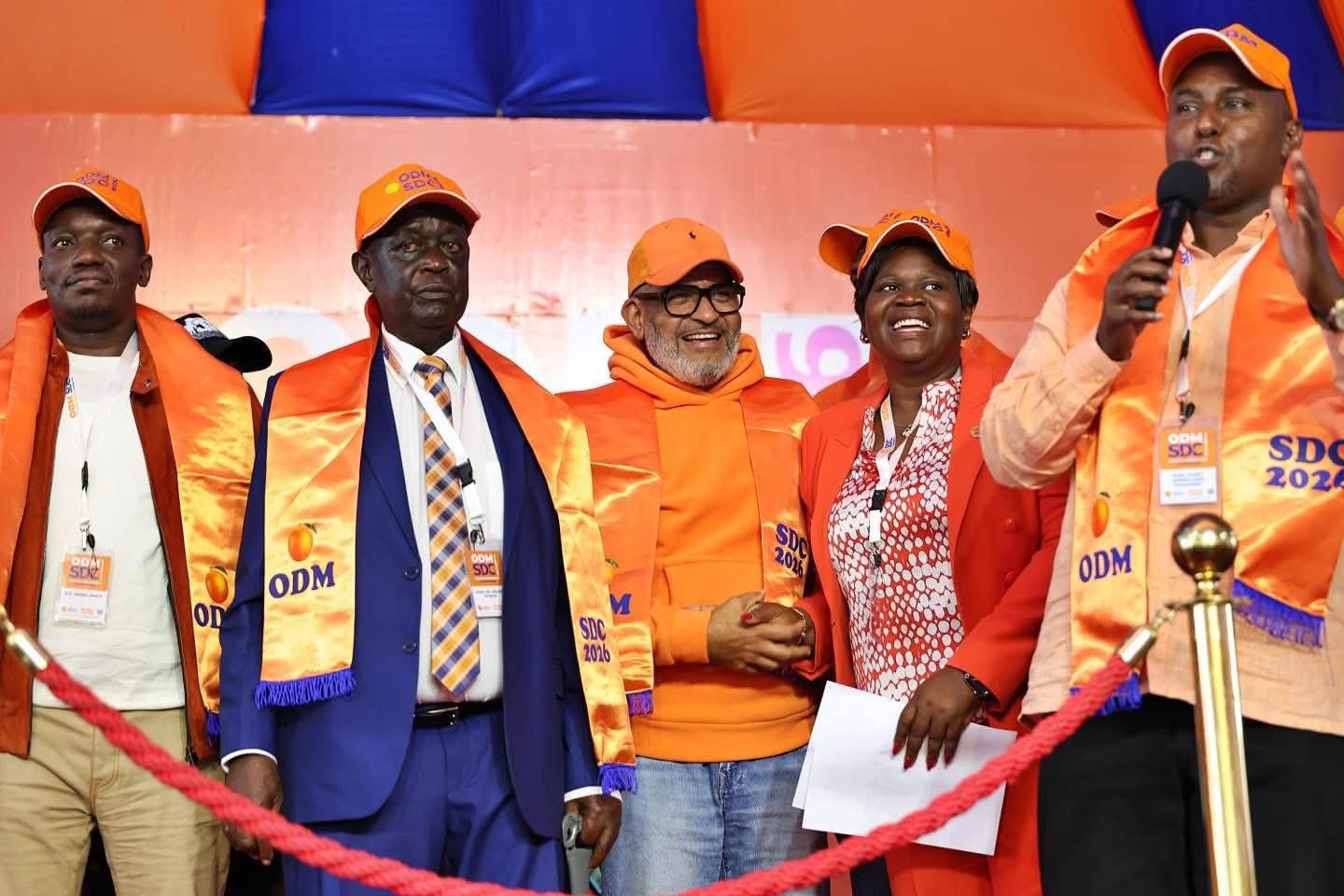
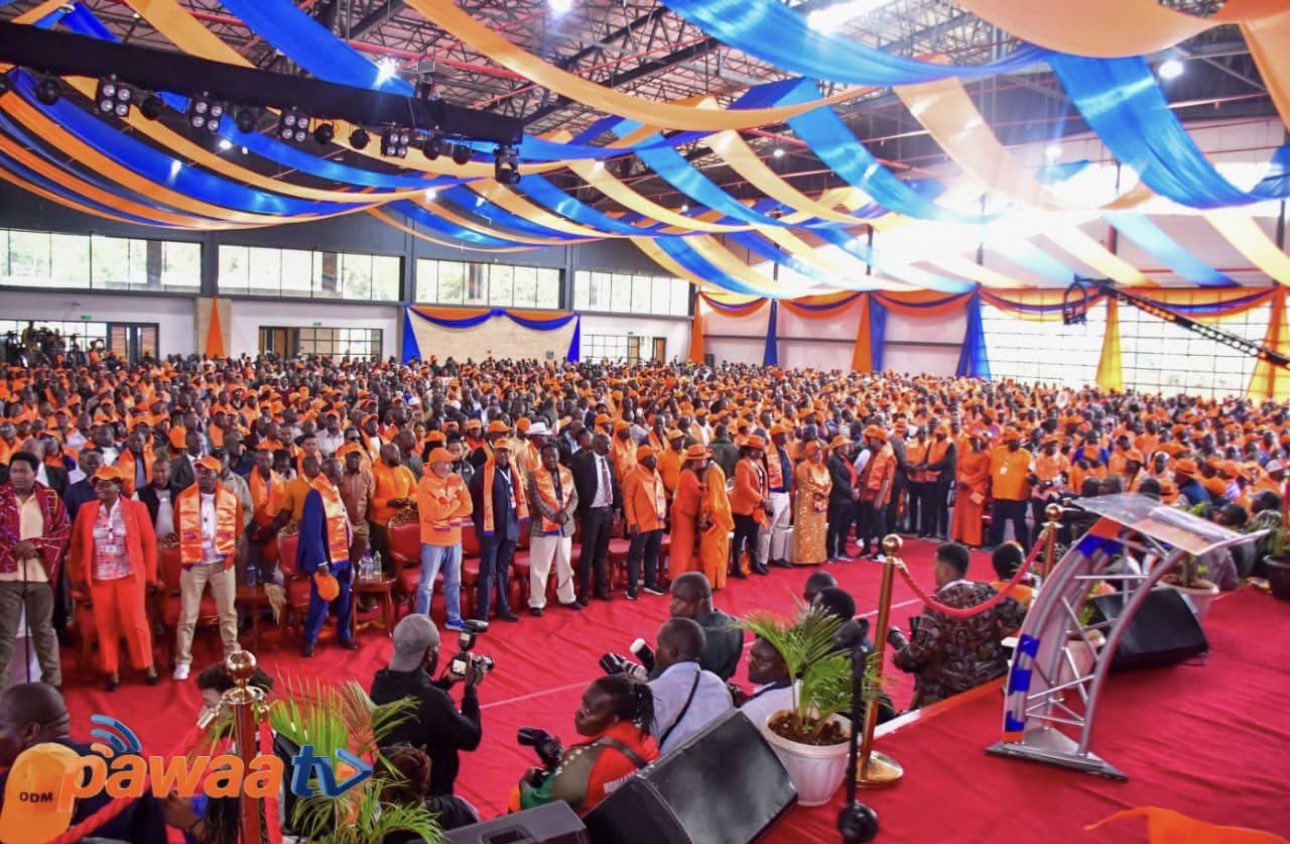
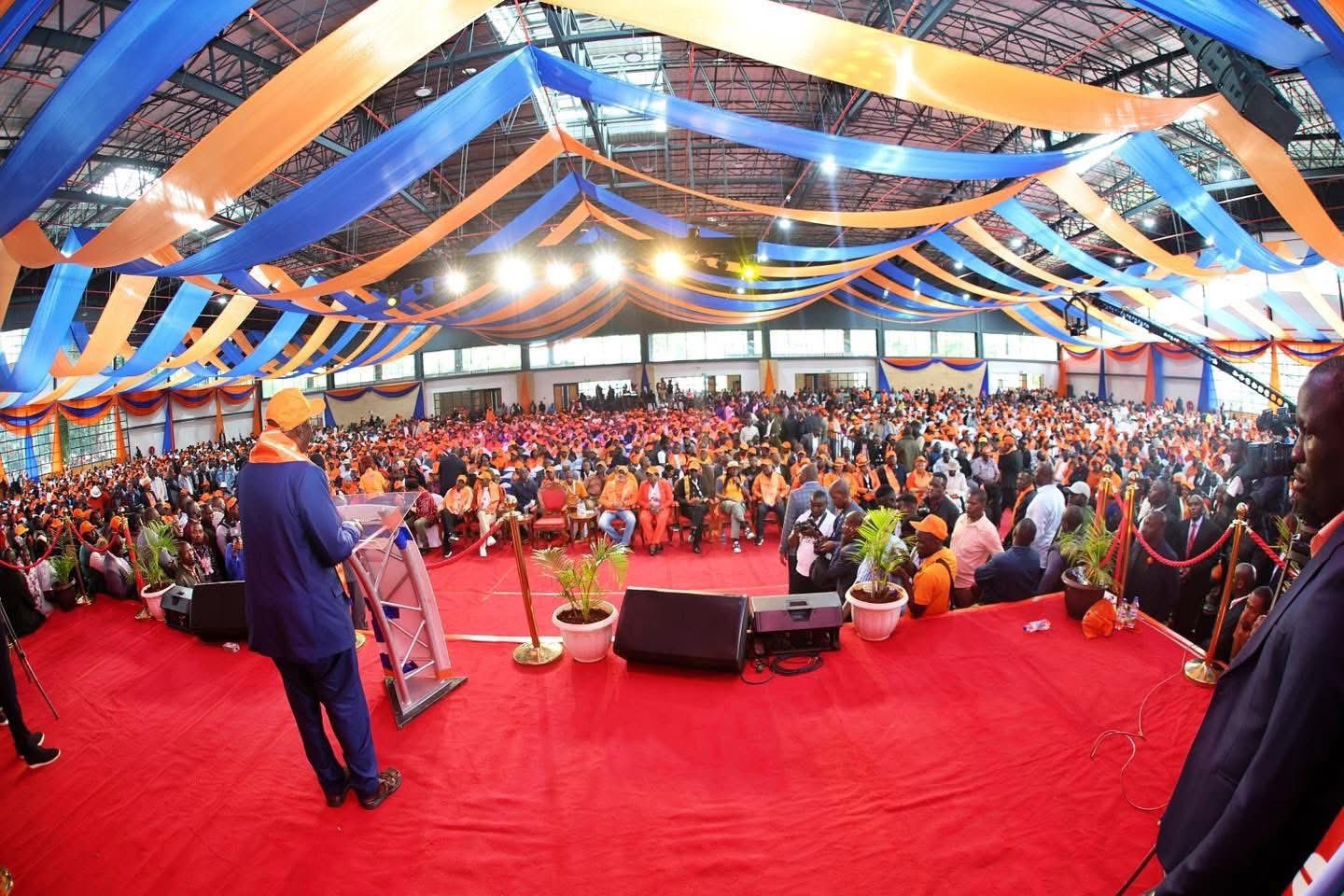
The Orange Democratic Movement has never been accused of doing things quietly. But the scale of extravagance at its Special National Delegates Convention at the ASK Jamhuri Grounds last Friday made even hardened political observers raise an eyebrow. A party currently locked in a bitter and public feud over money, legitimacy and leadership reportedly spent at least Sh40 million in a single day to put on the most ostentatious show of political force seen in Nairobi since the last general election.
Three thousand delegates. Branded merchandise. Chartered buses. Catered meals served in shifts. Mobile money disbursements handled by a contracted firm. Security so tight that journalists were shepherded in and out of the venue on party buses. It was not a political convention so much as a carefully produced political spectacle, and every shilling of it was designed to send one message: ODM is still here, still powerful and, above all, still very much open for business.
“The entire process is estimated to cost about Sh40 million,” a senior party official on the organising committee told The Star, speaking in confidence. “Posters, merchandise, food, transport, accommodation, everything that has gone into making the event a success is around that figure.”
The money, according to party officials, was drawn from ODM’s accounts and disbursed through a structured system, with delegates receiving transport and sitting allowances via mobile money from a third-party firm. Delegates from within Nairobi collected approximately Sh5,000 each, while those making the journey from far-flung regions pocketed upwards of Sh20,000. Delegates from Kisumu, a four-hour drive away, received Sh9,000 per head. Across 3,000 delegates, that delegate facilitation alone runs into the tens of millions before a single crate of water is factored in.
Nairobi County branch chairman George Aladwa confirmed that capital-based delegates received their dues without incident, a rare and notable achievement at large-scale political gatherings, where delayed payments have historically sparked chaos and stampedes. That the money flowed on time, through a single contracted firm, points to a level of financial management that ODM has not always been able to demonstrate. It also raises pointed questions about where, exactly, the money came from.
The question of funding has become the most combustible issue in ODM’s savage internal war. Secretary General Edwin Sifuna, now removed from his position by a NEC resolution but still fighting through the courts, has repeatedly alleged that the Linda Ground faction’s rallies and gatherings have been bankrolled by “outsiders,” with some in his camp pointing directly at State House. Sifuna claimed in February that he, as a signatory to ODM’s accounts alongside National Treasurer Timothy Bosire, had not authorised any withdrawal sufficient to fund the string of Linda Ground rallies held across Kisumu, Kakamega, Busia and Kisii. “The money you see being spent in ODM rallies is not coming from ODM headquarters,” he said at the time. “There is parallel funding for activities clothed in ODM colours.”
The allegations stung. ODM National Chairperson and Homa Bay Governor Gladys Wanga moved swiftly to douse the flames. She explained that the national treasurer’s signature is the only mandatory one required to release party funds and that six other signatories can co-authorise expenditure. “There is political party funding in this country, and ODM is entitled to the second largest share. We have money as a party,” she said. Oburu Oginga, now the ratified party leader following the death of his brother Raila Odinga in October 2025, denied that State House had any hand in ODM’s activities.
But the questions have not gone away. The Political Parties Fund, administered by the National Treasury, is at the centre of a long-running legal dispute between ODM and the government. ODM claims it is owed Sh12.6 billion in accumulated, unpaid statutory party funding. That dispute has escalated to the point where the party’s Central Committee resolved last year to pursue execution proceedings against the Treasury. Yet on Friday, Sh40 million appeared to flow with seamless efficiency.
“We haven’t received about Sh12 billion from the exchequer, but we get our quarterly shares, so we were able to fund the programme,” a senior official involved in organising Friday’s convention told The Star. The quarterly disbursements, officials insist, are sufficient to bankroll a convention of this magnitude. Independent analysts are less certain. Sh40 million is a substantial sum for a party that simultaneously claims financial persecution at the hands of the Treasury and faces the additional complication of a sitting secretary general who refuses to recognise the legitimacy of the NDC that authorised the expenditure.
The convention itself unfolded against the backdrop of the most serious internal rupture in ODM’s 20-year history. While Oburu and his Linda Ground faction occupied the ASK Dome at Jamhuri Grounds, Sifuna led a parallel “People’s Convention” eight kilometres away at Ufungamano House, forcing his way through a police blockade with allies including Siaya Governor James Orengo, Vihiga Senator Godfrey Osotsi and Embakasi East MP Babu Owino. Anti-riot police had sealed off Ufungamano House early in the morning, turning away delegates and journalists before Sifuna’s contingent breached the cordon. The symbolism was hard to miss: two events, one party, and a police force whose deployment favoured one side over the other.
Sifuna’s faction dismissed the Jamhuri convention as constitutionally illegitimate. He argued that only the secretary general, under the ODM constitution, can legally convene a National Delegates Conference and that the 21-day notice issued by his rival Catherine Omanyo, whom he does not recognise as acting secretary general, was therefore void. “Convention bandia,” was his verdict. His allies were more blunt. “Who said Oburu should be ODM’s party leader? Did you elect him?” Sifuna demanded, in a remark that landed heavily given that Oburu was installed, in Sifuna’s telling, even before Raila’s body had arrived back in Kenya from India.
The Political Parties Disputes Tribunal declined to stop the convention. In its ruling on March 26, the tribunal struck out Sifuna’s petition on the procedural ground that he had not exhausted ODM’s internal dispute resolution mechanisms before approaching the tribunal. The ruling cleared the runway for Jamhuri. It did not resolve the underlying constitutional questions, which remain live and may yet find their way back to a higher forum.
At Jamhuri, in the meantime, the theatre was spectacular. The convention ratified Oburu Oginga as substantive party leader, installed Kisii Governor Simba Arati and Mombasa Governor Abdulswamad Nassir as deputy party leaders, and removed Osotsi from his position as deputy leader. The delegates also ratified a National Executive Committee resolution under Article 87 of the ODM constitution, formally authorising the party to open coalition talks with President William Ruto’s United Democratic Alliance, a decision that represents ODM’s most dramatic strategic pivot since its founding.
Junet Mohamed, the Suna East MP and Minority Leader in the National Assembly, struck a combative tone that drew roars from the crowd. “Anyone in this country who wants to negotiate with ODM, we will not negotiate on our parliamentary strength,” he declared, hinting heavily at a zoning arrangement for the 2027 elections. “Anywhere we have an MCA, MP, Senator, Governor, Woman Rep, it will remain with ODM. Don’t joke with ODM because if they are angered, they can cause problems.” The implicit threat was aimed at UDA, but it was loud enough to reach Sifuna at Ufungamano as well.
Winnie Odinga, daughter of the late Raila and until recently an ally of Sifuna’s faction, chose to appear at Jamhuri, delivering a carefully worded speech that congratulated Oburu while pressing for youth inclusion and a more open party culture. Her presence was read as a significant political signal, a cautious swing toward the mainstream Oburu structure even as she continued to advocate for reforms from within. “When we talk about the new ODM, we want a party that opens doors, not closes them,” she said. Oburu responded with a conciliatory promise not to expel rebels, though he stopped well short of inviting Sifuna back to the table.
Wanga, ratified as national chairperson, described the event as “inspiring, engaging, productive and historic,” a characterisation that her rivals at Ufungamano would contest every word of. The party’s organisational prowess on the day was genuine and, for ODM’s purposes, politically valuable. The buses ran on time. The mobile money transferred without drama. The delegates ate. The leadership was installed. The coalition mandate was secured. The event was, by any operational measure, a success.
The harder test comes next. ODM now enters coalition talks with UDA carrying a fractured internal structure, a disputed secretary general, a Sh12.6 billion funding grievance against the government it is proposing to partner with, and questions about the provenance of the very money it spent to get here. Forty million shillings can buy a spectacular day. What it cannot buy, as ODM is about to discover, is a united party.
Kenya Insights allows guest blogging, if you want to be published on Kenya’s most authoritative and accurate blog, have an expose, news TIPS, story angles, human interest stories, drop us an email on [email protected] or via Telegram


Google Must Let UK Publishers Opt Out Of AI Search Under New Rules

Maraga’s 2027 Bid Hit by Explosive Sexual Harassment Claims as Former Insider Alleges Cover-Up and Victim Intimidation

Tanzanian President Visits Russia

Why PayPal Is Freezing Kenyan Accounts in Massive Crackdown

Inside Bharat Thakrar’s Plot for a Hostile Scangroup Takeover

The Man Who Keeps Coming Back: How a Corrupt History and a Missing Masters Degree Could Finally Lock Wamukota Out of the KETRACO Corner Office

Yet Another Blow for Bia Tosha as Court Rejects Bid to Halt Diageo–Asahi Transaction

US to Slash Number of African Embassies Processing Visas from 50 to 20, Kenya Remains a Key Hub

Trump Picks Veteran Crisis Diplomat Henry Wooster as New U.S. Ambassador to Kenya

Former Catholic Priest Arrested Over Alleged Treasonous Social Media Posts

Why Ruto’s Favourite Candidate Adan Mohammed Could Be Locked Out of the KRA Top Job

Este Medical Kenya Fights American’s Explosive Complaints

Safaricom’s Sh1.4 Billion Reckoning: How Kenya’s Most Profitable Company Stole a Man’s Idea and Got Caught

LifeCare on the Brink: SHA Fraud, Stolen Wages, and the Rotten Empire Jayesh Saini Built

The Rot Inside Absa: How Bank Insiders Are Looting Nairobi’s Customers

The $24 Million Heist at the End of the World

Denial Under Duress: The Untold Collapse Threatening David Lagat’s DL Group’s Empire

THE INSURER THAT TOOK YOUR PREMIUM AND FORGOT YOUR NAME: How ICEA Lion Left a Client Begging for Sh7.8 Million Across Four Months

Court Confirms Safaricom Customers Data Was Sold To Betting Companies In Seven-Year Cover-Up

Inside FAFSA Fraud: How Kenyan Cybercriminals Siphoned Millions from America’s Sh12 Billion Student Loan System
-
 News1 week ago
Este Medical Kenya Fights American’s Explosive Complaints
-
 Investigations1 week ago
LifeCare on the Brink: SHA Fraud, Stolen Wages, and the Rotten Empire Jayesh Saini Built
-
 Americas1 week ago
Inside FAFSA Fraud: How Kenyan Cybercriminals Siphoned Millions from America’s Sh12 Billion Student Loan System
-

 News5 days ago
Eight Students Arrested In Kenya After Suspected Deadly School Arson Attack
-
 Business1 day ago
THE GREAT HOLLOWING: How James Mworia Extracted KES 750 Million While 33,000 Centum Shareholders Lost Everything
-
 Investigations1 week ago
LSK On The Spot For Renewing Rogue Lawyer Dennis Onyango’s Licence Despite Mounting Evidence He Held Foreign Investors’ Millions Hostage
-

 Investigations2 days ago
Betika Faces DCI Probe, Directors Arrest and License Revocation Over Massive 29.5 Million Safaricom Customers’ Data Breach
-
 News3 days ago
How Uhuru’s Deal With Obama In 2015 Paved Way For America’s Ebola Plan In Kenya