
Business
Pride of Africa, Prisoner of Debt: Kenya Airways Burns Through Its Miracle Year and Falls Back into the Red
A single year of profit in over a decade has been wiped away. A Sh17.2 billion net loss for 2025, a grounded fleet and a leadership vacuum cast a long shadow over the national carrier’s much-heralded turnaround. Now, a war in the Middle East may be its most improbable lifeline yet.

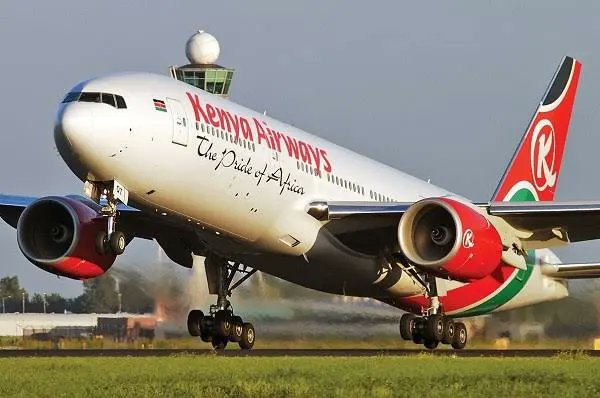
Kenya Airways has long been a repository of broken promises. Since the carrier last sustained a full year of profit in 2012, it has accumulated more than Sh172 billion in net losses, absorbed successive government bailouts drawn from taxpayer funds, cycled through chief executives, and lurched between restructuring plans bearing the kind of names that inspire confidence at board level but rarely at the bottom line. Kifaru. Project Kifaru.
The Pride of Africa. Each iteration repackages the same painful truth: that the national carrier remains one of the most financially distressed airlines on the continent, propped up by state patronage and perpetually one crisis away from catastrophe.
The audited group results for the year ended December 31, 2025, published this Tuesday morning, confirm what investors and aviation analysts had quietly accepted since August last year: the one glimmer of profitability that made Kenya Airways the brief darling of Nairobi Securities Exchange watchers is gone.
The airline recorded a net loss of Sh17.2 billion in 2025, a savage reversal from the Sh5.4 billion profit posted in 2024 that management had trumpeted as the carrier’s first net profit in over eleven years. Total income collapsed from Sh188.5 billion to Sh161.47 billion.
The airline’s operating loss stood at Sh5.61 billion, against an operating profit of Sh16.62 billion the previous year.
Finance costs alone consumed Sh12.4 billion, dwarfing the paltry Sh79 million in interest income and producing a loss before tax of Sh17.93 billion. After a tax credit of Sh764 million, the net loss attributable to shareholders was Sh17.13 billion. Total comprehensive loss for the year reached Sh13.81 billion.
It is a set of numbers that should horrify any board of directors. And yet, against the backdrop of what Kenya Airways has endured across the past decade and a half, it lands with a peculiar, wearying familiarity.
A Decade of Ruin, a Flicker of Light
The story of Kenya Airways’ financial decline is by now a well-worn narrative in Kenyan business journalism, but its scale bears repeating. The carrier’s accumulated net losses from 2013 to 2022 exceeded Sh172 billion.
In financial year 2022 alone, the airline posted a loss of Sh38.26 billion, the tenth consecutive year in which the once-celebrated airline had delivered red ink to its shareholders. The trajectory was not merely bad. It was catastrophic. By 2023, equity had fallen to negative Sh138.1 billion. The airline’s shareholders had long ceased to own anything of value.
Yet something unexpected happened. Under the stewardship of Allan Kilavuka, who took the helm in April 2020 at the nadir of the global pandemic, the airline embarked on a structural reset it called Project Kifaru.
The three-stage plan, launched in 2021, converted aircraft to cargo operations, diversified revenue beyond passenger traffic, renegotiated lease agreements, and enforced a stringent regime of cost control.
Kilavuka, a former General Electric executive who had spent years understanding balance sheets before ever running an airline, pursued the debt restructuring with uncommon discipline. In 2023, Kenya Airways converted 85 percent of its foreign-currency debt into shilling-denominated loans, a move that dramatically curtailed the foreign exchange losses that had ravaged prior years. The 2023 full year results delivered an operating profit of Sh10.5 billion, a 287 percent improvement over the prior year, and the first operating profit in six years.
Then, in March 2025, Kilavuka announced what no Kenya Airways chief executive had been able to say since 2012: the airline had turned a net profit.
At Sh5.4 billion, the figure was modest against the scale of accumulated losses and deeply negative equity, which had improved but still stood at negative Sh118.2 billion by year-end 2024.
A stronger Kenyan shilling provided Sh10.55 billion in foreign exchange gains against a Sh15.04 billion forex loss the previous year. Cargo revenues had risen sharply. Passenger numbers reached 5.2 million.
EBITDA margin hit 20 percent, above the industry average of 17 percent. The airline carried more freight and more passengers than at any point in its history. Kilavuka declared Kenya Airways no longer merely an airline in recovery, but an airline in ascent. The board extended his contract. The press called it a miracle.
It lasted one year.
Dreamliners Become Nightmares
The mechanism of Kenya Airways’ return to loss is brutally specific. The airline operates nine Boeing 787-8 Dreamliner aircraft, its entire wide-body fleet and the backbone of its long-haul operations to Europe, North America, Asia and the Middle East.
These nine jets, averaging just over ten years in service and all powered by General Electric GEnx-1B engines, are the aircraft that fly to London, Paris, New York and Amsterdam. They are the planes on which Kenya Airways generates the yield that sustains everything else.
Beginning in late 2024 and accelerating through the first quarter of 2025, a global shortage of spare engine parts caused the maintenance overhaul timelines for GEnx-1B engines to balloon. Overhauls that had previously taken sixty days began taking ninety to one hundred and twenty days.
Kenya Airways found itself unable to return aircraft from maintenance on schedule. By the time the first-half results were published in August 2025, three of its nine Dreamliners, a full third of the wide-body fleet, were on the ground.
The aircraft are 5Y-KZA, named The Great Rift Valley, one of the oldest in the fleet and grounded in Nairobi; 5Y-KZC; and 5Y-KZH. Capacity dropped 16 percent year-on-year. Available seat kilometres fell from 7,991 million to 6,715 million.
Passenger numbers fell 14 percent. Revenue for the first half of 2025 alone came in at Sh75 billion, a 19 percent decline against the Sh91 billion recorded in the same period of 2024.
Kenya Airways is not alone in suffering from this malaise. British Airways has made repeated changes to its 787 schedule. Air New Zealand grounded units of its own Dreamliner fleet. Vietnam Airlines reported maintenance overruns of more than 30 days beyond contracted timelines.
The crisis is an industry-wide indictment of a global aviation supply chain still unwinding from the dislocations of the Covid-19 pandemic. For airlines with large, diversified fleets and deep pockets, the grounding of a handful of widebodies is a manageable irritant.
For Kenya Airways, with its slim fleet, its precarious capital structure and its still-negative equity, the loss of one-third of its long-haul capacity was existential in impact.
By November 2025, the airline had issued a formal profit warning, telling investors that full-year 2025 earnings would fall by at least 25 percent against 2024.
That estimate, it now emerges, was optimistic. The audited results reveal a swing from a Sh5.4 billion profit to a Sh17.2 billion loss. One aircraft returned from maintenance in July 2025.
The remaining two remained grounded through the full financial year. Fleet ownership costs rose 29 percent as lease remeasurements bit. Operating costs fell slightly to Sh167.08 billion from Sh171.87 billion as the airline scaled back flying, but the revenue collapse overwhelmed any cost savings.
It is the mathematics of a company running on thin ice that simply could not replace the income it had lost.
A CEO Departs, a Vacuum Opens
The financial collapse of 2025 was not the only turbulence Kenya Airways absorbed. In December of that year, Allan Kilavuka exited the airline, proceeding on terminal leave ahead of the formal expiry of his contract on March 31, 2026. It was a muted departure for the man credited with engineering the carrier’s brief return to profit
The board appointed Captain George Kamal, the airline’s chief operating officer, as acting group managing director and CEO effective December 16, 2025.
Kamal is an experienced aviation executive with nearly three decades in the industry, having held senior roles at Etihad Airways, Air Arabia and Iraqi Airways, where he was chief operations and executive officer.
He holds a doctorate in business administration and an MSc in aviation management. He is not, however, a permanent appointment.
The search for a substantive successor to Kilavuka was ongoing at the time the 2025 full-year results landed. The leadership vacuum is compounded by a separate governance gap at board level: Michael Joseph, who chaired the Kenya Airways board, retired in June 2025 and has not been replaced.
Treasury Cabinet Secretary John Mbadi acknowledged in December that the government was focused on filling both positions before advancing the search for a strategic investor.
The sequencing tells its own story about where Kenya Airways stands. An airline seeking a strategic partner to inject capital into its deeply negative balance sheet must do so simultaneously while finding new permanent leadership and reconstituting its board. It is a demanding set of tasks under ideal conditions. Under current conditions, it constitutes a governance crisis that no amount of buoyant load factor data can fully obscure.
The Middle East Windfall
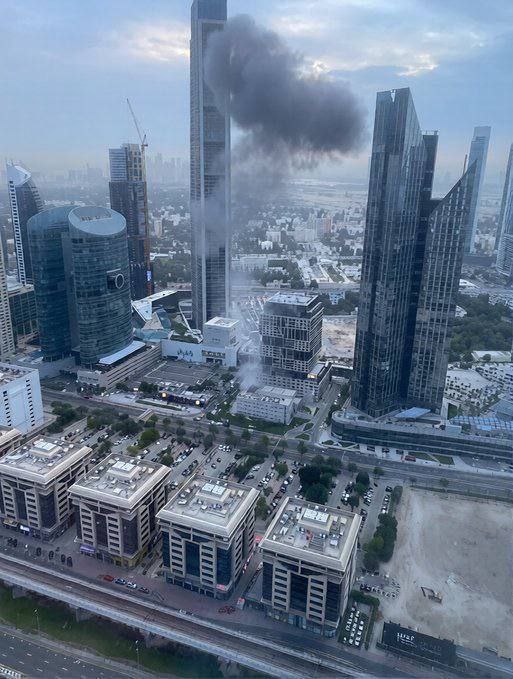
And yet, on the very morning that Kenya Airways released the worst results in recent memory, acting chief executive George Kamal stood before reporters in Nairobi to announce something quite different: demand for seats on the airline’s flights is surging, and the reason is war.
The US-Israeli military campaign against Iran, which escalated dramatically with strikes against Iranian territory on February 28, 2026, has redrawn the global aviation map.
Middle Eastern carriers, among the most powerful in the world, have been thrown into operational chaos. Emirates, operating out of Dubai, fell to roughly three-quarters of its pre-conflict capacity. Flydubai was running at approximately a third.
Qatar Airways, which had built much of its transcontinental dominance on its Doha hub, was operating at around 20 percent of normal levels. More than 20,000 flights were cancelled across the region in the immediate aftermath of the strikes.
Airports in the Gulf that serve as critical transit nodes for traffic between Africa, Europe, Asia and the Americas were disrupted at a scale not seen since the pandemic.
Kenya Airways, whose network routes through Nairobi rather than any Middle Eastern hub, found itself in an unexpected position of competitive advantage. Passengers who would ordinarily transit through Dubai, Doha or Abu Dhabi on the way between Europe and East or Southern Africa began seeking alternatives.
The airline’s seat load factor, which had averaged 70 percent as recently as January 2026, climbed rapidly from February onward. By the time Kamal addressed reporters on March 23, it had reached between 90 and 99 percent on some routes. The gains are concentrated on the airline’s most valuable corridors: Europe, the United States and Asia.
The airline is planning to add flights on a number of routes in response to the demand surge. It is sourcing additional jet fuel from India, with its flight operations head Paul Njoroge disclosing that the airline currently holds approximately 56 days of supply.
The Iran conflict has also driven up global oil prices, adding Brent crude costs that will filter into operating expenses in the months ahead. At Sh12,950 per barrel as of this week, fuel is a growing concern.
But for an airline with planes flying at near-maximum capacity after a year in which those same planes sat half-empty on thinned-out long-haul schedules, full aircraft in 2026 represent a potentially transformative revenue opportunity.
The irony is not lost on analysts watching the stock. Kenya Airways has spent the past twelve months haemorrhaging income because its aircraft were on the ground.
The Iran war has generated demand that the airline can, for the first time in a difficult period, actually meet, because by March 2026 its Dreamliner fleet has been progressively restored to service. One aircraft returned in July 2025. The other two returned later in the second half of the year.
The full-year results thus reflect a period in which the revenue damage was done before the capacity was recovered, a cruel timing mismatch that will not be lost on the new acting CEO.
The Balance Sheet That Never Heals
Behind the demand surge, the underlying financial architecture of Kenya Airways remains deeply alarming. Despite the Sh5.4 billion profit of 2024, the airline’s equity position had improved only marginally to negative Sh118.2 billion.
The 2025 loss of Sh17.13 billion attributable to shareholders will push that figure deeper into negative territory when the 2025 balance sheet is fully analysed.
Total comprehensive loss for 2025 was Sh13.81 billion. The airline’s basic loss per share was Sh2.94, against basic earnings per share of Sh0.95 in 2024. The trajectory is a reminder that a single profitable year, however celebrated, does not reverse twelve years of structural destruction.
The airline’s recapitalisation plan remains the missing centrepiece of any credible recovery narrative.
Management has articulated a target of raising approximately $500 million by early 2026 to expand the fleet from its current base to more than 50 aircraft over five years, to retire the aging Embraer 190s that serve as the workhorses of regional operations, and to bring in Boeing 737 MAX 8 aircraft.
The government, which holds a 49 percent stake, has been working with National Treasury on plans to convert a portion of novated government debt into equity to make room for a strategic investor without diluting the state beyond acceptable political limits. That investor has not materialised.
The leadership gaps have, in the Treasury’s own words, complicated the process. The $500 million target may require recalibration against a balance sheet that has just deteriorated by more than Sh17 billion in a single year.
What the Iran conflict cannot fix is the fundamental equation facing Kenya Airways: that it operates a small fleet on a continent with limited aviation infrastructure, with a capital base that is deeply negative, a fuel bill that is rising, engine maintenance costs that remain elevated, and a governance structure that is in transition at precisely the moment it most needs stability.
The load factors of March 2026 are real. The revenue they generate is real. But the airline’s finance costs were Sh12.4 billion in 2025, and that number does not diminish because passengers are fleeing a war.
The Wider Diagnosis
Kenya Airways’ story is not merely the story of one airline. It is the story of African aviation’s structural condition.
The continent’s carriers operate older fleets, face higher maintenance costs because the continent lacks major MRO capability, service their dollar-denominated debt with currencies that are chronically weak, and compete on long-haul routes against state-subsidised behemoths in the Gulf, East Asia and Europe.
When those Gulf carriers are grounded by war, the mathematics change briefly and dramatically. When they return to full capacity, as they inevitably will, the structural pressures return with them.
Allan Kilavuka, who built the most credible recovery Kenya Airways has seen in over a decade, was fond of pointing out that the airline’s EBITDA margin in its best year was competitive with global industry averages. He was correct.
But EBITDA margin measured against revenues does not pay down negative equity of Sh118 billion. It does not retire dollar-denominated debt. It does not replace a fleet whose average age is climbing.
And it does not survive a year in which a third of your most important aircraft are on the ground because a supply chain for engine components, disrupted first by a pandemic and then by years of underinvestment, has not recovered.
George Kamal inherits an airline that is flying full today, losing heavily on paper, and searching for money, leadership and a strategic direction simultaneously.
The Pride of Africa has been here before. The question is whether the Iran war’s unexpected dividend can be converted into something more durable than the one-year miracle that preceded it.
Kenya Airways (KQ) is listed on the Nairobi Securities Exchange. The airline’s 2025 audited group results were published on March 24, 2026. All figures in Kenya shillings unless otherwise stated.
Kenya Insights allows guest blogging, if you want to be published on Kenya’s most authoritative and accurate blog, have an expose, news TIPS, story angles, human interest stories, drop us an email on [email protected] or via Telegram


How Uhuru’s Deal With Obama In 2015 Paved Way For America’s Ebola Plan In Kenya

Phone Thief’s Fatal Mistake: Online Sale Ad Leads Police to Major Nairobi Bust, 22 Stolen Handsets Recovered

Credit Bank Repositions for Growth After Cutting Losses and Strengthening Balance Sheet

22.9 Million Safaricom Customers’ Data Breach Lands Odibets Boss Andrew Aligula In Police Custody, Firm Now Operating On A Thin Line Of Court Order

Popular Luo TikToker MC Adek Tatu Arrested Over Tribal Remarks Following Utumishi Girls Tragedy

Italy Bans Kanye West, Travis Scott Concerts Over Security Concerns

OdiBets Faces Investigation After 29.5 Million Safaricom Customers’ Data Breach, Risks Losing License

Omtatah Seeks Removal of Three Appeal Judges Over Kenya-US Health Deal Ruling

Blue Origin Rocket Explodes On Launchpad In A Setback For Bid To Catch Musk’s SpaceX

Two Teachers Knew Of Planned Utumishi Girls Dormitory Fire But Failed To Act

Why Ruto’s Favourite Candidate Adan Mohammed Could Be Locked Out of the KRA Top Job

Green Gold, Rotten Roots: How Kenya’s Biggest Avocado Firms Hijacked a Sh5.8 Billion Harvest Ban

Safaricom’s Sh1.4 Billion Reckoning: How Kenya’s Most Profitable Company Stole a Man’s Idea and Got Caught

Este Medical Kenya Fights American’s Explosive Complaints

The Rot Inside Absa: How Bank Insiders Are Looting Nairobi’s Customers

The $24 Million Heist at the End of the World

Denial Under Duress: The Untold Collapse Threatening David Lagat’s DL Group’s Empire

THE INSURER THAT TOOK YOUR PREMIUM AND FORGOT YOUR NAME: How ICEA Lion Left a Client Begging for Sh7.8 Million Across Four Months

LifeCare on the Brink: SHA Fraud, Stolen Wages, and the Rotten Empire Jayesh Saini Built

Court Confirms Safaricom Customers Data Was Sold To Betting Companies In Seven-Year Cover-Up
-
 News2 weeks ago
Why Ruto’s Favourite Candidate Adan Mohammed Could Be Locked Out of the KRA Top Job
-
 News6 days ago
Este Medical Kenya Fights American’s Explosive Complaints
-
 Investigations5 days ago
LifeCare on the Brink: SHA Fraud, Stolen Wages, and the Rotten Empire Jayesh Saini Built
-
 Business2 weeks ago
Court Confirms Safaricom Customers Data Was Sold To Betting Companies In Seven-Year Cover-Up
-
 Americas6 days ago
Inside FAFSA Fraud: How Kenyan Cybercriminals Siphoned Millions from America’s Sh12 Billion Student Loan System
-

 News2 days ago
Eight Students Arrested In Kenya After Suspected Deadly School Arson Attack
-

 Investigations2 days ago
Mohan Galot’s Empire Faces Collapse As Court Reinstates Sh3 Billion Demand
-

 Business2 weeks ago
Blocked: How Mombasa Tycoon Ashok Doshi Has Stopped Imperial Bank Depositors From Getting Their Money