
Lifestyle
Weight-Loss Treatments Boom As Kenyan Attitudes To Beauty Change
“Kenyans are discovering that obesity is not a sign of wealth, it’s about health”


In Kenya, where being overweight was once perceived as a sign of wealth and success, a drive to shed the pounds is now taking hold.
Surgical procedures and weight-loss drugs are growing in popularity, with some influencers detailing their own slimming journeys to both acclaim and criticism.
At her weight-loss clinic in the capital, Dr Lyudmila Shchukina has a fully booked schedule.
It has not always been this way for the Nairobi Bariatric Center, which she and her late husband – both from Ukraine – founded three decades ago.
When it started, the facility, which Shchukina proudly regards as a pioneer for weight-loss surgery in the country, was hardly receiving any clients.
But the clinic is now thriving, seeing 10 to 15 patients a day.
It’s a “boom”, the doctor tells the BBC one evening at the end of her shift.
Societal pressures may be one reason for the change.
Kenyans on social media are not known for holding back and many people, both men and women, have been insultingly told to, in the Kenyan phrase, “unfat!” after pictures of themselves have been posted online.
When political activist Francis Gaitho complained about being cyber-bullied over his weight, several people responded by telling him to “unfat”.
Shchukina says that concern over both physical and mental health linked to excess weight drives patients to her doors.
She sees patients who have high blood pressure, infertility issues, diabetes, joint and back pain, while others are concerned about the overall quality of their life.
Kenyans are now “discovering that obesity is not a sign of wealth, it’s about health”, Shchukina says.
Health officials here have become increasingly concerned about the issue. In urban areas just over half of women and a quarter of men were described as either overweight or obese in a 2022 survey. In rural areas the equivalent figures were 39% and 14%.
However, some of Shchukina’s patients are also seeking to enhance their appearance, besides their health concerns.
She says that at one time being a “big size” was considered fashionable but “now… the fashion is [to be] slim, tiny… You can see how it is changing.”
Beauty expert Yvonne Kanyi says that for women the “pressure” for the “hourglass [figure] and flat stomach” was always there, although access to medical procedures was not.
Kanyi, who runs a skincare and cosmetics business and frequently speaks about beauty and entrepreneurship, says that what has changed is the celebrity culture which has now amplified the trend, “normalising medical intervention as part of maintaining a certain image”.
Besides that, more women are now feeling empowered to make decisions about their body “without apology”, she tells the BBC.
One of those is Naomi Kuria, a popular content creator who has had medical procedures to lose weight and enhance her looks – and is proud of the outcome.
The 27-year-old’s efforts to lose excess weight began in 2024.
She started with gym workouts, but five months later, she realised she was not achieving the results she wanted. She had instead added more weight and was having “serious pain” in her knees.
Alternatives were suggested, including swimming or dieting. But she wanted speedier results.
“How long will I swim to lose a kg really?” she asks. “So I explored other quicker ways to lose weight and then I found out about Ozempic.” A fellow content creator talked to her about it and she sought medical advice.
Ozempic is one of several brands, including Mounjaro and Wegovy, that are now being prescribed for long-term weight management.
It contains semaglutide, which is used in the treatment of diabetes.
The medication, administered as an injection, targets hormones that determine how quickly the stomach empties and how full a person feels, helping to regulate appetite.
Kuria says the jab helped her get closer to her ideal weight, losing 11kg (1st 10lb) in about a month and a half.
In Kenya, Ozempic is officially only available on prescription. She says she spent 80,000 Kenyan shillings ($620; £465) on the drug.
Despite experiencing the side-effect of “throwing up like crazy”, she felt good afterwards “because every part of my body was really defined”.
However, Kuria wanted to go a step further and underwent a procedure, known as an airsculpt, which is a type of liposuction designed to shape the body. This involved removing fat from her stomach and transferring it to her “skinny” legs.
She has faced criticism from her audience for undergoing the procedure, which she feels stems from people “misjudging” her reasons.
Commenters asked her why she went through with it, saying that she already had the “perfect body”.
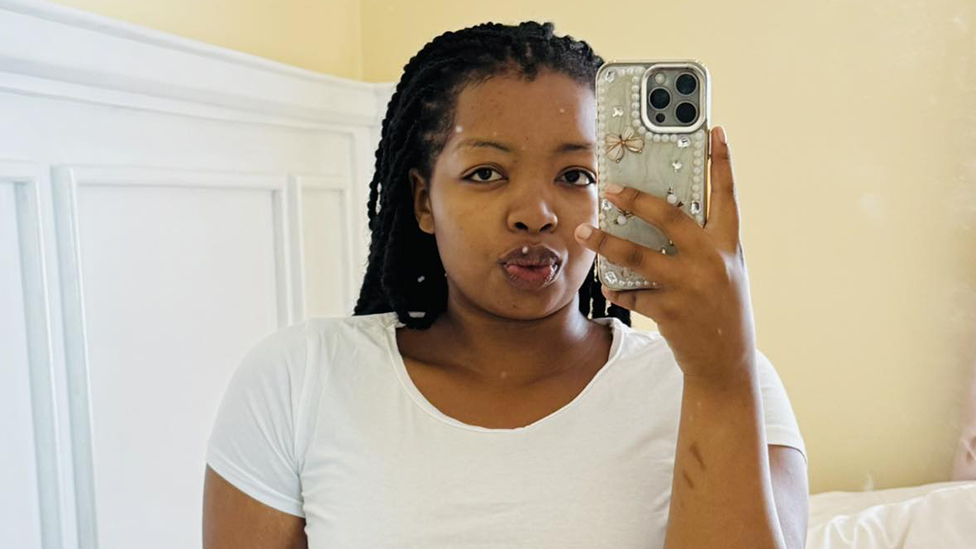
Naomi Kuria.
Others questioned why she had spent a total of 700,000 Kenyan shillings ($5,400; £4,000) to change her appearance.
“So you have decided to compete with God,” said one person.
But Kuria says these were her own “personal choices,” and she is happy with them, even if the barrage of “crazy reactions” did affect her at the beginning.
“I’m trending and everyone is talking about me and not even one person is making a positive comment.
“I got to a place where I was very angry, very angry with people. And I started replying to comments, and if you’re rude to me, I get rude to you,” she tells the BBC.
Ciru Muriuki, a 43-year-old content creator and journalist also shared her weight-loss experience.
To reduce her own weight, Muriuki first underwent a gastric balloon procedure, in which a silicone balloon is put in the stomach, to limit its capacity and create a feeling of fullness. The balloon is usually removed after six months.
Despite the procedure, her health “was all over the place” in early 2024 following the death of her fiancé.
She said she quickly lost a lot of weight “that wasn’t in a healthy way”, and then it started rising again.
It was then that she sought weight-loss jabs from a medical professional.
She said this was not about looking for a “series of shortcuts” to get what she wanted.
“It was never like that,” she said, fully aware of the criticism that is often directed at people who are seen as finding a quick way to lose weight.
Diet control and exercise have long been recommended as the best ways to manage weight.
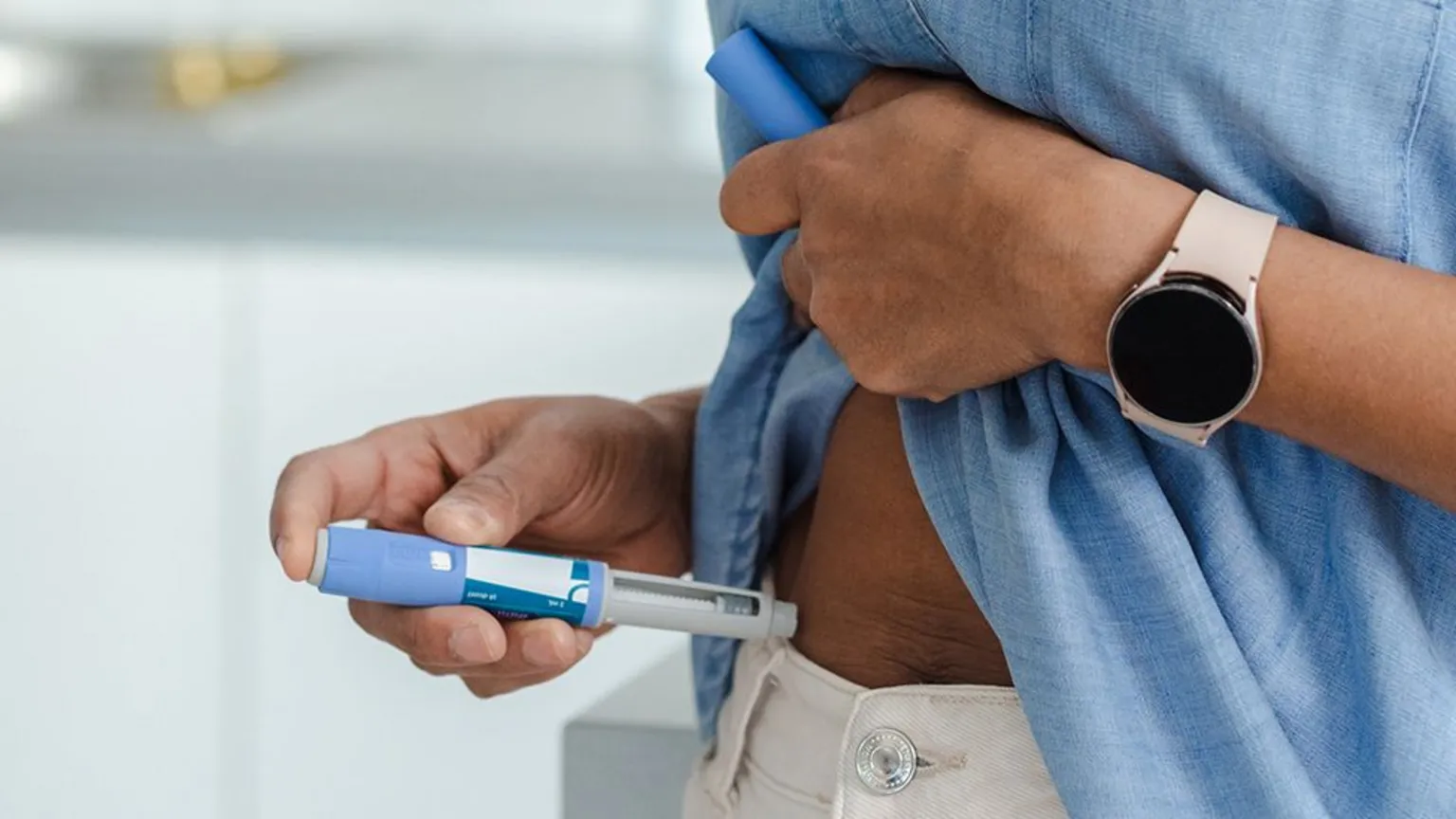
Patients administer the weight-loss jabs themselves. Getty images
But Dr Alvin Mondoh, a Kenyan weight-management specialist, says “people still do need help” through medical intervention, as weight gain can be caused “by factors beyond your control”.
Yet he warns that there is a growing concern about the use of weight-loss jabs.
“Unfortunately, what we’ve seen in the recent past is a growing trend of people using it for vanity reasons,” he says.
There are risks, especially if someone tries to avoid the certified clinics and licensed medication and gets something cheaper in an unregulated market.
At the Nairobi Bariatric Center, which offers surgery, weight-loss drugs and counselling, packages can cost up to $7,000 (£5,000), a sum far beyond the reach of most Kenyans.
Kuria acknowledges that weight-loss procedures are “very costly” – she has spent about $6,000 on both the drugs and the airsculpt.
And she warns people to be aware of the consequences.
“You will [also] pay the cost of recovery, which is not easy. You will pay the cost of stigma, society stigma. It’s a shortcut that is never short,” she says.
However, she has no regrets.
Mondoh warns that some people’s desperation to lose weight can be exploited by scammers.
Last August, the drugs regulator, the Pharmacy and Poisons Board, issued a public safety alert over the use of weight-loss medicines.
“Semaglutide is a prescription-only medicine and its unsupervised or off-label use may result in serious health concerns,” it said.
One fitness influencer was warned to stop promoting places where his followers could buy the jabs at a cheaper price.
But given the rise in obesity levels in Kenya, the demand for quick ways to lose weight will not go away.
—BBC
Kenya Insights allows guest blogging, if you want to be published on Kenya’s most authoritative and accurate blog, have an expose, news TIPS, story angles, human interest stories, drop us an email on [email protected] or via Telegram


Former Catholic Priest Arrested Over Alleged Treasonous Social Media Posts

Hundreds Protest Against Planned US Ebola Quarantine Facility in Kenya

President Ruto Defends Laikipia Ebola Quarantine Centre, Tells Critics to ‘Relax’

“Raila Died Walking, He Didn’t Collapse,” Maurice Ogeta Breaks Silence On His Boss’ Final Moments

Bolt Denies Viral Exit Claims, Says Kenya Operations Remain Fully Active

Secret Trident Meetings, Claims of Millions Exchanged: Fresh Questions Raised Over PCF Boss Mohammed Sahal’s Role in Insurance Battle

The Kamukunji Cash Pit: Ghost School, Phantom Audit Trails and NG-CDF Manager Who Refuses to Leave

Lawyer in Sh65 Million Fake Gold Scandal Dragged to Court as Investigators Uncover Web of Suspicious Deals

THE GREAT HOLLOWING: How James Mworia Extracted KES 750 Million While 33,000 Centum Shareholders Lost Everything

Port Tycoon Samuel Kairu Dragged Into Sh500 Million Mombasa Port Tax Scam

Why Ruto’s Favourite Candidate Adan Mohammed Could Be Locked Out of the KRA Top Job

Este Medical Kenya Fights American’s Explosive Complaints

Safaricom’s Sh1.4 Billion Reckoning: How Kenya’s Most Profitable Company Stole a Man’s Idea and Got Caught

LifeCare on the Brink: SHA Fraud, Stolen Wages, and the Rotten Empire Jayesh Saini Built

The Rot Inside Absa: How Bank Insiders Are Looting Nairobi’s Customers

The $24 Million Heist at the End of the World

Denial Under Duress: The Untold Collapse Threatening David Lagat’s DL Group’s Empire

THE INSURER THAT TOOK YOUR PREMIUM AND FORGOT YOUR NAME: How ICEA Lion Left a Client Begging for Sh7.8 Million Across Four Months

Court Confirms Safaricom Customers Data Was Sold To Betting Companies In Seven-Year Cover-Up

Eight Students Arrested In Kenya After Suspected Deadly School Arson Attack
-
 News1 week ago
Este Medical Kenya Fights American’s Explosive Complaints
-
 Investigations1 week ago
LifeCare on the Brink: SHA Fraud, Stolen Wages, and the Rotten Empire Jayesh Saini Built
-
 News4 days ago
Eight Students Arrested In Kenya After Suspected Deadly School Arson Attack
-
 Americas1 week ago
Inside FAFSA Fraud: How Kenyan Cybercriminals Siphoned Millions from America’s Sh12 Billion Student Loan System
-
 Business2 weeks ago
Blocked: How Mombasa Tycoon Ashok Doshi Has Stopped Imperial Bank Depositors From Getting Their Money
-
 Investigations1 week ago
LSK On The Spot For Renewing Rogue Lawyer Dennis Onyango’s Licence Despite Mounting Evidence He Held Foreign Investors’ Millions Hostage
-

 News2 days ago
How Uhuru’s Deal With Obama In 2015 Paved Way For America’s Ebola Plan In Kenya
-

 Investigations1 week ago
Your Medical Records Were Wide Open: How Three Digital Lenders Hacked the Heart of Kenya’s Health System and the DHA Chief Who Looked Away