
Business
The Oversubscribed Mirage: Why KPC’s IPO Success Masks a Deeper Market Rejection
Kenya’s largest privatisation in nearly two decades raised Sh112 billion and was declared a triumph. The data tells a far more unsettling story. When the insiders who know a company best refuse to buy its shares, investors should ask why.

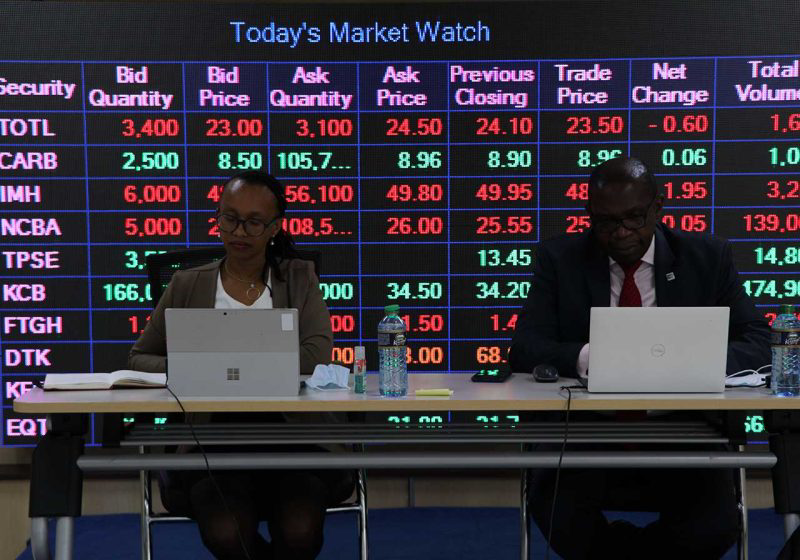
March with a headline-grabbing 105.7 per cent subscription rate, raising Sh112.37 billion against a Sh106.3 billion target. Treasury Cabinet Secretary John Mbadi hailed the outcome as a triumph of transparency and investor confidence, pointing to the company’s regional monopoly in petroleum transport as a bulwark against economic volatility.
The government was effusive. President William Ruto, in a statement from State House, described the result as reflecting “strong confidence by investors and the market.”
Beneath this veneer of success lies a stark and inconvenient anatomy. The deal was propped up almost entirely by 465 local institutional investors led by the National Social Security Fund and the Public Service Superannuation Fund, alongside Uganda’s state-owned oil entity. Those with the most intimate knowledge of KPC, its own employees and the oil marketers who depend on its infrastructure daily, stayed conspicuously on the sidelines. When insiders and natural strategic buyers abandon an offering at scale, the question is not whether the numbers add up but whether the market is trying to communicate something the government refuses to hear.
A Damning Anatomy of Demand
The numbers are precise and they are damning. Oil marketers, allocated Sh15.9 billion in shares and positioned as natural strategic buyers given their reliance on KPC’s network, purchased a mere Sh23.1 million worth, equivalent to 0.14 per cent of their reservation. Only ten such firms participated against a sector that moves the overwhelming bulk of the country’s fuel.
Major players including Vivo Energy, Rubis, and TotalEnergies abstained altogether. The final allocation tells the same story in stark arithmetic: oil marketing companies ended up with 0.014 per cent of total shares, and that figure, as disclosed by the Privatisation Authority, understates the rejection because it covers only those who did participate.
KPC employees fared little better. Against a Sh5.3 billion reservation representing a dedicated 5 per cent pool, staff purchased Sh99.1 million worth of shares. All 670 employees reportedly took some allocation, yielding an average investment of approximately Sh148,000 per person.
For workers with front-row seats to KPC’s operational realities including a 42 per cent underspend of the capital budget last year and an ongoing Sh3 billion environmental lawsuit over pipeline leaks, that is not a vote of confidence. It is a hedge dressed up as participation.
Retail investors, the democratic heartbeat of any mass-market privatisation, numbered just 73,000 compared to the 800,000 who bought into the 2008 Safaricom IPO. They invested Sh4.1 billion against a Sh21.2 billion allocation, taking a final stake of 2.56 per cent. Foreign investors, for whom a quota of Sh21.2 billion was similarly set aside, spent a negligible Sh34.8 million, acquiring a rounding-error 0.02 per cent of the company. The IPO was extended by three days after early reports placed subscription at roughly 10 per cent, a figure that, if accurate, would have placed the entire transaction at risk of collapse.
When the lead transaction adviser describes the oil marketers’ avoidance as a ‘cocktail of issues,’ the more parsimonious explanation is that sophisticated actors looked at the price and declined.
The institution that ultimately saved the offering was Uganda’s state-owned Uganda National Oil Company. UNOC acquired shares worth Sh34.7 billion, far exceeding its East African Community allocation of Sh21.2 billion and securing a 20.15 per cent stake in KPC.
As part of a legally binding side letter negotiated ahead of the IPO, Uganda secured veto powers over tariff adjustments, dividend policy changes, material amendments to the business plan, share dilution, governance restructuring, and the appointment of the chief executive officer.
Uganda also gained the right to appoint two directors to the nine-member KPC board. Kampala, which had for fifty years relied on KPC’s infrastructure to fuel its economy while having no formal say in tariff or strategic decisions, has now bought its way to the table. It is a rational act of statecraft. Whether it constitutes a rational investment at these prices is a separate question altogether.
The Valuation Question the Government Cannot Escape
Priced at Sh9 per share, the KPC offering implied a price-to-earnings ratio of approximately 22 times based on the company’s earnings per share of Sh0.4122 for the year to June 2025.
The comparison with listed peers is instructive and brutal. Kenya Power trades at approximately 1.2 times earnings. KenGen trades at 4 times. NCBA, one of the country’s leading commercial banks, trades at 3.5 times.
Even Safaricom, Kenya’s most profitable listed company and the uncontested jewel of the Nairobi Securities Exchange, trades at 8 to 9 times earnings. The government priced a state monopoly carrying a corruption investigation, pipeline leaks, and a capital budget chronically below target as though it were a high-growth technology company.
Old Mutual Investment Group Uganda, in a detailed initiation note released in January, valued KPC shares at just Sh4.61, barely half the offer price, warning of limited upside due to what it characterised as an “embedded premium” in the current pricing.
The firm forecast post-listing repricing as market liquidity forces genuine price discovery. The Ugandan analysts were not alone.
Former Central Bank of Kenya chairman Mbui Wagacha publicly questioned the opacity of the process, warning that boardroom dealings “affect investor confidence.” Opposition senator Okiya Omtatah filed suit to stop the privatisation, citing constitutional violations and inadequate public participation, though the transaction ultimately proceeded.
Faida Investment Bank, the lead transaction adviser, attributed oil marketers’ absence to fears over valuation, delayed board approvals, and a lack of consensus on whether to bid collectively or individually.
That explanation is technically accurate and analytically insufficient. When sophisticated commercial actors whose primary business depends on the infrastructure being sold calculate that the entry price offers no reasonable return, the problem is not their decision-making process. The problem is the price.
Pension Funds, Political Pressure, and the Rescuer Problem
The rescue of this IPO by the NSSF and the PSSF raises questions that neither institution has adequately answered.
A Nairobi lawyer publicly warned both funds against deploying pension savings into the offering, a warning that drew no public substantive rebuttal on the merits.
The NSSF’s own Auditor-General report for the year ended June 2025 identified Sh199.4 million tied up in non-performing assets, Sh47 million lost in falling share investments, Sh163 million linked to ghost contributors, and five prime central business district properties worth Sh4.02 billion lying idle.
The fund simultaneously committed to the Rironi-Nakuru-Mau Summit highway project and the KPC offering, all while its investment policy compliance remains under audit scrutiny.
The Nation’s reporting noted that “talk” circulated of state pressure on the NSSF and PSSF to ensure the offering reached minimum thresholds. Both funds deny this characterisation.
What is not in dispute is the arithmetic: local institutional investors purchased Sh67 billion in shares, oversubscribing their segment by 216 per cent, while every other category of investor fell dramatically short.
The concentration of rescue capital in state-adjacent institutions is either a remarkable coincidence of investment conviction or something that warrants the scrutiny of the Capital Markets Authority and Parliament’s Public Accounts Committee.
The government has sold a strategic national asset, diverted the proceeds to a fund whose constitutionality is before the High Court, and declared the transaction a benchmark for transparency. Each of those three claims merits separate examination.
Sovereignty Sold, Sovereignty Bought
Uganda’s acquisition deserves consideration on its own terms before it is celebrated as proof of regional integration. Kampala financed the Sh34.7 billion purchase in part through borrowing capacity, partly backed by a proposed facility linked to global oil trader Vitol.
Uganda’s fuel supply relies on KPC for roughly 95 per cent of its imports. The investment gives UNOC formal veto rights over the pricing of a service on which its own economy depends. That is strategically rational for Uganda.
It is less obviously rational for Kenya, which has diluted a majority of a monopoly infrastructure asset to a neighbour that now controls the appointment of the company’s chief executive and two of its nine board seats.
East African Community investors collectively hold 21.22 per cent of the company, with Uganda accounting for the overwhelming majority. Rwanda’s pension funds participated with a smaller allocation.
The Kenyan government retains 35 per cent. Local institutional investors hold 41 per cent. Retail Kenyans, despite President Ruto’s exhortation to buy shares for as little as Sh200, hold 2.56 per cent. The democratisation of public assets that the government promised has produced a company majority-owned by institutions and a foreign sovereign, with the Kenyan public as spectator shareholders.
Where the Money Goes and What It Does Not Do
Proceeds from the KPC IPO will be channelled into the National Infrastructure Fund, a vehicle CS Mbadi described as “the premier economic engine” of Kenya’s development strategy.
The problem is that the Fund’s legal standing is currently before the High Court, which is examining whether its establishment bypassed constitutional safeguards.
The National Infrastructure Fund Bill was before the National Assembly as of this week, with Mbadi insisting the legislative process was near conclusion. Investors who have purchased shares in a company whose proceeds flow into a fund of disputed constitutionality have accepted a structural risk that was not adequately foregrounded in the government’s public communications.
None of the Sh112.37 billion raised returns to KPC. The company plans to reduce its dividend payout ratio from 94.5 per cent of profits to 50 per cent to fund capital expenditure requirements, including a new Mombasa-Nairobi pipeline.
Investors who bought for income have accepted a dramatic reduction in near-term yield. Investors who bought for capital growth have accepted entry at a price that independent analysts place well above intrinsic value.
Standard Investment Bank’s senior research associate Wesley Manambo issued a buy recommendation strictly for investors with a long time horizon, explicitly warning of limited attraction for shorter-term participants. With the listing date set for 9 March and institutional holders expected to hold positions indefinitely, secondary market liquidity on the Nairobi Securities Exchange may prove thin and disorderly in the opening weeks.
What This Tells Capital Markets
Kenya’s privatisation programme has been dormant since 2008, and the KPC listing carries the weight of representing an entire policy agenda. A clean, broadly subscribed deal would have signalled that the Nairobi Securities Exchange can serve as a credible venue for large public offerings, that retail investors trust government pricing, and that strategic buyers see long-term value in Kenyan infrastructure. The KPC transaction delivered none of those signals.
What it delivered instead is a more sobering lesson. An oversubscription built on two pillars, a foreign sovereign with a structural dependency on the asset and a cluster of state-adjacent pension funds with murky investment mandates, is not market validation. It is managed demand.
The government has raised its Sh106.3 billion. But it has done so at a cost that will become legible only after listing: reduced retail confidence in future privatisations, unresolved questions about NSSF’s fiduciary obligations, a secondary market almost certain to be illiquid, and a foreign shareholder now positioned with veto rights over the strategic direction of a company that handles over 80 per cent of Kenya’s petroleum supply.
In a debt-laden economy where annual loan repayments devour roughly 40 per cent of government revenues, the urgency to execute this transaction was real.
That urgency is precisely the condition under which pricing discipline collapses, scrutiny is dismissed as obstructionism, and institutions are leaned upon to perform the market’s function. The KPC IPO did not fail.
But it also did not succeed in the way that matters for the long-term health of Kenya’s capital markets. Those are not the same thing, even when the headline subscription rate is 105.7 per cent.
Kenya Insights allows guest blogging, if you want to be published on Kenya’s most authoritative and accurate blog, have an expose, news TIPS, story angles, human interest stories, drop us an email on [email protected] or via Telegram



Karua Detained at Entebbe as Uganda Blocks Besigye Lawyer From Entering Country

How KCB and Airtel Turned Kenya’s Unbanked Into a Data Goldmine Behind a ‘Financial Inclusion’ Deal

The Chivayo Network: How a Convicted Fraudster Won Access to Presidents, Passports and Billion-Dollar Deals Across Africa

BURRIED TWICE: The Victoria Bank CEO Yogesh Pattni Files

Court Stops Transfer Of EABL Shares To Asahi By Diageo In A Fresh Snag

Death Before Justice: Stephen Ngei, Victim of Sh180 Million Laptop Tender Scam Linked to Allan Chesang, Killed in Highway Crash

Court Brands Sh1.1 Billion Fee Demand by Lawyer Victor Swanya “Excessive and Exorbitant,” Exposes How City Hall Lets Public Money Bleed Through Legal Bills

Trump Unveils New Air Force One

MR. NO SHOW: Finance Bill 2026 Exposes Ndindi Nyoro’s Political Conmanship

Billionaire Eric Muli Rebukes Musalia Mudavadi Over Nairobi Capital Relocation Debate

Businessman Philip Waithaka Kinuthia’s Minor Son Allegedly Drove Drunk, Killed Two Peponi Students in Ngong Road Horror Crash as Claims of Cover-Up Intensify

Inside NCBA’s Decline: How a Banking Giant Lost Its Strategic Edge

Cement, Cash and Courts: How the Hashu Dynasty Crushed the Ramji Brothers for Fourteen Years and Why the Walls Are Now Closing In

Standard Chartered Ghosts Haunt Joshua Oigara At Stanbic As Whistleblower Spills Beans

South Sudan: Adut Salva Kiir’s Shadow Treasury Exposed

Inside The Urban Planning Cartel That Owns Nairobi

THE VULTURE AND THE SCHEME How Nairobi West Hospital Became the Most Dangerous Institution in Kenya’s SHA Ecosystem and Why the Books Must Be Audited Now

How Adil Popat Saved His Empire On The Eve Of Imperial Bank Collapse and Why Kenya’s Mainstream Media Buried The Story

The President’s Daughter and The Missing Witness: How Adut Salva Kiir’s Shadow Treasury Silenced Its Most Dangerous Critic

Why John Ngumi Is Running From the EACC and Why the Sh415 Million Payday May Be the Least of His Worries
-
 News1 week ago
Businessman Philip Waithaka Kinuthia’s Minor Son Allegedly Drove Drunk, Killed Two Peponi Students in Ngong Road Horror Crash as Claims of Cover-Up Intensify
-
 Business2 weeks ago
Inside NCBA’s Decline: How a Banking Giant Lost Its Strategic Edge
-
 Business2 weeks ago
Standard Chartered Ghosts Haunt Joshua Oigara At Stanbic As Whistleblower Spills Beans
-
 Africa1 week ago
South Sudan: Adut Salva Kiir’s Shadow Treasury Exposed
-
 Investigations3 days ago
THE VULTURE AND THE SCHEME How Nairobi West Hospital Became the Most Dangerous Institution in Kenya’s SHA Ecosystem and Why the Books Must Be Audited Now
-
 Business1 week ago
How Adil Popat Saved His Empire On The Eve Of Imperial Bank Collapse and Why Kenya’s Mainstream Media Buried The Story
-
 Africa2 weeks ago
The President’s Daughter and The Missing Witness: How Adut Salva Kiir’s Shadow Treasury Silenced Its Most Dangerous Critic
-
 Business1 week ago
Why John Ngumi Is Running From the EACC and Why the Sh415 Million Payday May Be the Least of His Worries