
Business
Safaricom CEO Peter Ndegwa’s Tenure Controversially Extended: A Record Defined by Apologies, Denials and Corporate Opacity
Ordinarily, his contract would have lapsed on March 31, 2026.

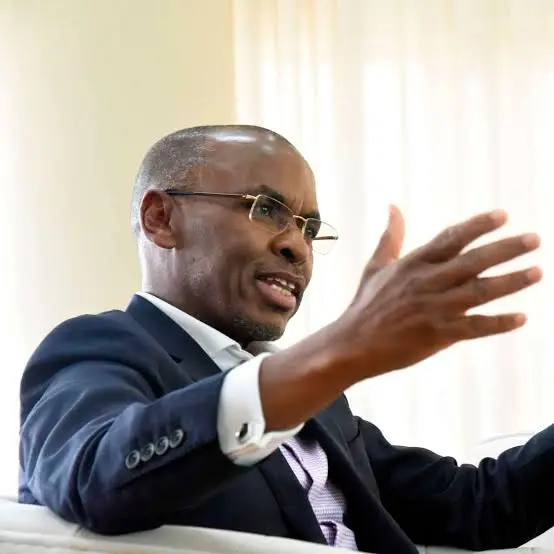
In a stunning display of corporate opacity that has left shareholders, regulators and millions of ordinary Kenyans reeling, Safaricom’s board has effectively extended Group CEO Peter Ndegwa’s tenure without so much as a public statement, pushing the first Kenyan to lead the telecom behemoth well beyond the six-year mark and into uncharted governance territory.
As of mid-April 2026, Ndegwa remains firmly entrenched at the helm, actively testifying before parliamentary committees and listed on the company’s official platforms, even as the Consumers Federation of Kenya (COFEK) warns that his contract situation has devolved into little more than educated guesswork. Ordinarily, his contract would have lapsed on March 31, 2026. The board has said nothing. No end date has been announced. No succession plan exists in the public domain. For a listed company that touches every facet of Kenyan daily life — from paying rent via M-Pesa to accessing the internet — such opacity is not merely poor governance. It is an insult to the millions of shareholders and customers who fund the enterprise.
THE STANDARD THAT CAME BEFORE HIM
To fully appreciate the wreckage that Ndegwa’s tenure has inflicted on Safaricom’s institutional credibility, one must first understand what existed before him. The company was built by leaders who, whatever their limitations, maintained a clear compact with the public on the terms of their authority.
Michael Joseph, the Zimbabwe-born American who joined as founding CEO in July 2000, steered Safaricom for a full decade until his planned retirement in November 2010. The numbers speak for themselves: under Joseph, Safaricom grew from a struggling venture with roughly 20,000 subscribers into a national colossus. M-Pesa, launched in 2007, was his era’s crowning achievement — a product that has since been cited by the Harvard Business Review as among the most transformative financial innovations in emerging market history. His departure was announced well in advance. There were no mysteries, no governance questions, no guesswork. When he returned as interim leader following the untimely death of his successor, he did so cleanly, transparently, and with the full knowledge of the public.
Bob Collymore, the Guyanese-British executive who succeeded Joseph in November 2010, operated to the same standard. His initial fixed-term contract was publicly extended twice by the board — once in 2013, and again in 2017 — with clear announcements that left no room for speculation. Collymore transformed Safaricom into East Africa’s most profitable telecom company, overseeing the introduction of M-Shwari, Fuliza, and a nationwide 4G rollout while more than doubling the customer base and lifting the company’s Nairobi Securities Exchange valuation into the stratosphere. When he died from cancer in July 2019, the reaction was one of genuine national mourning. His tenure had been conducted with a consistency and transparency that made the grief uncomplicated. People knew what they were losing because they had always been told the truth about what they had.
Ndegwa’s story could not be more different.
THE CONTRACT THAT BECAME A MYSTERY
Appointed in April 2020 as the first Kenyan CEO amid considerable national celebration, Ndegwa negotiated a structure that differed from his predecessors. Unlike Joseph and Collymore, who came in as expatriates on conventional fixed three-year contracts, Ndegwa negotiated a deliverables-based arrangement with the board. He has said publicly: “Unlike my two predecessors who came in as expatriates, I am a Kenyan and so the issue of contract didn’t have to apply. So, when I was joining, we sat with the Board of Directors and agreed on a number of deliverables against which they would track my performance.”
In principle, this arrangement sounds progressive. A Kenyan CEO, measured on outcomes rather than calendar cycles. In practice, it has produced something worse than a fixed term: a tenure without a publicly known end, governed by criteria that the board has never disclosed to the public, running in the shadow of a charter provision that sets a maximum of seven years.
Safaricom’s own board governance charter stipulates that a CEO shall serve on a fixed-term contract of not less than three years and not more than seven, with extensions possible only if the board deems them necessary. Ndegwa has now been in the role for six years, placing him near the upper boundary of that window. April 2027 is the latest theoretical endpoint under the charter. Yet the board has offered zero clarity on his end date or any succession roadmap. He was still actively appearing before parliamentary committees at the end of March 2026. His name is still listed as Group CEO on Safaricom’s official website. No statement has been issued. No transition process has been initiated or acknowledged.
This silence is not neutral. In listed company governance, silence on CEO succession is a failure. It exposes the company to key-person risk, suppresses legitimate board-level debate, and leaves analysts, shareholders, and the public making decisions about a company whose leadership trajectory is deliberately obscured.
THE INTERNET THAT WENT DARK
If one moment crystallised the dangers of Ndegwa’s leadership style, it was June 25, 2024. As Gen Z protesters converged on Parliament in Nairobi in the most consequential civil uprising Kenya had seen in a generation, Safaricom’s network suffered a nationwide internet outage. The disruption lasted over two hours. It coincided precisely with the peak of the demonstrations against the Finance Bill 2024, when protesters needed mobile communication most urgently.
Ndegwa’s initial explanation was that undersea cables had experienced “reduced bandwidth.” Yet internet observatory platform NetBlocks immediately disputed the claim, reporting that no evidence of physical cable damage had been identified and that the impact of the disruption in Kenya was worse than in any previous cable cut. The major undersea cable companies serving East Africa — TEAMs, SEACOM, and EASSy — reported no service disruptions. Airtel Kenya, which operates on the same infrastructure, said its services were intermittent rather than completely unavailable. Safaricom alone suffered a total outage.
The conflicting explanations triggered a wave of accusations. Influencers cut ties with the company en masse. Musicians announced they would pull their work from Safaricom’s Skiza tunes platform. Consumer advocates launched boycott campaigns. The Kenya Human Rights Commission warned that the High Court had in May 2025 issued orders expressly prohibiting any form of internet shutdown by telecommunications operators following the June 2024 episode.
Ndegwa eventually appeared on television to apologise. “It is unfortunate that we lost the internet and let our customers down,” he told JK Live on Citizen TV. “Safaricom is the largest provider of internet in Kenya and we let our customers down.” The apology was accepted by some. It satisfied no one who had watched the timing. The question of whether the most powerful telecom company in the country had, willingly or under pressure, suppressed communication during a national democratic moment was never conclusively resolved.
THE DATA SCANDAL THAT WOULD NOT GO AWAY
The internet outage was bad enough. What followed was worse.
In October 2024, a joint investigation by Daily Nation journalists and international reporters published one of the most damaging exposés in Safaricom’s history. The investigation revealed that Kenya’s security agencies had gained routine access to Safaricom’s customer call data records (CDRs), often without court orders, using the data to track and in some cases facilitate the abduction, disappearance, or killing of Kenyan citizens. The investigation further alleged that Safaricom, in collaboration with British company Neural Technologies Limited, had developed software that granted security agencies what was described as virtually unfettered access to private consumer data through a browser portal enabling real-time tracking of individuals by their CDRs, including a visualisation function officers had nicknamed “Find My Friends.”
The Kenya Human Rights Commission and Muslims for Human Rights wrote a formal open letter to Safaricom demanding answers. The letter alleged that Safaricom allowed police officers attached to its Law Enforcement Liaison Office to handle CDRs in cases where those same officers were implicated in enforced disappearances — a flagrant conflict of interest that, the groups argued, enabled state crime to be concealed rather than prosecuted. It further alleged that Safaricom retained customer data it had publicly claimed to have deleted, and that it had produced inconsistent, redacted, or false CDR records before Kenyan courts.
In one striking case cited by the investigation, CDRs relating to the disappeared Trevor Ndwiga placed him simultaneously en route to the Somali border and in Nairobi — an impossibility that pointed either to data manipulation or fundamental record-keeping failures.
Safaricom’s response was to deny the allegations, issue an ISO certification press release, and then — in a move that should have drawn far greater condemnation from the press freedom community — threaten the Nation Media Group with a SLAPP suit if the article was not withdrawn. When the Nation refused to comply, Safaricom pulled its advertising from all NMG-owned publications. Given that Safaricom spends close to 500 million shillings monthly on advertising across Kenya’s media landscape, this was not a minor commercial decision. It was an attempt to use financial muscle to punish independent journalism. Reporters Without Borders condemned the pressure. Senior editors at NMG confirmed that Safaricom officials had also visited major Kenyan newsrooms in October 2024 to request that critical coverage be toned down.
The Kenya Human Rights Commission and the Independent Medico-Legal Unit subsequently demanded a full independent audit of Safaricom’s data sharing practices and called for sanctions if the company was found to have violated the Data Protection Act. Access Now and dozens of global civil society organisations sent an open letter to Vodacom, Safaricom’s second-largest shareholder, demanding a full investigation into whether the telecom had facilitated human rights abuses. That letter remains, as of this writing, publicly unanswered.
Under Ndegwa’s watch, Safaricom has moved from a position of being Kenya’s most trusted institution to being a company that international press freedom organisations are monitoring as a threat to independent journalism.
THE DOMINANCE THAT CRUSHES COMPETITION
Beyond the scandals, there is a structural problem that defines the Ndegwa era: the aggressive defence of monopoly power at the expense of the Kenyan consumer.
Communications Authority data shows that Safaricom commands a 65 per cent share of Kenya’s mobile subscriptions, approximately 92 per cent of SMS volumes, and 89 per cent of the mobile money market through M-Pesa as of late 2025. These are not the numbers of a company competing in a healthy market. They are the numbers of a company that has used its first-mover advantage to build barriers so high that meaningful competition is structurally impossible without intervention.
Consumer advocates and smaller rivals have for years called on the Communications Authority to formally declare Safaricom a dominant operator and impose the safeguards that typically accompany such designation — interconnection pricing reform, restrictions on bundled pricing strategies, and enhanced obligations on data portability and consumer protection. Rather than engage these calls with humility or acknowledge the structural advantages that history has bestowed on Safaricom, Ndegwa has consistently adopted a posture of contempt toward his competitors. He has publicly advised rival operators to “invest more” if they wish to compete, as though the question of dominance is purely a matter of effort rather than market architecture.
This posture conveniently ignores the role that the Communications Authority’s own tariff structures, spectrum allocations, and regulatory forbearance have played in cementing Safaricom’s position. It also ignores the ways in which Safaricom’s dominance in mobile money has been leveraged to subsidise and cross-subsidise its telecom operations in ways that smaller operators cannot replicate. The regulator has made marginal efforts: in March 2026 it reduced mobile termination rates from Sh0.41 to Sh0.37 per minute, a modest adjustment that Safaricom has the scale to absorb comfortably but which smaller operators have welcomed as a small step toward a level playing field.
Meanwhile, Ndegwa has also attempted to shape satellite internet regulation in Safaricom’s favour. In 2024, Safaricom wrote to the Communications Authority urging caution in granting independent licences to satellite providers like Starlink — this after Starlink had become Kenya’s eighth-largest internet service provider in record time, demonstrating that Kenyan consumers will rapidly adopt alternatives when they are available and competitively priced. The irony of the continent’s largest and most profitable telecom company lobbying regulators to slow the entry of a competitor apparently did not trouble Ndegwa’s board.
THE RACISM THAT FESTERED IN HIS FLAGSHIP STORE
There is a dimension to Ndegwa’s record that goes beyond financial and governance failure. Under his leadership, Safaricom became the subject of documented racial discrimination allegations at its flagship Village Market outlet in Nairobi, with Kenyan customers publishing detailed accounts of differential treatment: white patrons served promptly, Black Kenyans made to wait, ignored, and in some accounts subjected to outright hostility by staff.
COFEK published a searing account under the headline “Safaricom for Whites? Pain of a Kenyan as raw hate and racism persists at Village Market, Nairobi.” The piece was not an abstract critique. It was a firsthand account of a paying Safaricom customer describing a degrading experience at a shop operated under the brand that markets itself as deeply and authentically Kenyan.
For a company whose entire identity is predicated on being “the pride of Kenya,” on being a homegrown brand that emerged from Kenyan soil, such allegations are not peripheral. They go to the heart of what the company claims to be. Michael Joseph was American. Bob Collymore was Guyanese-British. Neither of them presided over allegations that their stores subjected Kenyan customers to racial contempt. Peter Ndegwa — the first Kenyan CEO, the man appointed specifically to bring local authenticity to the role — has.
THE COMPENSATION THAT KEEPS RISING
Through all of this — the internet outage, the data scandal, the media intimidation, the racial discrimination allegations, the governance opacity — Ndegwa has collected compensation packages that rank among the highest in Kenya’s entire corporate sector. According to published financial disclosures, his total remuneration for the 2024 fiscal year exceeded KSh283 million, approximately $2.2 million, placing him at the top of the Nairobi Securities Exchange’s executive pay rankings by a significant margin. This includes base salary, performance bonuses, non-monetary benefits, and incentive payments.
The juxtaposition is jarring. Safaricom’s ordinary customers — the boda boda rider who uses M-Pesa to send money home, the mama mboga who deposits float at a Safaricom agent, the student who relies on Safaricom’s internet for academic work — fund this compensation through tariffs and charges imposed by a monopolist with no real competitive alternative. They also fund it while enduring the spam SMS crisis that COFEK and consumer advocates have documented: a relentless tide of unsolicited promotional texts, gambling alerts, and mysterious short-code messages that violate privacy and clutter inboxes daily, a problem that persists despite repeated promises from management to address it.
THE BOARD THAT MUST NOW ACT
The governance question that Ndegwa’s tenure raises is ultimately not about him alone. It is about a board that has allowed this situation to develop without correction.
Safaricom’s board charter is unambiguous: CEO tenure is bounded, extensions require explicit board action, and the maximum period is seven years. Yet the board has allowed Ndegwa to drift past the ordinary six-year mark without a public word. No announcement of an extension. No announcement of succession planning. No announcement of a review process. The company’s most consequential governance decision — who will lead it — has been reduced to guesswork, a state of affairs that COFEK, with characteristic understatement, has described as “unusual.”
It is not unusual. It is a failure of fiduciary duty. Safaricom is listed on the NSE. Its majority shareholders include the Government of Kenya and Vodacom. Millions of ordinary Kenyans hold shares through the NSE and through collective investment schemes. Every one of them is entitled to know, at minimum, whether the CEO’s contract is current, on what terms it was extended, and what the board’s succession plan entails. They are getting none of this.
The board must act. It must publish the terms of Ndegwa’s current engagement. It must initiate a visible, credible succession process. It must explain what “delivering on the agreed deliverables” actually means — what targets were set, which have been met, and which have not. And it must reckon with a record that includes an internet shutdown during a democracy movement, a data surveillance scandal that drew international condemnation, the intimidation of a free press, unresolved racial discrimination allegations, and six years of relentless dominance defence at the expense of the consumers who make the company’s existence possible.
Peter Ndegwa is not without achievements. Safaricom Ethiopia now covers more than 48 per cent of the Ethiopian population. The company recorded earnings before interest and tax exceeding one billion dollars in 2024, the first company in East Africa to cross that threshold. The network quality scores published by the Communications Authority in April 2026 show Safaricom leading its competitors on almost every technical metric. These are real results.
But they do not excuse the governance failures. They do not justify the opacity. And they do not answer the question that COFEK, consumer advocates, international press freedom organisations, human rights defenders, and ordinary Kenyans are now asking with increasing force: when does the board intend to tell the public what it has decided about the future of the man running their most important company?
The silence, at this point, is not caution. It is contempt.
Kenya Insights allows guest blogging, if you want to be published on Kenya’s most authoritative and accurate blog, have an expose, news TIPS, story angles, human interest stories, drop us an email on [email protected] or via Telegram


Safaricom CEO Peter Ndegwa’s Tenure Controversially Extended: A Record Defined by Apologies, Denials and Corporate Opacity

THE FUEL CABAL: How Mohamed Jaffer, a KPC Insider, and a Ministry Official Are Alleged to Have Manufactured Kenya’s Worst Petroleum Crisis in Three Years, While Kenyans Burned

Sugar Empire in the Dock: How Kibos’s Mombasa Refinery Landed 1,481 Phantom Tonnes at the Port — and Why Nine Government Agencies Are Now Watching Its Every Move

G-to-G Deal Fails To Cushion Kenyans As Country Stares At Adulterated Fuel After Hiked Prices

Getting Away With It: How Kenya’s Most Politically Connected Fuel Company Gulf Energy Is Pocketing Billions While Rival Firms Face Public Wrath

The Great Vanishing Act: Odinga Family Moves Be Energy Millions to Secret Tax Haven

Kenyan Motorists Stare At Possible Engine Damage And Heavy Losses As Report Confirms Substandard Fuel In Circulation

Best Betting Sites in Kenya for 2026

How Safaricom Could Sell You Out To KRA

A Case That Refuses To Die: EABL Stake Sale Faces Fresh Challenge After Temporary Reprieve

Forged Legacy: How Kaplan and Stratton’s Peter Gachuhi Is Accused of Faking a Top AG’s Will as State Claims Damning Evidence

THE HANDSHAKE THAT BECAME A NOOSE: How Tuju’s Alleged Intimate Access to EADB’s Yeda Apopo Produced a Sh294 Million Deal With No Written Contract, and Why That Trust Destroyed an Empire

Sold And Abandoned: How Diageo and Asahi Are Locking Kenya’s EABL Minority Shareholders Out Of East Africa’s Biggest Corporate Heist

Poison at the Pump: How Kenya’s Fuel Marking System May Be Exposing Millions to Cancer-Causing Chemicals

How Firm Linked To Mombasa Tycoon Jaffer Was Allowed To Import Fuel At Bloated Price And Set To Make Billions In Profits From Iranian War Crisis In Kenya

THE ZAKHEM-ECOBANK MACHINE: How Kenya’s Courts Were Weaponised to Drain a State Corporation of Over KES 78 Billion

The Teflon Company: How Gulf Energy’s Insiders Built Billions on Kenya’s Fuel, and Walked Away Clean

Inside Details Of Sh78 Billion Fraud in KPC’s Mombasa-Nairobi Line 5 Pipeline Project That Has Continued To Bleed The Country

The Debt They Would Not Pay: How Standard Group Ducked Sh50 Million In Regulatory Fee For Years, Then Called It A Witch-Hunt

Men Linked to Akasha Drug Dynasty Charged With Death Threats and Assault at Nairobi Nightclub
-
 Business2 weeks ago
Poison at the Pump: How Kenya’s Fuel Marking System May Be Exposing Millions to Cancer-Causing Chemicals
-
 Investigations2 weeks ago
THE ZAKHEM-ECOBANK MACHINE: How Kenya’s Courts Were Weaponised to Drain a State Corporation of Over KES 78 Billion
-
 Investigations1 week ago
The Teflon Company: How Gulf Energy’s Insiders Built Billions on Kenya’s Fuel, and Walked Away Clean
-
 Investigations1 week ago
Inside Details Of Sh78 Billion Fraud in KPC’s Mombasa-Nairobi Line 5 Pipeline Project That Has Continued To Bleed The Country
-

 News1 week ago
Mombasa Lawyer Exposed In Sh600 Million Alleged Double-Dealing Diani Property Transaction
-
 Business1 week ago
Wattanga Fired Over Incompetence in Tech, Insiders Say
-

 Investigations2 weeks ago
Who Architected the Ksh 4.8 Billion Fuel Scandal? Two CSs Now Caught in the Storm
-
 News1 week ago
The Lawyer at the Centre of Kenya’s State Machine: Eric Gumbo, the AG’s Bypassed Office, and the Half-Billion-Shilling Question