
Business
Kenya To Earn Less From Turkana Oil Deal As Govt Exempts Gulf Energy From Taxes
The modification means Gulf Energy can recoup significantly more of its petroleum costs before profit-sharing with the state begins.

The Kenyan government has granted Gulf Energy sweeping tax exemptions and increased cost-recovery provisions for the long-delayed Turkana oil project, potentially reducing state revenues from the country’s first commercial crude production by hundreds of millions of dollars.
Under amendments to the production-sharing agreement submitted to parliament last week, Gulf Energy will be exempted from paying value-added tax, withholding taxes and import levies on goods and services used in developing the South Lokichar basin.
The changes remove obligations that previously required developers to pay 16 per cent VAT, 5 per cent and 5.625 per cent withholding tax on local and imported goods respectively, plus a 2 per cent railway development levy and a 2.5 per cent import declaration fee.
The government will take home a smaller share of revenues from Turkana’s oil project following an amendment that raises Gulf Energy’s cost-recovery limit to 85 per cent of annual crude production, an increase from the previous 65 per cent agreement in the initial contract with Tullow Oil.
The modification means Gulf Energy can recoup significantly more of its petroleum costs before profit-sharing with the state begins.
The amendments come after Energy and Petroleum Cabinet Secretary Opiyo Wandayi confirmed that his ministry has approved the Field Development Plan for the project , which now requires parliamentary ratification under Kenya’s constitution.
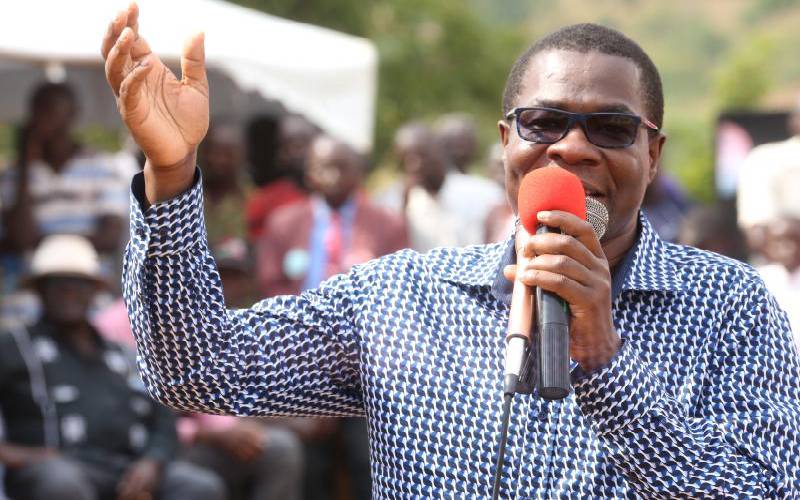
Energy and Petroleum CS Opiyo Wandayi
The approved development will require an estimated $6.1 billion investment over a 25-year contract period , according to the energy ministry.
The revisions represent a substantial shift from the original terms negotiated when British oil explorer Tullow Oil held the blocks. Tullow had struggled for more than a decade to advance the project after discovering commercially viable reserves in 2012, facing persistent challenges around financing infrastructure including a heated pipeline to transport crude from landlocked Turkana to the Mombasa coast for export.
The sale to Gulf Energy, finalised in July 2025, closed a turbulent chapter for Tullow, which received an initial payment of $40 million under the sale agreement with two additional payments of $40 million each due in 2026 and 2028.
TotalEnergies and Africa Oil Corporation, Tullow’s former partners, had withdrawn from the project in 2023 when financing for the multi-billion-dollar plan collapsed.
The contract amendments also include changes to where crude oil is lifted for marketing purposes. Previously, the government’s share of profit oil was to be lifted at Mombasa, but the revised agreement designates Turkana as the lifting point, effectively shifting transportation responsibilities and associated costs.
According to the amended production-sharing contract, Kenya’s share of profit will start at 50 per cent in the initial stages and increase to 75 per cent at peak production where output is expected at more than 150,000 barrels per day.
The agreement includes a windfall tax provision of 26 per cent triggered when oil prices reach at least $50 per barrel.
The energy ministry estimates recoverable reserves at 326 million stock-tank barrels, with oil initially in place estimated at up to 4 billion barrels.
Phase One aims to produce 20,000 barrels per day, increasing up to 50,000 barrels per day under Phase Two, with Gulf Energy planning first oil production by December 2026 and full production expected by 2032.
Leparan Morintat, chief executive of the state-owned National Oil Corporation of Kenya, said the amendments were meant to harmonise provisions in the two blocks’ agreements and help the project move forward faster.
Under the revised terms, Kenya’s back-in rights for the project are set at 20 per cent for both blocks, to be held by the state oil company.
Gulf Energy, a Nairobi-based energy trading company acquired by French multinational Rubis in 2019 for 16.4 billion shillings, now holds complete control of Block T7 following years of partner exits.
The company operates primarily in downstream petroleum marketing across East Africa.
The parliamentary ratification process is expected to be completed within 90 days. Under Kenya’s Petroleum Act, the field development plan will be deemed ratified if parliament fails to reach a decision within that timeframe.
The government must also incorporate public views before making a final determination.
Industry observers have raised concerns that the enhanced cost-recovery ceiling and tax exemptions may substantially diminish Kenya’s take from the project during its critical early years when Gulf Energy will be recovering its capital investments.
With the higher 85 per cent cost-recovery threshold, the company could capture the vast majority of early production revenues before any profit-sharing occurs, potentially delaying meaningful returns to the state.
Kenya has waited nearly 15 years to realise commercial production from the Turkana oil discovery.
The government views the project as strategically important for economic development and energy security, particularly given the country’s reliance on imported petroleum products.
However, the concessions granted to advance the project highlight the difficult trade-offs developing nations face when attempting to attract investment in capital-intensive extractive industries.
Kenya Insights allows guest blogging, if you want to be published on Kenya’s most authoritative and accurate blog, have an expose, news TIPS, story angles, human interest stories, drop us an email on [email protected] or via Telegram







The Conquest of Tatu City, A New Zealander Story

VANISHING ACT: How China Jiangxi International Pocketed Billions in Kenyan Public Contracts, Then Walked Away

THE GROUP CHAT THAT BROKE THE CARTEL: How Kenya’s Biggest Mattress Firms Used WhatsApp to Fix Your Prices, Then Used It to Destroy Themselves

Court Upholds Gachagua Impeachment, Awards Him Sh50M In Constitutional Damages To Be Paid By Senate

Somali FIFA Referee Denied Entry To US Ahead Of 2026 World Cup: Reports

David Maraga: Kenya’s Ex-Chief Justice Arrested At Protest Against Building On National Park

KRA Warns It Will Automatically File Tax Returns for Kenyans Who Miss June 30 Deadline Using Its Own Data

Govt Plans to Monetise eCitizen Data in New Revenue Drive

Dennis Onyango: Why Raila Won Elections But Never Became President

Israel, Iran Trade Fire Despite Trump’s Call For Restraint

Cement, Cash and Courts: How the Hashu Dynasty Crushed the Ramji Brothers for Fourteen Years and Why the Walls Are Now Closing In

Inside The Urban Planning Cartel That Owns Nairobi

Why Ruto’s Favourite Candidate Adan Mohammed Could Be Locked Out of the KRA Top Job

LifeCare on the Brink: SHA Fraud, Stolen Wages, and the Rotten Empire Jayesh Saini Built

Este Medical Kenya Fights American’s Explosive Complaints

The Rot Inside Absa: How Bank Insiders Are Looting Nairobi’s Customers

Betika Faces DCI Probe, Directors Arrest and License Revocation Over Massive 29.5 Million Safaricom Customers’ Data Breach

Inside FAFSA Fraud: How Kenyan Cybercriminals Siphoned Millions from America’s Sh12 Billion Student Loan System

Fresh Move Launched to Remove Kenya Railways MD Mainga From Office After Awarding Sh817 Million Consultancy Contract

Court Confirms Safaricom Customers Data Was Sold To Betting Companies In Seven-Year Cover-Up
-
 Investigations4 days ago
Cement, Cash and Courts: How the Hashu Dynasty Crushed the Ramji Brothers for Fourteen Years and Why the Walls Are Now Closing In
-
 Investigations3 days ago
Inside The Urban Planning Cartel That Owns Nairobi
-
 Investigations2 weeks ago
LifeCare on the Brink: SHA Fraud, Stolen Wages, and the Rotten Empire Jayesh Saini Built
-
 Investigations1 week ago
Betika Faces DCI Probe, Directors Arrest and License Revocation Over Massive 29.5 Million Safaricom Customers’ Data Breach
-
 Investigations4 days ago
Fresh Move Launched to Remove Kenya Railways MD Mainga From Office After Awarding Sh817 Million Consultancy Contract
-

 News2 weeks ago
Eight Students Arrested In Kenya After Suspected Deadly School Arson Attack
-
 News1 week ago
How Uhuru’s Deal With Obama In 2015 Paved Way For America’s Ebola Plan In Kenya
-

 Investigations2 weeks ago
The Invisible Hand: Al Jazeera Further Exposes How Safaricom Became The Regime’s Most Powerful Spy