
News
Who Killed George Muchai? Seven Suspects On Defence Battling A Mysterious Case

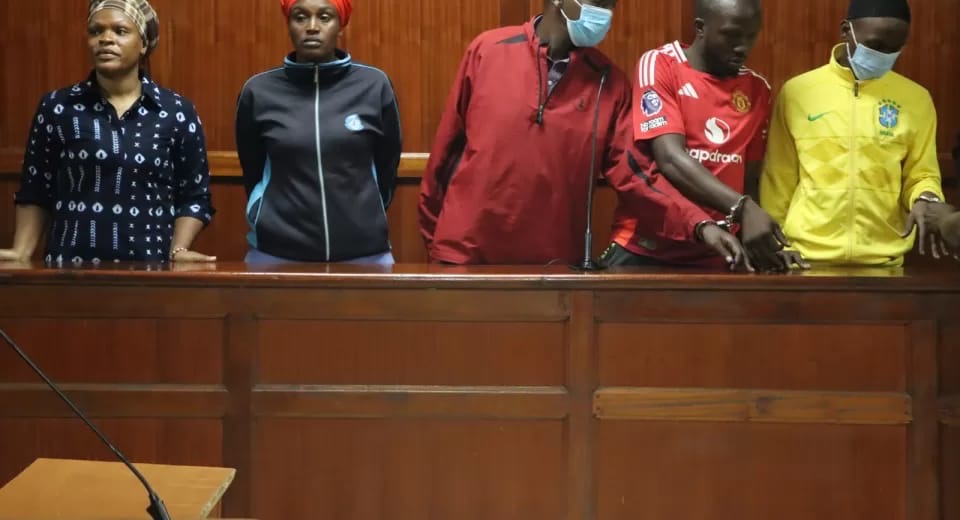
The death of George Muchai has taken a new turn years after he was killed in a deadly assasination plans.
Ironically, the main susoects who might have engineered his murder is still at large as seven suspects continue to battle the murder case. Did they kill Muchai?
On Friday, the Seven accused persons in Late MP George Muchai’s murder case on pleaded with the court to allow them defend themselves which is a turnaround from their earlier decision where they had declined the offer of defense trial.
The seven had declined to give their evidence to exonerate themselves from the charges facing them saying that the charge sheet was fatally defective and that the robbery with violence with which they were charged was not known in Law.
The seven include Erick Muyera Isabwa alias Chairman, Raphael Kimani alias Butcher, Mustafa Kimani alias Musto, Stephen Asitiva Lipapo alias Chokori, Jane Wanjiru Kimani alias Shiro, Margaret Njeri alias Waciuri, and Simon Wambugu Gichamba.
The court had declined to acquit them of the charge because of the alleged defective charge sheet and ordered the matter to proceed.
They are all charged with robbery with violence and murder of Muchai and his aides which occurred in February 2015.
The accused had moved to the High Court seeking refuge to have the robbery with violence case trial before Chief Magistrate Lucas Onyina stayed but their request was declined and the file forwarded back to the Magistrate for the case to proceed to its logical conclusion.
This had prompted the seven to seek favour with Magistrate Onyina pleading with him to allow them another opportunity to prove their innocence.
The first accused Erick Muyera Isabwa told the Court that he is confident enough that if the court gives him an opportunity to defend himself, he would shed light to the court and prove that he did not commit the offence he is charged with.
“I am confident enough that if this court gives me an opportunity to defend myself, I will shed light to this court and prove that I did not commit the offence am charged with.” Eric said.
Through lawyer Stephen Ongaro the accused argued that Justice must not only be done but must be seen to be done and that the charge sheet upon which the accused persons are being held in custody is fatally defective and unconstitutional.
“None of the accused persons is guilty, none of them committed the offences they are facing, I saw injustice on my face, I could not stand injustice and my effort to ensure the injustice does not prevail was thwarted by the court, give me a chance to attack the evidence produced by the prosecution, ” Ongaro said.
The defense also maintained that they have submissions heavy enough to acquit all the accused persons.
The Court allowed the application to reopen the defense hearing and the case will proceed tomorrow.
Kenya Insights allows guest blogging, if you want to be published on Kenya’s most authoritative and accurate blog, have an expose, news TIPS, story angles, human interest stories, drop us an email on [email protected] or via Telegram


Court Brands Sh1.1 Billion Fee Demand by Lawyer Victor Swanya “Excessive and Exorbitant,” Exposes How City Hall Lets Public Money Bleed Through Legal Bills

Trump Unveils New Air Force One

MR. NO SHOW: Finance Bill 2026 Exposes Ndindi Nyoro’s Political Conmanship

Billionaire Eric Muli Rebukes Musalia Mudavadi Over Nairobi Capital Relocation Debate

Lawyer Cliff Ombeta Warns Against Taking Insurance Cover With Old Mutual: “Talk to Me Before You Do, Their Imara Cover Is a Fraud”

My Life Is In Danger: Investor Drops Bombshell Expose On Thomas Ogutu CEO VeGrid Ltd And Fugitive Nairobi CEC Charles Kerich – DCI Inaction And Corruption Network Exposed

City Tycoon Chris Obure Returns To Senteu Plaza After Court Victory

NCBA’s Repossession Empire: How Borrowers Lose Their Cars While the Bank Profits at Every Step

Ex-First Lady Margaret Kenyatta and Siblings Move to Block Widow from Late Brother’s Sh50 Million Estate

Inside the Billion-Shilling Betrayal: How Senior Treasury Officials Plundered a UN Poverty Fund and Built a Real Estate Empire on the Backs of Kenya’s Rural Poor

Businessman Philip Waithaka Kinuthia’s Minor Son Allegedly Drove Drunk, Killed Two Peponi Students in Ngong Road Horror Crash as Claims of Cover-Up Intensify

Inside NCBA’s Decline: How a Banking Giant Lost Its Strategic Edge

Cement, Cash and Courts: How the Hashu Dynasty Crushed the Ramji Brothers for Fourteen Years and Why the Walls Are Now Closing In

Standard Chartered Ghosts Haunt Joshua Oigara At Stanbic As Whistleblower Spills Beans

Inside The Urban Planning Cartel That Owns Nairobi

South Sudan: Adut Salva Kiir’s Shadow Treasury Exposed

How Adil Popat Saved His Empire On The Eve Of Imperial Bank Collapse and Why Kenya’s Mainstream Media Buried The Story

Why John Ngumi Is Running From the EACC and Why the Sh415 Million Payday May Be the Least of His Worries

The President’s Daughter and The Missing Witness: How Adut Salva Kiir’s Shadow Treasury Silenced Its Most Dangerous Critic

THE VULTURE AND THE SCHEME How Nairobi West Hospital Became the Most Dangerous Institution in Kenya’s SHA Ecosystem and Why the Books Must Be Audited Now
-
 News6 days ago
Businessman Philip Waithaka Kinuthia’s Minor Son Allegedly Drove Drunk, Killed Two Peponi Students in Ngong Road Horror Crash as Claims of Cover-Up Intensify
-
 Business2 weeks ago
Inside NCBA’s Decline: How a Banking Giant Lost Its Strategic Edge
-
 Business1 week ago
Standard Chartered Ghosts Haunt Joshua Oigara At Stanbic As Whistleblower Spills Beans
-
 Africa1 week ago
South Sudan: Adut Salva Kiir’s Shadow Treasury Exposed
-
 Business1 week ago
How Adil Popat Saved His Empire On The Eve Of Imperial Bank Collapse and Why Kenya’s Mainstream Media Buried The Story
-
 Business1 week ago
Why John Ngumi Is Running From the EACC and Why the Sh415 Million Payday May Be the Least of His Worries
-
 Africa1 week ago
The President’s Daughter and The Missing Witness: How Adut Salva Kiir’s Shadow Treasury Silenced Its Most Dangerous Critic
-
 Investigations2 days ago
THE VULTURE AND THE SCHEME How Nairobi West Hospital Became the Most Dangerous Institution in Kenya’s SHA Ecosystem and Why the Books Must Be Audited Now