
News
Ridiculous and Malicious: Judiciary Dismisses Kung’u Muigai’s Corruption Allegations on Judges in Case Against KCB
Ndemo has emphasized that no competent forum has ever found evidence of wrongdoing or corruption, and that Muigai has failed to produce credible proof to substantiate his explosive claims.

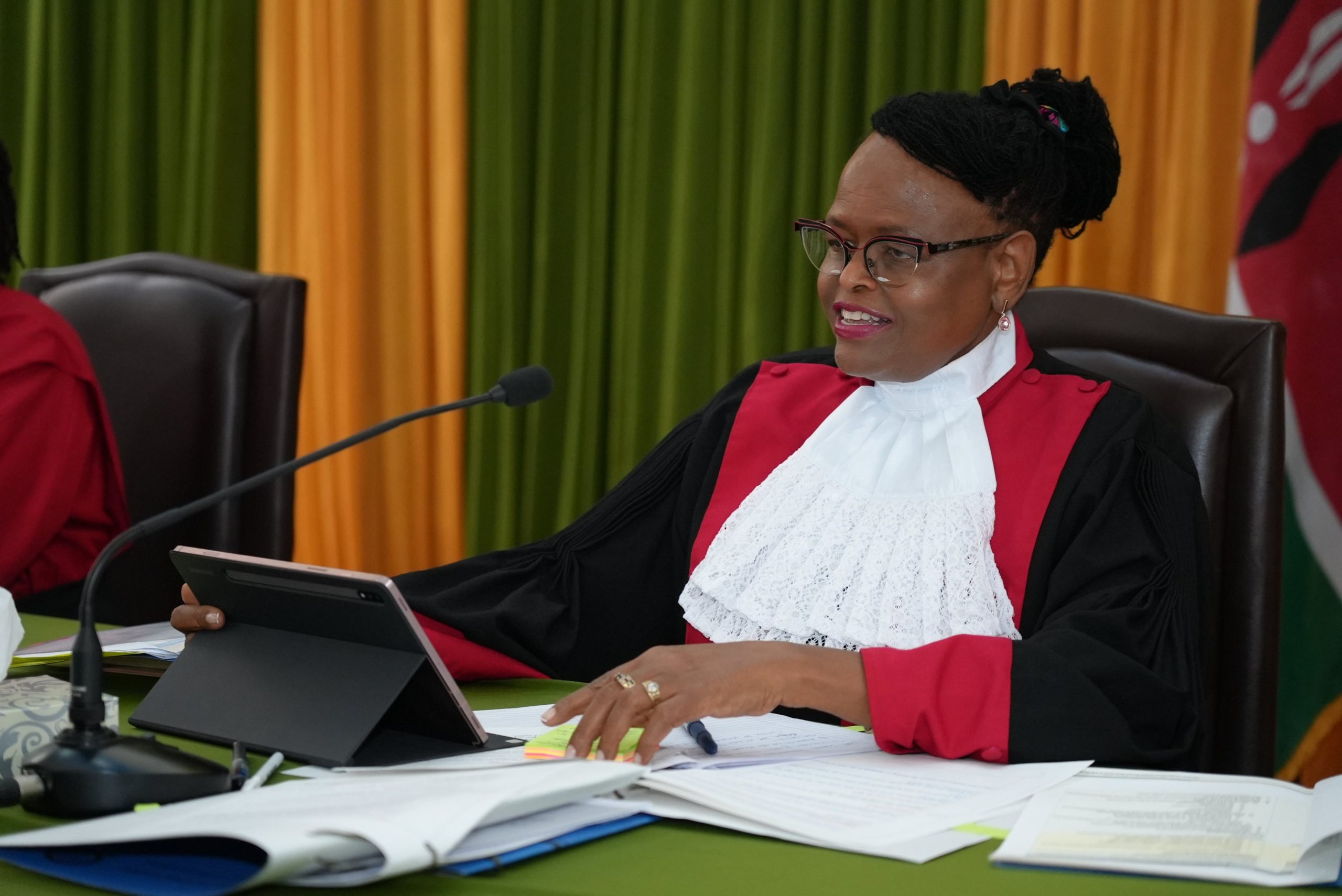
The Kenyan Judiciary has strongly dismissed fresh corruption allegations leveled against Chief Justice Martha Koome and ten other senior judges by retired military officer Captain Kung’u Muigai, describing the claims as “ridiculous” and driven by “bad faith, malice and a camouflaged agenda.”
In a statement released Wednesday, September 10, 2025, through spokesperson Paul Ndemo, the Judiciary categorically refuted Muigai’s accusations that judges were bribed over KSh 825 million to favor Kenya Commercial Bank in the disputed sale of the 443-acre Muiri Coffee Estate.
Ndemo has emphasized that no competent forum has ever found evidence of wrongdoing or corruption, and that Muigai has failed to produce credible proof to substantiate his explosive claims.
The corruption allegations, filed with the Judicial Service Commission on August 19, 2025, targeted some of Kenya’s most senior judicial officers including Supreme Court justices Mohammed Ibrahim, Njoki Ndung’u, Isaac Lenaola, and William Ouko, alongside six Court of Appeal judges including President Daniel Musinga.
Muigai’s petition centers on a decades-long legal battle over the Muiri Coffee Estate, which he claims was improperly auctioned for KSh 70 million despite being worth significantly more.
He alleges that courts have consistently relied on a non-existent consent judgment dated May 4, 1992, to dismiss his suits as res judicata, effectively blocking his legal pursuit of the matter.
However, the Judiciary’s response paints a starkly different picture of the case’s history.
According to the statement, the dispute arose from a 1989 commercial loan extended by KCB to Benjoh Amalgamated Ltd, with the 443-acre coffee estate serving as security.
When the borrowers defaulted and failed to meet a July 31, 1992 repayment deadline, KCB moved to sell the charged properties.
The Judiciary maintains that a valid consent order was indeed recorded on May 4, 1992, before Justice Erastus Githinji, admitting the borrowers’ indebtedness.
The Court of Appeal confirmed this consent order’s validity on March 10, 1998, in Civil Appeal No. 276 of 1997, finding no evidence of fraud or illegality.
Despite this final determination, Muigai continued filing successive suits across all court levels over two decades.
The Judiciary noted that by May 11, 2018, when the Court of Appeal dismissed Civil Application No. 40 of 2018, more than fourteen suits had been filed without success.
The court characterized this pattern as “vexatious and an abuse of the court process.”
Ndemo reveals that allegations of judicial misconduct in these cases were previously presented to the Judicial Service Commission, which independently reviewed the petitions and found no credible evidence of impropriety or misconduct by any judge.
Addressing Muigai’s specific bribery allegations, including claims of USD 3.5 million routed through offshore accounts and various payments to individual judges, Ndemo emphasized that dissatisfaction with judicial outcomes does not constitute proof of misconduct.
The statement pointedly noted that Muigai alleges all judges who ruled against his companies were bribed, while those who agreed with him were not corrupted.
The Judiciary has assured the public of its unwavering commitment to upholding the rule of law and deciding matters impartially. It warned that unfounded allegations that impugn judicial integrity only serve to undermine public confidence in the courts and constitutional order, encouraging aggrieved parties to pursue lawful avenues of review grounded in evidence rather than engaging in misinformation campaigns.
This latest development adds another chapter to what the courts have characterized as a protracted and unsuccessful legal campaign spanning over three decades, with the Judiciary making clear that respect for final court judgments remains essential to the administration of justice.
Kenya Insights allows guest blogging, if you want to be published on Kenya’s most authoritative and accurate blog, have an expose, news TIPS, story angles, human interest stories, drop us an email on [email protected] or via Telegram


Karua Detained at Entebbe as Uganda Blocks Besigye Lawyer From Entering Country

How KCB and Airtel Turned Kenya’s Unbanked Into a Data Goldmine Behind a ‘Financial Inclusion’ Deal

The Chivayo Network: How a Convicted Fraudster Won Access to Presidents, Passports and Billion-Dollar Deals Across Africa

BURRIED TWICE: The Victoria Bank CEO Yogesh Pattni Files

Court Stops Transfer Of EABL Shares To Asahi By Diageo In A Fresh Snag

Death Before Justice: Stephen Ngei, Victim of Sh180 Million Laptop Tender Scam Linked to Allan Chesang, Killed in Highway Crash

Court Brands Sh1.1 Billion Fee Demand by Lawyer Victor Swanya “Excessive and Exorbitant,” Exposes How City Hall Lets Public Money Bleed Through Legal Bills

Trump Unveils New Air Force One

MR. NO SHOW: Finance Bill 2026 Exposes Ndindi Nyoro’s Political Conmanship

Billionaire Eric Muli Rebukes Musalia Mudavadi Over Nairobi Capital Relocation Debate

Businessman Philip Waithaka Kinuthia’s Minor Son Allegedly Drove Drunk, Killed Two Peponi Students in Ngong Road Horror Crash as Claims of Cover-Up Intensify

Inside NCBA’s Decline: How a Banking Giant Lost Its Strategic Edge

Cement, Cash and Courts: How the Hashu Dynasty Crushed the Ramji Brothers for Fourteen Years and Why the Walls Are Now Closing In

Standard Chartered Ghosts Haunt Joshua Oigara At Stanbic As Whistleblower Spills Beans

South Sudan: Adut Salva Kiir’s Shadow Treasury Exposed

Inside The Urban Planning Cartel That Owns Nairobi

THE VULTURE AND THE SCHEME How Nairobi West Hospital Became the Most Dangerous Institution in Kenya’s SHA Ecosystem and Why the Books Must Be Audited Now

How Adil Popat Saved His Empire On The Eve Of Imperial Bank Collapse and Why Kenya’s Mainstream Media Buried The Story

The President’s Daughter and The Missing Witness: How Adut Salva Kiir’s Shadow Treasury Silenced Its Most Dangerous Critic

Why John Ngumi Is Running From the EACC and Why the Sh415 Million Payday May Be the Least of His Worries
-
 News1 week ago
Businessman Philip Waithaka Kinuthia’s Minor Son Allegedly Drove Drunk, Killed Two Peponi Students in Ngong Road Horror Crash as Claims of Cover-Up Intensify
-
 Business2 weeks ago
Inside NCBA’s Decline: How a Banking Giant Lost Its Strategic Edge
-
 Business2 weeks ago
Standard Chartered Ghosts Haunt Joshua Oigara At Stanbic As Whistleblower Spills Beans
-
 Africa2 weeks ago
South Sudan: Adut Salva Kiir’s Shadow Treasury Exposed
-
 Investigations4 days ago
THE VULTURE AND THE SCHEME How Nairobi West Hospital Became the Most Dangerous Institution in Kenya’s SHA Ecosystem and Why the Books Must Be Audited Now
-
 Business2 weeks ago
How Adil Popat Saved His Empire On The Eve Of Imperial Bank Collapse and Why Kenya’s Mainstream Media Buried The Story
-
 Africa2 weeks ago
The President’s Daughter and The Missing Witness: How Adut Salva Kiir’s Shadow Treasury Silenced Its Most Dangerous Critic
-
 Business2 weeks ago
Why John Ngumi Is Running From the EACC and Why the Sh415 Million Payday May Be the Least of His Worries