
Economy
National Assembly Passes Finance Bill 2025
The bill which is expected to raise Sh24 billion now awaits assent by President William Ruto.

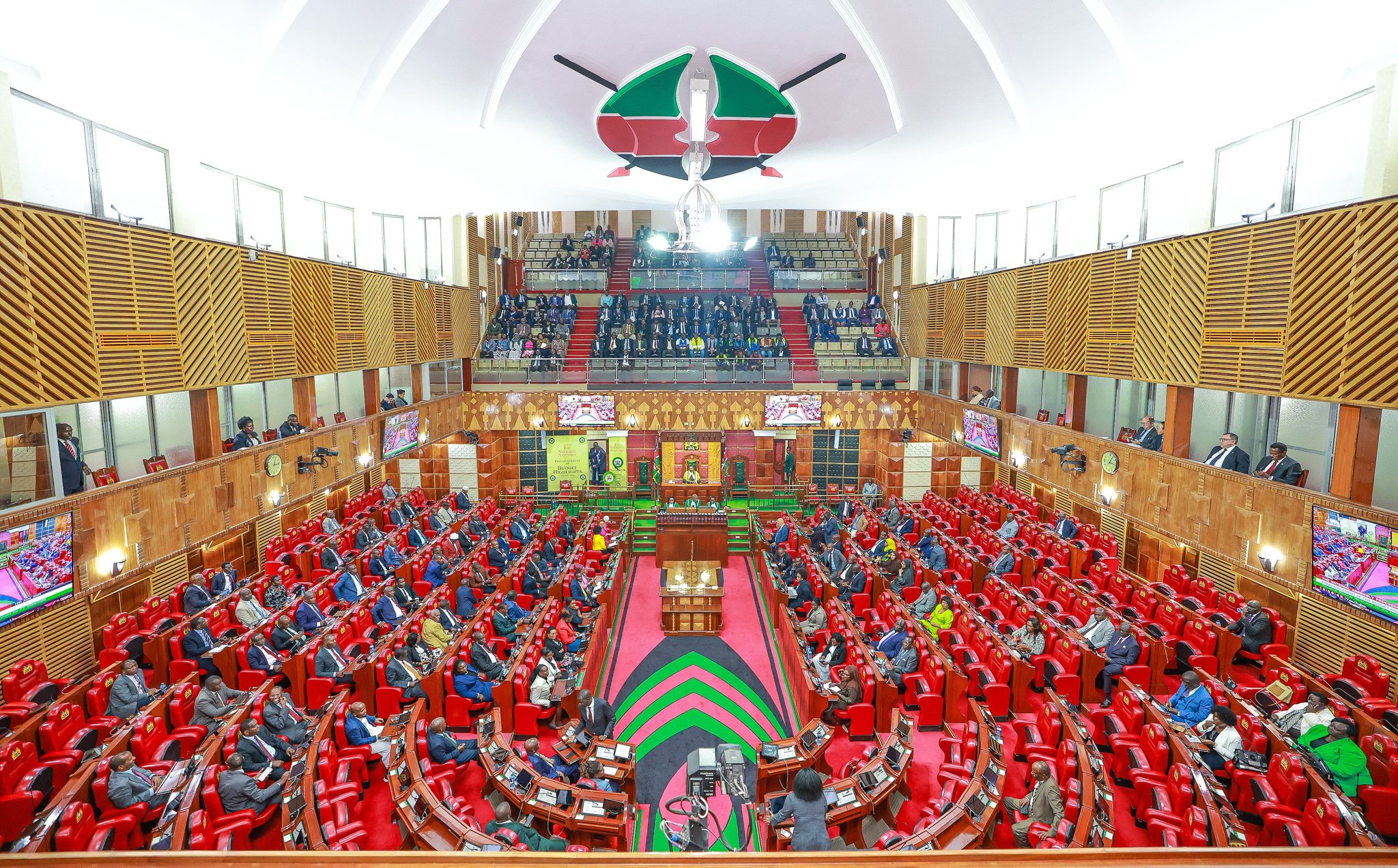
NAIROBI, Kenya Jun 19 – Kenyans can breathe a sigh of relief as the National Assembly passed the Finance Bill 2025 after stripping the proposal allowing the Kenya Revenue Authority (KRA) unfettered access to customer records.
The bill which is expected to raise Sh24 billion now awaits assent by President William Ruto.
The house approved the amendments by the Finance and Planning committee chaired by Molo Member of Parliament Kimani Kuria which rejected KRA’s proposal for unrestricted access to personal data for tax compliance, arguing that it violates Article 31(c) and (d) of the Constitution, which guarantees the rights to privacy.
The committee had argued that Section 60 of the Tax Procedures Act already provides sufficient authority for data access through judicial warrants.
The lawmakers also rejected the expansion of the PAYE tax bands to 10 per cent, 17.5 per cent, 25 per cent, 27.5 per cent and 30 per cent, which would have empowered the Treasury Cabinet Secretary to adjust rates by up to 10 per cent every three years for inflation.
The House also rejected Treasury’s proposal to reclassify certain commodities from zero-rated to exempt status, instead maintaining zero-rated status for locally assembled mobile phones, motorcycles, electric bicycles, solar batteries, electric buses, animal feed inputs, and bioethanol vapor stoves.
For the cooperative incentives, the MPs rejected the elimination of the 15 per cent corporate tax rate for companies engaged in local motor vehicle assembly and construction of at least 100 residential housing units.
MPs retained the Sh500 excise duty per litre on Extra Neutral Alcohol (ENA) for licensed spirituous beverage manufacturers, providing relief to manufacturers already facing increased duties.
Legislators also supported full tax exemption for all pension payments, whether received as lump sums or instalments, creating clarity by repealing redundant provisions.
In the amendements, the house supported expanding the Significant Economic Presence Tax (SEPT) definition to include websites and electronic networks beyond digital marketplaces.
However, they opposed the Sh5 million threshold, arguing it creates revenue leakage loopholes and hinders KRA enforcement.
Kenya Insights allows guest blogging, if you want to be published on Kenya’s most authoritative and accurate blog, have an expose, news TIPS, story angles, human interest stories, drop us an email on [email protected] or via Telegram













How KCB and Airtel Turned Kenya’s Unbanked Into a Data Goldmine Behind a ‘Financial Inclusion’ Deal

The Chivayo Network: How a Convicted Fraudster Won Access to Presidents, Passports and Billion-Dollar Deals Across Africa

BURRIED TWICE: The Victoria Bank CEO Yogesh Pattni Files

Court Stops Transfer Of EABL Shares To Asahi By Diageo In A Fresh Snag

Death Before Justice: Stephen Ngei, Victim of Sh180 Million Laptop Tender Scam Linked to Allan Chesang, Killed in Highway Crash

Court Brands Sh1.1 Billion Fee Demand by Lawyer Victor Swanya “Excessive and Exorbitant,” Exposes How City Hall Lets Public Money Bleed Through Legal Bills

Trump Unveils New Air Force One

MR. NO SHOW: Finance Bill 2026 Exposes Ndindi Nyoro’s Political Conmanship

Billionaire Eric Muli Rebukes Musalia Mudavadi Over Nairobi Capital Relocation Debate

Lawyer Cliff Ombeta Warns Against Taking Insurance Cover With Old Mutual: “Talk to Me Before You Do, Their Imara Cover Is a Fraud”

Businessman Philip Waithaka Kinuthia’s Minor Son Allegedly Drove Drunk, Killed Two Peponi Students in Ngong Road Horror Crash as Claims of Cover-Up Intensify

Inside NCBA’s Decline: How a Banking Giant Lost Its Strategic Edge

Cement, Cash and Courts: How the Hashu Dynasty Crushed the Ramji Brothers for Fourteen Years and Why the Walls Are Now Closing In

Standard Chartered Ghosts Haunt Joshua Oigara At Stanbic As Whistleblower Spills Beans

South Sudan: Adut Salva Kiir’s Shadow Treasury Exposed

Inside The Urban Planning Cartel That Owns Nairobi

THE VULTURE AND THE SCHEME How Nairobi West Hospital Became the Most Dangerous Institution in Kenya’s SHA Ecosystem and Why the Books Must Be Audited Now

How Adil Popat Saved His Empire On The Eve Of Imperial Bank Collapse and Why Kenya’s Mainstream Media Buried The Story

Why John Ngumi Is Running From the EACC and Why the Sh415 Million Payday May Be the Least of His Worries

The President’s Daughter and The Missing Witness: How Adut Salva Kiir’s Shadow Treasury Silenced Its Most Dangerous Critic
-
 News1 week ago
Businessman Philip Waithaka Kinuthia’s Minor Son Allegedly Drove Drunk, Killed Two Peponi Students in Ngong Road Horror Crash as Claims of Cover-Up Intensify
-
 Business2 weeks ago
Inside NCBA’s Decline: How a Banking Giant Lost Its Strategic Edge
-
 Business2 weeks ago
Standard Chartered Ghosts Haunt Joshua Oigara At Stanbic As Whistleblower Spills Beans
-
 Africa1 week ago
South Sudan: Adut Salva Kiir’s Shadow Treasury Exposed
-
 Investigations3 days ago
THE VULTURE AND THE SCHEME How Nairobi West Hospital Became the Most Dangerous Institution in Kenya’s SHA Ecosystem and Why the Books Must Be Audited Now
-
 Business1 week ago
How Adil Popat Saved His Empire On The Eve Of Imperial Bank Collapse and Why Kenya’s Mainstream Media Buried The Story
-
 Business1 week ago
Why John Ngumi Is Running From the EACC and Why the Sh415 Million Payday May Be the Least of His Worries
-
 Africa2 weeks ago
The President’s Daughter and The Missing Witness: How Adut Salva Kiir’s Shadow Treasury Silenced Its Most Dangerous Critic