
Politics
Gachagua Attacks Ruto for Holding Madaraka Day Celebrations at Newly Built Wajir Stadium, Says Residents Have More Pressing Unmet Needs
“Holding the celebrations in Wajir is mocking them as they have nothing to celebrate,” Gachagua said

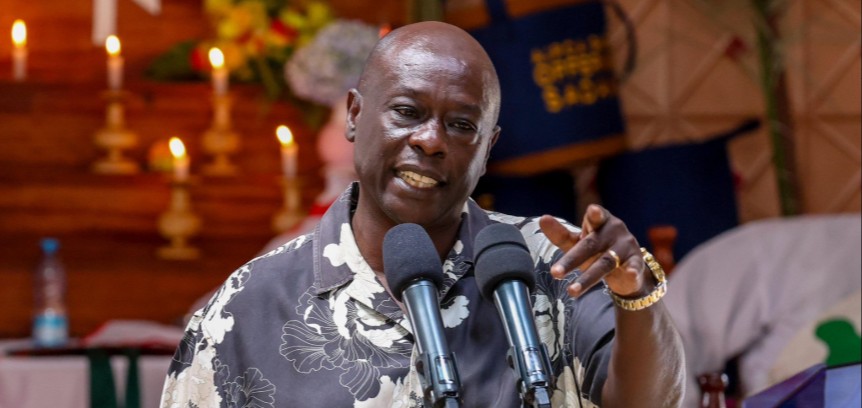
Former Deputy President Rigathi Gachagua has launched a sharp attack on President William Ruto over the decision to hold this year’s Madaraka Day celebrations in Wajir County, arguing that residents continue to grapple with poverty, inadequate infrastructure and limited access to essential public services.
In a statement issued on Monday as the country marked its 63rd Madaraka Day, Gachagua questioned the rationale behind staging the national event in a region he says still faces serious development challenges despite years of funding from both the national and county governments.
The former deputy president said the celebrations should have provided an opportunity for the Head of State to account for the state of development in Wajir and explain what tangible gains residents have received from public investments over the years.
“Holding the celebrations in Wajir is mocking them as they have nothing to celebrate,” Gachagua said, insisting that many residents continue to struggle with access to clean water, reliable electricity, quality healthcare, education and security.
His remarks came as President Ruto presided over the historic Madaraka Day celebrations at Wajir Stadium, the first time in Kenya’s history that the national event has been hosted in Northern Kenya. During his address, Ruto described the occasion as a symbolic declaration that no region should be excluded from the country’s development agenda.
Questions Over Development Priorities
Gachagua accused leaders from the region of failing to explain why basic services remain inadequate despite years of devolved funding and allocations through national government programmes.
He cited challenges ranging from poor road networks and unreliable electricity supply to inadequate sanitation infrastructure and recurring water shortages, arguing that these issues should have been addressed before investing in high-profile projects associated with hosting a national celebration.
The former deputy president also questioned whether resources used to prepare for the event could have been directed toward projects with a more direct impact on residents, including schools, hospitals, water systems and sewerage infrastructure.
He further challenged the government to provide a detailed account of how billions of shillings allocated to Wajir County since the advent of devolution in 2013 have been spent, saying residents deserve transparency on the use of public funds and the outcomes achieved.
Ruto’s Message of Inclusion
The criticism came only hours after President Ruto used the national celebrations to acknowledge decades of neglect suffered by Northern Kenya and issue a rare public apology on behalf of the Kenyan state.
Addressing thousands of residents gathered at Wajir Stadium, the President admitted that past governments had failed the region through policies that concentrated development in areas considered economically productive while leaving vast parts of Northern Kenya behind.
“Poleni sana,” Ruto told residents, describing the marginalisation of Northern Kenya as a historical injustice that should never have happened. He pledged to accelerate investments in roads, healthcare, water projects, education and other critical infrastructure to bridge the development gap.
The President also defended the decision to host Madaraka Day in Wajir, saying it was intended to demonstrate that every Kenyan region matters and that national celebrations should not be confined to major urban centres.
Political Undertones
Gachagua’s latest remarks are likely to deepen the growing political rivalry between the former deputy president and his former boss as both leaders intensify efforts to shape the national political conversation ahead of the next General Election.
Beyond development concerns, Gachagua urged the President to address historical grievances in the region, including the legacy of the Wagalla Massacre, and reassure residents that such tragedies would never recur.
The exchange highlights the competing narratives emerging around Wajir’s hosting of Madaraka Day. While the government has portrayed the event as a landmark moment of national inclusion and recognition for a historically neglected region, critics argue that symbolism alone cannot substitute for improvements in the daily lives of residents.
As celebrations concluded in Wajir, the debate shifted beyond the festivities themselves to a broader question that has long shaped Kenya’s politics: whether promises of inclusion and development are translating into meaningful change for communities that have spent decades on the margins of the country’s growth.
Kenya Insights allows guest blogging, if you want to be published on Kenya’s most authoritative and accurate blog, have an expose, news TIPS, story angles, human interest stories, drop us an email on [email protected] or via Telegram


Gachagua Attacks Ruto for Holding Madaraka Day Celebrations at Newly Built Wajir Stadium, Says Residents Have More Pressing Unmet Needs

Bought Popularity? Malindi NG-CDF Officer Nelson Alfayo Faces Fresh Claims of Poll Manipulation Amid Mounting Corruption Allegations

KDF Cordon Off Laikipia Air Base As Hundreds Protest Planned Ebola Facility

Chilling CCTV Footage Shows Moments Suspects Setting Fire In Dormitory Killing 16 Fellow Students

Betika Faces DCI Probe, Directors Arrest and License Revocation Over Massive 29.5 Million Safaricom Customers’ Data Breach

Kanye West Performs To 118,000 In Turkey Despite Bans Elsewhere

How Uhuru’s Deal With Obama In 2015 Paved Way For America’s Ebola Plan In Kenya

Phone Thief’s Fatal Mistake: Online Sale Ad Leads Police to Major Nairobi Bust, 22 Stolen Handsets Recovered

Credit Bank Repositions for Growth After Cutting Losses and Strengthening Balance Sheet

29.5 Million Safaricom Customers’ Data Breach Lands Odibets Boss Andrew Aligula In Police Custody, Firm Now Operating On A Thin Line Of Court Order

Why Ruto’s Favourite Candidate Adan Mohammed Could Be Locked Out of the KRA Top Job

Este Medical Kenya Fights American’s Explosive Complaints

Safaricom’s Sh1.4 Billion Reckoning: How Kenya’s Most Profitable Company Stole a Man’s Idea and Got Caught

The Rot Inside Absa: How Bank Insiders Are Looting Nairobi’s Customers

The $24 Million Heist at the End of the World

LifeCare on the Brink: SHA Fraud, Stolen Wages, and the Rotten Empire Jayesh Saini Built

Denial Under Duress: The Untold Collapse Threatening David Lagat’s DL Group’s Empire

THE INSURER THAT TOOK YOUR PREMIUM AND FORGOT YOUR NAME: How ICEA Lion Left a Client Begging for Sh7.8 Million Across Four Months

Court Confirms Safaricom Customers Data Was Sold To Betting Companies In Seven-Year Cover-Up

Eight Students Arrested In Kenya After Suspected Deadly School Arson Attack
-
 News1 week ago
Este Medical Kenya Fights American’s Explosive Complaints
-
 Investigations6 days ago
LifeCare on the Brink: SHA Fraud, Stolen Wages, and the Rotten Empire Jayesh Saini Built
-
 News3 days ago
Eight Students Arrested In Kenya After Suspected Deadly School Arson Attack
-

 Americas1 week ago
Inside FAFSA Fraud: How Kenyan Cybercriminals Siphoned Millions from America’s Sh12 Billion Student Loan System
-
 Business2 weeks ago
Blocked: How Mombasa Tycoon Ashok Doshi Has Stopped Imperial Bank Depositors From Getting Their Money
-

 Investigations1 week ago
LSK On The Spot For Renewing Rogue Lawyer Dennis Onyango’s Licence Despite Mounting Evidence He Held Foreign Investors’ Millions Hostage
-

 Investigations1 week ago
Your Medical Records Were Wide Open: How Three Digital Lenders Hacked the Heart of Kenya’s Health System and the DHA Chief Who Looked Away
-

 News2 weeks ago
Jackson Kihara Accuses His Uncle Rigathi Gachagua of Framing Him in Robbery with Violence Case To Surrender Father’s Property