
Americas
Inside The American Ebola Makeshift Hospital Being Built On Kenyan Soil: Tents, Biocontainment Pods, And A Deal Ruto Cannot Afford To Refuse
A military-grade quarantine compound at Laikipia Air Base, staffed entirely by American health officers and sealed off from Kenyan contact, is opening its doors on Friday. The story of how it got here leads back to a $2.5 billion health deal signed in Washington six months ago and a Nairobi government that agreed to terms it is now refusing to publicly defend.

Picture this. You are driving north out of Nairobi on the A2, past Thika, past Karatina, the road climbing steadily through coffee farms and forest until the land opens into the wide, dry plateau of Laikipia. You are 200 kilometres from the capital, 1,865 metres above sea level, in terrain the British Army has been training on since the colonial era. And somewhere on that plateau, behind the perimeter wire of the Kenya Air Force’s Laikipia Air Base, American military contractors are right now finishing the construction of what the White House describes as a state-of-the-art facility to receive Americans who have been exposed to Ebola.
It will open on Friday. Kenya was told about it in a press release.
That is not an exaggeration. Health Cabinet Secretary Aden Duale, when confronted by the Daily Nation with ten specific questions about the facility, responded with two pages that confirmed discussions were ongoing, declared Kenya ready and capable, and said nothing whatsoever about where the facility would be, who had approved it, on what legal basis, or when the first patients might arrive. The Kenyan public learned the location from the Kenyan Medical Practitioners, Pharmacists and Dentists Union, not from the government. Even that disclosure came only after the union issued a 48-hour strike ultimatum demanding answers.
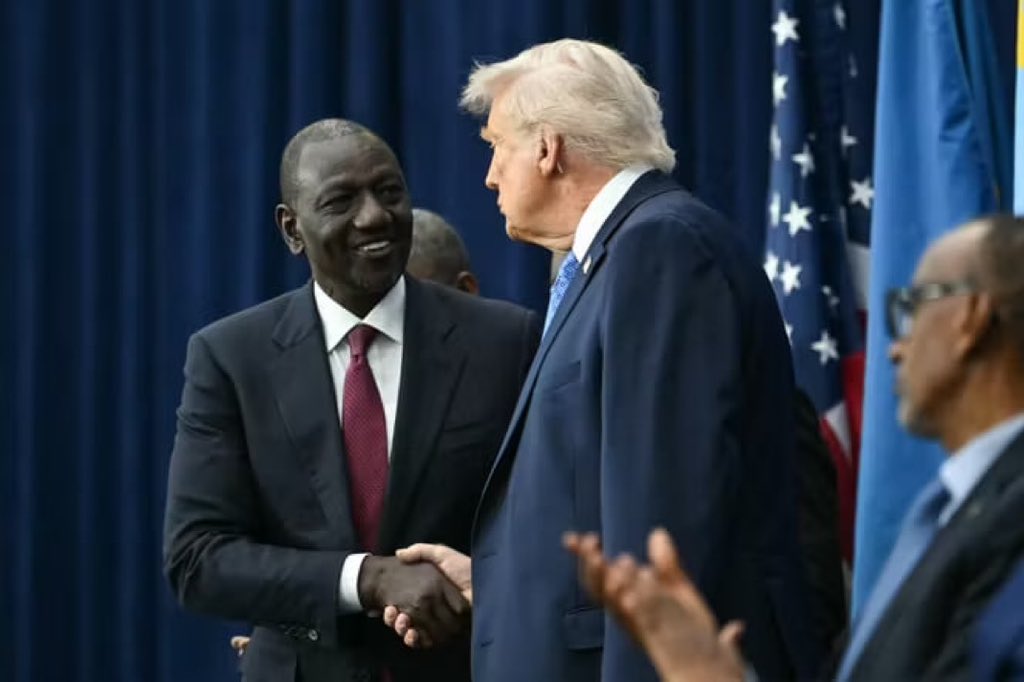
The answers, assembled from American officials, sources within the Kenyan negotiating team, court documents, and reporting from Washington, paint a picture that the Ruto administration has every political reason not to paint. Kenya did not stumble into this arrangement. It walked in deliberately, six months ago, in a Washington hotel ballroom, when President William Ruto watched Prime Cabinet Secretary Musalia Mudavadi and US Secretary of State Marco Rubio sign the Kenya-United States Health Cooperation Framework. That agreement, worth $2.5 billion over five years, contained within it the seed of everything now unfolding at Laikipia.
THE $2.5 BILLION DEAL THAT MADE THIS POSSIBLE
On December 4, 2025, Kenya became the first African country to sign a bilateral agreement with the United States under Washington’s new America First Global Health Strategy. The signing took place in Washington on the margins of a broader diplomatic visit, and the ceremony was attended by President Ruto himself, a signal of the importance Nairobi attached to the deal. The framework, negotiated over a period of months following initial contacts in August 2025, replaced the patchwork of previous health support arrangements that had been run through the United States Agency for International Development before the Trump administration dismantled USAID earlier in the year.
Under the terms of the framework, the United States committed to providing up to $1.6 billion over five years to support priority health programmes in Kenya, covering HIV/AIDS, tuberculosis, malaria, maternal and child health, polio eradication, disease surveillance, and — critically — infectious disease outbreak response and preparedness. Kenya, for its part, committed to increasing domestic health expenditure by $850 million over the same period, gradually assuming greater financial responsibility as American funding tapers. The combined figure of $2.5 billion was the headline number both governments promoted.
What the headline obscured was that the American contribution represented a reduction of approximately $423 million compared to the previous levels of US health funding flowing into Kenya under USAID. Before USAID was abolished, the United States was spending around $250 million annually on Kenya’s health sector. The new deal, front-loaded with promises but structured to decline over time, delivered less total money to Kenya than the old arrangement while requiring Kenya to commit public funds that constitutional scholars have since argued were pledged without the mandatory parliamentary appropriation.
Kenya did not stumble into this arrangement. It walked in deliberately, six months ago, in a Washington hotel ballroom.
The High Court saw enough to suspend the framework’s implementation within days of the signing. On December 11 and 19, 2025, two separate conservatory orders were issued blocking the agreement, with Justice Chacha Mwita pointing to concerns over data privacy, constitutional compliance, and the commitment of expenditure outside the Public Finance Management Act. The primary petition, filed by activist and senator Okiya Omtatah Okoiti and the Katiba Institute, argued that the framework interfered with devolved functions and imposed obligations on county governments without their consent.
The Court of Appeal temporarily lifted those orders on May 12, 2026, just weeks before the Ebola facility discussions became public. The timing was not coincidental. With the legal blockage lifted, the machinery of the health cooperation framework became operational again — and with it, the infectious disease outbreak response provisions that appear to provide at least part of the diplomatic scaffolding under which the Laikipia facility has been constructed. The government has declined to state explicitly whether the Ebola arrangement falls under the health cooperation framework. It has also declined to say it does not.
THE FACILITY: WHAT IS BEING BUILT AND WHERE
Laikipia Air Base sits approximately eight kilometres west-northwest of the town of Nanyuki. It was established in 1974 as Nanyuki Air Base, the Kenya Air Force’s primary fighter aircraft facility, and has hosted foreign military training exercises for decades. The British Army Training Unit Kenya, one of the United Kingdom’s largest military installations anywhere on the African continent, operates from the eastern section of the same base, known as Laikipia Air Base East. American forces have used the broader Laikipia region for training activities tied to US Africa Command operations. In short, this is a location already familiar with the presence of foreign military and quasi-military personnel. That familiarity, sources suggest, was a key factor in its selection.
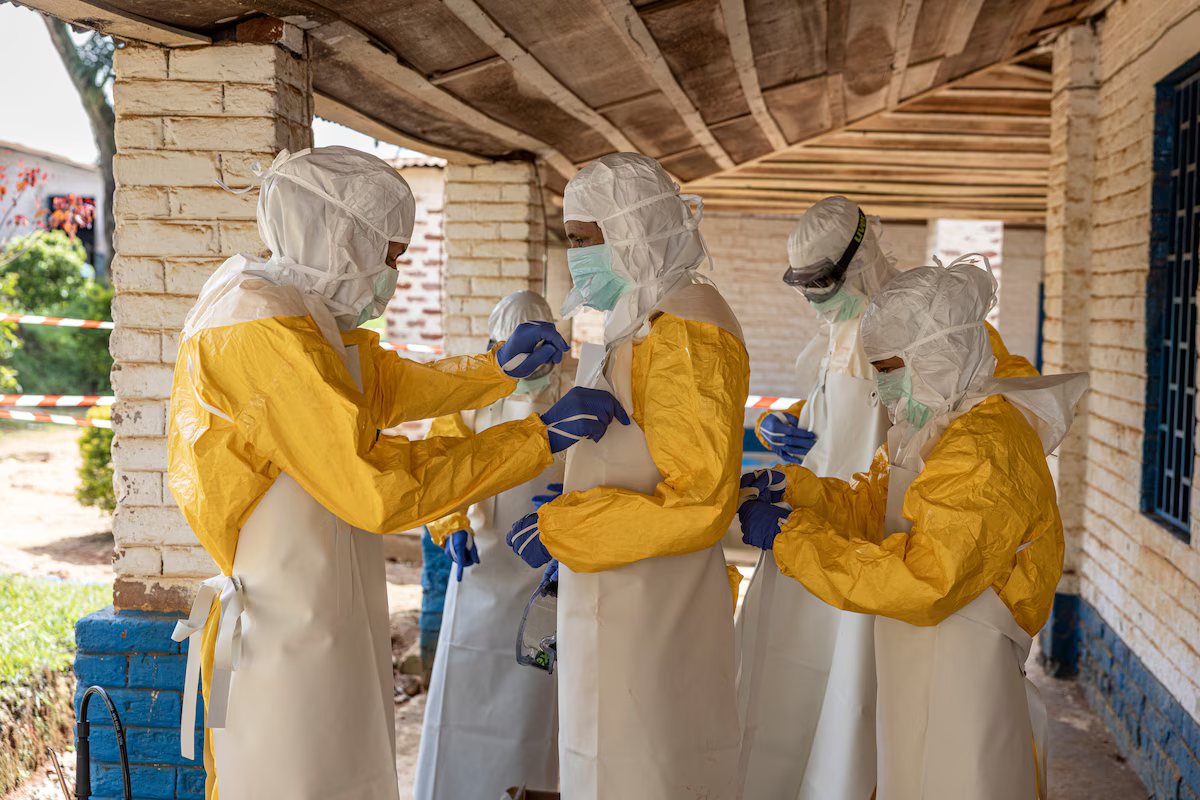
What is being built inside the base perimeter is a phased American military field hospital. Phase one, which becomes operational on Friday, consists of a 50-bed quarantine unit capable of receiving Americans who have been potentially exposed to Ebola but have not yet tested positive or developed symptoms. This is a monitoring and observation facility for asymptomatic individuals during the Ebola virus’s incubation window, which can run to 21 days.
Phase two, expected to be operational within the following week, will add specialised isolation units and biocontainment units transported directly from the United States. According to senior Trump administration officials who briefed reporters in Washington on Thursday, the fully built-out facility will eventually include three isolation units, each capable of holding four patients, and two biocontainment units, each capable of holding two patients. That gives the site a maximum symptomatic patient capacity of sixteen in high-containment conditions, with the 50-bed quarantine block handling the larger pool of exposed but unconfirmed cases. A source familiar with the broader Ebola response said the facility has the potential to eventually expand to 250 beds if the outbreak demands it.
The physical structure is not a conventional hospital building. It is a modular, tent-based military field hospital of the type the US military deploys in conflict zones and disaster response operations, supplemented by purpose-built biocontainment pods that are bolted together rather than constructed. Think pressurised, hermetically sealable rooms within a larger controlled-access compound, with negative air pressure systems to prevent contaminated air from escaping, and full decontamination corridors between zones. The biocontainment units in particular are the same technology used at facilities like Emory University Hospital in Atlanta, where American Ebola patients were treated during the 2014 West Africa outbreak. They are being flown to Kenya from American military stockpiles.
No Kenyan public health officer will be permitted inside the American unit. The infected will be treated by American infectious disease experts only.
The surrounding Laikipia terrain provides the buffer the Americans wanted. There are no dense civilian populations immediately adjacent to the base. The air base itself has the airstrip infrastructure necessary for medevac aircraft operations, which is central to the facility’s function as a staging and stabilisation point rather than a definitive treatment destination. A patient who deteriorates at Laikipia will not be flown to Nairobi. According to officials, they will be evacuated to specialised tertiary-care facilities in Europe, with the United States Centers for Disease Control working with European counterparts to identify receiving hospitals. Officials cited airports in Congo and Kenya as having limited capabilities that complicate direct long-haul transport to the United States.
HOW THE FACILITY WILL BE OPERATED
The operational structure of the Laikipia facility is built around a principle of total American control and total Kenyan exclusion from the patient-care environment. More than thirty officers from the United States Public Health Service Commissioned Corps are already on the ground, having departed Joint Base Andrews in Maryland on Wednesday night after a three-day training course covering Ebola patient care, quarantine procedures, and the use of personal protective equipment. A second cohort of officers is undergoing the same training this weekend and will deploy to Kenya next week.
Some of the officers currently in Kenya treated Ebola patients during the 2014 to 2015 Liberia outbreak, giving the team real-world Ebola experience at a facility that is treating the Bundibugyo strain, a rare variant for which there is no approved vaccine and no approved therapeutic. That clinical reality shapes the treatment protocols. If a quarantined patient develops symptoms or tests positive, the facility will be able to administer monoclonal antibody treatments and remdesivir, the broad-spectrum antiviral developed by Gilead Sciences. Remdesivir is not approved to treat Ebola specifically, but it is commonly used off-label in viral haemorrhagic fever management because of its demonstrated antiviral activity. Hydration support and respiratory assistance will also be available on-site.
Kenyan health workers are conducting parallel training at separate locations, with no integration planned between the American clinical team and Kenyan medical personnel. This segregation is not incidental. A source with direct knowledge of the arrangements was blunt about it: no Kenyan will be allowed inside the American treatment unit. Kenya’s own isolation infrastructure, which amounts to a single purpose-built viral haemorrhagic fever isolation unit at Kenyatta National Hospital in Nairobi, will handle any Kenyan Ebola cases independently, without cross-pollination with the American facility or its staff.
What this means in operational terms is that a patient arrives at Laikipia by medical evacuation aircraft, enters the quarantine block for monitoring, is assessed by American doctors, receives American-administered treatments if symptoms develop, and is either cleared for onward travel or evacuated to Europe. At no point in that pathway does a Kenyan clinician, a Kenyan public health officer, or a Kenyan biosafety inspector interact with the patient or the patient’s care team. The facility is, in every meaningful sense, an American installation on Kenyan sovereign territory.
WHY KENYA? THE QUESTION THE GOVERNMENT WON’T ANSWER
The Nation has established that Uganda was approached by the United States before Kenya. Whether Uganda declined or simply did not move fast enough for Washington’s timetable is not confirmed, but the sequence matters enormously. It means Kenya was not selected because it is the most clinically capable country in the region or the most geographically logical. It was selected because it was available, because it had a bilateral health cooperation framework already in place providing diplomatic cover, and because the Ruto government — economically dependent on American support for a health sector that had been built on USAID funding for decades — was in no position to refuse.
Africa CDC has placed Kenya among the ten highest-risk countries on the continent due to the volume of cross-border movement with both the Democratic Republic of Congo and Uganda. Kenya shares a border with Uganda and has extensive air and trade connections to the DRC. There have already been more than 55,000 travellers screened at Kenya’s ports of entry since the Bundibugyo outbreak intensified, and ten individuals have been tested for the virus, all returning negative results. Kenya has not recorded a single confirmed Ebola case.
The United States government’s own stated position is unambiguous. Secretary of State Rubio said it plainly during a White House Cabinet meeting: the United States cannot and will not allow any Ebola cases to enter American territory. That is the geopolitical logic underlying the Kenya facility. America will keep Ebola out of America by keeping Americans who may have been exposed out of America. Those Americans will instead be placed in a tent compound in the Kenyan highlands and treated by American staff, with European hospitals as the fallback if things go badly wrong.
If the United States believes the 12-hour medevac flight back to Washington is too dangerous for its citizens, by what logic is it safe to fly infected individuals into Kenyan airspace?
The KMPDU Secretary-General Dr Davji Bhimji Atellah put the central contradiction with surgical precision. If it is too dangerous for America, it is too dangerous for Kenya. The union has demanded that the government explain why Kenya was selected as the designated containment location while nations directly bordering the Bundibugyo epicentre are bypassed. That demand has not been answered.
Professor Lawrence Gostin, Director of the World Health Organization Centre on Global Health Law, went further. He called the plan reckless, unethical and possibly unlawful. He pointed out that the odds of surviving Ebola are vastly higher in specialised American hospitals than in a field facility with no approved therapeutics, and he laid responsibility for the delayed outbreak detection directly at the feet of the Trump administration, which had gutted the CDC and USAID field presence in the DRC before the Bundibugyo strain began spreading. If USAID and CDC had been active in the DRC, Gostin said, detection could have been earlier.
The Law Society of Kenya, through its president Charles Kanjama, called on the government to decline the request outright and argued that treatment facilities should be established near the outbreak epicentre in eastern DRC or western Uganda rather than in a country with no active cases. Former Chief Justice David Maraga called for immediate parliamentary scrutiny. Even within the Ministry of Health, the official line has fractured publicly: Medical Services PS Ouma Oluga made claims about Kenya’s isolation capacity and laboratory preparedness that Public Health PS Mary Muthoni directly contradicted, with Muthoni confirming to this newspaper that Kenya has exactly one purpose-built viral haemorrhagic fever isolation unit, located at KNH.
THE OUTBREAK BEHIND THE ARRANGEMENT
The epidemiological context in which all of this is unfolding is grave. The Bundibugyo strain of Ebola, the current outbreak’s causative agent, is the third largest Ebola outbreak on record. The World Health Organization declared it a Public Health Emergency of International Concern this month. In the Democratic Republic of Congo, there have been more than 906 suspected cases, 105 confirmed, and 223 suspected deaths. Uganda has reported seven confirmed cases and one fatality. The case fatality rate of the Bundibugyo strain sits between 25 and 40 percent.
There is no approved vaccine for Bundibugyo. The approved Ebola vaccines — including the rVSV-ZEBOV vaccine that proved effective in the 2018 to 2020 DRC outbreak — target the Zaire strain, not Bundibugyo. The standard vaccine stockpile is clinically irrelevant to the current emergency. Experimental immunological approaches are being researched, but nothing has received regulatory authorisation. This is the critical medical reality that makes the American decision to establish a field facility rather than return patients to Emory, the National Institutes of Health Clinical Centre, or other high-capability American biocontainment hospitals so politically charged. Those American facilities have the infrastructure, the trained staff, and the biocontainment capacity built specifically for this scenario. The Trump administration has chosen not to use them.
Samaritan’s Purse, the American evangelical humanitarian organisation that has operated multiple Ebola treatment units in previous outbreaks, has already established isolation facilities in the DRC. Washington has separately disbursed funds directly to the DRC as part of a broader multilateral response involving the United Kingdom and other bilateral partners. The Kenya facility is presented by American officials as one component of a multi-country, multi-partner response architecture, a staging and monitoring hub rather than a standalone treatment centre.
WHAT KENYA GETS FROM THIS
The government’s silence is not without a calculation behind it. Two KEMRI scientists contacted by the Daily Nation before the facility’s location became publicly known offered a perspective that the Ruto administration cannot say out loud but almost certainly believes. Professor Matilu Mwau, a Senior Principal Clinical Research Scientist at the Kenya Medical Research Institute, noted the obvious: the Americans are not going to demolish it when they leave. A biocontainment-capable isolation facility constructed to American military specifications, abandoned in place at a Kenyan air force base when the Ebola crisis passes, becomes a permanent asset for Kenya’s infectious disease response infrastructure. A country that currently has one isolation unit gets a second one, free of charge and built to a higher technical standard than anything Kenya could procure independently.
Brown Ashira, the Secretary General of the Public Health Union, was willing to describe the potential upside while insisting it came with non-negotiable conditions. If the arrangement proceeds with heavy ring-fenced international financing, he said, it could catalyse permanent employment for unemployed Kenyan doctors and nurses, strengthen border screening capacity, and give Kenyan frontline clinicians access to American infectious disease expertise and training that they would not otherwise encounter. The facility, properly leveraged, could serve as a catalyst for domestic investment in Kenya’s chronically underfunded public health defence.
None of those benefits are guaranteed. None of them are written into a public agreement because there is no public agreement. There are discussions. There are ongoing negotiations. There are equipment shipments crossing Africa and staff flying into Nairobi and a compound taking shape at Laikipia. But as of Friday morning, when the 50-bed quarantine unit becomes operational, Kenya’s government will not have told its citizens what it agreed to, on what terms, with what legal basis, or with what protections for the Kenyan public who live, farm and breathe the same air as the facility being built in their name.
The Americans are not going to demolish it when they leave. A facility built to American military specifications, abandoned in place at a Kenyan air base, becomes a permanent asset.
The KMPDU’s ultimatum expires within hours. If the government does not publish the bilateral text of the agreement, explain the selection of Kenya over frontline states, and commit to using the facility as leverage to employ the thousands of Kenyan doctors currently locked out of the public health system, the union has promised a nationwide strike. That is the political clock ticking alongside the epidemiological one.
AN AGREEMENT NO ONE IS DEFENDING PUBLICLY
There is a phrase in diplomacy for what Kenya’s government is doing: strategic ambiguity. It is the art of not saying yes and not saying no and letting events proceed without the accountability that either answer would demand. CS Duale’s two-page statement confirmed discussions. It confirmed Kenya’s partnership with the United States. It confirmed that any arrangements would be guided by Kenya’s national laws. It confirmed nothing that could be held against the government in court, in parliament, or in the press.
The problem with strategic ambiguity is that facilities are not ambiguous. Fifty beds are fifty beds. Biocontainment pods shipped from American military stockpiles are not hypothetical. Thirty-plus US Public Health Service officers sleeping in Laikipia barracks right now are not a discussion document. The train, as one senior Kenyan health official told the Nation, left the station before the Cabinet meeting even convened.
What Kenya is left with is this: a facility it cannot publicly endorse, built under an agreement it will not release, to house patients from a country that will not bring them home, in the name of a health partnership that was suspended by its own courts and only lifted six months after it was signed. The Americans have described it as a natural extension of longstanding cooperation. Kenyan doctors are calling it a containment colony. The courts are being petitioned. Parliament has not been consulted. And on Friday morning, the gate at Laikipia opens.
Kenya Insights allows guest blogging, if you want to be published on Kenya’s most authoritative and accurate blog, have an expose, news TIPS, story angles, human interest stories, drop us an email on [email protected] or via Telegram




Omtatah Seeks Removal of Three Appeal Judges Over Kenya-US Health Deal Ruling

Blue Origin Rocket Explodes On Launchpad In A Setback For Bid To Catch Musk’s SpaceX

Two Teachers Knew Of Planned Utumishi Girls Dormitory Fire But Failed To Act

Eight Students Arrested In Kenya After Suspected Deadly School Arson Attack

Kenyan Court Orders Suspension Of US Plan For Ebola Quarantine Facility

Mohan Galot’s Empire Faces Collapse As Court Reinstates Sh3 Billion Demand

From Hunger Cartel To Oil Docket: The Troubling Rehabilitation Of Kello Harsama

Ruto Claims Powerful Oil Cartels Are Fighting to Block Dangote Refinery Entry Into Kenya, Vows to Push Ahead

Inside The American Ebola Makeshift Hospital Being Built On Kenyan Soil: Tents, Biocontainment Pods, And A Deal Ruto Cannot Afford To Refuse

Lobby Group Moves To Court To Block Proposed US Ebola Quarantine Facility In Kenya

How Did a Sh468K KRA Salary Allegedly Turn Into Sh30 Billion? Questions Deepen Over Commissioner George Obel and Ciala Resort Owner’s Wealth

Why Ruto’s Favourite Candidate Adan Mohammed Could Be Locked Out of the KRA Top Job

Green Gold, Rotten Roots: How Kenya’s Biggest Avocado Firms Hijacked a Sh5.8 Billion Harvest Ban

Safaricom’s Sh1.4 Billion Reckoning: How Kenya’s Most Profitable Company Stole a Man’s Idea and Got Caught

The Rot Inside Absa: How Bank Insiders Are Looting Nairobi’s Customers

The $24 Million Heist at the End of the World

Denial Under Duress: The Untold Collapse Threatening David Lagat’s DL Group’s Empire

THE INSURER THAT TOOK YOUR PREMIUM AND FORGOT YOUR NAME: How ICEA Lion Left a Client Begging for Sh7.8 Million Across Four Months

DENTIST IN DISGUISE: How Este Medical Kenya’s Co-Founder Allegedly Prescribed Medicines Outside Her Scope, Lied to Police, and Weaponised the Law Against a Foreign Patient

LifeCare on the Brink: SHA Fraud, Stolen Wages, and the Rotten Empire Jayesh Saini Built
-
 News2 weeks ago
Why Ruto’s Favourite Candidate Adan Mohammed Could Be Locked Out of the KRA Top Job
-
 News4 days ago
DENTIST IN DISGUISE: How Este Medical Kenya’s Co-Founder Allegedly Prescribed Medicines Outside Her Scope, Lied to Police, and Weaponised the Law Against a Foreign Patient
-
 Investigations3 days ago
LifeCare on the Brink: SHA Fraud, Stolen Wages, and the Rotten Empire Jayesh Saini Built
-

 Business2 weeks ago
Court Confirms Safaricom Customers Data Was Sold To Betting Companies In Seven-Year Cover-Up
-
 Americas4 days ago
Inside FAFSA Fraud: How Kenyan Cybercriminals Siphoned Millions from America’s Sh12 Billion Student Loan System
-
 Business1 week ago
Blocked: How Mombasa Tycoon Ashok Doshi Has Stopped Imperial Bank Depositors From Getting Their Money
-
 Investigations4 days ago
LSK On The Spot For Renewing Rogue Lawyer Dennis Onyango’s Licence Despite Mounting Evidence He Held Foreign Investors’ Millions Hostage
-
 Business2 weeks ago
Paybill 585555: How Airtel Kenya’s Interoperability Gateway Became A Criminal Pipeline Draining Millions From Unsuspecting M-Pesa Users