
Business
Luxury Play for Influence: Inside Kempinski’s High-Stakes Bet on Brazzaville

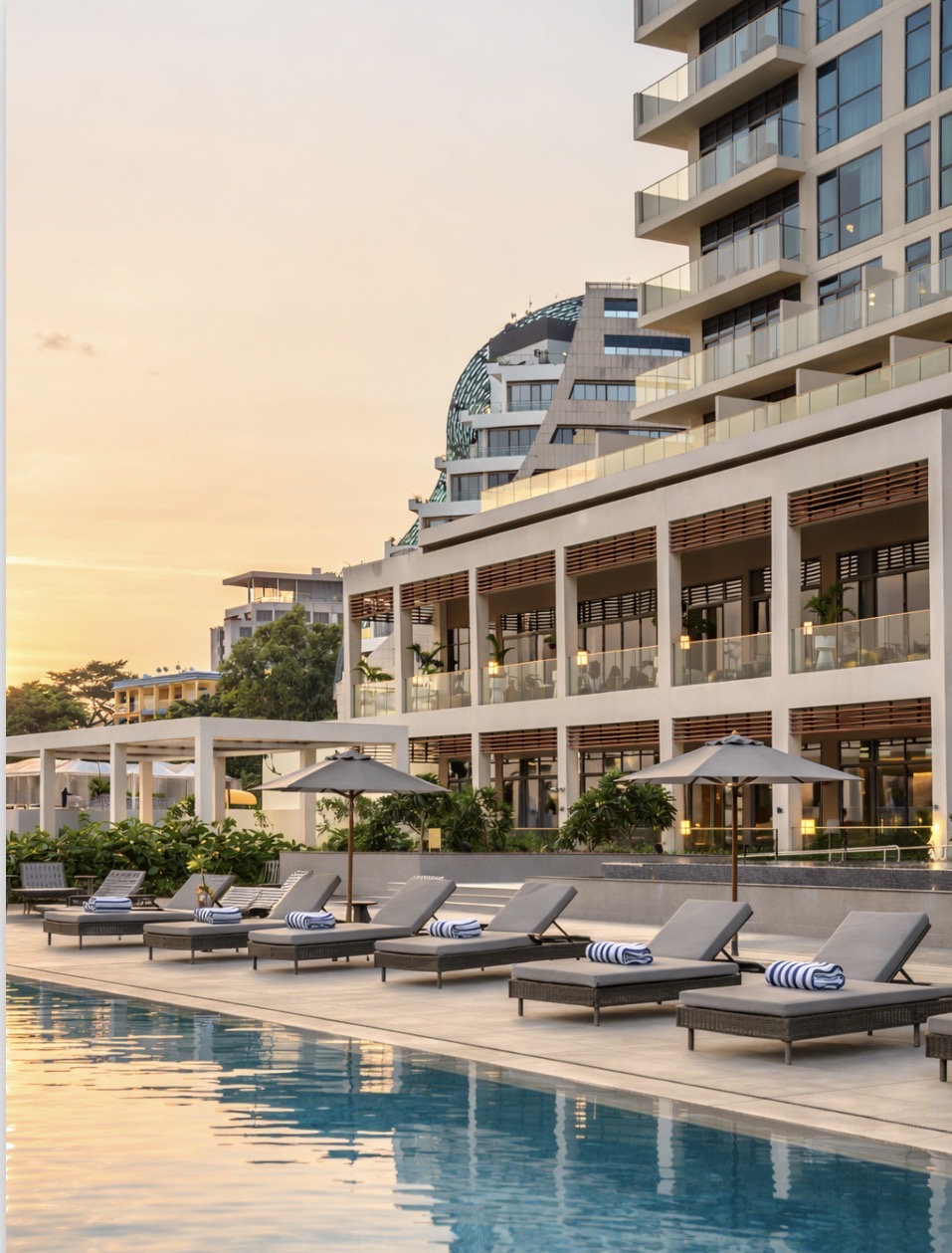
Brazzaville is not typically the first name that surfaces in conversations about Africa’s luxury hospitality boom. But a new entrant on the banks of the Congo River is attempting to force a rethink.
Barely months after opening its doors in December 2025, Kempinski Hotel Brazzaville is positioning itself not just as a five-star address, but as a strategic gateway to a country and region long overlooked by global tourism circuits.
The ambition is clear and unusually explicit: reshape Brazzaville’s international image and pull it into the orbit of high-end business and leisure travel.
Set along the riverfront directly facing Kinshasa, the 197-room property leans heavily on location as both a visual and symbolic asset.
From private balconies overlooking one of the world’s most powerful rivers to interiors inspired by Congolese natural textures and materials, the hotel is designed to sell a narrative as much as a stay. Management frames it as an “interpreter” of the city’s cultural and historical identity, but the underlying play is economic anchoring Brazzaville as a viable destination for global capital and diplomacy.
This is not happening in a vacuum. Across Africa, luxury hotel groups are increasingly targeting underexposed capitals with political significance or untapped tourism potential.
Brazzaville, with its history as a diplomatic hub and its proximity to the vast Congo Basin, fits that profile. What has been missing is infrastructure capable of meeting international expectations. Kempinski appears intent on filling that gap.
The hotel’s culinary strategy signals part of that push. With five distinct restaurants and bars under the direction of Chef Michael Berthelot, the property is trying to establish itself as a social and gastronomic nucleus.
Concepts range from buffet-style dining at Mosaic to European-inspired cuisine at La Capitale, alongside a café-bar hybrid designed to transition from daytime meetings to evening nightlife.
A rooftop lounge, marketed as the city’s first of its kind, adds another layer to what is effectively a controlled ecosystem of experiences aimed at both international visitors and the local elite.
Beyond dining, the property is betting on scale and versatility.
An 870-square-metre event space, including a ballroom capable of hosting 600 guests, positions the hotel as a contender for regional conferences, diplomatic gatherings and state functions.
In a capital where international organisations and government institutions intersect, that capability is not incidental it is central to the business model.
The wellness and leisure offering follows a similar logic.
A large swimming pool, full-service fitness centre, kids’ club and curated activities such as aqua gym sessions and swimming lessons suggest an attempt to broaden appeal beyond transient business travellers.
The hotel is also actively marketing itself as a family destination, a relatively underdeveloped segment in Brazzaville’s hospitality sector.
Perhaps the most strategically significant feature, however, is the concierge service.
Framed as a bridge between guests and the country, it is designed to funnel visitors into curated cultural and ecological experiences from the Poto-Poto painting school and Bacongo’s rumba scene to excursions deeper into the Congo Basin’s national parks. This is where the hotel’s ambitions intersect with a larger narrative: positioning Congo not just as a stopover, but as an experiential destination rooted in biodiversity and culture.
That ambition comes with risks. Congo’s tourism infrastructure remains uneven, and security, accessibility and global perception continue to shape traveller decisions.
High-end hospitality alone cannot resolve those structural challenges.
But it can act as a signal one that suggests confidence in the market and attempts to attract the ecosystem that follows, from airlines to tour operators and investors.
Kempinski, which operates 75 properties across 33 countries, is no stranger to such calculated expansions.
Its entry into Brazzaville reflects a broader industry pattern: identifying locations with latent potential and moving early to define the standard. Whether that standard holds will depend not only on the hotel’s performance, but on how effectively the broader destination evolves around it.
For now, the message is unmistakable.
In a city better known for its cultural legacy than its luxury credentials, a global hospitality heavyweight is making a deliberate, high-visibility bet.
And in doing so, it is attempting to redraw the map of where luxury and influence can take root in Central Africa.
Kenya Insights allows guest blogging, if you want to be published on Kenya’s most authoritative and accurate blog, have an expose, news TIPS, story angles, human interest stories, drop us an email on [email protected] or via Telegram


Senegal’s Parliament Speaker Quits Two Days After Prime Minister Is Sacked

Inside FAFSA Fraud: How Kenyan Cybercriminals Siphoned Millions from America’s Sh12 Billion Student Loan System

LSK On The Spot For Renewing Rogue Lawyer Dennis Onyango’s Licence Despite Mounting Evidence He Held Foreign Investors’ Millions Hostage

Your Medical Records Were Wide Open: How Three Digital Lenders Hacked the Heart of Kenya’s Health System and the DHA Chief Who Looked Away

DENTIST IN DISGUISE: How Este Medical Kenya’s Co-Founder Allegedly Prescribed Medicines Outside Her Scope, Lied to Police, and Weaponised the Law Against a Foreign Patient

Nigerians Arrested in Thailand Over AI Dating Scam

Senegal President Sacks PM Sonko, Dissolves Government After Months of Friction

Court Sets Date For Ruling In Gachagua Impeachment Petitions

China Threatens Kenya With Lawsuit Over Secret SGR Contracts as Court Orders Full Disclosure

Auto Accident Claims: Essential Guide for Engaging an Auto Accident Lawyer Las Vegas

How Did a Sh468K KRA Salary Allegedly Turn Into Sh30 Billion? Questions Deepen Over Commissioner George Obel and Ciala Resort Owner’s Wealth

Why Ruto’s Favourite Candidate Adan Mohammed Could Be Locked Out of the KRA Top Job

Green Gold, Rotten Roots: How Kenya’s Biggest Avocado Firms Hijacked a Sh5.8 Billion Harvest Ban

Safaricom’s Sh1.4 Billion Reckoning: How Kenya’s Most Profitable Company Stole a Man’s Idea and Got Caught

The $24 Million Heist at the End of the World

The Rot Inside Absa: How Bank Insiders Are Looting Nairobi’s Customers

Denial Under Duress: The Untold Collapse Threatening David Lagat’s DL Group’s Empire

THE INSURER THAT TOOK YOUR PREMIUM AND FORGOT YOUR NAME: How ICEA Lion Left a Client Begging for Sh7.8 Million Across Four Months

The President’s Helicopter: How Ruto’s Aviation Empire Lands a Historic Airbus Milestone While His Government Writes the Tax Code

Bush Air Safaris Founder John Ndiritu Risks Losing Property Over Disputed Loan Claim
-
 News1 week ago
Why Ruto’s Favourite Candidate Adan Mohammed Could Be Locked Out of the KRA Top Job
-
 Business2 weeks ago
The Rot Inside Absa: How Bank Insiders Are Looting Nairobi’s Customers
-
 Business2 weeks ago
The President’s Helicopter: How Ruto’s Aviation Empire Lands a Historic Airbus Milestone While His Government Writes the Tax Code
-

 Business1 week ago
Court Confirms Safaricom Customers Data Was Sold To Betting Companies In Seven-Year Cover-Up
-

 Arts & Culture2 weeks ago
“TikTok Who? YouTube Sorry. A Kenyan-Built Platform Just Dropped—and 20 African Ministers Showed Up To Launch It.”
-
 Business6 days ago
Blocked: How Mombasa Tycoon Ashok Doshi Has Stopped Imperial Bank Depositors From Getting Their Money
-
 Business1 week ago
Paybill 585555: How Airtel Kenya’s Interoperability Gateway Became A Criminal Pipeline Draining Millions From Unsuspecting M-Pesa Users
-

 News4 days ago
Jackson Kihara Accuses His Uncle Rigathi Gachagua of Framing Him in Robbery with Violence Case To Surrender Father’s Property