
Investigations
THE PHANTOM COVER: Unlicensed Broker Vanishes With Sh42M, Hussein Mohammed Fingered In The Alleged CHAN 2024 Insurance Scandal
How a 40-Day-Old, Unlicensed Broker Walked Away With Sh42 Million of FKF Money While CHAN 2024 May Have Been Staged Without Valid Insurance

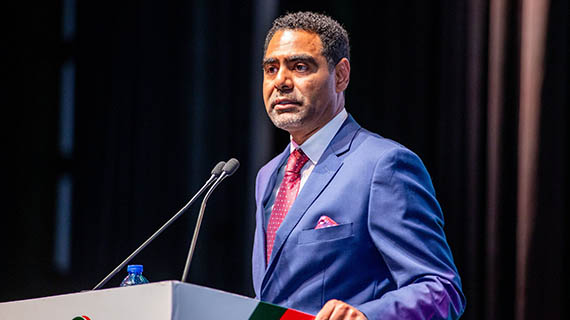
It is a question that strikes at the heart of Kenya’s credibility as a continental football host: was the 2024 African Nations Championship, co-hosted by Kenya, Uganda and Tanzania from August to September last year, staged without valid insurance cover?
That is the explosive allegation now lodged before the Ethics and Anti-Corruption Commission, supported by documentation that points to a procurement exercise under Football Kenya Federation President Hussein Mohamed in which brokerage fees worth USD 328,735, approximately Sh42.7 million, were wired into the account of a company incorporated barely forty days before it received the money, a company with no licence from the Insurance Regulatory Authority and no listing on the register of the Association of Insurance Brokers of Kenya.
The company at the centre of the allegations is Riskwell Insurance Brokers Limited, incorporated on 25 June 2025, just weeks before CHAN 2024 kicked off at Kasarani and Nyayo stadiums. According to documentation reviewed in the course of this investigation, the fee of USD 328,735 was wired to Riskwell’s account at First Community Bank Limited (now Premier Bank) on 4 August 2025, the very day Kenya hosted the Democratic Republic of Congo in the tournament’s opening match before a sell-out crowd in Nairobi.
The central and unanswered question, the one that makes this more than a procurement irregularity, is whether Riskwell ever placed any insurance cover on behalf of FKF at all.
If no valid policy existed, then Kenya hosted an international continental tournament, attracting players, officials, fans and broadcast crews from across Africa, without insurance protection.
That is not an administrative lapse.
It is a potential constitutional violation touching the right to life under Article 26, the right to dignity under Article 28, and the standards of public accountability under Articles 73 and 232 of the Constitution of Kenya.
Kenyan courts have consistently treated FKF as a quasi-public body, drawing on taxpayer-funded allocations and acting in Kenya’s name on the continental stage, obligations that place its leadership under heightened fiduciary standards.
The central and unanswered question is whether Riskwell Insurance Brokers Limited ever placed any insurance cover on behalf of FKF at all.
THE GHOST BROKER
Riskwell Insurance Brokers Limited exists, at least on paper, as a company registered under Kenyan law. What it does not possess, according to the Insurance Regulatory Authority’s public register, is any licence to operate as an insurance broker in Kenya.
The IRA register, which is the authoritative list of entities legally permitted to intermediate insurance business in this country, carries no record of Riskwell. The Association of Insurance Brokers of Kenya, the industry body whose membership is a practical prerequisite for operating in the market, similarly has no record of the firm as a registered member.
A company formed in June 2025 and invisible to both the sector regulator and the industry association received over forty-two million shillings of federation money the same week CHAN opened. The mathematics of that sequence should alarm any reasonable public accountant.
The investigation that produced this material began, according to the whistleblower who brought it forward, at the close of CHAN 2024, driven by a professional instinct and a citizen’s sense of duty.
The resulting dossier has since been formally submitted to the EACC alongside a call for a forensic examination of the full transaction.
The whistleblower, who has been on this trail for close to twelve months and describes the evidence as documented rather than speculative, warns of the exposure that attaches to institutions, officials and ultimately taxpayers when procurement is conducted through unvetted intermediaries in transactions of this scale.
HUSSEIN MOHAMED: A LEADERSHIP ALREADY UNDER STRAIN
Hussein Mohamed assumed the presidency of FKF on 7 December 2024, winning decisively with 67 votes in a second-round contest against his closest opponent Barry Otieno.
He ran alongside former Kenyan international McDonald Mariga on a platform of transparency, integrity and grassroots investment.
His campaign website promised a federation that would function within the law, with clear governance structures and an end to the financial mismanagement that had characterised earlier administrations. Barely sixteen months after his election, those promises have become the standard against which the current allegations will be judged.
The forensic audit commissioned upon Hussein’s election painted a damning portrait of the federation he inherited.
It found a previous administration that left behind debts exceeding Sh383 million, operated sixteen bank accounts, several of which were described as illegal, and was embroiled in twenty-one active legal cases.
At the FKF Congress in May 2025, Hussein revealed that the federation’s total obligations had ballooned to over Sh600 million, a figure he said was crippling the federation’s ability to deliver on its programmes. Among those inherited liabilities was a debt of Sh109 million to former Harambee Stars coach Adel Amrouche, whose wrongful dismissal between 2013 and 2014 had wound through the FIFA Players’ Status Committee and the Court of Arbitration for Sport before resulting in a penalty that FIFA eventually began deducting directly from Kenya’s FIFA Forward development funds.
Yet despite inheriting that wreckage, Hussein’s own administration has accumulated its own transparency deficits.
The most visible has been the refusal to disclose the salary of South African coach Benni McCarthy, appointed in March 2025.
The FKF first claimed McCarthy’s pay was funded by government through the Salaries and Remuneration Commission, a claim the SRC publicly repudiated, saying it had no such arrangement and that national team coaches are not civil servants under its framework.
Hussein then told a press conference that McCarthy would be paid by FKF, but declined to state the figure, citing privacy.
That the federation promised insurance for players during the campaign while its president now declines to account for an insurance brokerage fee of over forty-two million shillings paid to an unlicensed entity is, for its critics, a perfect emblem of the gap between the platform and the practice.
Hussein’s campaign promised a federation that would function within the law. Barely sixteen months after his election, those promises have become the standard against which the current allegations will be judged.
CHAN 2024: THE TOURNAMENT AND THE QUESTIONS IT LEFT BEHIND
CHAN 2024, branded TotalEnergies African Nations Championship, was a landmark event for Kenyan football. Staged across Kenya, Uganda and Tanzania from 2 August to 30 August 2025, it was the first time the tournament had been co-hosted by three nations and the most significant continental football event Kenya had hosted in decades.
Nairobi served as the nerve centre, with Kasarani and Nyayo hosting Group A matches involving Harambee Stars, Morocco, Angola, the Democratic Republic of Congo and Zambia.
Kenyan fans turned out in extraordinary numbers, prompting security alerts and a CAF directive to cap attendance at 60 percent of stadium capacity after gates were breached during a Kenya versus Morocco fixture.
Hussein Mohamed was deeply visible throughout.
He met with FIFA President Gianni Infantino in Marrakech on the margins of the tournament, discussed infrastructure and a proposed FIFA technical centre in Kenya, urged fans to arrive five hours before kick-off, and heaped praise on security agencies in a breakfast meeting held on 4 September 2025, naming individual officers responsible for the tournament’s smooth management.
By the time the final whistle blew at the end of August, Hussein was presenting CHAN 2024 as a dry run for the 2027 Africa Cup of Nations, a proof of concept for Kenya’s ability to host continental football.
It is precisely that narrative that the insurance allegation threatens to unravel.
If the tournament’s insurance procurement was routed through an unlicensed shell company that received fees days after the tournament began, and if no valid policy was ever placed, then the celebration conceals a liability exposure that FKF, the government and the millions of Kenyans who attended CHAN matches may have been unaware of. The EACC now holds the material.
The federation has not addressed it publicly.
Hussein Mohamed has not yet responded to the specific allegation. The silence, for observers who remember the denials and deflections that preceded earlier FKF scandals, is itself a data point.
THE MATCH-FIXING SHADOW
The insurance allegation does not arrive in isolation. It lands in an institution already caught in a decade-long struggle with match manipulation.
In February 2020, FIFA banned four Kenyan players from football for their roles in an international match-fixing conspiracy involving Kakamega Homeboyz.
In January 2023, FKF suspended fourteen players and two coaches following match-fixing investigations, the largest single action in Kenyan domestic football history.
By May 2025, FIFA had ordered the relegation of Muhoroni Youth from the National Super League after finding the club guilty of match manipulation.
In March 2025, national team goalkeeper Patrick Matasi became the most prominent Kenyan footballer caught in match-fixing allegations in years, provisionally suspended for 90 days after a leaked video implicated him in manipulation discussions.
The trajectory is a deep structural problem rather than a series of isolated incidents. A 2019 FIFA investigation had found prima facie evidence that several Kenya international matches had been fixed, with documented correspondence linking national team players to convicted match-fixer Wilson Raj Perumal going back to 2009.
The government response has been legislative rather than operational.
In March 2026, the Sports (Amendment) Bill, 2026, sponsored by Nominated MP Irene Mayaka, was tabled to criminalise match manipulation with fines and custodial sentences. The bill’s very existence is an acknowledgment that Kenya’s existing legal architecture has been structurally inadequate to the scale of the problem.
FKF under Hussein responded to FIFA’s decision on Muhoroni Youth by reiterating a zero-tolerance policy. The federation also cooperated sufficiently with FIFA’s Governance and Compliance Committee, known as the GACC, for FIFA to lift a freeze on FKF’s FIFA Forward development funds in December 2025, having earlier suspended those funds following a central audit that raised governance and financial management concerns.
FIFA placed FKF under a monthly reporting mechanism on the use of Forward funds as a condition for restoration.
The GACC was scheduled for a follow-up review in March 2026.
The insurance allegation, if substantiated, lands directly in the window of that ongoing FIFA oversight, with potentially severe consequences for Kenya’s standing with world football’s governing body.
The EACC now holds the material. The federation has not addressed it publicly. Hussein Mohamed has not yet responded to the specific allegation.
THE AFCON 2027 COUNTDOWN AND THE PRICE OF SCANDAL
Kenya’s co-hosting of the 2027 Africa Cup of Nations with Uganda and Tanzania is the most consequential football commitment in the country’s history.
The tournament, scheduled from June 19 to July 18, 2027, carries with it the promise of sports tourism, infrastructure investment and the symbolic redemption of a football association twice stripped of hosting rights before.
Kenya lost the right to host the 1996 AFCON and the 2018 African Nations Championship, both times for inadequate preparations.
The 2027 bid, the Pamoja East Africa initiative, was awarded in September 2023 in part on the strength of institutional commitments that FKF’s leadership, including Hussein Mohamed, is now obliged to honour.
The financial picture is alarming.
Kenya’s total contractual cost for stadium renovation and construction for AFCON 2027 stands at Sh15.11 billion, of which only Sh3.74 billion has been paid.
The contractor at Kasarani, owed more than Sh3.7 billion, has reduced its workforce. The contractor at Nyayo Stadium, owed more than Sh2.6 billion, has abandoned the site entirely.
The Sh3.9 billion hosting rights fee owed to CAF, due in April 2026, was not provided for in the 2025/26 Budget Estimates, prompting Cabinet Secretary for Sports Salim Mvurya to invoke the supplementary budget process as a rescue mechanism.
CAF’s own inspection report published in February 2026 found that none of the proposed competition venues in Kenya fully meets the Category 4 requirements for hosting AFCON matches.
The Talanta Sports City Stadium, a 60,000-capacity flagship venue along Ngong Road built by China Road and Bridge Corporation at an estimated cost of Sh44.7 billion and supervised by the Kenya Defence Forces, missed its December 2025 completion deadline. It was at 88 percent completion as of April 2026, with a new target that officials have declined to formally commit to.
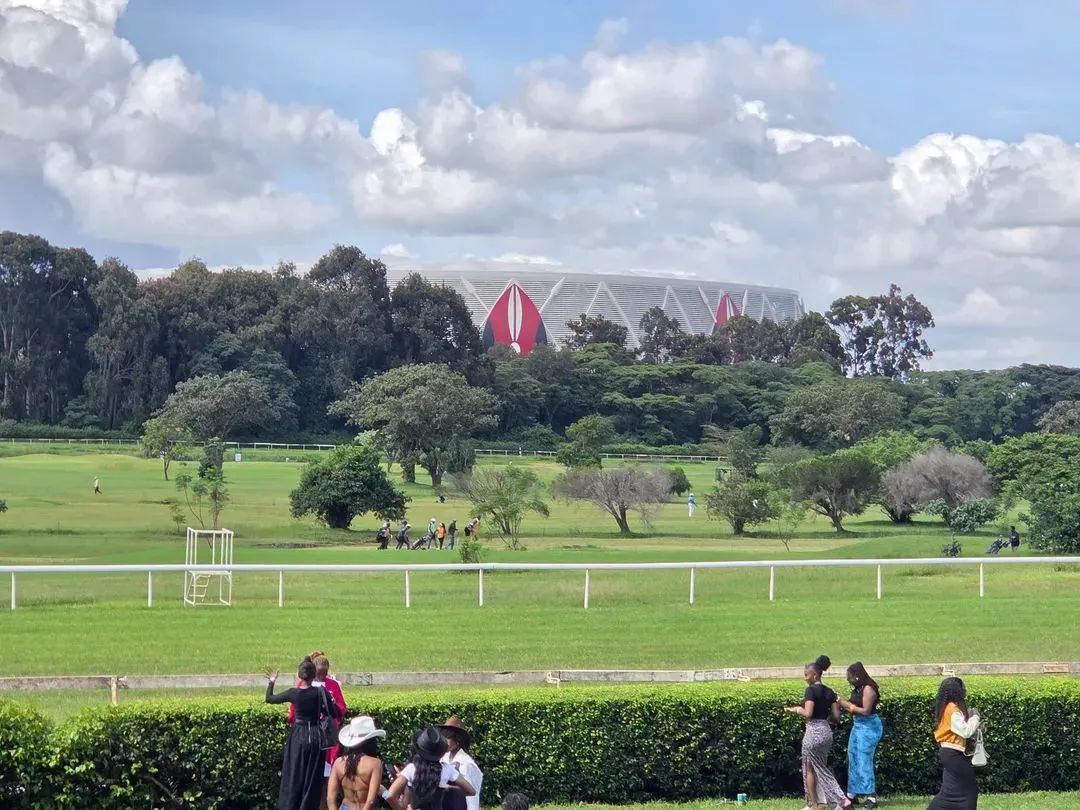
A view of Talanta Stadium
The stadium was renamed the Raila Odinga International Stadium by President William Ruto during Jamhuri Day celebrations in December 2025, but remains incomplete. Hussein Mohamed serves as vice president of the CHAN and AFCON Local Organising Committee, chaired by former CECAFA Secretary-General Nicholas Musonye, with businessman Myke Rabar as CEO. Kenya is reconstituting the LOC for AFCON and the composition of that new structure has not been finalised.
The insurance allegation injects a governance crisis into an infrastructure crisis at the worst possible moment. Sports tourism and continental events run on institutional confidence, sponsor commitments and investor trust.
An FKF president under investigation, or even under credible allegation of procurement fraud involving an unlicensed entity, is not the face that Kenya’s AFCON machinery can afford to present to CAF, FIFA, broadcasting partners and the commercial sponsors on whom the tournament’s revenue model depends.
Kenya has already been stripped of two hosting rights in its history.
The documentation now before the EACC, if it reveals what the whistleblower asserts, may force a reckoning that neither FKF nor the government has the institutional bandwidth to manage while simultaneously trying to ready Kasarani, Talanta and the training grounds for June 2027.
THE CONSTITUTIONAL DIMENSION
The whistleblower’s formal complaint to the EACC is grounded in constitutional language that deserves serious weight.
FKF operates partly on public funds, draws FIFA Forward allocations managed through government structures, and organises events in Kenya’s name under international football governance frameworks. Its president holds a public trust that the courts have repeatedly affirmed.
To procure tournament insurance through a company formed forty days before payment, unlicensed by the IRA, unregistered with AIBK, and potentially incapable of placing a valid policy, is to expose players, officials and the attending public to uninsured risk. If players or officials had been injured during CHAN 2024 and no valid policy existed, the resulting liability would have been enormous and the claimants would have had nowhere to turn. That exposure, real or hypothetical, does not dissipate simply because the tournament concluded without a major physical incident.
The EACC now faces a test of its own institutional integrity.
The commission has been presented with documentation, not rumour, and a specific financial trail: a named broker, a named bank, a named account, a specific wire transfer date and a specific amount.
The question it must answer is whether Riskwell Insurance Brokers Limited ever placed any insurance cover on behalf of FKF for CHAN 2024. If it did not, then the money moved on 4 August 2025 was not a brokerage fee. It was something else.
WHAT MUST HAPPEN NOW
The FKF National Executive Council has a responsibility that predates the EACC complaint. It must convene an emergency sitting, demand a full account of the CHAN 2024 insurance procurement process, and place all related documentation before an independent forensic auditor.
That process cannot be conducted credibly if Hussein Mohamed, as the federation’s chief executive officer and the official who carried ultimate oversight responsibility for the procurement, remains in post while the investigation proceeds.
The logic of institutional integrity demands a voluntary and temporary step-aside, not an admission of guilt but an act of leadership that protects both the investigation and the federation it is meant to serve.
The government, through the Ministry of Sports and in its capacity as custodian of the AFCON 2027 project, has an equally compelling interest in demanding accountability. Every day that FKF operates under unresolved allegations of this gravity is a day that Kenya’s credibility as a host nation weakens. CAF is watching.
FIFA’s GACC is watching. Sponsors are watching.
The three months between now and the end of June, when CAF expects material progress on infrastructure and governance readiness, will determine whether Kenya retains its AFCON hosting rights or joins the list of countries that made the promise and failed the delivery.
Kenya Insights allows guest blogging, if you want to be published on Kenya’s most authoritative and accurate blog, have an expose, news TIPS, story angles, human interest stories, drop us an email on [email protected] or via Telegram


How KCB and Airtel Turned Kenya’s Unbanked Into a Data Goldmine Behind a ‘Financial Inclusion’ Deal

The Chivayo Network: How a Convicted Fraudster Won Access to Presidents, Passports and Billion-Dollar Deals Across Africa

BURRIED TWICE: The Victoria Bank CEO Yogesh Pattni Files

Court Stops Transfer Of EABL Shares To Asahi By Diageo In A Fresh Snag

Death Before Justice: Stephen Ngei, Victim of Sh180 Million Laptop Tender Scam Linked to Allan Chesang, Killed in Highway Crash

Court Brands Sh1.1 Billion Fee Demand by Lawyer Victor Swanya “Excessive and Exorbitant,” Exposes How City Hall Lets Public Money Bleed Through Legal Bills

Trump Unveils New Air Force One

MR. NO SHOW: Finance Bill 2026 Exposes Ndindi Nyoro’s Political Conmanship

Billionaire Eric Muli Rebukes Musalia Mudavadi Over Nairobi Capital Relocation Debate

Lawyer Cliff Ombeta Warns Against Taking Insurance Cover With Old Mutual: “Talk to Me Before You Do, Their Imara Cover Is a Fraud”

Businessman Philip Waithaka Kinuthia’s Minor Son Allegedly Drove Drunk, Killed Two Peponi Students in Ngong Road Horror Crash as Claims of Cover-Up Intensify

Inside NCBA’s Decline: How a Banking Giant Lost Its Strategic Edge

Cement, Cash and Courts: How the Hashu Dynasty Crushed the Ramji Brothers for Fourteen Years and Why the Walls Are Now Closing In

Standard Chartered Ghosts Haunt Joshua Oigara At Stanbic As Whistleblower Spills Beans

South Sudan: Adut Salva Kiir’s Shadow Treasury Exposed

Inside The Urban Planning Cartel That Owns Nairobi

THE VULTURE AND THE SCHEME How Nairobi West Hospital Became the Most Dangerous Institution in Kenya’s SHA Ecosystem and Why the Books Must Be Audited Now

How Adil Popat Saved His Empire On The Eve Of Imperial Bank Collapse and Why Kenya’s Mainstream Media Buried The Story

Why John Ngumi Is Running From the EACC and Why the Sh415 Million Payday May Be the Least of His Worries

The President’s Daughter and The Missing Witness: How Adut Salva Kiir’s Shadow Treasury Silenced Its Most Dangerous Critic
-
 News1 week ago
Businessman Philip Waithaka Kinuthia’s Minor Son Allegedly Drove Drunk, Killed Two Peponi Students in Ngong Road Horror Crash as Claims of Cover-Up Intensify
-
 Business2 weeks ago
Inside NCBA’s Decline: How a Banking Giant Lost Its Strategic Edge
-
 Business2 weeks ago
Standard Chartered Ghosts Haunt Joshua Oigara At Stanbic As Whistleblower Spills Beans
-
 Africa1 week ago
South Sudan: Adut Salva Kiir’s Shadow Treasury Exposed
-
 Investigations3 days ago
THE VULTURE AND THE SCHEME How Nairobi West Hospital Became the Most Dangerous Institution in Kenya’s SHA Ecosystem and Why the Books Must Be Audited Now
-
 Business1 week ago
How Adil Popat Saved His Empire On The Eve Of Imperial Bank Collapse and Why Kenya’s Mainstream Media Buried The Story
-
 Business1 week ago
Why John Ngumi Is Running From the EACC and Why the Sh415 Million Payday May Be the Least of His Worries
-
 Africa2 weeks ago
The President’s Daughter and The Missing Witness: How Adut Salva Kiir’s Shadow Treasury Silenced Its Most Dangerous Critic