
News
Iran Missiles Don’t Have Capacity To Reach Kenya, Envoy Assures as William Ruto Condemns Middle East Attacks
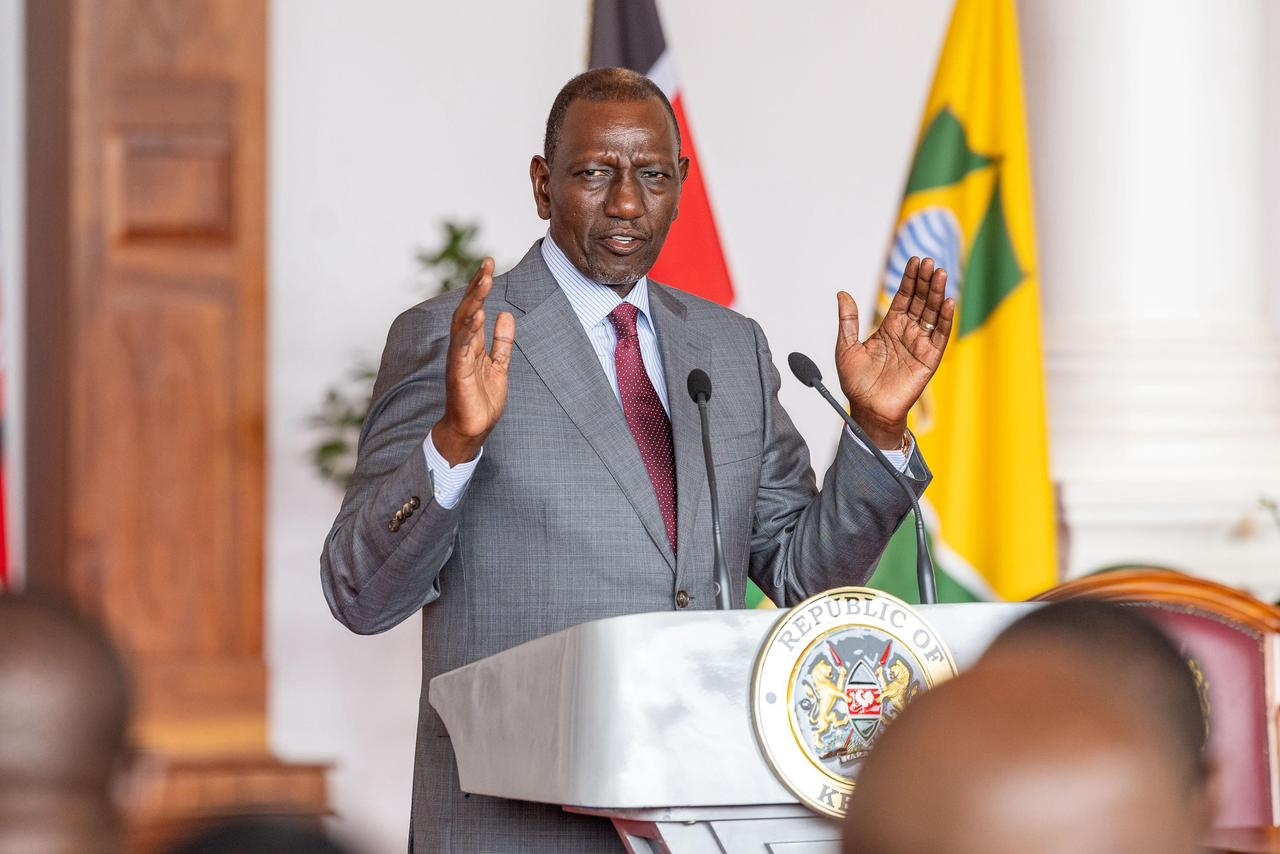
President Ruto on Monday condemned the widening conflict, warning that its regionalisation poses a grave threat to international peace and security.

Iran’s ambassador to Kenya has sought to calm anxiety over the escalating conflict in the Middle East, assuring that Tehran’s missile systems do not have the capacity to reach Kenyan territory.
Speaking in Nairobi, Iranian envoy Ali Gholampour said Iran’s ballistic missile programme is capped at a maximum range of about 2,000 kilometres, placing East Africa well outside its operational reach. He described the limitation as deliberate and intended to demonstrate what he termed Iran’s defensive military posture.
“Our missiles will not reach the Kenyan territory. The range has been deliberately limited for defensive purposes,” he said, adding that Tehran has no intention of extending hostilities beyond the current theatre of confrontation.
The envoy urged the United Nations Security Council to convene urgently to push for de-escalation, warning that continued escalation risks heavy civilian casualties and long-term regional instability.
His remarks come against the backdrop of intensifying exchanges of airstrikes and missile attacks across the Gulf region, following coordinated military action by the United States and Israel against Iranian targets.
Security analysts note that a 2,000-kilometre range covers much of the Middle East, including parts of southern Europe and western Asia, but does not extend to East Africa.
Kenya lies several thousand kilometres beyond the furthest publicly acknowledged range of Iran’s medium-range ballistic missiles.
The ambassador also addressed speculation that countries hosting United States military installations could be drawn into the conflict.
He said Iran considers bases used to launch attacks against it as American territory, but expressed confidence that Kenya would not allow its soil to be used to strike Iran.
“I do not believe that Kenya will provide such a facility to attack Iran from its land,” he said, citing what he described as longstanding diplomatic relations between Nairobi and Tehran.
On the economic front, the envoy acknowledged that a prolonged war could disrupt global trade and energy supplies.
He referred to the strategic Strait of Hormuz, a vital corridor for global oil shipments, saying Iran continues to monitor the waterway but has not closed it.
He said Tehran does not intend to interrupt the flow of essential commodities, including energy exports bound for African markets, even as tensions remain high.
President Ruto on Monday condemned the widening conflict, warning that its regionalisation poses a grave threat to international peace and security.
In a statement, he called for urgent multi-stakeholder engagement to prevent further escalation and underscored the importance of multilateral institutions in resolving the crisis.
“The regionalisation of this conflict poses a grave threat to international peace and security. At this defining and perilous moment in global history, longstanding multilateral institutions remain indispensable frameworks for the resolution of the current crisis in the Middle East,” President Ruto said.
The crisis intensified after airstrikes that Iran says killed its Supreme Leader, Ali Khamenei, along with several senior officials. The strikes triggered retaliatory missile and drone attacks across the region.
United States President Donald Trump has said he remains open to talks with remaining Iranian leaders, even as hostilities continue. Iran has maintained that it will respond to what it calls aggression while rejecting negotiations under pressure.
As global powers exchange accusations and mobilise forces, Kenya has positioned itself on the side of dialogue and restraint.
For now, Tehran insists East Africa is outside the reach of its missile systems, but Nairobi continues to monitor developments closely amid growing uncertainty in the Middle East.
Kenya Insights allows guest blogging, if you want to be published on Kenya’s most authoritative and accurate blog, have an expose, news TIPS, story angles, human interest stories, drop us an email on [email protected] or via Telegram


Yet Another Blow for Bia Tosha as Court Rejects Bid to Halt Diageo–Asahi Transaction

US to Slash Number of African Embassies Processing Visas from 50 to 20, Kenya Remains a Key Hub

Trump Picks Veteran Crisis Diplomat Henry Wooster as New U.S. Ambassador to Kenya

Former Catholic Priest Arrested Over Alleged Treasonous Social Media Posts

Hundreds Protest Against Planned US Ebola Quarantine Facility in Kenya

President Ruto Defends Laikipia Ebola Quarantine Centre, Tells Critics to ‘Relax’

“Raila Died Walking, He Didn’t Collapse,” Maurice Ogeta Breaks Silence On His Boss’ Final Moments

Bolt Denies Viral Exit Claims, Says Kenya Operations Remain Fully Active

Secret Trident Meetings, Claims of Millions Exchanged: Fresh Questions Raised Over PCF Boss Mohammed Sahal’s Role in Insurance Battle

The Kamukunji Cash Pit: Ghost School, Phantom Audit Trails and NG-CDF Manager Who Refuses to Leave

Why Ruto’s Favourite Candidate Adan Mohammed Could Be Locked Out of the KRA Top Job

Este Medical Kenya Fights American’s Explosive Complaints

Safaricom’s Sh1.4 Billion Reckoning: How Kenya’s Most Profitable Company Stole a Man’s Idea and Got Caught

LifeCare on the Brink: SHA Fraud, Stolen Wages, and the Rotten Empire Jayesh Saini Built

The Rot Inside Absa: How Bank Insiders Are Looting Nairobi’s Customers

The $24 Million Heist at the End of the World

Denial Under Duress: The Untold Collapse Threatening David Lagat’s DL Group’s Empire

THE INSURER THAT TOOK YOUR PREMIUM AND FORGOT YOUR NAME: How ICEA Lion Left a Client Begging for Sh7.8 Million Across Four Months

Court Confirms Safaricom Customers Data Was Sold To Betting Companies In Seven-Year Cover-Up

Eight Students Arrested In Kenya After Suspected Deadly School Arson Attack
-
 News1 week ago
Este Medical Kenya Fights American’s Explosive Complaints
-
 Investigations1 week ago
LifeCare on the Brink: SHA Fraud, Stolen Wages, and the Rotten Empire Jayesh Saini Built
-
 News4 days ago
Eight Students Arrested In Kenya After Suspected Deadly School Arson Attack
-
 Americas1 week ago
Inside FAFSA Fraud: How Kenyan Cybercriminals Siphoned Millions from America’s Sh12 Billion Student Loan System
-

 Investigations1 week ago
LSK On The Spot For Renewing Rogue Lawyer Dennis Onyango’s Licence Despite Mounting Evidence He Held Foreign Investors’ Millions Hostage
-

 Investigations2 days ago
Betika Faces DCI Probe, Directors Arrest and License Revocation Over Massive 29.5 Million Safaricom Customers’ Data Breach
-
 News3 days ago
How Uhuru’s Deal With Obama In 2015 Paved Way For America’s Ebola Plan In Kenya
-

 Investigations3 days ago
29.5 Million Safaricom Customers’ Data Breach Lands Odibets Boss Andrew Aligula In Police Custody, Firm Now Operating On A Thin Line Of Court Order