
Development
Kenya Strips Dutch Climate Body of Diplomatic Immunity Amid Donor Fraud Scandal and Allegations of Executive Capture
Parliament unanimously annuls sweeping privileges granted to the Global Center on Adaptation, raising urgent questions over its CEO’s relationship with President Ruto and a pattern of deception exposed by European investigators

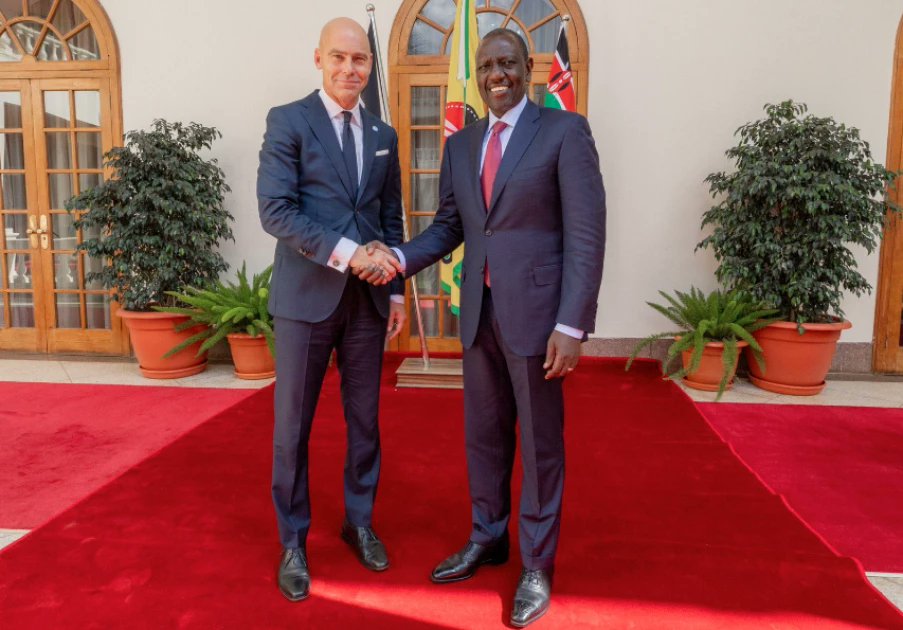
NAIROBI, MARCH 2, 2026
In a development that cuts to the heart of Kenya’s troubled relationship with powerful foreign institutions, the National Assembly last week unanimously voted to strip the Global Center on Adaptation (GCA) of the sweeping diplomatic immunities it had enjoyed for less than five months.
The decision, passed on February 24, 2026, came largely unannounced amid routine parliamentary business but carries consequences that reverberate far beyond the walls of the August House.
At its centre is a story of institutional capture, alleged donor fraud, and a foreign climate organisation that, facing ruin in Europe, found a powerful patron in Nairobi.
The GCA, a Netherlands-founded international non-governmental organisation established in 2018 and known for its iconic floating headquarters on Rotterdam’s Rijnhaven, bills itself as the world’s premier broker of climate adaptation solutions.
Its Africa Adaptation Acceleration Program, co-designed with the African Development Bank and endorsed by the African Union, claims to have channelled over $18 billion into climate resilience projects across 40 African countries, benefiting close to 60 million people. The organisation’s ambition has always been operatic in scale. So, it turns out, has been the controversy surrounding its methods.
A Scandal Born in Rotterdam
Before Kenya’s parliament voted to extend its arm of welcome, the GCA’s reputation was already in tatters in the country that created it.
In October 2025, Dutch public broadcaster NOS published a devastating investigation, the product of six months of work, more than 70 interviews, and hundreds of documents.
The conclusions were damning: the GCA had systematically exaggerated its contributions to major international projects, falsely claimed involvement in World Bank initiatives it had no part in, and pressured staff to inflate results in order to secure donor funding.
The GCA had told donors it created 900,000 jobs, mobilised €25 billion in investments, and improved the lives of 82.5 million Africans, all while operating on an annual budget of approximately €23 million.
Pieter Pauw, a climate finance expert at TU Eindhoven, described the figures as grotesquely inflated and without precedent in the sector. Among the most egregious findings was the GCA’s claim to have participated in a $100 million World Bank soil erosion project in the Democratic Republic of Congo.
World Bank officials, confronted by NOS investigators on two separate occasions, stated categorically that the GCA had played no role in that project. More than 20 former employees corroborated the picture of an organisation where, under the direct pressure of CEO Patrick Verkooijen, staff were regularly encouraged to embellish outputs to attract funding.
An internal advisory note from the Bill and Melinda Gates Foundation, one of GCA’s largest private donors, obtained by NOS, described the organisation as difficult to work with and prone to claiming credit for projects it had not initiated or materially supported.
The Gates Foundation is understood to be reconsidering its position. Norway temporarily froze its contributions to demand greater transparency. Denmark wrote that it found it difficult to estimate what could be attributed to the GCA’s work. The United Kingdom withdrew its support entirely, and the Dutch government, which had funded the centre since its inception, announced it would pull the plug on financing after 2025, citing a combination of budget constraints and governance concerns.
Faced with the evaporation of nearly half its funding, Verkooijen publicly announced the GCA would abandon its Rotterdam base and relocate to Nairobi if Dutch support ceased. The announcement turned out to be less a threat than a blueprint already in execution.
Nairobi Opens Its Arms
The GCA’s pivot to Kenya did not happen in a vacuum. It was the culmination of a relationship between Verkooijen and President William Ruto that critics have described, with mounting alarm, as one of the most troubling entanglements between a foreign NGO and a sitting African head of state in recent memory.
The sequence of events is worth setting out in full, because taken individually each step carries its own explanation; taken together they form a pattern that Kenya’s parliamentarians ultimately found impossible to ignore.
In December 2023, the GCA awarded a research contract worth €1.2 million to the University of Nairobi for climate adaptation projects.
In January 2024, weeks after that funding was formalised, President Ruto personally appointed Verkooijen as Chancellor of the University of Nairobi, making the Dutch executive the first foreign national to hold the chancellorship of a major Kenyan public university. Verkooijen assumed the role in February 2024.
The circularity was immediately apparent: the head of an organisation that had just paid Kenya’s foremost public university was now simultaneously the head of that same university. No independent audit of the contract’s deliverables has been made public.
In July 2025, President Ruto presided over the groundbreaking of a Sh1.7 billion GCA headquarters at the Kenya School of Government in Kabete, Nairobi, a facility that was to serve as the organisation’s African anchor and, in a detail that would later fuel parliamentary concern, would also house Mazingira House, the headquarters of Kenya’s Ministry of Environment, Climate Change and Forestry.
Critics noted the arresting logic of the arrangement: the government ministry mandated to oversee environmental policy and partnerships with organisations like the GCA would now operate from within the GCA’s own premises. The ministry cannot investigate, audit, or sue a landlord that enjoys diplomatic immunity.
On April 20, 2025, the Prime Cabinet Secretary signed Legal Notice No. 82, granting the GCA and its internationally recruited staff a comprehensive suite of privileges under Kenya’s Privileges and Immunities Act (Cap 179).
These included full immunity from lawsuits and legal process, inviolability of the organisation’s offices and archives, exemption from income tax on staff salaries, freedom from immigration restrictions for officers and their families, and exemption from customs duties on goods imported for official use.
On September 30, 2025, Parliament ratified the agreement, following stakeholder hearings and public participation conducted, critics noted, in a process that gave interested parties little more than two weeks to respond, and a committee report that offered scant analysis of the potential risks to Kenyan citizens.
The Parliamentary Revolt
The ratification was not the end of the story. Over the months that followed, public fury intensified, driven by investigative journalism, civil society activism, and the emerging contours of the European scandal.
The question that rang loudest across Kenyan social media and in the opinion pages was deceptively simple: why does an organisation dealing with our land and resources need protection from Kenyan laws? The activist Lynn Ngugi, whose posts on the subject attracted thousands of engagements, put it with characteristic directness, asking how a regulator could be a tenant of the entity it was supposed to oversee.
Comparisons to an earlier controversy proved irresistible. In 2024, the Kenyan government had extended similar diplomatic-style immunities to the Bill and Melinda Gates Foundation, only to suspend the arrangement after a public and legal backlash.
The GCA case seemed to many observers like a repetition of the same dynamic: a foreign organisation with powerful connections to the executive securing protections that ordinary Kenyans and Kenyan organisations could never enjoy.
Parliamentary critics were particularly exercised by a report from the Departmental Committee on Environment, Forestry, and Mining, which had flagged the GCA’s pronounced proximity to the executive branch.
The appointment of Verkooijen as university chancellor, the financial relationship with the University of Nairobi, the co-location of the Ministry of Environment within GCA’s new premises: each was cited as evidence of blurred institutional boundaries and potential conflicts of interest that the immunity arrangement would place permanently beyond legal remedy. The National Assembly’s unanimous vote on February 24 to annul Legal Notice No. 82 was, by any measure, a remarkable rebuke of both the executive and the foreign organisation it had championed.
Sall at State House
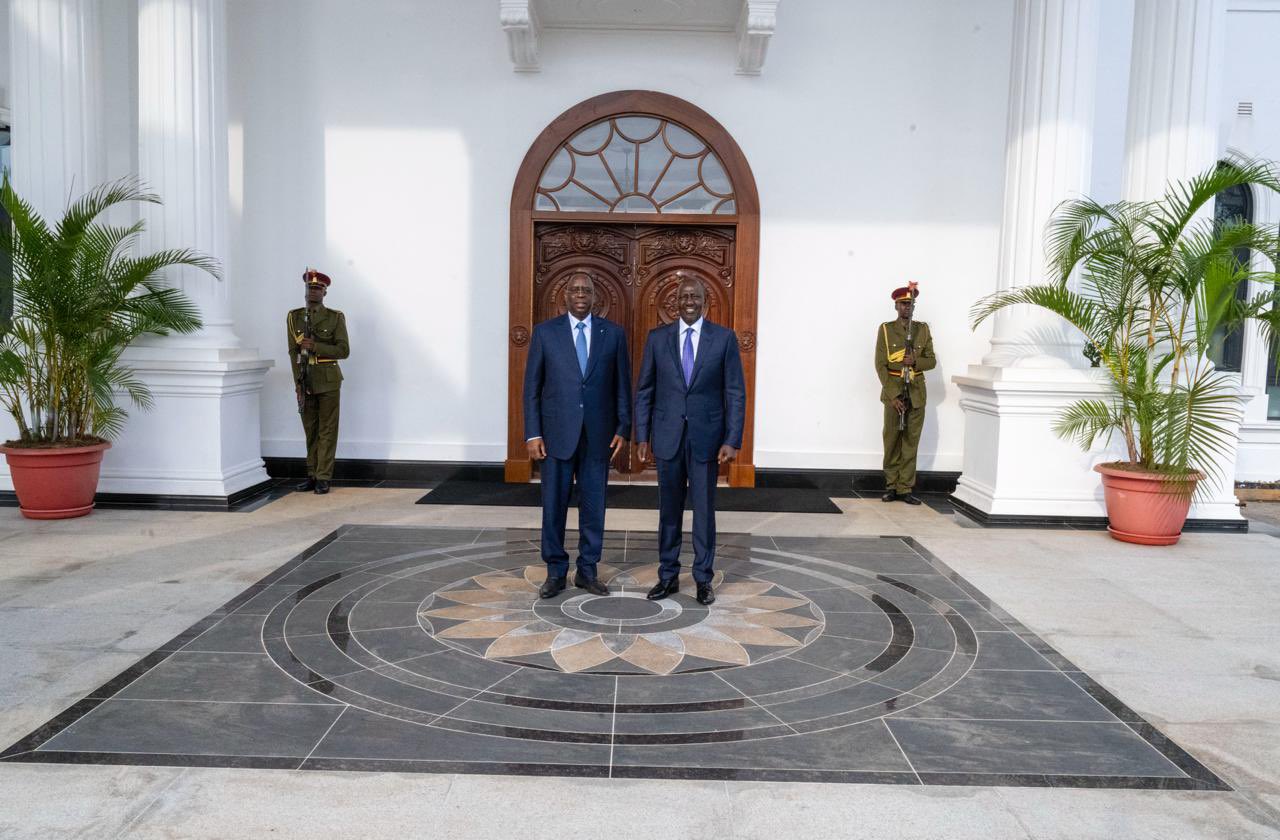
The timing of the parliamentary vote lent the episode an almost theatrical quality. On the same day the National Assembly stripped the GCA of its privileges, former Senegalese President Macky Sall, who chairs the GCA’s Supervisory Board, was received at State House Nairobi for discussions with President Ruto on Kenya’s climate agenda, including resilient agriculture, clean energy infrastructure, and the next phase of the Africa Adaptation Acceleration Program.
Sall posted on social media afterwards, welcoming what he described as the extraordinary leadership of President Ruto on adaptation for Africa. Whether Sall was informed of the vote taking place in parliament while he sat with the president is not known. Neither the presidency nor the GCA responded to requests for comment.
Sall is himself a figure of some complexity in this story.
A former two-term president of Senegal who stepped down in 2024 amid domestic controversy, he chairs a supervisory board whose membership reads like a roll call of global influence: the president of Kenya, the prime minister of Barbados, the president of Tanzania, the managing director of the International Monetary Fund, the chair of the African Union Commission, and a representative of the Gates Foundation, among others. Former United Nations Secretary-General Ban Ki-moon serves as honorary chair. The organisation that Kenya’s parliament has now stripped of immunity is, by any measure, deeply embedded in the architecture of global power.
The Government Defends Itself
Foreign Affairs Principal Secretary Dr Korir Sing’oei has consistently defended the process that led to the GCA’s host country status.
In statements issued in October 2025 following the initial public backlash, Sing’oei emphasised that the privileges granted to the GCA were not extraordinary, that more than 170 non-state entities, including Oxfam, Save the Children, and the World Wide Fund for Nature, had received comparable status in Kenya since 1984. He rejected allegations that the arrangement was driven by external political pressure or personal relationships, insisting that the Host Country Agreement followed all legal requirements under the Privileges and Immunities Act and served Kenya’s strategic interest in positioning Nairobi as a continental hub for international institutions.
The GCA, for its part, has strongly denied the findings of the NOS investigation. In a statement, the organisation said the suggestion that it exaggerates results or misleads donors was false and unfounded, noting that its methodology was independently evaluated, including by the Boston Consulting Group. Verkooijen himself dismissed the NOS figures as utter nonsense.
The GCA also warned, in an earlier communication to journalists in Kenya covering the story, that it would pursue legal action against reports it considered defamatory.
What Comes Next
The annulment of Legal Notice No. 82 does not, in itself, shut the GCA’s Nairobi operation. The organisation’s multi-billion-shilling headquarters continues under construction at the Kenya School of Government, and its Africa Adaptation Acceleration Program, for all the governance questions swirling around it, retains the backing of the African Development Bank and has attracted fresh commitments from donors including France as recently as February 2026. The GCA’s AAAP 2.0 phase, which is intended to run from 2026 to 2030, is already in preparation.
But the loss of diplomatic immunity is more than symbolic. It means the GCA’s Nairobi office is now subject to the same legal framework as any other organisation operating in Kenya. Its premises can be entered, its archives can be subpoenaed, its staff can be sued, and its financial arrangements with Kenyan public institutions, including the University of Nairobi, can be subjected to the scrutiny that immunity had, until last week, placed beyond reach.
For Kenya, the episode raises questions that will outlast any single parliamentary vote. The country has built its international identity, in no small part under President Ruto, around its role as a climate leader and a welcoming hub for the global institutions that shape the agenda on adaptation and resilience. That identity carries real value. It has brought investment, international attention, and a seat at tables where decisions affecting Africa’s future are made. The question that Kenya’s parliament has now forced into the open is whether that identity can be sustained without clearer rules about which organisations qualify for which privileges, and what accountability looks like when things go wrong.
Kenya’s lawmakers have, for once, provided an answer. Whether the executive branch takes heed of it is another matter entirely.
Kenya Insights allows guest blogging, if you want to be published on Kenya’s most authoritative and accurate blog, have an expose, news TIPS, story angles, human interest stories, drop us an email on [email protected] or via Telegram


THE GROUP CHAT THAT BROKE THE CARTEL: How Kenya’s Biggest Mattress Firms Used WhatsApp to Fix Your Prices, Then Used It to Destroy Themselves

Court Upholds Gachagua Impeachment, Awards Him Sh50M In Constitutional Damages To Be Paid By Senate

Somali FIFA Referee Denied Entry To US Ahead Of 2026 World Cup: Reports

David Maraga: Kenya’s Ex-Chief Justice Arrested At Protest Against Building On National Park

KRA Warns It Will Automatically File Tax Returns for Kenyans Who Miss June 30 Deadline Using Its Own Data

Govt Plans to Monetise eCitizen Data in New Revenue Drive

Dennis Onyango: Why Raila Won Elections But Never Became President

Israel, Iran Trade Fire Despite Trump’s Call For Restraint

Dennis Onyango Lifts Lid on Raila’s Inner Circle, Says Sifuna Lost Baba’s Trust While Babu Was Viewed as a Threat

Sibling Rivalry? Cracks Emerge Within Linda Mwananchi

Cement, Cash and Courts: How the Hashu Dynasty Crushed the Ramji Brothers for Fourteen Years and Why the Walls Are Now Closing In

Inside The Urban Planning Cartel That Owns Nairobi

Why Ruto’s Favourite Candidate Adan Mohammed Could Be Locked Out of the KRA Top Job

LifeCare on the Brink: SHA Fraud, Stolen Wages, and the Rotten Empire Jayesh Saini Built

Este Medical Kenya Fights American’s Explosive Complaints

The Rot Inside Absa: How Bank Insiders Are Looting Nairobi’s Customers

Betika Faces DCI Probe, Directors Arrest and License Revocation Over Massive 29.5 Million Safaricom Customers’ Data Breach

Inside FAFSA Fraud: How Kenyan Cybercriminals Siphoned Millions from America’s Sh12 Billion Student Loan System

Fresh Move Launched to Remove Kenya Railways MD Mainga From Office After Awarding Sh817 Million Consultancy Contract

Court Confirms Safaricom Customers Data Was Sold To Betting Companies In Seven-Year Cover-Up
-
 Investigations4 days ago
Cement, Cash and Courts: How the Hashu Dynasty Crushed the Ramji Brothers for Fourteen Years and Why the Walls Are Now Closing In
-
 Investigations3 days ago
Inside The Urban Planning Cartel That Owns Nairobi
-
 Investigations2 weeks ago
LifeCare on the Brink: SHA Fraud, Stolen Wages, and the Rotten Empire Jayesh Saini Built
-
 Investigations1 week ago
Betika Faces DCI Probe, Directors Arrest and License Revocation Over Massive 29.5 Million Safaricom Customers’ Data Breach
-
 Investigations4 days ago
Fresh Move Launched to Remove Kenya Railways MD Mainga From Office After Awarding Sh817 Million Consultancy Contract
-
 News2 weeks ago
Eight Students Arrested In Kenya After Suspected Deadly School Arson Attack
-
 News1 week ago
How Uhuru’s Deal With Obama In 2015 Paved Way For America’s Ebola Plan In Kenya
-

 Investigations2 weeks ago
The Invisible Hand: Al Jazeera Further Exposes How Safaricom Became The Regime’s Most Powerful Spy