
For weeks, Opiyo Wandayi stood before cameras and microphones and told Kenya there was nothing to worry about. No fuel crisis. No shortage. No cause for panic. He said it on March 13. He said it again on March 27. He said it with the serene confidence of a man who had read every brief, studied every data point, and arrived at an informed and commanding conclusion. It now turns out that he had read every brief. That is precisely the problem.
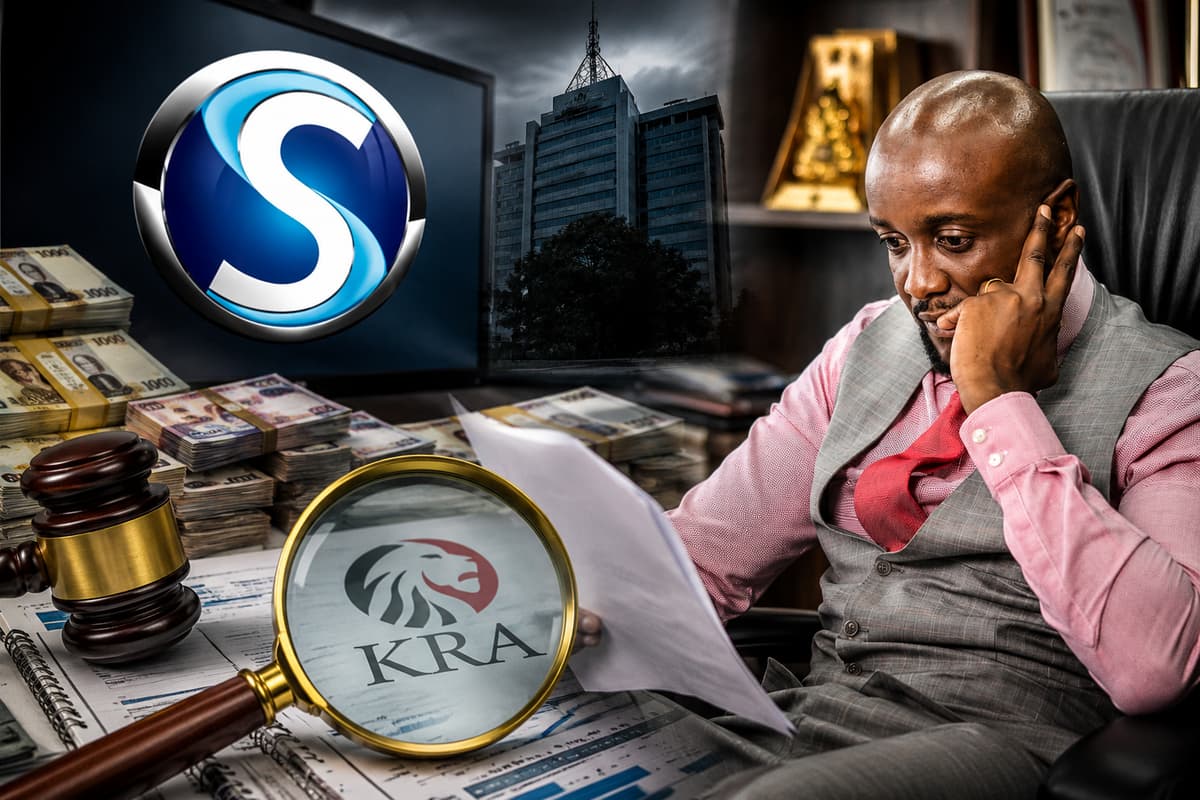
Leaked internal correspondence from the Ministry of Energy and Petroleum, authenticated by investigators and now before the Directorate of Criminal Investigations, establishes that Wandayi was not merely a passive recipient of good news. He was an active participant in the approval chain for a KSh 4.8 billion fuel consignment that his own ministry’s documents acknowledge was substandard, overpriced, and procured in flagrant violation of Kenya’s government-to-government framework with Gulf oil suppliers. The documents show that the Principal Secretary for Petroleum, Mohamed Liban, copied Wandayi on correspondence to the Kenya Bureau of Standards in which he explicitly sought a quality waiver for a cargo aboard the MT Paloma carrying petroleum products with dangerously elevated levels of sulphur, manganese, and benzene. Condition two of the waiver letter states unambiguously that the MT Paloma consignment was not compliant with Kenya’s mandatory fuel standards. Wandayi was on notice.
“If he knew, he must be arrested immediately for criminal culpability. If he didn’t know, he must immediately take political responsibility and resign or be sacked for gross incompetence.” — Senator Boni Khalwale
The paper trail begins on March 26, 2026. On that day, Liban wrote to Kenya Bureau of Standards Managing Director Esther Ngari requesting a temporary waiver on quality certification requirements for the incoming consignment. In that letter, Liban invoked the disruption caused by the closure of the Strait of Hormuz, through which a fifth of global oil supplies flow, as justification for bypassing standard pre-export verification. What that letter omitted was the sequence that investigators now consider most damning.
On March 25, the day before Liban wrote to KEBS, he had already written directly to One Petroleum Limited director Ali Balala and Oryx Energies chief executive Angeline Maangi, authorising each firm to import approximately 60,000 tonnes of petroleum. The authorisation preceded the quality waiver request by a full day, suggesting, in the language of investigators at the DCI, that the emergency narrative was constructed to justify a deal they believe was already pre-arranged.
A Cargo Intended for Angola
The MT Paloma docked at the Port of Mombasa between March 27 and 29, carrying 68,000 tonnes of petroleum products imported by One Petroleum Limited, a firm linked to Mombasa tycoon Mohamed Jaffer. According to investigators, the consignment was originally destined for Angola before being diverted to Kenya in circumstances that remain under active investigation.
A second shipment of 60,000 tonnes imported by Swiss-owned Oryx Energies was blocked from docking before it could unload, following the eruption of the scandal. The financial motive embedded in the deal is staggering. One Petroleum quoted a price of KSh 37,691 per tonne for its cargo, more than three times the KSh 10,917 per tonne charged under the regular government-to-government arrangement.
Wandayi himself inadvertently confirmed the price disparity in his belated public statement on April 5, citing invoice comparisons showing that One Petroleum’s landed in-tank Mombasa price stood at KSh 198,855 per metric tonne while the G-to-G equivalent was KSh 140,111.
That gap of KSh 58,744 per metric tonne, translating to KSh 43.40 per litre, was being absorbed by consumers who had been told there was nothing to worry about.
On March 28, Trade Cabinet Secretary Lee Kinyanjui wrote directly to Wandayi formally recommending a waiver for the importation of the petroleum products aboard the MT Paloma. That letter listed six conditions to be met before the waiver took effect, including destination inspection of the cargo, full compliance with automotive gasoline specifications, and a written indemnity from the importer protecting KEBS against any fallout.
None of the six conditions was verified before the MT Paloma began discharging its cargo. The KPC quality assurance manager who detected the anomaly through laboratory testing halted distribution and escalated the matter to senior officials. What followed was not corrective action from the top. It was internal disagreement over whether to release the product anyway.
The Silence and Then the Statement
When the DCI descended on the energy sector on the night of April 2, conducting coordinated raids and detaining the most powerful figures in the petroleum supply chain, Wandayi disappeared into silence. Petroleum PS Mohamed Liban, KPC Managing Director Joe Sang, EPRA Director-General Daniel Kiptoo, Petroleum Deputy Director Joseph Wafula, and KPC Supply and Logistics Manager Joel Mburu were arrested, interrogated, and eventually either resigned or remained in custody facing economic sabotage charges. Liban was released on medical grounds. Kiptoo, Sang, and Wafula remained in custody heading into the Easter weekend. Reports surfaced that more than KSh 500 million recovered during raids of the suspects’ homes had allegedly vanished from police custody, with accounts suggesting a senior Kenya Kwanza-linked politician had the cash delivered to him without any official receipt or inventory.
As five officials fell and the public clamoured for answers, Wandayi remained in office and said nothing. Treasury Cabinet Secretary John Mbadi stepped into the vacuum, telling Parliament in measured and distinctly more honest terms that Kenya had only 16 days of petrol stock and 19 days of diesel, a stark contradiction of the boundless reassurance Wandayi had offered weeks earlier. The burden of explaining the crisis had quietly passed from the man who caused the problem to a colleague attempting damage limitation.
Wandayi finally broke his silence on April 5. His statement offered no acknowledgement of the internal letters. He did not explain why he had approved the waiver despite knowing the consignment was non-compliant. He did not address why he was copied on correspondence from his own PS to KEBS seeking waivers for carcinogenic fuel parameters. He warned against disinformation. He called for patience. He announced an internal review. He insisted the G-to-G framework remained stable and resilient. It was, by every measure of accountability journalism, a statement designed to outlast scrutiny rather than meet it.
“It is no longer about the junior officials. The focus must move to decisions made at the highest policy levels.” — Senior DCI officer, on record with investigators
The Impossible Defence
Kakamega Senator Boni Khalwale has framed the political calculus with forensic precision. If Wandayi knew the fuel was substandard and approved its release anyway, he is criminally culpable and must be arrested.
If he did not know, then a KSh 4.8 billion deal procured outside the government-to-government framework, at more than three times the regulated price, involving cargo originally bound for Angola and carrying carcinogenic levels of sulphur, manganese, and benzene, passed through the entire Ministry of Energy and Petroleum without the Cabinet Secretary learning a word of it.
That too is not innocence. That is incompetence of a magnitude that demands the immediate surrender of office. Khalwale has warned that if President Ruto fails to sack Wandayi, the National Assembly must exercise its constitutional mandate and impeach him.
The Consumer Federation of Kenya revealed on April 5 that KEBS had already allowed the substandard MT Paloma fuel to be sold in the Kenyan market. The implications are not abstract.
Fuel contaminated with excess sulphur damages catalytic converters, destroys engine seals, accelerates corrosion in vehicle fuel systems, and over time increases harmful emissions to levels that cause respiratory damage in urban populations.
The Kenyans who filled their tanks in Mombasa in late March and early April were not told what they were putting in their engines. Wandayi had assured them, as recently as March 27, that there was no crisis and that all petroleum products met the requisite quality standards.
The Political Calculation
Wandayi’s survival in office is not principally a question of evidence. It is a question of political architecture. He joined President Ruto’s Cabinet on August 8, 2024, as part of the broad-based government arrangement that followed the late Raila Odinga’s defection from opposition following the Gen Z protests. His appointment was part of the donation of senior ODM figures, including John Mbadi, Ali Hassan Joho, and Wycliffe Oparanya, to the Ruto administration. Firing him carries consequences that extend beyond his personal culpability.
It risks fracturing the ODM component of the broad-based government at a moment when Ruto’s political coalition is still consolidating ahead of the 2027 election cycle.
Those who defend Wandayi’s continued presence in Cabinet deploy the language of stability. Remove the Energy minister now, they argue, and you inject more uncertainty into an already volatile sector. The counter-argument, advanced by a growing number of legislators, civil society organisations, and ordinary Kenyans, is that what looks like stability from inside State House looks like selective accountability from everywhere else.
It cannot have escaped notice that President Ruto, speaking at a church service in Kilgoris on April 5, spoke with considerable force about cartels and accountability. He vowed that the energy sector cartels would not operate freely. He declared that developments in the Middle East would not be used as an excuse to create artificial problems at home. He reached for the language of moral resolve.
What he did not do was mention Opiyo Wandayi by name. He did not demand a resignation. He did not acknowledge that leaked letters show his own Cabinet Secretary was copied on the very correspondence that authorised the release of condemned fuel into the Kenyan market.
The Karen Question
Questions intensified when reports surfaced that Wandayi had recently acquired a palatial residential property in the Hardy area of Karen, with market valuations ranging between KSh 200 million and KSh 275 million.
The property has become shorthand in public discourse for the disparity between ministerial assurances and ministerial enrichment, even as investigators have not established a direct link between the property and the fuel transaction.
A senior DCI officer privy to the investigation has confirmed that the two Cabinet Secretaries, Wandayi and Kinyanjui, will be required to explain their roles. The authenticated letters, the officer stated on record, are critical because the focus must now move to the decisions made at the highest policy levels.
The MT Paloma has already discharged its cargo. Its fuel is already in the system. The second consignment was stopped. Five officials have left their posts or are under arrest.
A plea bargain is reportedly in negotiation with some of the detained officials. KSh 500 million in recovered cash has reportedly gone missing from police custody. The DCI has summoned Oryx executives.
And Opiyo Wandayi, the man whose name is on the ministry letterhead, whose PS signed the waiver request, whose correspondence trail forms the backbone of the DCI probe, remains in his office, urging patience and warning against disinformation. That is where Kenya finds itself this Tuesday morning.






Comments