
Development
South Africa starts giving oral PrEP to HIV-negative sex workers – Its time Kenya did the same


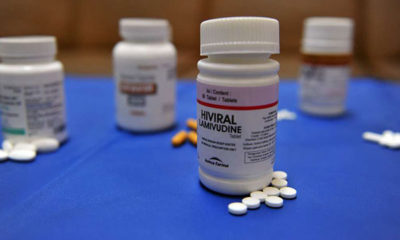
Early March 2016, South Africa announced leading-edge interventions to address the high HIV infection rates among sex workers. The planned actions included; the provision of immediate antiretroviral treatment to all sex workers with HIV, and also to offer daily oral pre-exposure prophylaxis (PrEP) to HIV-negative sex workers so as to prevent them from acquiring the infection.
While designing the plan, South Africans encompassed the multi-faceted lives of sex workers tackling not only their health needs but also psycho social support, alcohol and substance abuse treatment, reducing violence and economic empowerment.
Kenya should be noting down the important lessons
Although Kenya has been providing both emergency antiretrovirals and post-exposure prophylaxis (Pep) treatment, which suppress the HIV virus if taken within 72 hours of infection, sex workers are often left out this HIV response due to criminalisation, stigma, discrimination and Violence. But how can pre-exposure prophylaxis be offered to a group the is already existing in Kenya illegally? (Sex work is illegal in Kenya).
1. Curbing stigma
Implementing PrEP will mean that implementing groups such as Ministry of Health first take the service to the sex workers and afterwards encourage the sex workers to seek psycho-social support, alcohol and substance abuse treatment and economic empowerment services offered countrywide.
The combination of HIV-related stigma and stigma associated with sex work prevents sex workers from seeking HIV testing, and sex workers are also less likely to receive treatment.
2. Strategic de-criminalisation of Sex work.
There is strong evidence that criminalisation of sex work (Sex work is illegal in Kenya) encourages behaviour associated with a high risk of HIV infections and other sexually transmitted infection. Additionally, where sex work is criminalised, violence against sex workers is often not reported or monitored, and legal protection is often not offered to victims of such violence. Additionally, health-service providers often neglect their duty to provide care when attending to sex workers.
HIV in Kenya
The first case of HIV in Kenya was detected in 1984 and by 2013, Kenya had the joint fourth-largest HIV epidemic in the world in terms of the number of people living with HIV. Roughly 58,000 people died from AIDS-related illnesses in the same year.
Multi-level Interventions were launched including the declaration by the then President that HIV was a National Disaster. Remarkable achievements came through but the fact is that HIV remains a major threat to public health not only in Kenya but globally. The latest available data and evidence shows a general decrease in the HIV infections. Additionally, too many people are becoming infected with HIV, too many people do not know that they have HIV, and too many people are dying from AIDS-related causes.
In a report by UNAIDS/Lancet, no African country reports a prevalence of HIV infection of less than 6% among sex workers. In comparison to the rest of the world, the median prevalence of HIV infection in sex workers in sub-Saharan Africa alone is 20·5% as compared with the global median of 3·9%.
Kenya ought to and home from South Africans.
If this is actually implemented fully, the sex workers an important but neglected population that has a very high risk of HIV will be reached. In the case of South Africa, a total of 70000 sex workers will be reached in a three year period.
Who has already applauded South Africas plan
The World Health Organization (WHO) has already welcomed South Africas plan.
“We applaud the South African Government for this bold plan and for offering early testing and treatment and PrEP to sex workers,” said Dr Gottfried Hirnschall, Director of WHO’s HIV/AIDS Department.
“This plan is an important step to scaling up treatment towards ‘treat all’ and to reducing HIV transmission effectively and rapidly.” added Dr Gottfried Hirnschall.
South Africa has the highest number of HIV-positive people in the world, with an estimated 6.3 million people living with HIV. Sex work is estimated to account for as much as 20% of new HIV infections in the country. A recent Integrated Biological and Behavioural Surveillance Survey showed extremely high HIV prevalence among sex workers, with as many as 70% of sex workers in Johannesburg living with HIV.
In September 2015, WHO recommended that PrEP be offered as an additional prevention choice for people at substantial risk of HIV. South Africa is recognized as the first country in Africa to translate this recommendation into national policy.
Kenya Insights allows guest blogging, if you want to be published on Kenya’s most authoritative and accurate blog, have an expose, news TIPS, story angles, human interest stories, drop us an email on [email protected] or via Telegram









SH2 BILLION HEIST EXPOSED: How Tatu City’s Foreign Masters Used Dirty Offshore Traps, London Arbitration & Mauritius Liquidation to Strip Local Investors of Their Stake

Dimba Accused of Extorting Bank Executives in Escalating Feud

Humiliated, Handed Sh1,000 and Sent Away: Furious Residents Return Nathif Jama’s Money, Accuse Governor of Arrogance and Inhumane Treatment of Sick Woman

ICC’s Karim Khan Suspended Over Sexual Misconduct Claims

The Conquest of Tatu City, A New Zealander Story

VANISHING ACT: How China Jiangxi International Pocketed Billions in Kenyan Public Contracts, Then Walked Away

THE GROUP CHAT THAT BROKE THE CARTEL: How Kenya’s Biggest Mattress Firms Used WhatsApp to Fix Your Prices, Then Used It to Destroy Themselves

Court Upholds Gachagua Impeachment, Awards Him Sh50M In Constitutional Damages To Be Paid By Senate

Somali FIFA Referee Denied Entry To US Ahead Of 2026 World Cup: Reports

David Maraga: Kenya’s Ex-Chief Justice Arrested At Protest Against Building On National Park

Cement, Cash and Courts: How the Hashu Dynasty Crushed the Ramji Brothers for Fourteen Years and Why the Walls Are Now Closing In

Inside The Urban Planning Cartel That Owns Nairobi

Why Ruto’s Favourite Candidate Adan Mohammed Could Be Locked Out of the KRA Top Job

LifeCare on the Brink: SHA Fraud, Stolen Wages, and the Rotten Empire Jayesh Saini Built

Este Medical Kenya Fights American’s Explosive Complaints

The Rot Inside Absa: How Bank Insiders Are Looting Nairobi’s Customers

Betika Faces DCI Probe, Directors Arrest and License Revocation Over Massive 29.5 Million Safaricom Customers’ Data Breach

Inside FAFSA Fraud: How Kenyan Cybercriminals Siphoned Millions from America’s Sh12 Billion Student Loan System

Fresh Move Launched to Remove Kenya Railways MD Mainga From Office After Awarding Sh817 Million Consultancy Contract

Court Confirms Safaricom Customers Data Was Sold To Betting Companies In Seven-Year Cover-Up
-
 Investigations4 days ago
Cement, Cash and Courts: How the Hashu Dynasty Crushed the Ramji Brothers for Fourteen Years and Why the Walls Are Now Closing In
-
 Investigations3 days ago
Inside The Urban Planning Cartel That Owns Nairobi
-
 Investigations1 week ago
Betika Faces DCI Probe, Directors Arrest and License Revocation Over Massive 29.5 Million Safaricom Customers’ Data Breach
-
 Investigations4 days ago
Fresh Move Launched to Remove Kenya Railways MD Mainga From Office After Awarding Sh817 Million Consultancy Contract
-
 News2 weeks ago
Eight Students Arrested In Kenya After Suspected Deadly School Arson Attack
-
 News1 week ago
How Uhuru’s Deal With Obama In 2015 Paved Way For America’s Ebola Plan In Kenya
-

 Investigations2 weeks ago
The Invisible Hand: Al Jazeera Further Exposes How Safaricom Became The Regime’s Most Powerful Spy
-

 Business5 days ago
TRUST BETRAYED: How Senior DTB Bank Insiders Allegedly Looted Sh149 Million From a Customer’s Account Over Five Years