
Economy
Putin Says Energy Crisis Has Arrived But Russia Is Ready To Work With Europe
The loss of the European market has deprived Russia of its most lucrative customers and forced it to sell oil and gas at steep discounts to Asia.

Summary
- Putin says oil output relying on Hormuz Strait could stop in a month
- Russia says it is ready to supply oil and gas to Europe
- Putin says Russian firms should make use of situation
- Putin says high oil prices may be temporary
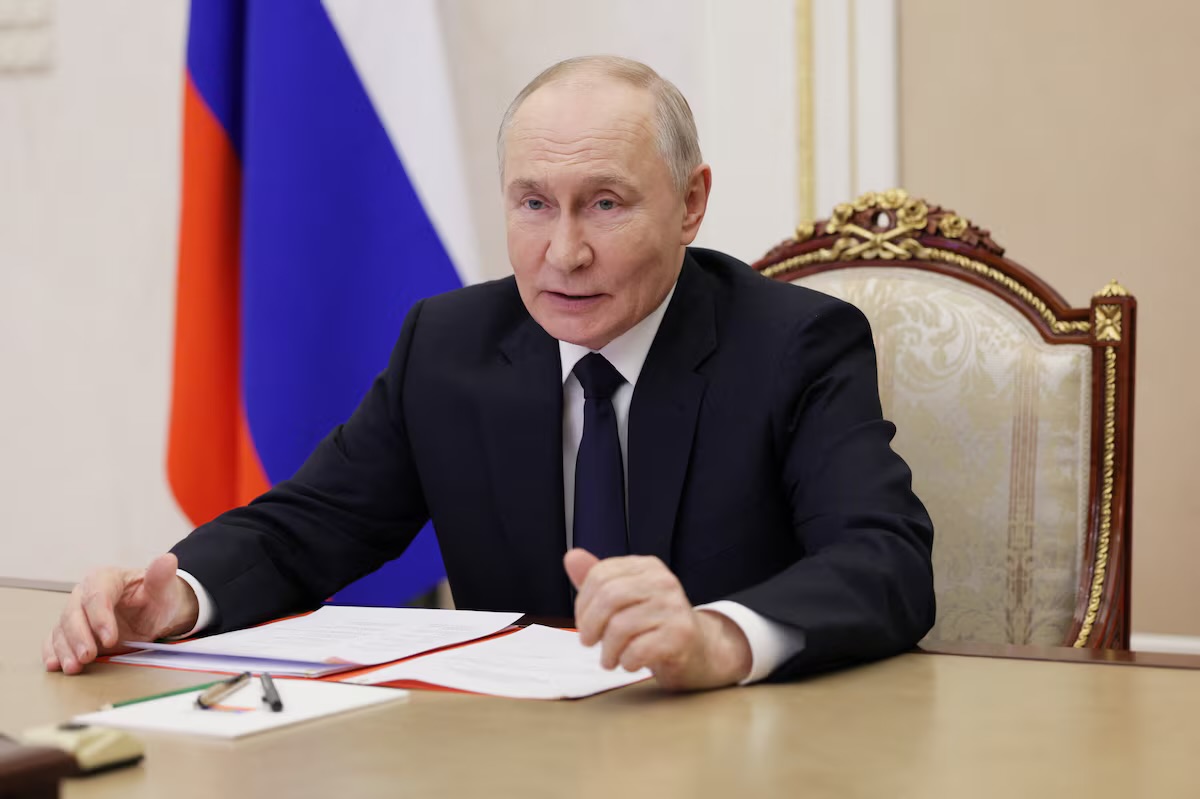
MOSCOW, March 9 (Reuters) – Russian President Vladimir Putin said on Monday that the U.S.-Israeli war on Iran had triggered a global energy crisis and cautioned that oil production dependent on transport through the Strait of Hormuz could soon come to a halt.
Putin said that Russia — the world’s second-largest oil exporter and holder of the biggest natural gas reserves — was ready to work again with European customers if they wanted to return to long-term cooperation.
Western powers, however, have spent the past four years sharply reducing their reliance on Russian oil and gas in response to Moscow’s war in Ukraine and subsequent EU and G7 sanctions.
The loss of the European market has deprived Russia of its most lucrative customers and forced it to sell oil and gas at steep discounts to Asia.
Speaking at a televised meeting with government officials and the heads of Russia’s leading oil and gas producers, Putin said that Russia had repeatedly warned that destabilising the Middle East could lead to an energy crisis with grave implications for the global economy — a turn of events he said had now materialised.
Oil prices exceeded $100 per barrel on Monday to reach peaks unseen since 2022 as the Strait of Hormuz, which accounts for roughly a fifth of global oil and liquefied natural gas flows, has been effectively closed due to the Iran war.
“Oil production dependent on the Strait of Hormuz risks halting completely within the next month. It has already begun to decline, and storage facilities in the region are filling with oil that cannot be transported…is extremely difficult to transport, or is extremely expensive to transport,” Putin said.
He said Russian companies should take advantage of the current situation in the Middle East, though he noted that the spike in prices was probably temporary. Oil and gas revenues make up around a quarter of total federal budget proceeds.
G7 nations said on Monday they were prepared to implement “necessary measures” in response to surging global oil prices, but stopped short of committing to release emergency reserves.
“We’re ready to work with Europeans too. But we need some signals from them that they’re ready and willing to work with us and will ensure this sustainability and stability,” Putin said.
Last week he instructed the government to consider switching remaining Russian oil and gas flows away from Europe, before the European Union starts enforcing its decision to completely ban Russian fossil fuels.
Before the Ukraine war, Europe was buying more than 40% of its gas from Russia, but combined sales of pipeline gas and LNG from Russia accounted for only 13% of total EU imports in 2025.
Kenya Insights allows guest blogging, if you want to be published on Kenya’s most authoritative and accurate blog, have an expose, news TIPS, story angles, human interest stories, drop us an email on [email protected] or via Telegram









How KCB and Airtel Turned Kenya’s Unbanked Into a Data Goldmine Behind a ‘Financial Inclusion’ Deal

The Chivayo Network: How a Convicted Fraudster Won Access to Presidents, Passports and Billion-Dollar Deals Across Africa

BURRIED TWICE: The Victoria Bank CEO Yogesh Pattni Files

Court Stops Transfer Of EABL Shares To Asahi By Diageo In A Fresh Snag

Death Before Justice: Stephen Ngei, Victim of Sh180 Million Laptop Tender Scam Linked to Allan Chesang, Killed in Highway Crash

Court Brands Sh1.1 Billion Fee Demand by Lawyer Victor Swanya “Excessive and Exorbitant,” Exposes How City Hall Lets Public Money Bleed Through Legal Bills

Trump Unveils New Air Force One

MR. NO SHOW: Finance Bill 2026 Exposes Ndindi Nyoro’s Political Conmanship

Billionaire Eric Muli Rebukes Musalia Mudavadi Over Nairobi Capital Relocation Debate

Lawyer Cliff Ombeta Warns Against Taking Insurance Cover With Old Mutual: “Talk to Me Before You Do, Their Imara Cover Is a Fraud”

Businessman Philip Waithaka Kinuthia’s Minor Son Allegedly Drove Drunk, Killed Two Peponi Students in Ngong Road Horror Crash as Claims of Cover-Up Intensify

Inside NCBA’s Decline: How a Banking Giant Lost Its Strategic Edge

Cement, Cash and Courts: How the Hashu Dynasty Crushed the Ramji Brothers for Fourteen Years and Why the Walls Are Now Closing In

Standard Chartered Ghosts Haunt Joshua Oigara At Stanbic As Whistleblower Spills Beans

South Sudan: Adut Salva Kiir’s Shadow Treasury Exposed

Inside The Urban Planning Cartel That Owns Nairobi

THE VULTURE AND THE SCHEME How Nairobi West Hospital Became the Most Dangerous Institution in Kenya’s SHA Ecosystem and Why the Books Must Be Audited Now

How Adil Popat Saved His Empire On The Eve Of Imperial Bank Collapse and Why Kenya’s Mainstream Media Buried The Story

Why John Ngumi Is Running From the EACC and Why the Sh415 Million Payday May Be the Least of His Worries

The President’s Daughter and The Missing Witness: How Adut Salva Kiir’s Shadow Treasury Silenced Its Most Dangerous Critic
-
 News1 week ago
Businessman Philip Waithaka Kinuthia’s Minor Son Allegedly Drove Drunk, Killed Two Peponi Students in Ngong Road Horror Crash as Claims of Cover-Up Intensify
-
 Business2 weeks ago
Inside NCBA’s Decline: How a Banking Giant Lost Its Strategic Edge
-
 Business2 weeks ago
Standard Chartered Ghosts Haunt Joshua Oigara At Stanbic As Whistleblower Spills Beans
-
 Africa1 week ago
South Sudan: Adut Salva Kiir’s Shadow Treasury Exposed
-
 Investigations3 days ago
THE VULTURE AND THE SCHEME How Nairobi West Hospital Became the Most Dangerous Institution in Kenya’s SHA Ecosystem and Why the Books Must Be Audited Now
-
 Business1 week ago
How Adil Popat Saved His Empire On The Eve Of Imperial Bank Collapse and Why Kenya’s Mainstream Media Buried The Story
-
 Business1 week ago
Why John Ngumi Is Running From the EACC and Why the Sh415 Million Payday May Be the Least of His Worries
-
 Africa2 weeks ago
The President’s Daughter and The Missing Witness: How Adut Salva Kiir’s Shadow Treasury Silenced Its Most Dangerous Critic