
News
Executives Of Carbon-Offsetting Firm With Connections To Kenya Charged In US with Manipulating Data to Sell Fraudulent Carbon Credits

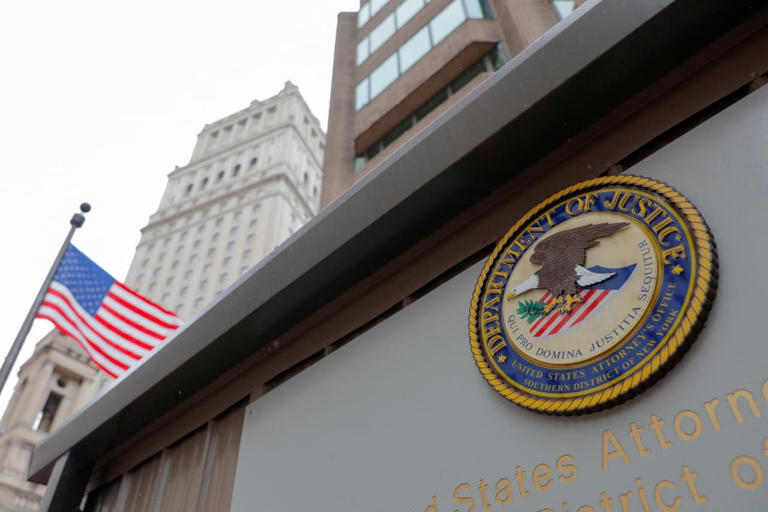
Two executives of a carbon-offsetting firm with ties to Kenya have been charged with fraud in a U.S. court, accused of manipulating carbon credit data from cookstove projects in Malawi, Zambia, and Angola to secure over $100 million (Ksh 12.9 billion) fraudulently.
The fraudulent carbon credits were generated from projects aimed at reducing greenhouse gas emissions by replacing traditional open fires in rural areas with more efficient cookstoves. Kenneth Newcombe, former CEO of C-Quest Capital (CQC) LLC, and Tridip Goswami, Head of CQC’s Carbon & Sustainability Accounting Team, are alleged to have falsified data from these projects, as well as others in Asia, to obtain carbon credits dishonestly.
CQC, which operated in Kenya through a partnership with Mwangaza Light, sold these fraudulent carbon credits on the global market, deceiving companies looking to offset their carbon emissions. U.S. federal authorities, including Damian Williams, U.S. Attorney for the Southern District of New York, and James E. Dennehy, Assistant Director of the FBI’s New York Field Office, announced the charges, linking CQC to a scheme that defrauded the carbon credit market and secured over $100 million in fraudulent investments.
Jason Steele, CQC’s Chief Operating Officer, has already pleaded guilty to his role in the fraud and is cooperating with authorities.
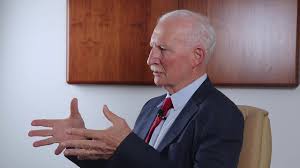
Mr Kenneth Newcombe. [Photo: Courtesy]
The carbon credit market was developed as a way to reduce greenhouse gas emissions, with companies buying credits to offset their own emissions. While some markets are regulated, the voluntary carbon market, in which CQC operated, is driven by companies voluntarily committing to reduce their emissions. In these markets, non-governmental organizations issue carbon credits based on standards developed in consultation with market participants, and project developers receive credits for activities that reduce or remove greenhouse gases from the atmosphere.
CQC generated its carbon credits—specifically voluntary carbon units (VCUs)—by running projects, including the installation of more efficient cookstoves in rural Africa and Southeast Asia. These cookstoves were intended to reduce emissions by using less fuel compared to traditional methods. CQC collected data through surveys to estimate how much fuel was saved and how many stoves were operational. This data was then used by a third-party issuer to calculate the number of carbon credits (VCUs) CQC would receive.
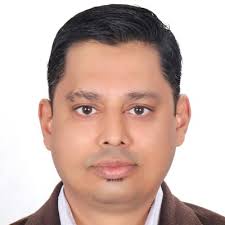
Mr Tridip Goswami. [Photo: Courtesy]
However, from 2021 to 2023, Newcombe, Goswami, Steele, and others at CQC submitted false data, making it seem as though the projects in Malawi and Zambia had achieved greater emission reductions than they had. When Goswami reported that the emission reductions were significantly below expectations, the team agreed to manipulate the data, going as far as fabricating survey results. These falsified figures were submitted to the issuer to fraudulently claim carbon credits. Additionally, they provided false information regarding the number of operational stoves in the projects.
U.S. Attorney Damian Williams stated, “As alleged, Kenneth Newcombe and Tridip Goswami, along with others, engaged in a years-long scheme to fraudulently obtain carbon credits by using manipulated and misleading data. They then sold those credits to unsuspecting buyers in the multi-billion-dollar global carbon credit market.
The actions of these defendants undermined the integrity of a market that is crucial to combating climate change.” He emphasized that the U.S. government will continue to pursue fraud in the financial markets, including the carbon credit sector.
Kenya Insights allows guest blogging, if you want to be published on Kenya’s most authoritative and accurate blog, have an expose, news TIPS, story angles, human interest stories, drop us an email on [email protected] or via Telegram


Shiquo Hii Style Store Was Not Raided, Anti-Counterfeit Authority Confirms; Says Influencer Used Empty Shelves for Content as She Relocates

Treasury CS Mbadi Unveils Sh4.8 Trillion Budget Estimates

Fraud, Misrepresentation and A Decade Of Evasion: How Indo Africa Finance Pocketed Sh150 Million Youth Funds and Fought To Keep Every Cent

Kenya Picks Chinese Firm For Sh375 Billion JKIA Upgrade Project After Adani Fallout

The President’s Daughter and The Missing Witness: How Adut Salva Kiir’s Shadow Treasury Silenced Its Most Dangerous Critic

Kisii Under Siege: Governor Arati’s Wife Accused of Hijacking IFMIS and Running a Parallel Government

Al-Shabaab Issues Statement Defending Omar Artan, Accuses U.S. of Discrimination After Referee’s Deportation

Netanyahu To Run For Re-Election, His Party Says, After Trump Raises Doubts

US Cracks Down on Birth Tourism Schemes

Microsoft Limits Employee Use Of Anthropic’s Claude Fable 5 Over Data Retention Concerns, The Verge Reports

Cement, Cash and Courts: How the Hashu Dynasty Crushed the Ramji Brothers for Fourteen Years and Why the Walls Are Now Closing In

Inside The Urban Planning Cartel That Owns Nairobi

Why Ruto’s Favourite Candidate Adan Mohammed Could Be Locked Out of the KRA Top Job

Standard Chartered Ghosts Haunt Joshua Oigara At Stanbic As Whistleblower Spills Beans

Inside NCBA’s Decline: How a Banking Giant Lost Its Strategic Edge

LifeCare on the Brink: SHA Fraud, Stolen Wages, and the Rotten Empire Jayesh Saini Built

Betika Faces DCI Probe, Directors Arrest and License Revocation Over Massive 29.5 Million Safaricom Customers’ Data Breach

Este Medical Kenya Fights American’s Explosive Complaints

Fresh Move Launched to Remove Kenya Railways MD Mainga From Office After Awarding Sh817 Million Consultancy Contract

The Rot Inside Absa: How Bank Insiders Are Looting Nairobi’s Customers
-
 Investigations7 days ago
Cement, Cash and Courts: How the Hashu Dynasty Crushed the Ramji Brothers for Fourteen Years and Why the Walls Are Now Closing In
-
 Investigations6 days ago
Inside The Urban Planning Cartel That Owns Nairobi
-
 Business19 hours ago
Standard Chartered Ghosts Haunt Joshua Oigara At Stanbic As Whistleblower Spills Beans
-
 Business2 days ago
Inside NCBA’s Decline: How a Banking Giant Lost Its Strategic Edge
-
 Investigations2 weeks ago
Betika Faces DCI Probe, Directors Arrest and License Revocation Over Massive 29.5 Million Safaricom Customers’ Data Breach
-
 Investigations7 days ago
Fresh Move Launched to Remove Kenya Railways MD Mainga From Office After Awarding Sh817 Million Consultancy Contract
-

 Business1 week ago
TRUST BETRAYED: How Senior DTB Bank Insiders Allegedly Looted Sh149 Million From a Customer’s Account Over Five Years
-

 News2 weeks ago
Eight Students Arrested In Kenya After Suspected Deadly School Arson Attack