
Business
The Listing That Doesn’t Lie: What the Market Isn’t Saying About Family Bank’s NSE Debut
Beneath the record profits, the oversubscribed placement and the fanfare of a long-awaited public debut, a set of structural vulnerabilities follows Family Bank to the Nairobi Securities Exchange. An independent analysis of why some of the sharpest minds in Kenyan capital markets are watching June 23 with something other than enthusiasm.

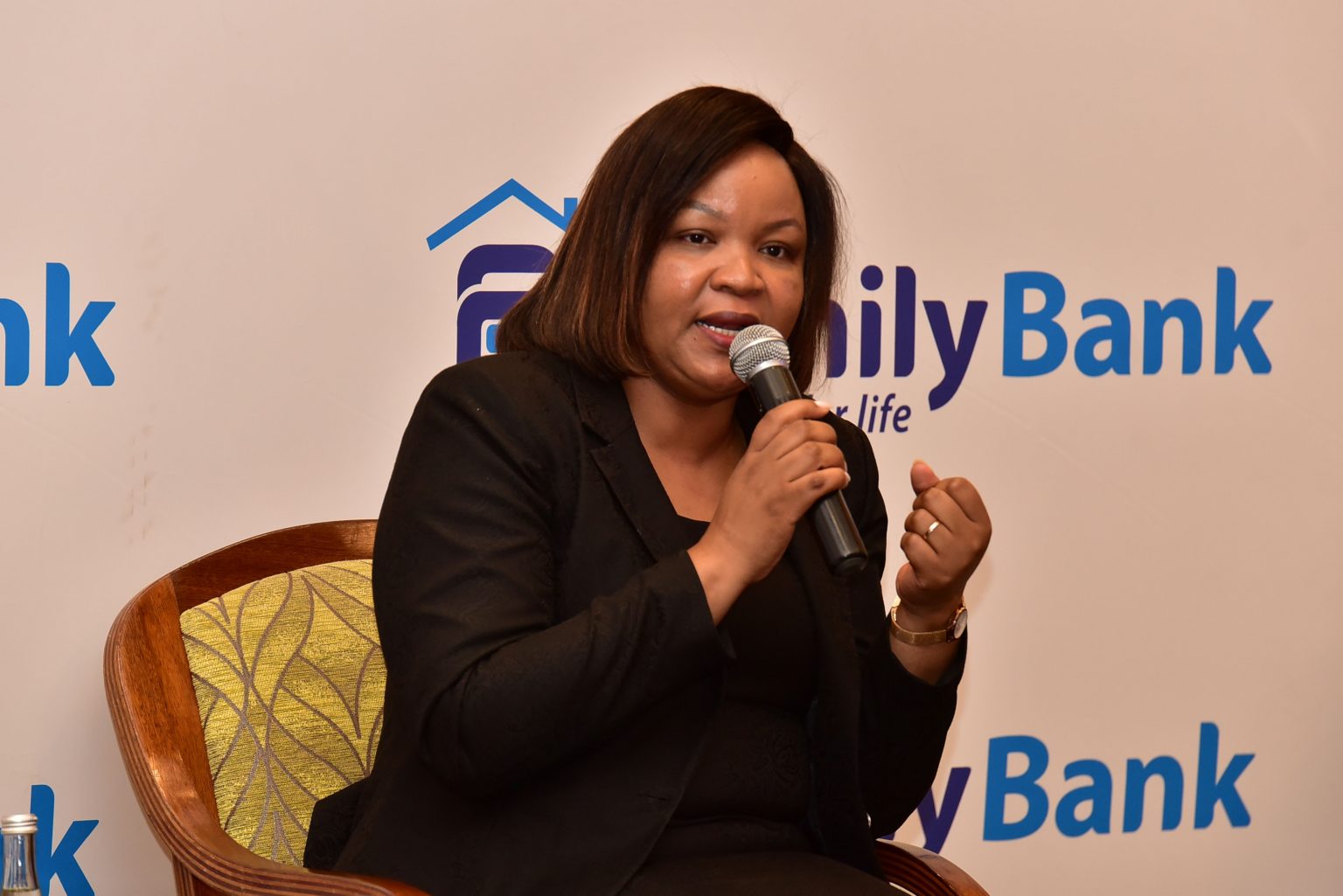
Family Bank has arrived at the Nairobi Securities Exchange bearing gifts. A 55.4 percent jump in full-year 2025 profit after tax. A Q1 2026 net income of KSh 1.6 billion, up 52.6 percent year-on-year. Total assets ballooning past KSh 230 billion. A private placement that raised KSh 8 billion against a KSh 6.09 billion target.
The numbers, on their face, are a celebration.
The listing on June 23, 2026 at KSh 18 per share, valuing the mid-tier lender at roughly KSh 29.9 billion, is the culmination of a two-decade ambition by founder Titus Kiondo Muya, a man who once controlled the institution so comprehensively that eight of its top ten shareholders were members of his own family.
Mainstream coverage has dutifully reproduced the headline metrics. Analysts at Standard Investment Bank, the lead transaction adviser, have written admiringly of the bank’s momentum.
GCR Ratings recently assigned Family Bank a national-scale issuer rating of BBB+(KE), with a stable outlook. The Capital Markets Authority cleared the listing on June 11. The NSE is eager for new blood after years of listings drought.
But something else is happening beneath the surface, away from the press releases and the choreographed optimism of roadshow season. Among independent market watchers, private equity professionals, and credit analysts who do not have a mandate to cheerlead this deal, a different conversation is taking place.
It is not a conversation about catastrophe. Family Bank is not a broken institution. The hesitation, rather, concerns a cluster of structural issues that the listing event itself will not fix, and that a sudden injection of public market scrutiny could actually intensify.
This is that conversation.
1. THE PROFIT ENGINE RUNS ON GOVERNMENT PAPER, NOT LENDING MUSCLE
Start with the most fundamental question any analyst asks about a bank: where is the money actually coming from? For Family Bank, the answer in recent quarters points uncomfortably toward Nairobi’s government securities market rather than the MSME lending engine the bank markets itself around.
Kenya’s banking sector has been gripped for several years by a structural reluctance to lend to the private sector. With gross NPL ratios hitting a twenty-year high of 17.4 percent across the industry in Q1 2025 before moderating slightly to 16.9 percent by September 2025, and with private sector credit growth languishing in low single digits through much of 2024, banks have rotated heavily into Treasury bills and bonds, instruments that are risk-free by sovereign guarantee and have offered attractive yields. Family Bank, by its own financial architecture, has not been immune to this flight to safety. A significant portion of the net interest income surge that powered the bank’s headline profit numbers is attributable to income from government securities, not from the competitive grind of commercial and MSME lending.
“A significant portion of the net interest income surge that powered Family Bank’s headline profit numbers is attributable to income from government securities, not from the competitive grind of commercial and MSME lending.”
This matters enormously for investors taking a long view. If the bank’s profit growth is primarily a function of the macro interest rate environment, it is inherently fragile.
The Central Bank of Kenya reduced its benchmark lending rate from 13.0 percent in early 2024 to 10.0 percent by end-2025 and has held it at 8.75 percent through mid-2026. Treasury bond coupon rates, while still attractive in historical terms, are compressing as the rate cycle turns.
The same environment that supercharged government securities income is softening. And as private sector credit growth ticks up, rising to 9.3 percent in May 2026 from 7.1 percent in April, the pressure on banks to shift back toward lending will intensify, exposing whichever institutions have built their profit narratives most heavily on the sovereign tilt.
Family Bank’s loan book grew 12.6 percent year-on-year to KSh 108.4 billion in Q1 2026, which is reasonable but hardly exceptional by the standards of a bank attempting to break into Kenya’s Tier 1 group.
Meanwhile, the bank’s loan-to-deposit ratio remains constrained by a deposit base growing faster than its ability to deploy capital productively into credit. The SIB initiation report notes that the loan book grew 10.1 percent in Q1 2025, and describes this as “the fastest growth rate amongst Tier I and Tier II banks,” but in absolute terms Family Bank’s loan book at that point sat at KSh 96.2 billion, modest for an institution claiming to be on the cusp of Tier 1 status.
The structural question that no press release will answer is whether Family Bank can sustain 50-plus percent profit growth once the government securities windfall compresses further and the bank must compete on actual credit quality, pricing discipline, and collection efficiency.
2. THE ACHILLES HEEL IS NOT A METAPHOR: SME CREDIT IN A BROKEN ECONOMY
Standard Investment Bank’s initiation coverage used the phrase “Achilles’ heel” deliberately. The SME and MSME segment that Family Bank has built its entire brand identity around, the “Preferred Bank for Biashara” positioning, is precisely the segment of the Kenyan economy that has sustained the most punishing damage from the past three years of macroeconomic turbulence.
Government payment delays to contractors, suppliers and service providers have cascaded through the MSME economy. High interest rates through 2024 crushed debt serviceability. Consumers facing rising fuel costs, elevated food prices, and shrunken household incomes pulled back on discretionary spending, hitting the small traders, manufacturers, and service businesses that are Family Bank’s core clientele.
The gross NPL ratio for the industry hit 17.4 percent in Q1 2025, described by CBK’s own data as the highest in over two decades. George Munga Amolo, Managing Partner at AMG Consulting Group, noted in January 2026 that NPLs in the sector rose because of government pending bills and decreased household incomes. He expected some recovery in 2026 and 2027, but recovery is not restoration.
For Family Bank specifically, the gross NPL ratio hovered in the 14 to 16.6 percent range across 2025 periods. The SIB initiation report cited a figure of 14.2 percent in Q1 2025, below the industry average but still significantly elevated. Gross non-performing loans grew 7 percent year-on-year to KSh 14.9 billion in Q1 2025. Provisions spiked 59.6 percent to KSh 333.8 million in the same period, reflecting the bank’s cautious, if belated, acknowledgement that the MSME credit book carries real stress.
The NPL coverage ratio stood at 58.6 percent on a reported basis, with adjusted coverage of around 80 percent in Q1 2025. An 80 percent coverage ratio is not poor, but it is not the 100-plus percent coverage that gives sophisticated credit analysts genuine comfort. For a bank with an NPL ratio north of 14 percent and a loan book concentrated in the most economically vulnerable segments of Kenyan business, the buffer is thinner than the profit headlines suggest.
“The market that Family Bank has built its identity around is precisely the segment of the Kenyan economy that sustained the most punishing damage from the past three years.”
There is also the SME loyalty paradox. Family Bank’s brand proposition is that it serves businesses others ignore: the market trader in Gikomba, the agribusiness operator in Kiambu, the small manufacturer in Thika. These customers are real, and the loyalty is genuine. But the lifecycle economics of SME banking create a structural problem. When a Family Bank MSME client succeeds, when they grow, formalise, access better financial products, and begin generating the kind of turnover that puts them in the commercial banking segment, they become a target for Equity Group, KCB, NCBA, and Co-operative Bank, institutions with stronger product ranges, wider agency networks, better digital platforms, and access to cheaper funding. The bank’s own SIB advisers acknowledged that customers migrating to larger banks as they scale “may prove to be the Achilles’ heel.”
This customer churn problem is not unique to Family Bank. But it is particularly acute for a lender whose Tier 1 ambitions require demonstrating that it can retain and grow commercial relationships. There is an awkward tension between being the Preferred Bank for Biashara and being the bank that biashara graduates out of.
3. THE KSH 18 LISTING PRICE: DISCOUNT OR DANGER SIGNAL?
The listing price of KSh 18 per share was set at the conclusion of the 2025 private placement, when sophisticated institutional investors, fund managers, pension funds, insurance companies and high-net-worth individuals put KSh 8 billion into the bank at that price. The oversubscription, 131 percent of target, is frequently cited as a validation of the valuation.
But Standard Investment Bank’s own research, published in August 2025, estimated fair value at KSh 16.54 per share, below the listing price. SIB’s methodology used a terminal price-to-book ratio of 1.26x based on precedent transaction averages, with a cost of equity of 21.9 percent and a weighted average cost of capital of 19.1 percent. The analysis reflects a bank that is correctly valued for what it is, not a discount story waiting to be arbitraged.
The book value dimension adds another layer of complexity. As of Q1 2026, total shareholders’ funds stood at KSh 34.77 billion. With 1.66 billion shares, the book value per share was approximately KSh 20.91.
This means that at the listing price of KSh 18, Family Bank is technically listing at a discount to its own book value, a price-to-book ratio of roughly 0.86x. On the surface, this appears to represent an opportunity. In reality, it raises a deeper question: why, if the bank is genuinely as well-positioned as its management claims, are sophisticated investors reluctant to price it above book?
The answer lies partly in the sector context. Listed Kenyan banks traded at compressed valuations throughout the 2022-2024 period as NPLs rose and sentiment soured.
Even the NSE’s banking index recovery in 2025, where KCB rose 32 percent, Equity 34 percent, and Co-operative Bank 25 percent, was concentrated in the large-cap Tier 1 names with stronger governance track records, diversified revenue streams, and East African subsidiaries providing growth optionality that Family Bank cannot yet offer. The market’s willingness to pay a premium is calibrated to scale, brand strength, and diversification, attributes that Family Bank is still building.
For a new NSE entrant seeking institutional allocation, the comparison set matters. A portfolio manager who can buy Equity Group at a well-established price-to-earnings multiple with a 34 percent PAT trajectory and fifty-plus million customers across six East African markets is a demanding counterpart against which to pitch an SME-focused Kenyan-only bank at a debut price slightly above the estimates of its own transaction adviser.
4. THE MTN BOMB TICKING BENEATH THE BALANCE SHEET
One item in Family Bank’s financial calendar is not receiving the attention it deserves. On December 17, 2026, a KSh 4.0 billion medium-term note matures. The MTN, priced at a 13.0 percent annual coupon and issued in 2021 at 147.3 percent subscription of a KSh 3.0 billion target, falls due just six months after the NSE listing.
This alone is not a crisis.
Family Bank has previously redeemed a KSh 2.02 billion MTN in April 2021 without incident, and its current capital position, with a GCR Core Capital Ratio of 16.9 percent and total shareholders’ funds of KSh 34.77 billion, is superficially comfortable. But the timing is precisely the kind of detail that makes careful analysts nervous.
A bank listing on a public exchange in June 2026 and then facing a KSh 4 billion capital refinancing event in December 2026 is operating with a compressed execution window.
The listing by introduction raises no new equity. There is no fresh capital injection. The KSh 8 billion private placement of 2025, while buoyant, has already been deployed into the balance sheet.
If secondary market trading post-listing is thin, or if the bank’s stock underperforms in its debut months because of the governance and NPL concerns discussed in this analysis, Family Bank’s ability to access public equity markets for refinancing before the December deadline becomes constrained.
The bank says it does not need additional capital.
Analysts at SIB have described the MTN maturity as simply framing “an opportune moment” for the listing. Both may be true. But the contingency risk, the scenario in which the December refinancing requires market access that a poorly-received listing would close off, is not zero.
5. THE FAMILY PROBLEM THAT GOVERNANCE DOCUMENTS CANNOT FULLY RESOLVE
Perhaps no aspect of Family Bank’s story is more thoroughly documented, or more persistently unresolved, than the question of the Muya family’s control.
In December 2020, Titus Muya himself acknowledged that the family’s combined stake of approximately 60 percent would need to come down. “By ceding ownership as I am doing, the bank will be able to grow its loan book, attract investors and grow towards achieving its targets,” he said in an interview at the time. What followed was a decade-long sequence of dilution that moved at a pace calibrated more to the family’s comfort than to regulatory urgency.
By the time of the 2025 private placement, the Muya family and associated entities held a combined stake of approximately 43.3 percent. Eight of the top ten shareholder positions were held by Muya-family interests. Titus Muya personally held 5.6 percent, above the Central Bank of Kenya’s five percent individual cap. The private placement, from which the Muya family largely sat out, diluted the combined family stake to an estimated 34 percent. Titus Muya’s direct holding fell to 4.4 percent, bringing him below the regulatory ceiling. But Daykio Plantations, his property company, holds 9.53 percent. The estate of the late Rachael Njeri Muya, also family-associated, holds 10.05 percent.
“GCR Ratings explicitly flagged the founding family’s 31.9 percent shareholding as ‘viewed unfavourably,’ with the bank ‘actively working to further dilute’ it. That statement appeared in a credit rating report, not a shareholder letter.”
GCR Ratings, whose BBB+(KE) rating has been widely cited as a positive ahead of the listing, explicitly flagged the founding family’s 31.9 percent shareholding as “viewed unfavourably,” with the bank “actively working to further dilute the founding family’s shareholding to comply with regulatory expectations.”
That statement appeared in a credit rating report issued just before the listing, not a shareholder letter or investor presentation.
The listing by introduction, it should be noted, provides a dilution pathway for shareholders who need to reduce their holdings to comply with CBK requirements.
The Muya family, still collectively holding around 34 percent of a publicly listed institution after many years of promised dilution, now has a public exchange through which to offload shares. This is beneficial to the family’s regulatory compliance. Whether it is beneficial to the stability of a stock’s price is a different matter.
Sustained family selling into thin secondary market liquidity is a suppressive force on any share price, and will hang over this counter in a way that Equity Group or KCB do not face.
To be precise: this is not a corruption allegation or a governance failure in the egregious sense. Family Bank under Nancy Njau has made measurable progress. The board has professionalised. The DFI relationships, 50 million euros from the European Investment Bank development arm and 20 million dollars from British International Investment, reflect credibility with sophisticated institutional lenders who conduct their own due diligence.
But for minority investors who are new to this stock, the governance optics of a publicly listed bank where 34 percent of shares are concentrated in a founding family is a real and legitimate concern that governance statements alone cannot dissolve.
6. WHAT 2023 TAUGHT US: THE MARKET HAS A MEMORY
The February 2024 rights issue collapse is the piece of Family Bank history that everyone in the market knows and few in the official listing narrative wish to dwell on. In December 2023, Family Bank launched a rights issue targeting KSh 9.3 billion, offering 643.5 million new shares to existing shareholders. The exercise closed on January 31, 2024. It raised KSh 252 million. That is 2.7 percent of the target.
SIB’s own research acknowledged that the rights issue failure was “partly due to the pricing of the issuance and market conditions.” Both factors are relevant. The pricing was high relative to market sentiment, and 2023 was a brutal year for Kenyan equities and MSME confidence. But the rights issue failure also reflected something harder to quantify: an investor base that was not sufficiently convinced, at that price and in those conditions, to put additional money into this institution.
The 2025 private placement success, which raised KSh 8 billion against a KSh 6.09 billion target from fund managers and pension funds, redeemed some of that reputation. But private placements are distributed to sophisticated, pre-selected investors in a controlled setting.
A public secondary market with retail participation, price discovery, and open-book scrutiny is a different environment entirely.
The NSE has suffered its own credibility wounds.
The bourse lost significant equity value over 2022-2023 as large-cap stalwarts sold off. The All Share Index fell 8 percent in 2025 even as banking blue chips recovered. Post-listing trading liquidity for mid-tier bank counters on the NSE is notoriously thin. HF Group, Diamond Trust Bank, and other second-tier lenders trade with volumes that rarely move their prices meaningfully.
Family Bank’s 6,345 existing shareholders are not a deep liquidity pool. Until institutional investors begin trading the counter in secondary markets, the price discovery function of the listing will be constrained, and the valuation signal will be noisy.
7. THE TIER 1 ASPIRATION AS BOTH PROMISE AND PRESSURE
Family Bank’s stated ambition is to transition from Tier 2 to Kenya’s elite Tier 1 group, a category currently occupied by Equity Group, KCB, Co-operative Bank, NCBA, and Absa. The strategic plan for 2025 to 2029 envisions a holding company structure, East and Central African expansion targeting Rwanda, Uganda, the DRC and Ethiopia, and KSh 1 billion in digital infrastructure investment.
These are serious aspirations, and they are not without foundation.
The bank’s asset base has grown at a compound annual growth rate of 31.4 percent from FY2020 to FY2024. Its digital credentials, the first bank in Kenya to offer paperless banking via smart card, the first in Africa to launch mVisa, are genuine. The 96-branch network spanning 32 counties is substantial for a Tier 2 institution.
But Tier 1 ambition comes with public market accountability that OTC trading never imposed. Every quarterly result will now be compared against listed peers. The cost-to-income ratio, above 60 percent, is higher than the Tier 1 group average and will be watched by analysts who do not have the patience of a private shareholder.
The regional expansion plan, capital-intensive and execution-dependent, will require follow-on capital raises that have historically not gone smoothly for this bank. And the consolidated capital requirements under the Business Laws (Amendment) Act, which mandates phased increases to KSh 10 billion minimum core capital by 2029, apply pressure across the entire sector. While Family Bank is comfortably above current thresholds, the escalating requirements mean that the growth capital requirement does not diminish: it compounds.
The irony is that the listing, intended to signal readiness for Tier 1, also makes visible all the structural gaps that remain. Under OTC obscurity, the bank could manage its narrative. Under NSE scrutiny, the narrative is tested every trading day.
THE VERDICT: A LEGITIMATE OPPORTUNITY WRAPPED IN LEGITIMATE RISK
To be clear about what this analysis is not: it is not a verdict that Family Bank will fail, or that the listing is fraudulent, or that investors should avoid the counter entirely.
The bank has genuine strengths.
The management team under Nancy Njau has delivered two consecutive years of exceptional profit growth.
The DFI funding relationships indicate credibility. The GCR rating, while it contains the uncomfortable family-shareholding caveat, is a stable BBB+(KE), not a speculative grade.
The dividend commitment of at least 30 percent payout offers income investors something to hold onto in thin trading conditions.
What experienced market analysts are genuinely hesitant about is the gap between the listing’s marketing and its mechanics.
The gap between the profit growth and its sustainability once sovereign securities income normalises. The gap between the governance improvements and the 34 percent family concentration that remains.
The gap between the Tier 1 aspiration and the execution capital required to achieve it. And the gap between the December 2026 MTN maturity and the liquidity that a debut-stage public market counter can reliably mobilise.
Family Bank is not a distressed story dressed up as a success.
It is something more nuanced and more instructive: a genuinely improving mid-tier institution being introduced to a public market at a moment when several of its most significant risks are simultaneously live.
The listing provides a platform.
The next twelve months, encompassing Q2 and Q3 2026 asset quality data, the December MTN refinancing, and the trajectory of family stake reduction, will reveal what Family Bank actually is beneath the record profits.
In Kenya’s capital markets, the moment of the listing is rarely the moment of truth.
The moment of truth comes six months later, when the fanfare is gone and the quarterly disclosures are open to the whole market. For Family Bank, that moment will be more revealing than anything that happens on June 23.
Kenya Insights allows guest blogging, if you want to be published on Kenya’s most authoritative and accurate blog, have an expose, news TIPS, story angles, human interest stories, drop us an email on [email protected] or via Telegram


Calls Mount for Probe Into Garissa Woman Rep Edo Udgoon Siyad Over Alleged Role in Controversial Land Transactions Linked to Nzoia Sugar Disputes

Embarrassing State House Gaffe as Hussein Mohamed Names Wrong Japanese Prime Minister, Then Quietly Deletes Statement

A Packet of Milk, A Public Strip Search and 26 Years Thrown Away: The Ugly Face of Lipton Teas’ Kenyan Operations Exposed

The Listing That Doesn’t Lie: What the Market Isn’t Saying About Family Bank’s NSE Debut

8 Dead After US Air Force B-52 Bomber Crashes Shortly After Takeoff In California

Sh11 Billion Zakhem Debt Bombshell Rocks Kenya Pipeline Three Months After IPO, As Questions Mount Over What Investors Were Told

How A Convicted Zimbabwean Fraudster Quietly Bought His Way Into Kenya’s Sh375 Billion JKIA Mega-Deal

How an Egyptian-Headquartered AI Medical Platform Harvested the Sensitive Health Data of Over 60,000 Kenyans — Leaving Thousands Exposed to a Mega Privacy Catastrophe in Foreign Hands

Inside the Cover-Up: How Diageo and EABL Allegedly Buried a Sexual Harassment Scandal at the Kisumu Brewery and Are Now Racing to Sell the Evidence Out of Kenya’s Reach

Lopokoiyit The Fraudster? Why A Past Scandal At Safaricom Has Come To Haunt Absa Executive Sitoyo

Inside NCBA’s Decline: How a Banking Giant Lost Its Strategic Edge

Cement, Cash and Courts: How the Hashu Dynasty Crushed the Ramji Brothers for Fourteen Years and Why the Walls Are Now Closing In

Standard Chartered Ghosts Haunt Joshua Oigara At Stanbic As Whistleblower Spills Beans

Businessman Philip Waithaka Kinuthia’s Minor Son Allegedly Drove Drunk, Killed Two Peponi Students in Ngong Road Horror Crash as Claims of Cover-Up Intensify

Inside The Urban Planning Cartel That Owns Nairobi

South Sudan: Adut Salva Kiir’s Shadow Treasury Exposed

Why Ruto’s Favourite Candidate Adan Mohammed Could Be Locked Out of the KRA Top Job

Why John Ngumi Is Running From the EACC and Why the Sh415 Million Payday May Be the Least of His Worries

Betika Faces DCI Probe, Directors Arrest and License Revocation Over Massive 29.5 Million Safaricom Customers’ Data Breach

The President’s Daughter and The Missing Witness: How Adut Salva Kiir’s Shadow Treasury Silenced Its Most Dangerous Critic
-
 Business6 days ago
Inside NCBA’s Decline: How a Banking Giant Lost Its Strategic Edge
-
 Investigations2 weeks ago
Cement, Cash and Courts: How the Hashu Dynasty Crushed the Ramji Brothers for Fourteen Years and Why the Walls Are Now Closing In
-
 Business5 days ago
Standard Chartered Ghosts Haunt Joshua Oigara At Stanbic As Whistleblower Spills Beans
-
 News23 hours ago
Businessman Philip Waithaka Kinuthia’s Minor Son Allegedly Drove Drunk, Killed Two Peponi Students in Ngong Road Horror Crash as Claims of Cover-Up Intensify
-
 Investigations1 week ago
Inside The Urban Planning Cartel That Owns Nairobi
-
 Africa4 days ago
South Sudan: Adut Salva Kiir’s Shadow Treasury Exposed
-
 Business4 days ago
Why John Ngumi Is Running From the EACC and Why the Sh415 Million Payday May Be the Least of His Worries
-
 Africa5 days ago
The President’s Daughter and The Missing Witness: How Adut Salva Kiir’s Shadow Treasury Silenced Its Most Dangerous Critic