
Business
THE GREAT HOLLOWING: How James Mworia Extracted KES 750 Million While 33,000 Centum Shareholders Lost Everything

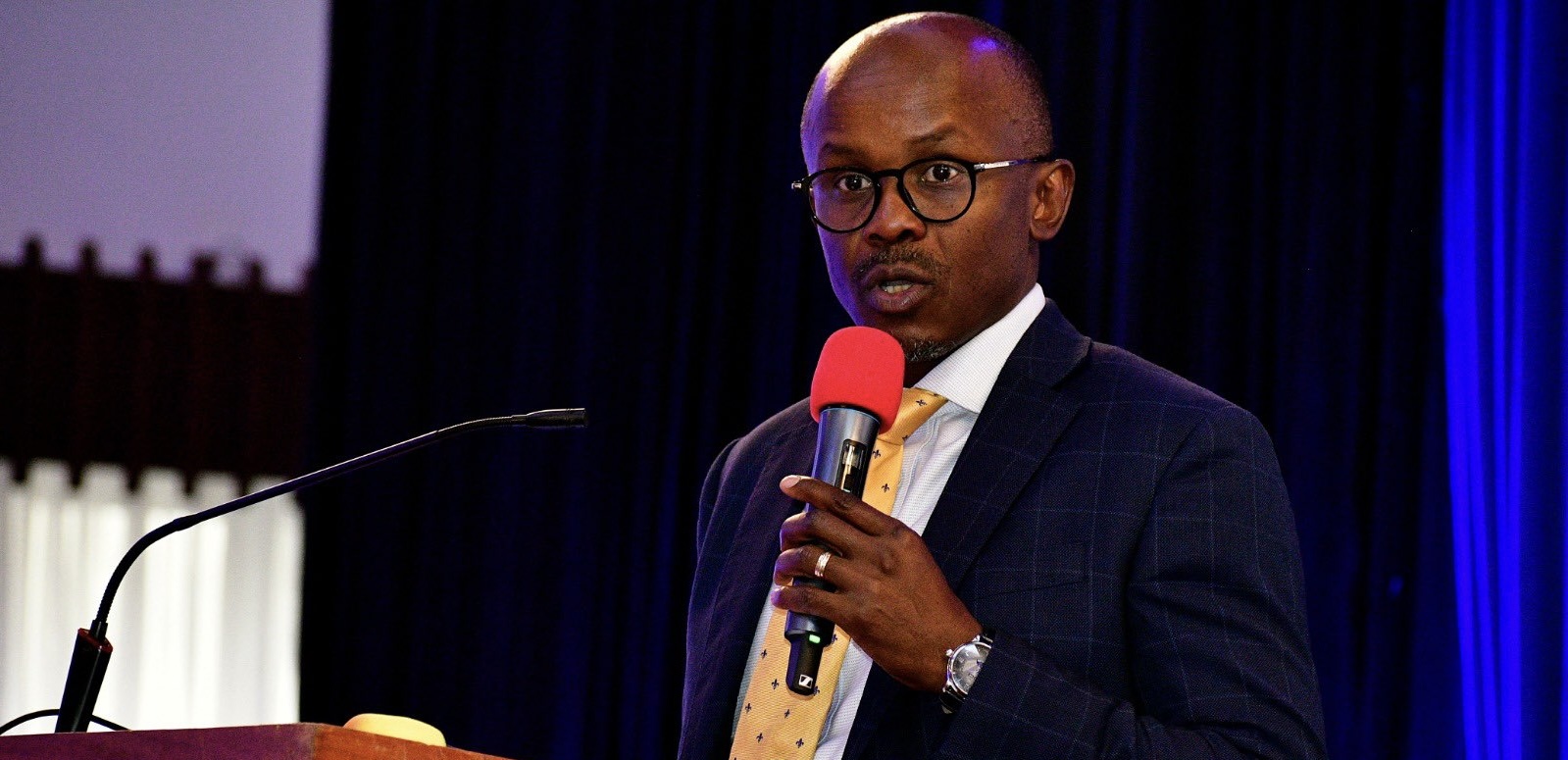
For a decade, James Mworia has stood at the podium of every Centum AGM and told shareholders a story about tangible wealth, about NAV growth, about strategic patience and the discipline of value investing. The balance sheets tell a different story entirely. A story of a company whose market value has collapsed 66 percent from its 2017 peak, whose subsidiaries are in technical default, whose flagship real estate project has destroyed billions in shareholder capital, and whose chief executive has collected over KES 750 million in personal compensation across the same period of ruin. This Kenya Insights investigation, drawing on audited financial statements, NSE filings, subsidiary-level accounts, and independent market analysis, lays out the full anatomy of what may be the most consequential governance failure in the history of Kenya’s capital markets.
THE ARITHMETIC OF RUIN: WHAT A KES 5 MILLION INVESTMENT ACTUALLY RETURNED
Begin with a number that management does not put in its press releases. A Kenyan investor who deployed KES 5 million into Centum Investment Company PLC at the market price of KES 40 per share in 2017 acquired 125,000 shares. By 1 June 2026, with the stock trading at approximately KES 13.80 to KES 14.00 on the Nairobi Securities Exchange, that position is worth roughly KES 1.725 million. The gross capital destruction stands at KES 3.275 million, a nominal wipeout of 65.5 percent. That is not a paper loss in the manner of a cyclical market correction. That is a near-permanent transfer of wealth away from minority shareholders.
Proponents of management’s position argue that dividends must be counted against this deficit. The audited dividend history bears examination. In FY2017 and FY2018, when Centum was generating peak exit proceeds from portfolio companies, the per-share dividend held at KES 1.20. After FY2020, as the company absorbed catastrophic losses driven by Two Rivers Development Limited, the dividend was slashed to KES 0.327 in FY2021, crept back to KES 0.587 and KES 0.600, and has since been capped at KES 0.320 since FY2024. For the hypothetical 125,000-share holder, cumulative dividends across nine financial years total approximately KES 869,250, a raw cash yield of 17.4 percent against an original principal of KES 5 million. Offset against the KES 3.275 million capital loss, the net economic deficit still exceeds KES 2.4 million. The dividend did not cushion the blow. It barely registered against it.
A KES 5 million investment in 2017 is worth KES 1.725 million today. The net economic deficit, after nine years of dividends, still exceeds KES 2.4 million.
What makes this outcome structurally damning rather than merely unfortunate is the unbroken trajectory it followed. Centum’s share price stood at KES 41.50 in 2017. By 2018 it had fallen to KES 34.25. By 2019, KES 30.50. By 2020, KES 23.00. By 2021, KES 17.05. By 2022, KES 14.10. By 2023, KES 8.90. There was a modest recovery in 2024 and 2025, pushing the price back into the KES 13 to KES 14 range. Every single year of James Mworia’s watch produced a lower share price than the year before it, until the stock was so deep in distress territory that any bounce became inevitable. The recovery still leaves long-term shareholders at roughly one-third of their entry point.
|
Year |
Share Price (KES) |
Dividend/Share (KES) |
Context |
|
2017 |
41.50 |
1.200 |
Peak exit / deal period |
|
2018 |
34.25 |
1.200 |
First full-year decline |
|
2019 |
30.50 |
1.200 |
GenAfrica exit proceeds |
|
2020 |
23.00 |
1.200 |
Pre-pandemic baseline |
|
2021 |
17.05 |
0.327 |
Two Rivers loss; first loss in 42 yrs |
|
2022 |
14.10 |
0.587 |
Partial macro recovery |
|
2023 |
8.90 |
0.600 |
KES 7.31bn consolidated loss |
|
2024 |
11.50 |
0.320 |
Buyback programme launch |
|
2026 (Jun) |
~13.80 |
0.320 |
80% NAV discount persists |
THE COMPENSATION ORBIT: KES 750 MILLION IN A DIFFERENT UNIVERSE
While shareholders watched their capital evaporate, the executive suite at Centum operated in what one shareholder brief described with precise accuracy as a completely different financial orbit. The compensation figures, drawn from audited annual reports and NSE disclosures, are not in dispute. What is in dispute is whether they reflect any coherent principle of governance or risk-sharing.
In FY2017, total executive remuneration at the group level reached KES 219.3 million. In FY2018, as the share price had already begun its descent, it was KES 177.5 million. The Business Daily, citing Centum’s own annual report, reported a figure of KES 375.6 million for the year ended March 2017, attributing the entire amount to Mworia as the sole executive director at group level. Mworia publicly disputed the characterization, arguing the figure represented the broader management team. The annual report’s own structure, explicitly stating that the board had only one executive director to prevent conflicts between management and the board, made that denial semantically difficult to sustain.
By FY2024, the executive base salary had climbed to KES 60.02 million following a sharp 31.8 percent structural upward adjustment from the previous KES 45.5 million baseline. Total compensation in FY2024 was reported at KES 64.52 million. This occurred in a year when Centum’s net profit had already collapsed 69 percent and its share price remained at a fraction of its 2017 levels. Across the full 2017 to 2026 cycle, cumulative leadership compensation at Centum is conservatively estimated to have exceeded KES 750 million. The shareholders who funded that compensation saw their equity reduced to roughly one-third of its starting value.
Centum’s bonus scheme was designed in theory to link pay to performance: bonuses would trigger only when cash returns exceeded a threshold. From FY2019 onward, bonuses dropped to zero as performance deteriorated. Management has consistently cited this zero-bonus period as evidence of a functioning risk-sharing mechanism. But the fixed baseline did not hold steady during the years of shareholder value destruction. It grew by roughly 65 percent from FY2019 to FY2024. When the losses mounted, the base pay accelerated. That is not shared risk. That is insulation.
When losses mounted and shareholder equity bled, the executive base salary grew by 65 percent. That is not shared risk. That is insulation.
THE DEBT MIRAGE: WHAT THE PARENT COMPANY HEADLINES DO NOT TELL YOU
Mworia has spent the better part of two years promoting what he calls Centum 5.0, a value-optimization strategy centered on parent-level deleveraging and asset monetization. Parent company borrowings did fall dramatically, from over KES 1.95 billion in FY2024 to KES 690 million by March 2025, and further to approximately KES 440 million by late 2025. These are real reductions. The problem is that they are not the whole picture, and in corporate finance, a partial picture is a dangerous document.
At the consolidated group level, borrowings as of 31 March 2025 stood at KES 17.85 billion, up from KES 16.59 billion the previous year. The parent company’s deleveraging has been financed in material part by pushing the debt burden down into subsidiaries where it accumulates at punitive rates and triggers covenant breaches that do not appear in the glossy investor presentations. The Group’s Debt-to-Equity ratio of approximately 0.42 appears moderate in isolation. It ceases to appear moderate when the specific nature of the subsidiary debt is examined against the interest rates being paid.
Two Rivers Land Company carries a USD 38.5 million term loan from Nedbank Limited and a USD 32.3 million mezzanine debt facility from Vantage Capital. Two Rivers Power Company carries a USD 7 million convertible loan from GridX Duara Holdings, extended in 2021 to fund solar and energy infrastructure. Two Rivers Development carries loan notes from various investors at rates that have reached 25 percent. Longhorn Publishers carries a working capital facility from Standard Chartered Bank that has already triggered covenant breaches. The subsidiary debt profile, drawn from Note 9.1b of Centum’s consolidated financial statements, reveals a company effectively funding long-duration, illiquid infrastructure and real estate projects with short-term, high-cost instruments. The academic term for this is asset-liability mismatch. The practical term is a slow-moving liquidity crisis.
|
Subsidiary |
Lender |
Facility Type |
Amount |
Status / Red Flag |
|
Two Rivers Land Co. |
Nedbank |
USD Term Loan |
USD 38.5M |
High LTV exposure on illiquid RE |
|
Two Rivers Land Co. |
Vantage Capital |
Mezzanine Debt |
USD 32.3M |
Equity conversion rights attached |
|
Two Rivers Power Co. |
GridX Duara |
Convertible Loan |
USD 7.0M |
Covenant breaches; reclassified current |
|
Two Rivers Development |
Various investors |
Loan Notes |
Undisclosed |
25% effective interest rate |
|
Longhorn Publishers |
Standard Chartered |
Working Capital |
Undisclosed |
Covenant breach; bank leash on new debt |
|
Zohari Credit |
Sidian Bank |
KES Term Loan |
Undisclosed |
High effective rate; parent sold Sidian |
TECHNICAL DEFAULT: THE COVENANT CRISIS NO ANNUAL REPORT LEADS WITH
The most alarming disclosure buried in Centum’s subsidiary accounts is not a matter of interpretation. It is a matter of established fact. Two Rivers Power Company Limited has breached multiple financial covenants on its GridX Duara convertible loan facility, specifically its Loan-to-Value ratio, its Debt Service Coverage Ratio, and its Gearing Ratio covenant. Each breach constitutes a technical event of default. Lenders now technically hold the right to demand immediate full repayment of what were previously long-term liabilities. Those liabilities have been reclassified as current liabilities on the group’s balance sheet, creating an immediate and material liquidity overhang. This is the kind of disclosure that, in a more rigorous regulatory environment, would trigger mandatory investor communications and shareholder votes. In Kenya’s current capital markets architecture, it sits in a financial note.
Longhorn Publishers presents a parallel story. Longhorn tripped its Current Ratio, Debt Coverage Ratio, and Total Debt to EBITDA covenant with Standard Chartered Bank. It secured waivers, but the price of those waivers is that Longhorn is now prohibited from taking on any new debt without the bank’s prior written consent. The bank, not the board, effectively controls the subsidiary’s balance sheet strategy. In FY2025, Longhorn’s revenue declined 56 percent to KES 672 million. The company posted a loss of KES 261.44 million. Its equity turned negative in the first half of the year to December 2024, with accumulated losses exceeding total equity. Centum’s original thesis for Longhorn was that the Competency Based Curriculum rollout would create a demand supercycle for educational publishers. The curriculum produced the opposite outcome. It has turned Centum’s thesis into a textbook example of capital misallocation by a management team that trusted its own forecasts above the evidence accumulating in the market.
TWO RIVERS: THE PROJECT THAT ATE CENTUM
No single decision in Centum’s modern history has done more damage to minority shareholder value than the Two Rivers development. The project, a mixed-use development along the Northern Bypass comprising Two Rivers Mall, residential units, and the Two Rivers International Finance and Innovation Centre Special Economic Zone, was presented to shareholders as a transformative urban project at a total investment cost of KES 25 billion. What it has delivered is an accelerating cascade of financial catastrophe that spans multiple financial years and has cost the consolidated group billions in impairment charges, finance costs, and operational losses.
In the financial year ended March 2021, finance costs at Two Rivers Development Limited drove Centum to a consolidated pre-tax loss of KES 2.33 billion. This was the company’s first loss in 42 years of operation. It was not a pandemic anomaly. In FY2023, Two Rivers Development Group posted a group loss of KES 7.09 billion, which included an impairment provision of KES 3.87 billion. The consolidated Centum net loss for FY2023 reached KES 7.31 billion. In the six months to September 2025, the core Two Rivers Development subsidiary still posted a loss of KES 90.68 million and the TRIFIC SEZ vehicle posted a loss of KES 584.5 million. In the same period, the group’s pre-tax losses more than tripled compared to the prior period, a figure partially obscured in headline reporting by a KES 296.71 million tax credit that narrowed the disclosed net loss to KES 326.14 million.
The mechanism of destruction is straightforward. Two Rivers was originally financed by a KES 8 billion facility from Co-operative Bank, later refinanced through Standard Bank South Africa, and subsequently subjected to multiple restructuring rounds that accumulated debt across the project entity. The Vantage Capital mezzanine facility of USD 32.3 million, raised in June 2024, carries equity-conversion rights that represent a potential dilution of Centum’s ownership in its flagship asset at a time when the project has yet to prove sustainable cash generation. In the first half of FY2026, Two Rivers development finance costs alone were burning approximately KES 583 million per half-year. That is not a rounding error. That is a cash demand that exceeds the dividend Centum pays to all of its shareholders combined.
Mworia’s current answer to the Two Rivers debt crisis is the TRIFIC I-REIT, a KES 4.8 billion USD-denominated income Real Estate Investment Trust that opened for subscription on 13 May 2026 and is scheduled to list on the NSE on 23 June 2026. The REIT’s anchor asset is the TRIFIC North Tower, approximately 100 percent let with Teleperformance as the anchor tenant on a long-term USD lease. If fully subscribed, the proceeds would retire the development facility that has been burning approximately KES 583 million per half-year in finance costs and provide the first independent, market-validated pricing for Centum’s largest single asset. The question that shareholders have not received a satisfactory answer to is why it took until 2026 to execute what appears, on paper, to be the logical capital markets solution to a problem that has been destroying value since at least 2018. The REIT does not retroactively compensate shareholders for eight years of finance costs. It does not reconstitute the equity wiped out by the FY2023 impairment provisions. The intervention came approximately five years later than the pain.
Two Rivers development finance costs were burning KES 583 million per half-year. That cash demand exceeds the dividend Centum pays to all of its shareholders combined.
ENERGY MISADVENTURES: KES 4.2 BILLION IN PROJECTS THAT PRODUCED NO ELECTRICITY
Centum’s energy portfolio represents a separate chapter in the story of capital destruction. The company made two major commitments in the power sector under Mworia’s leadership, and both have failed to produce a single unit of commercial electricity while consuming billions in shareholder capital.
The Lamu coal project, executed through Amu Power Company Limited in which Centum held a 51 percent majority stake alongside Gulf Energy, absorbed approximately KES 2.1 billion in Centum investment before it was effectively abandoned. The project encountered successive fatal setbacks: the National Environment Tribunal revoked its Environmental Impact Assessment licence, the African Development Bank and the European Investment Bank withdrew their support citing changed fossil fuel investment policies, and General Electric publicly exited the coal generation business. Centum wrote off the investment in 2022. KES 2 billion, confirmed in company disclosures and described by Mworia himself as a prudent recognition of reality, is one of the largest single-project capital destructions in NSE-listed company history. Not one watt of electricity was ever generated.
The Akiira Geothermal project has proven equally incapable of generating returns. Centum’s original 37.5 percent stake cost approximately KES 1.97 billion when deployed in 2016. Two exploratory wells, costing KES 1.2 billion in total, failed to meet production capacity. The founding international partners, Danish fund DI Frontier and American firm RAM Energy, exited their positions in 2024. Centum bought them out for a combined KES 232.788 million, raising its stake to 85 percent and its cumulative investment to approximately KES 2.2 billion. The equity value of the Akiira investment in Centum’s books is currently nil. The KES 1.095 billion carried on the balance sheet is recorded entirely as shareholder loans rather than equity, a designation that signals functional impairment without the formal write-off that would force a transparent hit to reported profits. As of June 2026, there is no commissioned generating capacity, no new partner in place, and no publicly disclosed timeline for the 140-megawatt project to produce commercial power. The company is still calling it an active investment.
THE SIDIAN BANK EXIT: LIQUIDITY TRIAGE DRESSED AS STRATEGY
In March 2026, Centum completed the sale of its entire remaining stake in Sidian Bank through its vehicle Bakki Holdco Limited, ending a 25-year relationship with the lender. Management framed the transaction as the conclusion of a planned divestment and evidence of disciplined capital recycling. The actual sequence of events tells a more instructive story about what drives decisions at Centum.
Centum once held a 67.54 percent controlling stake in Sidian acquired in November 2014. Between October 2023 and early 2026, its effective exposure was progressively diluted through successive Sidian rights issues that raised over KES 3 billion in new capital from other shareholders, in which Centum did not participate. Non-participation in a rights issue is one of the clearest signals a parent company can send about its own liquidity constraints. A parent that believes in the value of its subsidiary participates in rights issues to maintain its stake. A parent stretched to breaking point opts out and accepts dilution. Centum opted out, repeatedly, and watched its dominant controlling stake dilute to the residual 13.6 percent effective interest it ultimately sold.
The carrying value of the Sidian investment at the time of disposal was KES 1.1 billion. The buyer and the transaction price were not disclosed at the time of announcement, with Mworia failing to respond to media queries on these points. The financial effects will appear in Centum’s FY2026 results. What is already established is the pattern: a 25-year investment in a bank that grew its total assets to KES 94.8 billion and more than doubled deposits to KES 78.11 billion between December 2023 and September 2025 was sold at a moment of maximum leverage pressure rather than at a moment of strategic choice. The bank grew rapidly after Centum began its exit. Centum missed that upside because it needed the cash.
THE BUYBACK PARADOX: SPENDING ON THE STOCK WHILE SITTING ON EXPLOSIVE DEBT
In February 2023, Centum’s board approved a share buyback programme to repurchase up to 10 percent of the company’s issued share capital, equivalent to approximately 65.56 million shares. The programme was presented as evidence that management considered the stock deeply undervalued relative to its reported NAV. In execution, it became one of the more instructive examples of capital allocation dysfunction in recent Kenyan corporate history.
By the time the programme closed on 31 March 2026, Centum had repurchased a total of 10,839,300 shares against a target of 65.56 million, a hit rate of 16.76 percent. In the first phase, the company bought 10,688,500 shares at a maximum price of KES 9.03. In the extended second phase, it acquired a further 150,800 shares at KES 9.51. The second phase was rendered commercially inert by the fact that the share price had risen above the programme’s capped execution price. The buyback meant to signal confidence in undervalued equity ended with management confirming it had identified the bottom correctly but could execute on only a sixth of the intended volume.
The more fundamental problem is structural. In the period between March and September 2025, the Group’s total borrowings at the consolidated level rose from KES 17.8 billion to KES 21.2 billion. During a period of rising consolidated debt, much of it at subsidiary rates between 15 and 25 percent, the company spent KES 99.2 million on buying back its own stock. At a 25 percent marginal rate on the most punitive instruments, every KES 100 million used for buybacks rather than debt reduction costs the group KES 25 million per year in interest it would not otherwise have incurred. This is not neutral capital allocation. By spending nearly KES 100 million on buybacks while carrying KES 21.2 billion in consolidated debt, management effectively engineered a higher net asset value per share by shrinking the denominator. That is not organic value creation. It is financial optics executed at the expense of long-term balance sheet health.
THE PLEDGE TRAP AND THE FX SQUEEZE
Among the structural vulnerabilities that merit the attention of potential investors is the use of equity pledges to secure high-interest subsidiary debt. When a company in financial distress secures short-term bridge financing by pledging the equity of its subsidiaries, it is trading its long-term strategic autonomy for short-term breathing room. A lender holding pledged equity in a subsidiary that has already breached its DSCR and gearing covenants, as is the case with Two Rivers Power Company, does not merely hold a claim on cash. It holds a claim on the asset itself. If the subsidiary misses further targets, the lender can force ownership transfer without a shareholder vote. That is not a hypothetical scenario. It is the documented contractual exposure inside the Centum group structure.
The currency mismatch embedded in the group’s capital structure represents an additional invisible risk to minority equity holders. Centum’s Two Rivers infrastructure and SEZ projects generate revenues primarily in Kenya shillings. The debt used to finance those projects is structured in US dollars, including the USD 7 million GridX convertible loan and the USD 32.3 million Vantage Capital mezzanine facility. When the Kenya shilling depreciates, the shilling equivalent of the dollar debt principal expands automatically. A 10 percent weakening of the shilling adds approximately KES 210 million to the principal burden of the USD 7 million TRPC facility alone. A corresponding increment in annual interest payments, in a project with contracted tariff structures that cannot be adjusted upward, falls directly on equity. That invisible tax on shareholders is not reflected in Mworia’s investor presentations. It is reflected in the impairment charges and technical defaults that appear in the footnotes.
THE NAV ILLUSION: WHEN BOOK VALUE BECOMES A GOVERNANCE SHIELD
Centum’s defense of its decade-long performance rests substantially on the argument that its net asset value per share, currently reported at KES 68.75 against a market price of approximately KES 13.80 to KES 14.00, demonstrates that the market is wrong and management is right. The company trades at an approximately 80 percent discount to its stated NAV. Management argues this is irrational. The evidence of the past decade argues otherwise.
The NAV figure is derived from valuations of assets that are, in material part, not marketable at their book values under current conditions. The Akiira Geothermal investment carries KES 1.095 billion in shareholder loans with zero equity value and no producing wells. The Two Rivers Development portfolio carries values that reflect management-commissioned fair value adjustments rather than arm’s-length market transactions. Longhorn Publishers has negative equity. The valuation of the TRIFIC SEZ reflects projected income from a facility whose 22-storey expansion tower has no confirmed tenants, no disclosed pre-lease commitments, and relies on the successful subscription of the TRIFIC I-REIT for its construction financing. A NAV built substantially on self-assessed valuations of illiquid, non-income-producing, or actively loss-making assets is not the same instrument as a NAV built on liquid, income-generating, market-priced holdings. When Centum says the market is wrong by 80 percent, what it is actually saying is that investors should trust management’s own valuations of assets that management controls, manages, and is compensated to present favorably. That is not a compelling argument to anyone with access to the subsidiary financial statements.
The market’s persistent 80 percent discount to Centum’s stated NAV is not a failure of investor sophistication. It is a rational, market-aggregated judgment about the realizability of those assets under current ownership and management, expressed consistently and without interruption across nine years of trading. Capital markets have been making this judgment since 2018. The company’s response has been to continue reporting NAV, conduct a buyback that barely dented the float, and hold AGMs where questions about the mathematical timeline for value realization have not received quantified answers.
The market’s 80 percent discount to Centum’s NAV is not a failure of investor sophistication. It is a nine-year standing judgment about whether those assets will ever be realized at book value.
33,000 SHAREHOLDERS AND A REGULATORY VACUUM
A picture of the internal culture at Centum has emerged from multiple sources over the years, including a widely circulated letter in 2021 by former employees who described what they characterized as a toxic working environment under Mworia’s leadership. The letter, which drew significant public attention, alleged that over 40 staff members had been made redundant while the CEO blamed employees for the company’s strategic failures rather than accepting leadership accountability. The authors characterized Mworia as having constructed an ecosystem of selfish gain and described the investment model as inappropriate for a publicly listed vehicle with 33,000 small-scale shareholders. Management did not provide a substantive public response to the allegations. The Capital Markets Authority did not publicly investigate. The share price continued to fall.
The governance questions surrounding Centum are not technical matters visible only to sophisticated institutional investors. They are embedded in publicly filed annual reports available to anyone with a NSE account and the patience to read financial footnotes. Yet the Capital Markets Authority has not, in the public record, initiated any formal inquiry into the governance structures at Centum, the adequacy of its covenant breach disclosures to retail investors, the transparency of its executive compensation arrangements, or the appropriateness of a share buyback programme executed while the company was carrying KES 21.2 billion in consolidated debt at rates of up to 25 percent.
The NSE’s own disclosure requirements technically mandate that material events, including events of default and covenant breaches at subsidiaries that create reclassified current liabilities, be disclosed in a timely manner to the market. The reclassification of Two Rivers Power Company’s debt as current liabilities following covenant breaches appears in financial notes rather than in standalone NSE announcements. A market cannot allocate capital efficiently when the companies issuing securities withhold the operational specifics behind headline numbers, and when the regulator charged with protecting retail investors has no visible enforcement footprint in this case.
WHAT A NEW INVESTOR IS ACTUALLY BUYING IN JUNE 2026
For any investor considering a position in Centum Investment at the current price, the due diligence requirement is not whether the stock looks cheap relative to NAV. The due diligence requirement is whether the assets underpinning that NAV will ever be converted into cash that flows to minority shareholders at prices approximating the book values currently assigned to them, and whether the governance framework is capable of executing that conversion in a timeframe relevant to a human investor.
The current portfolio, stripped of management’s narrative, consists of the following. A real estate and SEZ development that has been producing losses for the majority of five financial years and whose deleveraging depends entirely on the successful subscription and listing of a first-of-its-kind USD-denominated I-REIT in a Kenyan market with limited institutional appetite for novel instruments. An educational publisher with negative equity, a 56 percent revenue decline, and a Standard Chartered covenant leash that prevents it from taking on new debt without bank approval. A geothermal power project with KES 2.2 billion invested, nil equity value, two failed exploratory wells, no producing capacity, and no partner in place. A private equity portfolio that has been progressively monetized through the Centum 5.0 exit cycle with the most liquid and profitable assets already sold. A parent company with KES 440 million in direct borrowings, a 16.76 percent buyback execution rate, and a dividend held at KES 0.32 per share.
The TRIFIC I-REIT, currently open for subscription until 12 June 2026, is the single most important near-term catalyst. If fully subscribed and listed successfully on 23 June, it retires the development finance costs, provides first independent price discovery for the TRIFIC North Tower, and unlocks capital that management has indicated will be redeployed into more liquid assets. That is a legitimate catalyst. The sufficient conditions for minority shareholders to realize actual value over a reasonable investment horizon require considerably more: a credible resolution or write-off of the Akiira Geothermal position that clears the false hope from the books; a demonstrated reversal in Longhorn’s operating trajectory; transparent disclosure of the mathematical timeline for NAV realization through asset monetizations; and governance reform that links the executive base salary to market-realized outcomes rather than self-assessed book-value NAV calculations that minority shareholders have consistently been unable to monetize.
Until those conditions are met, the balance sheet of Centum Investment Company PLC will continue to tell two stories simultaneously. The first story, told in press releases and AGM presentations, is of a disciplined capital allocator executing a rational portfolio optimization against an irrational market discount. The second story, told in subsidiary financial notes, covenant breach disclosures, and the brokerage statements of 33,000 retail shareholders, is of a company whose decade under its current chief executive has produced one of the most sustained transfers of wealth from public shareholders to executive compensation in Kenyan corporate history. Both stories are supported by the same documents. Only one of them is routinely told in public.
METHODOLOGY AND SOURCES
This investigation draws on Centum Investment Company PLC audited annual reports from FY2017 to FY2025; subsidiary financial statements including Two Rivers Development Limited, Two Rivers Power Company, and Longhorn Publishers; NSE regulatory filings and profit warnings; half-year results for the periods ended September 2024 and September 2025; independent financial analysis published by BoardLotSultan on Substack (May-June 2026); Kenya Insights special report (March 2026); The Kenyan Wallstreet deal record analysis (March 2026); Business Daily, The Standard, Nation Africa, and The Star reporting on specific transactions and results; and the public record of regulatory actions concerning Centum Investment Company PLC at the Capital Markets Authority of Kenya.
Kenya Insights allows guest blogging, if you want to be published on Kenya’s most authoritative and accurate blog, have an expose, news TIPS, story angles, human interest stories, drop us an email on [email protected] or via Telegram











Bolt Denies Viral Exit Claims, Says Kenya Operations Remain Fully Active

Secret Trident Meetings, Claims of Millions Exchanged: Fresh Questions Raised Over PCF Boss Mohammed Sahal’s Role in Insurance Battle

The Kamukunji Cash Pit: Ghost School, Phantom Audit Trails and NG-CDF Manager Who Refuses to Leave

Lawyer in Sh65 Million Fake Gold Scandal Dragged to Court as Investigators Uncover Web of Suspicious Deals

THE GREAT HOLLOWING: How James Mworia Extracted KES 750 Million While 33,000 Centum Shareholders Lost Everything

Port Tycoon Samuel Kairu Dragged Into Sh500 Million Mombasa Port Tax Scam

Couple Charged With Sh13.8 Million Forex Fraud

UK Wins Court Case Over Collapsed Rwanda Asylum Deal

Gachagua Attacks Ruto for Holding Madaraka Day Celebrations at Newly Built Wajir Stadium, Says Residents Have More Pressing Unmet Needs

Bought Popularity? Malindi NG-CDF Officer Nelson Alfayo Faces Fresh Claims of Poll Manipulation Amid Mounting Corruption Allegations

Why Ruto’s Favourite Candidate Adan Mohammed Could Be Locked Out of the KRA Top Job

Este Medical Kenya Fights American’s Explosive Complaints

Safaricom’s Sh1.4 Billion Reckoning: How Kenya’s Most Profitable Company Stole a Man’s Idea and Got Caught

LifeCare on the Brink: SHA Fraud, Stolen Wages, and the Rotten Empire Jayesh Saini Built

The Rot Inside Absa: How Bank Insiders Are Looting Nairobi’s Customers

The $24 Million Heist at the End of the World

Denial Under Duress: The Untold Collapse Threatening David Lagat’s DL Group’s Empire

THE INSURER THAT TOOK YOUR PREMIUM AND FORGOT YOUR NAME: How ICEA Lion Left a Client Begging for Sh7.8 Million Across Four Months

Court Confirms Safaricom Customers Data Was Sold To Betting Companies In Seven-Year Cover-Up

Eight Students Arrested In Kenya After Suspected Deadly School Arson Attack
-
 News1 week ago
Este Medical Kenya Fights American’s Explosive Complaints
-
 Investigations7 days ago
LifeCare on the Brink: SHA Fraud, Stolen Wages, and the Rotten Empire Jayesh Saini Built
-
 News4 days ago
Eight Students Arrested In Kenya After Suspected Deadly School Arson Attack
-

 Americas1 week ago
Inside FAFSA Fraud: How Kenyan Cybercriminals Siphoned Millions from America’s Sh12 Billion Student Loan System
-
 Business2 weeks ago
Blocked: How Mombasa Tycoon Ashok Doshi Has Stopped Imperial Bank Depositors From Getting Their Money
-

 Investigations1 week ago
LSK On The Spot For Renewing Rogue Lawyer Dennis Onyango’s Licence Despite Mounting Evidence He Held Foreign Investors’ Millions Hostage
-

 Investigations1 week ago
Your Medical Records Were Wide Open: How Three Digital Lenders Hacked the Heart of Kenya’s Health System and the DHA Chief Who Looked Away
-

 Investigations6 days ago
The Invisible Hand: Al Jazeera Further Exposes How Safaricom Became The Regime’s Most Powerful Spy