
Business
Kenyan Motorists Stare At Possible Engine Damage And Heavy Losses As Report Confirms Substandard Fuel In Circulation
Kenya Pipeline Company’s acting Managing Director has confirmed before a Senate committee that 60,000 tonnes of super petrol with sulphur content more than four times the legal limit was blended with existing stocks and released to oil marketing companies — directly contradicting a week of official government assurances that the consignment had been blocked from the market. Every motorist who filled their tank after March 27 is now a potential victim.

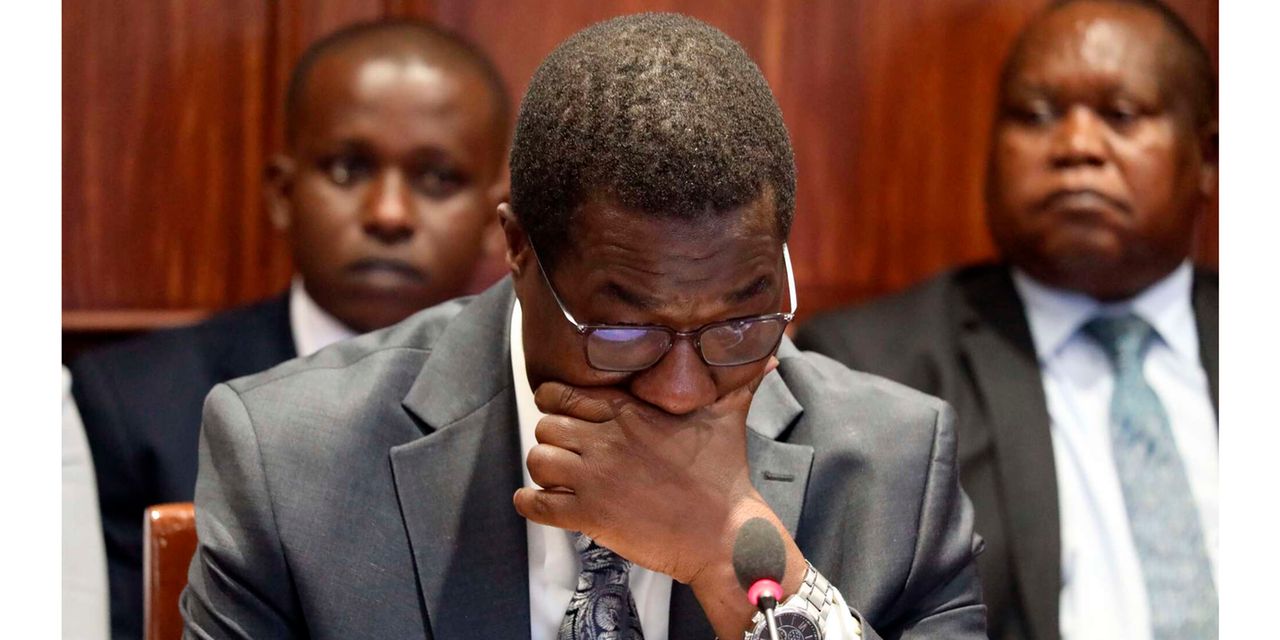
CONFIRMED: KPC Acting MD Pius Mwendwa told the Senate Energy Committee on April 14, 2026, that the consignment — which tested at 43ppm sulphur against the legal maximum of 10ppm — was blended with existing stocks and released to oil marketing companies following a written waiver from Trade CS Lee Kinyanjui.
The government’s week-long assurance that Kenya’s motorists were safe — that the 60,000 tonnes of substandard super petrol aboard MT Paloma had been intercepted and would never reach a forecourt — collapsed in a Senate committee room on Tuesday, April 14, 2026. Kenya Pipeline Company Acting Managing Director Pius Mwendwa, appearing before the Senate Energy Committee, did what the Ministry of Energy, Cabinet Secretary Opiyo Wandayi, and One Petroleum Limited had all carefully avoided doing: he told the truth. The substandard fuel is in the market. It was always going to be in the market. And anyone in Kenya who purchased petrol after March 27, 2026, may have pumped it into their vehicle.
The revelation is not merely a political embarrassment. It is a public safety crisis with direct, measurable consequences for millions of Kenyans who depend on private vehicles, public transport, motorcycles, generators, and water pumps. Senators on the committee raised immediate alarm about reports of vehicles burning on Kenyan roads, a symptom consistent with the kind of engine damage that high-sulphur, high-manganese, benzene-contaminated fuel can cause in modern engine management systems. The government, which had characterised the controversy as a procurement irregularity, must now answer for a different category of harm entirely.
THE NUMBER THAT CHANGES EVERYTHING: 43PPM AGAINST A LIMIT OF 10PPM
The technical dimensions of this scandal demand precise understanding. Kenya’s petroleum specifications, governed by the Kenya Bureau of Standards, set a maximum sulphur content of 10 parts per million (ppm) for super petrol. This threshold exists for well-established reasons: excess sulphur damages catalytic converters, fouls oxygen sensors, accelerates corrosion in fuel injection systems, and degrades the lubricating properties of fuel in engine components. In modern vehicles with electronic engine management systems, high-sulphur fuel can trigger diagnostic failures, reduce fuel efficiency, and in sustained use, cause irreversible damage to emission control hardware.
The consignment discharged from MT Paloma on March 27 tested at 43ppm. That is not a marginal exceedance. It is more than four times the legal limit permitted for fuel sold in the Kenyan market. The Kenya Bureau of Standards, the same institution whose waiver enabled the fuel’s entry, had determined through its own specifications that petrol with sulphur above 10ppm should never reach a Kenyan motorist’s tank. For KPC to have admitted this cargo into its system — and then to have blended and distributed it — on the authority of a letter from Trade CS Lee Kinyanjui is a governance failure of extraordinary proportions.
“We received the consignment on 27th March 2026 but after measuring it we realised there were high levels of sulphur. It had a sulphur content of 43ppm against the requirement of 10ppm.” — KPC Acting MD Pius Mwendwa, Senate Energy Committee, April 14, 2026
THE KINYANJUI LETTER: BLEND IT AND HOPE
At the centre of what is now a confirmed public contamination event is a letter dated March 28, 2026, from Trade and Investment Cabinet Secretary Lee Kinyanjui to Energy CS Opiyo Wandayi. Documents tabled before the Senate committee show that the letter directed that the 60,000 tonnes of substandard petrol aboard MT Paloma be comingled with existing stocks to mitigate excess manganese. The letter further instructed KPC and EPRA to control distribution of the blended fuel while awaiting the arrival of the next consignment, expected in early April. That consignment — a 96,000 metric tonne shipment by Oryx Energies Kenya — was subsequently cancelled when the government revoked the tender, leaving the dilution plan without its intended second phase.
Kinyanjui, when pressed in earlier media appearances, characterised his letter as simply giving conditions that were to be met and insisted he was doing what the law requires. The Senate testimony obliterates that framing. His letter did not merely set conditions. It affirmatively instructed KPC to blend illegal fuel with compliant stock and release the mixture to oil marketing companies. In law, that instruction — documented, tabled before Parliament, and confirmed by KPC’s own acting MD — is a directive to distribute adulterated fuel to consumers. That is not an administrative condition. It is a health and safety order whose consequences are now being borne by the motoring public.
The timing compounds the procedural irregularity to a degree that Narok Senator Ledama Ole Kina described in plain language before the committee. PS Liban requested a waiver on March 26. KPC admitted the consignment into its system on March 27. Kinyanjui’s formal approval letter authorising the waiver was only written on March 28. The cargo entered the system before the authority to admit it was formally issued. KPC, in the words of Senator Ole Kina, was trying to regularise an irregularity. Retroactive authorisation of a fait accompli is not a waiver process. It is a cover-up with letterheads.
“Does this not raise your eyebrows that KPC was trying to regularise an irregularity?” — Narok Senator Ledama Ole Kina, Senate Energy Committee, April 14, 2026
WANDAYI’S APRIL 7 STATEMENT: A FICTION IN REAL TIME
The full moral and political weight of Tuesday’s Senate testimony falls most heavily on CS Wandayi, whose April 7 press statement has now been exposed as either a deliberate untruth or a statement made in profound ignorance of what his own pipeline company was doing. On April 7, Wandayi directed One Petroleum to exit its product out of Kenya as soon as possible. He barred oil marketing companies from uplifting product from the consignment. He told the nation that the consignment had been imported in contravention of the G-to-G framework and posed a risk to pricing stability. What he did not tell the nation was that by April 7 — eleven days after MT Paloma docked — the fuel had already been blended and distributed. The withdrawal order was issued after the product had left the system. The horses had long since bolted. Wandayi was locking an empty stable.
One Petroleum’s own statement, issued in the days following Wandayi’s directive, declared that the company was taking steps to ensure that the cargo brought in on March 27 via MT Paloma does not enter the Kenyan market. Senate testimony confirms this was false at the time it was issued. The company has since declined to appear before the Senate committee, instead questioning the mandate of the Senate to investigate the matter — a position that, in the context of confirmed fuel contamination affecting millions of citizens, borders on contempt.
VEHICLES BURNING ON ROADS: THE HUMAN COST TAKES SHAPE
Senator Ledama Ole Kina’s warning during Tuesday’s hearing was not rhetorical. We are already seeing instances of vehicles burning on our roads, he told the committee. While the specific incidents he referenced have not been independently verified by Kenya Insights at time of publication, the causal chain between high-sulphur, high-manganese petrol and vehicle damage is well established in automotive engineering literature and has been documented in multiple countries where substandard fuel has inadvertently or deliberately entered fuel supply chains.
High manganese content, which the Kinyanjui waiver letter also acknowledged was present in the MT Paloma cargo, is particularly destructive. Manganese-based fuel additives, while used as octane boosters in some markets, deposit manganese oxides in combustion chambers, on spark plugs, and on catalytic converter surfaces. The deposits reduce combustion efficiency, foul ignition systems, and in sustained use can cause partial or total catalytic converter failure. In a vehicle where catalytic failure creates a blockage in the exhaust pathway, the consequences range from dramatic loss of power to fire risk.
The benzene content flagged in the Kinyanjui letter introduces an additional public health dimension that extends well beyond individual vehicle damage. Benzene is a Group 1 carcinogen under the International Agency for Research on Cancer. Its combustion in vehicle engines releases benzene derivatives into urban air, with the highest exposures experienced by vehicle operators, fuel station attendants, and pedestrians in high-traffic urban corridors. Nairobi, Mombasa, Kisumu, Nakuru, and Eldoret — all served by KPC depots — have now been exposed to a month of elevated benzene emissions from a consignment that should never have been distributed.
THE FUEL IMPORT SURGE: NUMBERS THAT TELL A STORY
Documents tabled before the Senate committee also revealed a data anomaly that investigators are likely to examine closely. According to KPC figures, Kenya received 403,343 metric tonnes of fuel in March 2026, dramatically higher than the 277,920 metric tonnes received in February. The 45 percent month-on-month surge in imports occurred precisely during the period when senior officials are alleged to have manipulated stock data to engineer a false impression of supply scarcity. The question investigators must now answer is whether the import surge itself was a consequence of genuine supply anxiety, or whether it represents the fingerprint of a procurement operation that used manufactured panic to justify extraordinary volumes at inflated prices.
The same documents revealed a separate and alarming supply discrepancy: KPC currently holds only 16,995 metric tonnes of diesel in stock for the month of April. For context, Kenya’s monthly diesel consumption runs to hundreds of thousands of metric tonnes. That stock level, tabled before senators in the same session where the substandard petrol contamination was confirmed, suggests that the supply disruption caused by the scandal — through the cancellation of the Oryx Energies consignment and the ongoing uncertainty around the fuel distribution system — has created real scarcity even as the government insists supply is stable.
THE REGULARISATION SCANDAL WITHIN THE SCANDAL
The sequence of events documented before the Senate committee reveals a pattern that investigators describe as retroactive regularisation: the practice of first taking an irregular action and then manufacturing paper trails designed to give it retrospective legitimacy. KPC admitted the MT Paloma cargo on March 27. The waiver authorising that admission was formally issued on March 28. This is not a technicality. Under Kenya’s procurement and regulatory law, the authority to act must precede the act. KPC’s admission of 43ppm sulphur fuel into the national pipeline system without valid authorisation was, in the absence of a pre-existing waiver, an unauthorised release of adulterated fuel into Kenya’s distribution network.
The paper trail constructed after the fact — Liban’s March 26 request, Kinyanjui’s March 28 approval — reads, in Senator Ole Kina’s framing, as an attempt to legitimise a decision that had already been taken at a level and on a timeline that the formal correspondence cannot fully explain. Who instructed KPC to admit the cargo before the waiver letter arrived? That question remains unanswered. The five officials arrested by the DCI — Liban, Sang, Kiptoo, Wafula, and Mburu — were released on Sh100,000 police cash bail each. No charges have been filed. The ODPP has been conspicuously silent. And the fuel is already in the market.
PARLIAMENT HAS NEVER SEEN THE G-TO-G DOCUMENTS
The Senate and National Assembly hearings have exposed a governance failure that predates the MT Paloma scandal by years. National Assembly Energy Committee member Awendo MP Walter Owino told the committee that Parliament has repeatedly requested the documents governing Kenya’s government-to-government fuel import framework but has never been provided with them. Committee chairman David Gikaria confirmed that legislators want to review the G-to-G regulations to identify whether loopholes in the arrangement enabled the landing of the illegal consignment at Mombasa.
The implications of this revelation are profound. Kenya’s entire fuel import architecture since 2023 has been governed by a framework that Parliament, the constitutionally mandated oversight institution, has never been permitted to examine. The G-to-G arrangement, which channels hundreds of billions of shillings in annual petroleum procurement through a narrow set of Gulf suppliers and their nominated Kenyan partners, has operated without the legislative scrutiny that public procurement of this magnitude demands. The fuel scandal is, in part, the consequence of a system designed to function beyond parliamentary sight.
THE KPC IPO AND THE QUESTION OF DISCLOSURE
The confirmed contamination also re-opens the question of disclosure obligations that arose with the March 2026 KPC initial public offering. The IPO was 105 percent oversubscribed, raising Sh106 billion at Sh9 per share, with 70,000 ordinary Kenyan investors participating. What those investors were not told — because neither KPC’s management nor the government disclosed it — was that the pipeline company’s acting leadership would, within weeks of the IPO closing, admit before a Senate committee that KPC had introduced a four-times-over-limit sulphur petrol into the national distribution system on the authority of a ministerial letter whose authorisation arrived the day after the cargo was admitted. If KPC’s board and management were aware of the MT Paloma quality failure at the time of the IPO roadshow, and if that information was material to the company’s regulatory standing, the non-disclosure may carry legal consequences for the issuer and its advisers.
WHAT MOTORISTS ARE OWED
Kenya Insights has been consistent in its position since this investigation began: the question at the heart of this scandal is not whether One Petroleum complied with a post-hoc withdrawal order. It is whether Kenyans who purchased petrol after March 27, 2026, were sold a product that met the standards their regulatory system promised them. Tuesday’s Senate testimony answers that question definitively. They were not.
What motorists are now owed is a public accounting that goes beyond parliamentary hearings and bail bonds. They are owed a formal public health disclosure that identifies, to the extent possible, the geographic distribution of the blended fuel through KPC’s depot network and the downstream retail stations that purchased it. They are owed independent laboratory testing of fuel samples drawn from the market between March 27 and the date the blended stock was exhausted. They are owed a liability framework that addresses engine damage claims from vehicle owners who can demonstrate causation. And they are owed a criminal process — not a bail and silence arrangement — that holds accountable those who signed the letters, admitted the cargo, issued the false assurances, and then declined to appear before Parliament.
The senators who pressed Mwendwa on Tuesday, April 14, achieved what a week of ministerial press statements had deliberately obscured. Kenya now knows, on the record, in a parliamentary committee, confirmed by the acting head of its own pipeline company, that substandard fuel with more than four times the legal sulphur limit was blended into the national supply and released to the market. Whether the institutions of accountability — the DCI, the ODPP, the courts, the Energy and Finance ministries, and ultimately the Presidency — rise to meet that confirmation is the only question that remains.
Kenya Insights allows guest blogging, if you want to be published on Kenya’s most authoritative and accurate blog, have an expose, news TIPS, story angles, human interest stories, drop us an email on [email protected] or via Telegram


Italy Bans Kanye West, Travis Scott Concerts Over Security Concerns

OdiBets Faces Investigation After 29.5 Million Safaricom Customers’ Data Breach, Risks Losing License

Omtatah Seeks Removal of Three Appeal Judges Over Kenya-US Health Deal Ruling

Blue Origin Rocket Explodes On Launchpad In A Setback For Bid To Catch Musk’s SpaceX

Two Teachers Knew Of Planned Utumishi Girls Dormitory Fire But Failed To Act

Eight Students Arrested In Kenya After Suspected Deadly School Arson Attack

Kenyan Court Orders Suspension Of US Plan For Ebola Quarantine Facility

Mohan Galot’s Empire Faces Collapse As Court Reinstates Sh3 Billion Demand

From Hunger Cartel To Oil Docket: The Troubling Rehabilitation Of Kello Harsama

Ruto Claims Powerful Oil Cartels Are Fighting to Block Dangote Refinery Entry Into Kenya, Vows to Push Ahead

Why Ruto’s Favourite Candidate Adan Mohammed Could Be Locked Out of the KRA Top Job

Green Gold, Rotten Roots: How Kenya’s Biggest Avocado Firms Hijacked a Sh5.8 Billion Harvest Ban

Safaricom’s Sh1.4 Billion Reckoning: How Kenya’s Most Profitable Company Stole a Man’s Idea and Got Caught

The Rot Inside Absa: How Bank Insiders Are Looting Nairobi’s Customers

The $24 Million Heist at the End of the World

DENTIST IN DISGUISE: How Este Medical Kenya’s Co-Founder Allegedly Prescribed Medicines Outside Her Scope, Lied to Police, and Weaponised the Law Against a Foreign Patient

Denial Under Duress: The Untold Collapse Threatening David Lagat’s DL Group’s Empire

THE INSURER THAT TOOK YOUR PREMIUM AND FORGOT YOUR NAME: How ICEA Lion Left a Client Begging for Sh7.8 Million Across Four Months

LifeCare on the Brink: SHA Fraud, Stolen Wages, and the Rotten Empire Jayesh Saini Built

The President’s Helicopter: How Ruto’s Aviation Empire Lands a Historic Airbus Milestone While His Government Writes the Tax Code
-
 News2 weeks ago
Why Ruto’s Favourite Candidate Adan Mohammed Could Be Locked Out of the KRA Top Job
-
 News5 days ago
DENTIST IN DISGUISE: How Este Medical Kenya’s Co-Founder Allegedly Prescribed Medicines Outside Her Scope, Lied to Police, and Weaponised the Law Against a Foreign Patient
-
 Investigations4 days ago
LifeCare on the Brink: SHA Fraud, Stolen Wages, and the Rotten Empire Jayesh Saini Built
-

 Business2 weeks ago
Court Confirms Safaricom Customers Data Was Sold To Betting Companies In Seven-Year Cover-Up
-
 Americas5 days ago
Inside FAFSA Fraud: How Kenyan Cybercriminals Siphoned Millions from America’s Sh12 Billion Student Loan System
-

 Business2 weeks ago
Blocked: How Mombasa Tycoon Ashok Doshi Has Stopped Imperial Bank Depositors From Getting Their Money
-

 Investigations5 days ago
LSK On The Spot For Renewing Rogue Lawyer Dennis Onyango’s Licence Despite Mounting Evidence He Held Foreign Investors’ Millions Hostage
-
 Investigations1 day ago
Mohan Galot’s Empire Faces Collapse As Court Reinstates Sh3 Billion Demand