
News
Mombasa Lawyer Exposed In Sh600 Million Alleged Double-Dealing Diani Property Transaction
State investigators accuse Muthama Advocates of routing a Sh600 million beachfront sale through its accounts while the same firm now seeks to defend the accused in Mombasa’s most explosive coastal land fraud prosecution in a decade.

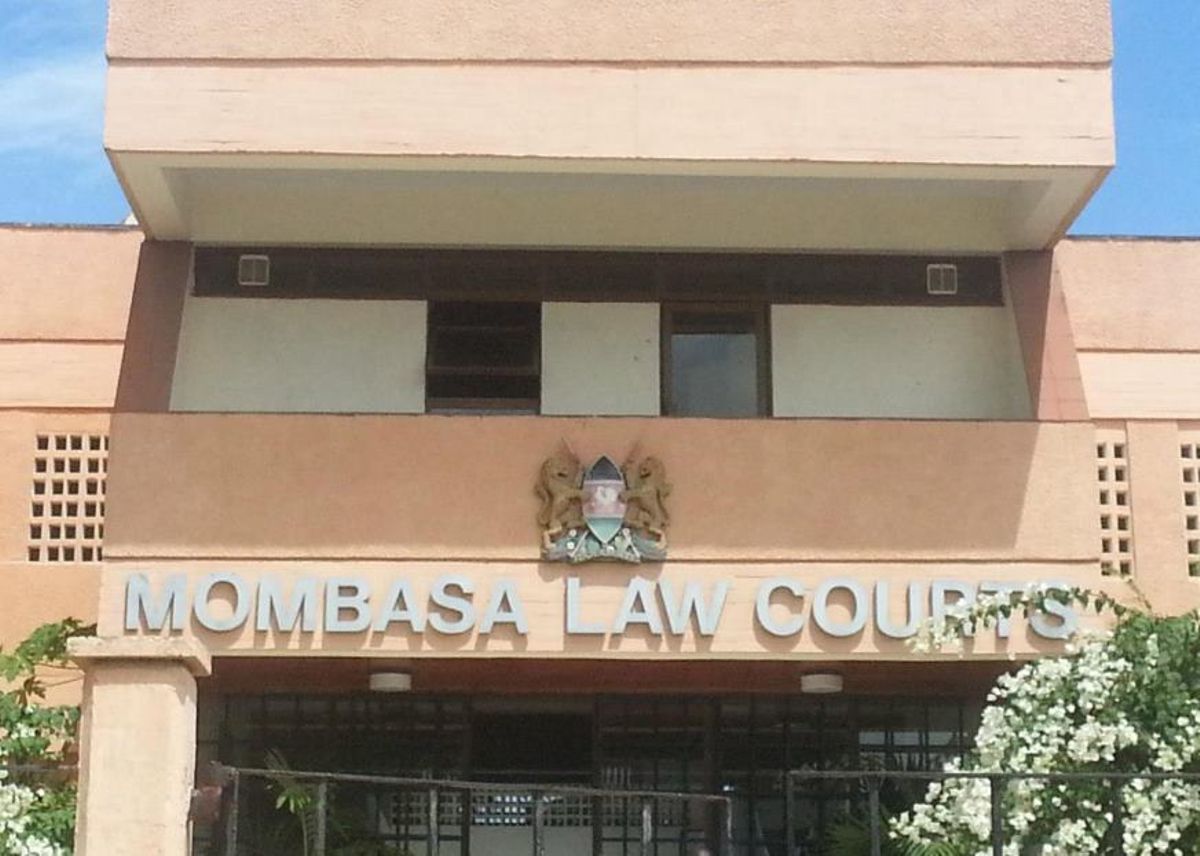
A Mombasa courtroom is being asked to resolve a question that cuts to the very heart of Kenya’s legal profession: can an advocate who allegedly served as the financial conduit for a Sh600 million fraudulent property transaction turn around and represent the accused as their defence counsel in the criminal trial that has followed? The Directorate of Criminal Investigations says the answer is an unequivocal no, and has filed sworn court papers seeking the immediate disqualification of Mombasa-based Adams Muthama from the explosive fraud case in which his own firm, Muthama Advocates, sits directly within the prosecution’s line of fire.
The case involves some of the most valuable beachfront land on Kenya’s entire Indian Ocean coastline. Kwale/Diani Beach Blocks 806, 807 and 808 lie within a tourist corridor that commands among the highest per-acre valuations outside Nairobi’s prime suburbs. Once home to a property known as Diani House, acquired through a family arrangement in the 1960s, the three parcels have been at the centre of a property dispute that has moved through the Environment and Land Court, the Court of Appeal, and now the Mombasa Magistrate’s Court in criminal proceedings that have reverberated across Kenya’s legal community.
“An advocate who is a material and necessary witness cannot appear as counsel in the same matter.” — DCI sworn affidavit, Mombasa 2026
Six accused persons stand charged with conspiracy to defraud, fraudulent disposal of trust property, and obtaining registration of titles by false pretences. They are Annelise Lulu Archer Clark, John Christopher Clark, Hellen Kay Hartley, Richard Hartley and Christine Inger Clark, all elderly Kenyans of British origin aged between 65 and 67, together with a Kenyan national, Peter Mutwiwa. The prosecution alleges that between 2017 and 2021, the group subdivided the three trust parcels into six separate plots and transferred them to three companies for a combined consideration of Sh600 million, knowing the transactions were designed to defraud the rightful beneficiaries: James Howard Archer, Joana Trent and Robert Archer.
THE FIRM AT THE CENTRE OF THE STORM
What transforms this land fraud case into a legal crisis is where those transactions are alleged to have been executed. Court filings by the DCI state, in unambiguous terms, that the disputed sales were concluded at the offices of Muthama Advocates. The charge sheet itself identifies the firm’s premises as the location where the alleged fraudulent disposal of the trust properties took place. Investigators further allege that the Sh600 million in proceeds was processed through the firm’s accounts, embedding the advocate squarely within the financial trail that prosecutors regard as the skeletal structure of their entire case.
According to the sworn DCI affidavit filed in Mombasa, Mr Muthama did not merely render passive legal services to the parties. Investigators allege that he was actively involved in the subdivision and transfer of the properties despite court-ordered restrictions that were in force at the time, and that he prepared or oversaw the sale agreements and related instruments used to effect the transactions. These are not, the DCI insists, the acts of a lawyer rendering routine conveyancing advice. They are, on the prosecution’s case, the acts of a participant.
The State further accuses the advocate of withholding critical documents, including sale agreements and bank account details, behind claims of legal professional privilege. Investigators argue that this posture risks shielding material evidence from scrutiny, potentially amounting to obstruction of justice. The DCI’s position is direct: where communication is made in furtherance of an alleged illegal purpose, it cannot attract the shield of privilege that ordinarily protects advocate-client exchanges.
A FAMILY TRUST UNRAVELS
The roots of this extraordinary legal confrontation run back six decades. The Archer family, a mixed-nationality clan of siblings with British passports but deep Kenya connections, acquired the Diani beachfront land in 1967. Howard Archer contributed five thousand pounds sterling towards the purchase. The property was registered in the name of his brother Christopher John Archer, then the only Kenyan citizen among the siblings and therefore the only one legally entitled under the prevailing Beach Land Act to hold such a title in his name. The understanding within the family, according to the subsequent civil litigation, was that Christopher held the land in trust for all the siblings.
Christopher Archer died. The property passed into the hands of Hellen, Christine and Annalise, the women among the siblings, who then became the registered holders. James Archer and Joana Trent, believing themselves to be beneficial owners, filed suit in the Environment and Land Court in 2012 seeking recognition of their interests. The lower court declined to recognise those interests. The matter went to the Court of Appeal, which in 2023 delivered a landmark ruling reversing the trial court, declaring the properties trust assets and ordering that beneficial interests be divided equally in four tranches of 25 percent each, allocated to Hellen, Christine and Annalise jointly, James, Trent and Robert Archer respectively.
The criminal case, however, had already arisen from what happened between the 2012 filing and the 2023 appellate ruling. During that litigation window, prosecutors allege, the accused subdivided the three parcels into six titles and transferred them to Snapdragon Limited, Kamakawaida Properties Limited and Baroness Holdings Limited for the combined Sh600 million. The prosecution further alleges that Annelise Archer Clark swore a false affidavit in the 2021 Court of Appeal proceedings falsely representing that the subdivisions had been transferred for legitimate valuable consideration, a charge of perjury that now forms a separate count in the criminal indictment. All six accused have denied every charge.
OFFSHORE STRUCTURES AND CONCEALED OWNERSHIP
Investigators have raised particular alarm about the company structures used as the ultimate recipients of the Diani properties. According to the DCI’s court filings, Baroness Holdings Limited, the entity involved in the final transfer of the parcels, was linked to nominee arrangements through which the true beneficial ownership of the company could be obscured. The prosecution argues that this corporate architecture was deliberately assembled to complicate any effort to trace the final destination of the Sh600 million, and to frustrate any future attempts at recovery or restitution.
The Mombasa court has issued warrants of arrest for the directors of all three companies who failed to appear when the matter was called. Interpol has been enlisted to assist in tracing those individuals, a development that signals investigators believe the network of interests in this case may extend beyond Kenyan borders. The offshore dimension of the alleged scheme places this prosecution in a category of coastal land fraud cases that have historically proven most resistant to resolution, given the difficulties in piercing nominee structures and compelling disclosure from foreign jurisdictions.
“This is not a peripheral issue. It goes to the core of whether the trial can proceed fairly.” — State filings, Mombasa Magistrate’s Court
THE ADVOCATE-WITNESS RULE: A SETTLED PRINCIPLE
The legal principle the DCI invokes against Mr Muthama is not novel. Rule 8 of the Advocates (Practice) Rules, made under the Advocates Act, is categorical: no advocate may appear before any court in any matter in which he has reason to believe he may be required as a witness, and if during proceedings it becomes apparent that he will be required to give evidence, he must cease to appear. The rationale for the rule is understood by any first-year student of professional ethics: an advocate who occupies the dual role of witness and counsel creates an inherent impossibility of fair representation. He cannot simultaneously challenge evidence he may be called to give, and he cannot put to the court an account of events that might differ materially from what he knows as a participant.
The Law Society of Kenya’s Code of Standards of Professional Practice and Ethical Conduct reinforces this position. A conflicting interest, the Code states, is one that gives rise to a substantial risk that the advocate’s representation of the client will be materially and adversely affected by the advocate’s own interests. Few configurations could more squarely meet that definition than the one the DCI describes in the Diani case. If Mr Muthama is called as a prosecution witness, he would be in the position of giving testimony that could incriminate his own clients. If he is not, but knows facts that ought to be disclosed, his silence as counsel may itself constitute professional misconduct.
Kenyan courts have, in a line of decisions, emphasised that the right of an accused person to counsel of their choice is a constitutionally protected guarantee under Article 50(2)(g) of the Constitution of Kenya. The threshold for displacing that right is therefore not merely evidence of inconvenience or theoretical prejudice. Courts have held that the applicant seeking disqualification must demonstrate real mischief and real prejudice that will in all human probability result from the continued appearance of counsel. The DCI’s filing appears acutely aware of this standard: the detail with which investigators describe Mr Muthama’s alleged transactional involvement is clearly designed to meet it.
PRECEDENT IN THE MAKING
Whatever the court decides, the ruling on Mr Muthama’s disqualification will be closely watched by Kenya’s legal community and by property practitioners along the Coast, where the model of a single advocate handling both the transaction and the long-term legal welfare of the client is deeply embedded. The case raises a structural question that professional bodies have never been required to confront with such public forcefulness: at what point does an advocate’s involvement in facilitating a commercial transaction cross the threshold from legitimate legal work into participation in the transaction itself, and what consequences flow from that crossing?
The Law Society of Kenya has not publicly commented on the disqualification application. Its Code of Conduct provides the framework but not the specific answer. Section 60(1) of the Advocates Act defines professional misconduct as disgraceful or dishonourable conduct incompatible with the status of an advocate. The DCI’s case, if substantiated, would go considerably beyond dishonourable conduct and enter the territory of criminal complicity. That is territory from which no advocate-client privilege, and no professional rule, can offer safe passage.
The criminal trial itself continues in Mombasa before the magistrate’s court, where all six accused remain on bond of Sh1 million each with cash bail alternative of Sh300,000. Their passports remain deposited with the court. The prosecution is expected to open its case in full once the preliminary contest over counsel’s role is resolved. For Kenya’s legal profession, the more consequential proceedings may prove to be those on the disqualification application, not the fraud trial itself.
WHAT THE DCI MUST NOW PROVE
For the disqualification application to succeed, the State must satisfy the court of three core propositions. First, that Mr Muthama possesses first-hand knowledge of the transactions that is not merely incidental to his legal mandate but material to the prosecution’s case. Second, that this knowledge could only be conveyed through his testimony as a witness, rather than through documents or other evidence. Third, that allowing him to continue as defence counsel would so compromise the fairness of the proceedings as to prejudice the administration of justice in a manner that outweighs the accused’s right to counsel of choice. The DCI’s affidavit has made its most direct assertions on the first ground. The second and third are where the court’s reasoning will ultimately have to do the most work.
Mr Muthama has not, in public reporting, offered a detailed defence of his position. His firm’s continued appearance on the record signals that he contests the application. The outcome of that contest will determine whether Kenya’s most dramatic coastal property fraud case proceeds with its original defence team intact, or whether it begins again, reshaped by a ruling that could redefine the boundaries of legal representation in transaction-linked criminal prosecutions for years to come.
Kenya Insights allows guest blogging, if you want to be published on Kenya’s most authoritative and accurate blog, have an expose, news TIPS, story angles, human interest stories, drop us an email on [email protected] or via Telegram


Nigerians Arrested in Thailand Over AI Dating Scam

Senegal President Sacks PM Sonko, Dissolves Government After Months of Friction

Court Sets Date For Ruling In Gachagua Impeachment Petitions

China Threatens Kenya With Lawsuit Over Secret SGR Contracts as Court Orders Full Disclosure

Auto Accident Claims: Essential Guide for Engaging an Auto Accident Lawyer Las Vegas

City Tycoon Chris Obure in Sh7.6 Billion Court Compensation Battle Over Alleged Illegal Eviction and Missing Family Gold Investment

Questions Over Missing Sh1.3 Billion in Mombasa Water Company

Jackson Kihara Accuses His Uncle Rigathi Gachagua of Framing Him in Robbery with Violence Case To Surrender Father’s Property

Court Finds Shooble Energy Director Guilty Of Defrauding Kenyan Investors Sh23.5 Million

Blocked: How Mombasa Tycoon Ashok Doshi Has Stopped Imperial Bank Depositors From Getting Their Money

How Did a Sh468K KRA Salary Allegedly Turn Into Sh30 Billion? Questions Deepen Over Commissioner George Obel and Ciala Resort Owner’s Wealth

Why Ruto’s Favourite Candidate Adan Mohammed Could Be Locked Out of the KRA Top Job

Green Gold, Rotten Roots: How Kenya’s Biggest Avocado Firms Hijacked a Sh5.8 Billion Harvest Ban

KETRACO CEO Advert Marred By Controversies As Fears Grow That Kipkemoi Kibias Is A Predetermined Candidate

Safaricom’s Sh1.4 Billion Reckoning: How Kenya’s Most Profitable Company Stole a Man’s Idea and Got Caught

The $24 Million Heist at the End of the World

The Rot Inside Absa: How Bank Insiders Are Looting Nairobi’s Customers

Denial Under Duress: The Untold Collapse Threatening David Lagat’s DL Group’s Empire

THE INSURER THAT TOOK YOUR PREMIUM AND FORGOT YOUR NAME: How ICEA Lion Left a Client Begging for Sh7.8 Million Across Four Months

The President’s Helicopter: How Ruto’s Aviation Empire Lands a Historic Airbus Milestone While His Government Writes the Tax Code
-
 News7 days ago
Why Ruto’s Favourite Candidate Adan Mohammed Could Be Locked Out of the KRA Top Job
-
 Business2 weeks ago
The Rot Inside Absa: How Bank Insiders Are Looting Nairobi’s Customers
-
 Business2 weeks ago
The President’s Helicopter: How Ruto’s Aviation Empire Lands a Historic Airbus Milestone While His Government Writes the Tax Code
-

 Business7 days ago
Court Confirms Safaricom Customers Data Was Sold To Betting Companies In Seven-Year Cover-Up
-

 Arts & Culture2 weeks ago
“TikTok Who? YouTube Sorry. A Kenyan-Built Platform Just Dropped—and 20 African Ministers Showed Up To Launch It.”
-
 Business5 days ago
Blocked: How Mombasa Tycoon Ashok Doshi Has Stopped Imperial Bank Depositors From Getting Their Money
-

 Business7 days ago
Paybill 585555: How Airtel Kenya’s Interoperability Gateway Became A Criminal Pipeline Draining Millions From Unsuspecting M-Pesa Users
-
 News3 days ago
Jackson Kihara Accuses His Uncle Rigathi Gachagua of Framing Him in Robbery with Violence Case To Surrender Father’s Property