
News
Banks, Safaricom Defy Court’s Ruling On Cash Transfer Charges

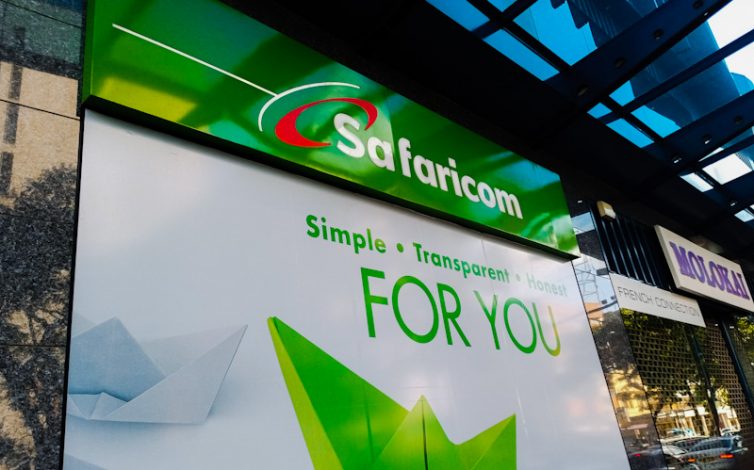
Most lenders and Safaricom have continued to levy bank to M-Pesa charges in defiance of a court order.
The High Court slammed brakes on reintroduction of bank to M-Pesa transactions.
But a survey I’m several banks including Kenya Commercial Bank, Equity Bank , Co-operative Bank and Safaricom are still charging bank to M-pesa transactions against the court order.
Customers from various Banks confirmed that their banks are charging for the said transactions.
Central Bank of Kenya Governor has also not issued any statement or directives informing them not to introduce the charges as ordered by Justice Mugure Thande.
Justice Thande issued a conservatory orders directing the telcos and the regulator to suspend the reintroduction of the charges for mobile money wallet and bank transactions, pending hearing and determination of the case.
Moses Wafula challenged the decision to reintroduce M-pesa charges a move that was condemned by the members of public due to harsh financial situation being experienced in the country.
Petitioner through his lawyer wrote to Central Bank Governor Patrick Njoroge on 10th of January,2023 questioning why he has failed to direct the Banks to suspend the transactions as directed by the high court .
“CBK as a regulator of Banks and M-pesa platform, is hereby required to direct the Banks to suspend the reinstated charges until the court issues any further orders in the matter,” Wafula letter stated.
Wafula urged the court to order CBK to produce before court within fourteen days, the criteria for authorisation of Mobile to Bank payment services, the list of documents submitted prior to clearance, and other documents specifically illustrating how the best interests of the public were taken care of prior to authorization.
“This court do order the intended Central Bank of Kenya to produce before court within fourteen (14) days the NO OBJECTION LETTERS issued to 1st Respondent and Banks in view of the MPESA PAYBILL contracts between the 1st Respondent and the respective Banks,” urged the court.
He argue that if the Banks continue riding on this Mpesa Paybill infrastructure, making money from members of the public, then in the event that this honorable court finds this Mpesa paybill platform to have been operating in contravention of the Law, the impact will be higher; more funds from the members of the public would have been lost and it may be a lot more difficult to ask the banks to refund such funds collected from the members of the public.
He said the case before court illustrates that the engagement between Safaricom and its Mpesa Paybill clients is a bipartite business engagement between the Safaricom as the Mpesa Paybill service provider and their Mpesa paybill primary clients being the service recipients. Banks and other financial institutions using the Paybill system are classified as Safaricom’s Mpesa Paybill primary clients.
He adds that the Banks being one of Safaricom Mpesa Paybill primary clients also elect to pass the Safaricom Mpesa paybill charges to the members of the public (the Safaricom clients’ customers).
“It is the applicant’s contention that M-pesa Paybill services being an outsourced service to the 1st Respondent; the 1st Respondent has no authority to charge members of the public for a service offered to its contracting service recipients including banks,” he adds.
He adds that Safaricom is acting as an agent in their role of collecting money from the consumers (the public) on behalf of the Banks and other parties mentioned in the petition and relaying the same to their bank accounts and mobile wallets. I further believe that M-pesa Paybill services being an outsourced service to Safaricom and the company has no authority to charge members of the public for a service offered to its contracting service recipients including banks.
“If the Banks continue riding on this Mpesa Paybill infrastructure, making money from members of the public, then in the event that this honourable court finds this Mpesa paybill platform in contravention of the constitution and various statutory provisions, the impact will be higher; more funds from the members of the public would have been lost and it may be a lot more difficult to ask the banks to refund such funds collected from the members of the public,” he adds.
Kenya Insights allows guest blogging, if you want to be published on Kenya’s most authoritative and accurate blog, have an expose, news TIPS, story angles, human interest stories, drop us an email on [email protected] or via Telegram


SH2 BILLION HEIST EXPOSED: How Tatu City’s Foreign Masters Used Dirty Offshore Traps, London Arbitration & Mauritius Liquidation to Strip Local Investors of Their Stake

Dimba Accused of Extorting Bank Executives in Escalating Feud

Humiliated, Handed Sh1,000 and Sent Away: Furious Residents Return Nathif Jama’s Money, Accuse Governor of Arrogance and Inhumane Treatment of Sick Woman

ICC’s Karim Khan Suspended Over Sexual Misconduct Claims

The Conquest of Tatu City, A New Zealander Story

VANISHING ACT: How China Jiangxi International Pocketed Billions in Kenyan Public Contracts, Then Walked Away

THE GROUP CHAT THAT BROKE THE CARTEL: How Kenya’s Biggest Mattress Firms Used WhatsApp to Fix Your Prices, Then Used It to Destroy Themselves

Court Upholds Gachagua Impeachment, Awards Him Sh50M In Constitutional Damages To Be Paid By Senate

Somali FIFA Referee Denied Entry To US Ahead Of 2026 World Cup: Reports

David Maraga: Kenya’s Ex-Chief Justice Arrested At Protest Against Building On National Park

Cement, Cash and Courts: How the Hashu Dynasty Crushed the Ramji Brothers for Fourteen Years and Why the Walls Are Now Closing In

Inside The Urban Planning Cartel That Owns Nairobi

Why Ruto’s Favourite Candidate Adan Mohammed Could Be Locked Out of the KRA Top Job

LifeCare on the Brink: SHA Fraud, Stolen Wages, and the Rotten Empire Jayesh Saini Built

Este Medical Kenya Fights American’s Explosive Complaints

The Rot Inside Absa: How Bank Insiders Are Looting Nairobi’s Customers

Betika Faces DCI Probe, Directors Arrest and License Revocation Over Massive 29.5 Million Safaricom Customers’ Data Breach

Inside FAFSA Fraud: How Kenyan Cybercriminals Siphoned Millions from America’s Sh12 Billion Student Loan System

Fresh Move Launched to Remove Kenya Railways MD Mainga From Office After Awarding Sh817 Million Consultancy Contract

Court Confirms Safaricom Customers Data Was Sold To Betting Companies In Seven-Year Cover-Up
-
 Investigations4 days ago
Cement, Cash and Courts: How the Hashu Dynasty Crushed the Ramji Brothers for Fourteen Years and Why the Walls Are Now Closing In
-
 Investigations3 days ago
Inside The Urban Planning Cartel That Owns Nairobi
-
 Investigations1 week ago
Betika Faces DCI Probe, Directors Arrest and License Revocation Over Massive 29.5 Million Safaricom Customers’ Data Breach
-
 Investigations4 days ago
Fresh Move Launched to Remove Kenya Railways MD Mainga From Office After Awarding Sh817 Million Consultancy Contract
-

 News2 weeks ago
Eight Students Arrested In Kenya After Suspected Deadly School Arson Attack
-
 News1 week ago
How Uhuru’s Deal With Obama In 2015 Paved Way For America’s Ebola Plan In Kenya
-

 Investigations2 weeks ago
The Invisible Hand: Al Jazeera Further Exposes How Safaricom Became The Regime’s Most Powerful Spy
-

 Business5 days ago
TRUST BETRAYED: How Senior DTB Bank Insiders Allegedly Looted Sh149 Million From a Customer’s Account Over Five Years