
The mathematics of corporate betrayal in Kenya rarely gets as naked as this. On one side of the ledger, Diageo Plc, the British multinational that has controlled East African Breweries Limited for decades, is walking away from Nairobi with a windfall that values its 65 percent stake at Sh303.5 billion — a price of Sh590.78 per share, a 97 percent premium over what ordinary investors on the Nairobi Securities Exchange could ever dream of receiving.
On the other side sit tens of thousands of Kenyan retail shareholders, the small investors who believed in the promise of East Africa’s most iconic brewer, who are being left at the door of the most consequential corporate transaction this country has witnessed in a generation.
Behind the share price ticker and the regulatory filings lies something else entirely: a decade-long legal endurance race between a market-dominant multinational and two Kenyan companies that built their businesses within EABL’s orbit, paid for that privilege, and are now watching the exit door close before a single shilling of what courts at every level have said they are owed has been paid.
For Bia Tosha Distributors and JILK Construction Company, the Diageo-Asahi transaction is not a corporate milestone. It is an enforcement cliff.
A formal legal objection filed at the Capital Markets Authority by Nairobi law firm Wamalwa and Echesa Co. Advocates, on behalf of minority shareholder Shane Ngechu, has forced the regulatory dimension into the open.
The petition demands that the CMA compel Asahi to make a mandatory takeover offer to all EABL shareholders on terms no less favourable than those agreed with Diageo, arguing that allowing the deal to proceed without such an offer would constitute unjustifiable differential treatment in violation of Article 27 of the Constitution of Kenya, which guarantees equality before the law.
“The Diageo consideration does not represent, and should not be construed as, a direct price per share or valuation of the ordinary shares of EABL.” — Asahi Group Holdings, December 2025
A PREMIUM THAT EVAPORATED OVERNIGHT
When Diageo announced on December 17, 2025 that it had agreed to sell its controlling stake to Asahi, the market response was predictable and immediate. EABL shares, trading at Sh252 on the NSE, surged 18.94 percent to Sh299.75 the following day as retail investors piled in, believing a mandatory buyout offer was imminent.
Analysts pointed to Asahi’s implied valuation of Sh590.78 per share and concluded, not unreasonably, that an offer at or near that price was coming.
They were wrong. Asahi moved quickly to disabuse the market of that notion, warning publicly that the Diageo price should not be taken as an indicator of the company’s general market value. The share price retreated.
By January 2026, EABL was trading at Sh254.75.
The brief euphoria had wiped Sh12.45 billion from the paper wealth of minority shareholders who had bought in on the announcement, leaving them nursing losses on a premium they never received.
The Asahi announcement was not timed for market sentiment. Diageo Interim CEO Nik Jhangiani said the deal delivers significant value for Diageo shareholders and accelerates the group’s commitment to strengthening its balance sheet.
The announcement was made on December 17. Courts operate at reduced capacity over the Christmas holiday period.
Counsel is difficult to mobilise. This timing was noted in the urgent court filings that followed weeks later — and the observation has not been rebutted.
THE REGULATORY TRAP
Kenya’s Capital Markets Regulations set a clear threshold. Any entity acquiring 25 percent or more of effective control in a listed company must extend a mandatory takeover offer to all remaining shareholders.
The purpose of this rule is straightforward: when a controlling shareholder exits at a premium, ordinary investors must have the same opportunity to sell.
Asahi is not acquiring 25 percent of EABL. It is acquiring 65 percent — more than two and a half times the statutory threshold. Yet Asahi has confirmed publicly it intends to apply for an exemption from the mandatory offer requirement, citing its stated desire to maintain EABL’s listing and what it describes as the commercial benefits of retaining minority shareholders.
The Wamalwa and Echesa petition draws a pointed comparison with the Sanlam Kenya rights issue of 2025, in which the CMA granted an exemption because the transaction involved a rescue of a financially distressed company with no premium being paid to a controlling shareholder.
The EABL transaction involves none of those circumstances. Diageo and Asahi are profitable multinationals transacting at their leisure over a brewer that posted a net profit of Sh11.2 billion in the half-year to December 2025, declaring an interim dividend of Sh4.00 per share against Sh1.50 a year earlier.
In Nigeria, Ghana, and Seychelles, Diageo’s exits triggered mandatory buyout offers. Only in Kenya are minority shareholders being left with nothing but a polite warning not to get their hopes up.
The petition also highlights what ought to be a damning continental precedent.
When Diageo sold its 80.4 percent stake in Guinness Ghana Breweries in July 2025, the transaction triggered a mandatory takeover offer to minority shareholders.
The October 2024 sale of Guinness Nigeria to Singapore’s Tolaram included a mandatory tender offer at a 63 percent premium over market price. Seychelles Breweries followed the same structure.
In every African jurisdiction where Diageo has recently divested, regulators compelled the acquirer to extend a buyout offer to all shareholders. Kenya appears to be the sole exception, and the CMA has offered no public explanation for why.
WHERE IT STARTED: 22 ROUTES AND A BROKEN PROMISE
The story of how Bia Tosha Distributors Limited ended up fighting not just EABL and Diageo but now arguably the Chief Justice herself begins in Nairobi West in 1997. That was the year Anne-Marie Burugu’s company entered its first distribution agreement with Kenya Breweries Limited, the dominant EABL subsidiary.
Over the next nine years, Bia Tosha paid millions in goodwill fees to acquire exclusive rights across 22 routes spanning some of the most lucrative beer-drinking territory in the country — Athi River, Kitengela, Kajiado, Kiserian, Langata, Rongai, Nairobi West, South B, Industrial Area, and a dozen others.
These were not informal handshakes.
They were commercial contracts that Bia Tosha negotiated, paid for, and operated.
In 2006, Kenya Breweries began repossessing the routes. Routes that Bia Tosha had paid goodwill to acquire were handed to new distributors. The Sh38 million goodwill Bia Tosha had paid was declared non-refundable.
The agreements, KBL now insisted, had never been exclusive. Bia Tosha went to court. What followed is one of the most instructive case studies in how a market-dominant multinational can use every legal, financial, and corporate instrument available to it — year after year, court after court — to frustrate a smaller party’s access to justice while simultaneously expanding and entrenching its market position.
The High Court issued conservatory orders protecting Bia Tosha’s routes in June 2016. EABL and KBL, Burugu alleges in sworn affidavits, simply ignored them.
The brewer continued supplying the new distributors in Bia Tosha’s territories, defied the order at every level, and when the matter reached the Court of Appeal, used its decision as the basis for arguing the High Court’s orders had been discharged.
The Supreme Court, sitting as a five-judge bench in February 2023, cut through this argument definitively. It reinstated the June 2016 conservatory orders, found that EABL had committed contempt, and sent the matter back to the High Court to assess punishment.
The bench was categorical: the respondents could only appear before the High Court to purge the contempt before they could be given any further audience.
Bia Tosha sought a fine equivalent to 20 percent of EABL’s gross turnover — roughly Sh39 billion — and civil jail sentences of up to six months for EABL CEO Jane Karuku, Uganda Breweries MD Andrew Kilonzo, and former EABL CEO Andrew Cowan, the three executives found in contempt.
EABL’s response was to file a review application at the Supreme Court arguing the executives had been condemned without a hearing. The Supreme Court dismissed this attempt in May 2023, confirming the punishment must be addressed at the High Court.
The three executives named in the contempt proceedings then received promotions. Jane Karuku was elevated to EABL Group CEO. Andrew Kilonzo was sent to run Uganda Breweries. Andrew Cowan was made MD for Diageo’s Africa Travel Retail division. The signal inside the company — that disobeying court orders leads to advancement rather than accountability — was not lost on those watching. Kilonzo’s Uganda tenure later produced its own COMESA violation findings, after which he was rotated back to Kenya as KBL MD, reuniting with Karuku in the same leadership structure the Supreme Court had found in contempt. The circle was complete.
EABL’S PLAYBOOK: HOW YOU WEAPONISE PROCESS
Diageo and EABL’s public line is that Bia Tosha is the one weaponising the courts — using decade-old commercial litigation to interfere with a nationally significant transaction. In documents filed by Diageo’s legal team, Bia Tosha’s application is described as hollow, a brazen attempt to advance private commercial interests under the guise of constitutional litigation, and an attempt to hoodwink the court. These characterisations deserve scrutiny.
Between June 2016 and March 2026, every court that examined Bia Tosha’s core claim has found in the distributor’s favour.
The High Court issued conservatory orders in 2016. The Court of Appeal sustained the orders. The Supreme Court in February 2023 reinstated those orders and found EABL in contempt.
A High Court ruling in December 2024 struck down the competing claims of two new distributors — Ngong Matonyok and Manara — who had been given Bia Tosha’s territories, ruling their appointments violated the 2016 conservatory orders. The judiciary at every level has confirmed that EABL violated the contract and defied the orders.
What EABL has demonstrated in this case is a different kind of weaponisation: the use of superior legal resources, institutional relationships, and procedural complexity to delay, dilute, and ultimately outlast a smaller opponent.
The company’s legal team — led in this matter by Njoroge Regeru, with Senior Counsel Prof. Githu Muigai’s firm involved in parallel proceedings — is on a retainer that industry insiders estimate at close to Ksh3 million per month, separate from per-matter billings. The incentive structure of retainer-funded litigation does not naturally produce recommendations for arbitration or settlement when the legal budget is large, annual, and guaranteed.
Bia Tosha also alleges that after the Supreme Court ordered reinstatement, EABL effectively sponsored the new distributors it had placed on its routes to file their own petitions at the High Court, arguing their rights would be violated if Bia Tosha was reinstated.
The High Court in December 2024 rejected those petitions. But the strategy of manufacturing competing litigation to create procedural obstacles is itself instructive. When courts find against you, you generate fresh litigation to relitigate what has already been decided.
“The respondents have acted with reckless abandon and with total contempt for the authority of this court, have continued to infringe upon the applicant’s distribution areas.” — Anne-Marie Burugu, Managing Director, Bia Tosha Distributors
THE COMESA VERDICT: WHAT DIAGEO ADMITTED
The systemic nature of EABL’s conduct toward its distributor network is not a matter of allegation alone. In October 2025, the COMESA Competition Commission validated what distributors had been whispering for years.
A four-year investigation into Diageo’s distribution practices, formally registered as Case No. CCC/ACBP/4/1/2021, concluded that contracts in Uganda, Eswatini, and Zambia contained clauses imposing minimum resale prices, single-branding restrictions, and territorial segmentation that violated regional competition law.
Diageo settled the case for $750,000 and committed to removing all restrictive clauses and notifying distributors within 30 days. The settlement was signed in London on September 30, 2025.
For a company of Diageo’s size, the fine was a rounding error.
The significance lay elsewhere: an internationally mandated competition body had formally found that Diageo’s distribution practices breach fair trade principles across the region. The practices were not confined to one market. They were the architecture.
Within Kenya, EABL’s Distributor Finance Scheme, introduced in 2018, requires all distributors to hold their working capital in accounts linked to five nominated banks including KCB, Equity, and Absa, with payments flowing through Safaricom till numbers connected to these accounts.
The practical consequence is that EABL has direct access to the bank accounts of its distributors and can debit funds without prior reconciliation or consultation.
Distributors who raised concerns about erroneous or delayed debits were told to top up their accounts immediately. Those who considered protesting knew the lesson Bia Tosha had already taught the network: complain, and your contract disappears.
Distributors are also rigidly segmented by product. Those selling Senator Keg cannot distribute mainstream beer or spirits. Those selling Tusker and Johnnie Walker cannot touch Keg. Cross-selling between product lines is prohibited even where consumer demand clearly exists.
Taken together, the system creates a network of commercially dependent operators who own their vehicles, warehouses, and working capital but function, to all intents and purposes, as captive distribution arms of EABL — bearing all the commercial risk without any of the pricing or operational autonomy that genuine independent commerce requires.
THE KISUMU FILES: JILK AND PROJECT NAFASI
Running parallel to the distributor dispute, and increasingly intertwined with it, is the JILK Construction case — a story that adds allegations of sexual harassment, fabricated whistleblower reports, and arbitration corruption to an already combustible picture.
In October 2017, JILK Construction Company Limited was awarded three civil works contracts by Kenya Breweries Limited for what was branded Project Nafasi — the Ksh15 billion revival of the dormant Kisumu Brewery, described at the time as one of the largest private investments in Western Kenya since independence.
The project was designed to integrate more than 15,000 sorghum farmers into KBL’s supply chain and create over 100,000 jobs. JILK completed the works and handed over the site. Disputes emerged over the final amount owed.
JILK initially claimed Ksh163 million. The matter was referred to arbitration, with Mutinda Mutuku appointed as sole arbitrator by the Architectural Association of Kenya. What KBL discovered — or so it alleges — was that Mutuku had undisclosed prior financial dealings with JILK, having received payments totalling hundreds of millions of shillings from JILK before his appointment, and maintained regular contact with JILK’s CEO during proceedings.
KBL moved to have Mutuku recuse himself. Both the Architectural Association and the High Court declined. By the time the arbitration neared an award, the claim had escalated from Ksh163 million to Ksh2.45 billion — a 1,400 percent increase that KBL describes as evidence of a compromised process.
In December 2024, KBL filed a petition seeking to annul the arbitration proceedings entirely and obtained ex parte conservatory orders barring the arbitrator from delivering his award. The orders were granted by Justice Freda Mugambi and described by legal observers including former Law Society of Kenya President Nelson Havi as unprecedented in duration — three months, when such orders typically last no longer than 14 days.
Havi publicly asked why Diageo, the majority EABL shareholder and not a registered trading company in Kenya, appeared to have acted as the effective client and project supervisor during construction. If JILK’s allegations are correct and the whistleblower report is fabricated, Havi noted, the implications in criminal law would be severe.
JILK alleges the whistleblower mechanism was deployed as a retaliatory instrument.
In January 2020, two female employees of JILK filed reports at Muthaiga Police Station alleging that a foreign contractor on the Kisumu project had sexually harassed and indecently assaulted them.
JILK wrote a formal complaint to KBL. The DCI wrote to EABL’s managing director noting the investigation. KBL, through Group Corporate Relations Director Eric Kiniti, acknowledged the complaint — but only after the foreign contractor had already left the country.
JILK’s CEO now alleges that EABL facilitated the contractor’s departure before he could be investigated, then deployed a whistleblower report two years later as retaliation for the harassment complaint. EABL has denied this characterisation entirely and called it malicious.
Justice Mugambi subsequently recused herself from the KBL constitutional petition, citing concerns about impartiality — the same judge who had granted KBL the controversial ex parte order.
The file was sent to the Principal Judge of the Commercial Division for reassignment.
As with the Bia Tosha matter, a judicial recusal at a critical moment has left the smaller party scrambling for continuity in proceedings that are, by design, time-sensitive.
THE BOND THAT RAISED QUESTIONS
Against the backdrop of these compounding legal exposures, EABL’s financial engineering in October 2025 deserves scrutiny. The company redeemed its Ksh11 billion five-year corporate bond a full year before its October 2026 maturity date, invoking its call option. It simultaneously issued a replacement five-year bond of identical size at a coupon rate of 11.8 percent versus the original 12.25 percent.
EABL presented this as a balance sheet optimisation, saving Ksh1.347 billion in interest over the combined bond period. Critics characterised the saving as financial sleight of hand — the reduction in interest costs derived entirely from skipping the final year’s payments on the original bond, not from any genuine refinancing efficiency. But the more pointed question concerns the VAT suit running alongside it.
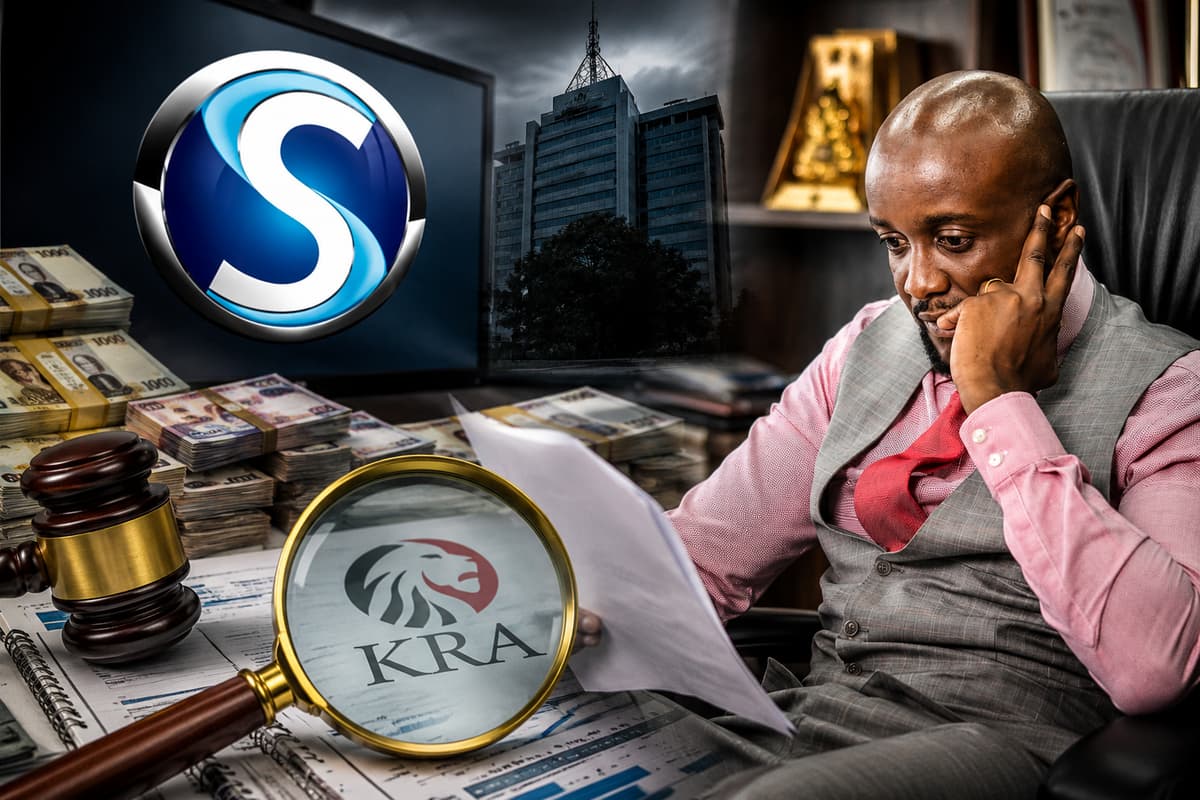
EABL is suing the Kenya Revenue Authority for Ksh800 million, which it claims was overpaid as VAT in 2018.
The Ksh800 million in question was recovered by EABL from its distributors via direct debit from their DFS accounts, even though those distributors had individually met their own tax obligations.
EABL collected the money from over 120 distributors without their consent.
Now it is suing KRA to get that money back.
If the courts rule in EABL’s favour, the question of where that money goes — to the 120-plus distributors who originally bore the burden, or into EABL’s treasury — has not been addressed by the company. The distributors who bore the burden have no mechanism for recovery and no visibility into proceedings that directly concern their own money.
THE VAT RECOVERY SILENCE
This VAT episode sits at the intersection of several of this story’s running themes: the Distributor Finance Scheme as an instrument of control rather than efficiency; the asymmetry between EABL’s legal resources and those of its distributor network; and the question of what governance obligations a company owes to the smaller parties within its commercial ecosystem.
No distributor has been formally notified that EABL is litigating on their behalf, or that a successful outcome might produce a refund.
None has been offered standing in the proceedings.
If EABL wins and the money flows back into the corporate treasury, the 120-plus distributors whose accounts were debited without authorisation will have funded a legal victory they never authorised and from which they will not benefit.
This is the Distributor Finance Scheme’s ultimate expression: control over the commercial relationship so complete that the operator’s own money can be used to pursue the operator’s legal opponent, without the operator’s knowledge or consent.
DIAGEO’S INSIDERS STACKING THE DECK
As the sale process advances toward a second-half 2026 closing, Diageo has been systematically installing its own loyalists in EABL’s C-suite in what observers on the Nairobi Securities Exchange have characterised as a quiet colonisation of the brewer’s leadership structure ahead of the handover.
Justin Mollel, currently Finance Director at Diageo Ireland — a career Diageo executive who previously served as Finance Director at Guinness Ghana Breweries and Serengeti Breweries in Tanzania — has been named EABL’s Group Chief Financial Officer Designate, effective May 1, 2026, with full duties assumed on July 1.
His appointment coincides almost exactly with the expected closing of the Asahi transaction. He replaces Risper Ohaga, the first African woman to serve as EABL’s Group CFO, who is departing to become Group Chief Executive Officer at APA Apollo Group.
Mollel is not alone. Anthony Njenga, formerly of Diageo Australia, was installed as EABL’s Supply Chain Director in January 2025. Lorna Benton, formerly Group Performance and Reward Director at Diageo PLC, joined the EABL board in March 2025.
Anne Joy Michira, currently Marketing and Innovations Director for Diageo South, West and Central Africa, has been named EABL’s Group Marketing and Innovations Director.
The brewer that is nominally transitioning out of Diageo’s orbit is being filled, floor by floor, with Diageo’s people at the precise moment when Asahi will need impartial management to navigate the post-acquisition period.
A LEGACY OF COMPETITOR SUPPRESSION
EABL does not arrive at this transaction with clean hands in the matter of market conduct. In the 1990s, it engaged in what analysts of the period described as a bruising turf war with South African brand Castle Brewery, which ultimately closed its multimillion-dollar factory in Thika in 2002 at the cost of 800 jobs.
In 2019, the company was embroiled in a dispute with Keroche Breweries over the embossing of brown beer bottles, with Keroche accusing it of buying up bottles on the open market and stamping them to lock rivals out of the supply chain.
In 2020, multiple senators hauled EABL before the Senate Committee on Trade, Industrialisation and Tourism to answer allegations of restrictive trade practices and monopolistic tendencies.
The company denied the allegations.
In 2024, Nairobi-based alcohol startup African Originals accused EABL of replicating its flagship cider range under a competing brand called Manyatta and orchestrating a social media smear campaign through digital marketing firm Wowzi, whose influencer network posted about falling ill after consuming African Originals products.
The timing of the posts followed immediately after EABL launched its competing line. EABL dismissed the African Originals allegations as false, defamatory and lacking any evidence.
The matter was never publicly resolved.
A Senate committee in 2024 was also convened to examine allegations that Diageo had fraudulently evaded tax liabilities at EABL through what a petitioner described as massive bribery of Kenya Revenue Authority and National Treasury officials.
The KRA Commissioner General appeared before the committee but no charges were ever filed. The allegations remain unproven. But their ventilation in Parliament illustrates the depth of institutional suspicion that has surrounded EABL’s corporate conduct under Diageo’s stewardship.
THE FEBRUARY 26 ABDICATION AND THE CJ ACCUSATION
The sequence of events on February 26, 2026 is, even stripped of any conspiracy theory, a remarkable coincidence of timing. Bia Tosha’s substantive application — seeking to block the share transfer as a constitutional matter — had been scheduled for hearing on that date before Justice Bahati Mwamuye.
When parties logged into the virtual platform, Justice Mwamuye informed them he had been transferred to Kiambu High Court, effective April 1. He declined to extend the interim orders that had temporarily restrained the share transfer.
He directed the file to an incoming judge and proposed April 9 as the next mention date.
EABL issued a press release celebrating the outcome later that day, noting that regulatory processes could now continue uninterrupted.
The critical window within which Bia Tosha believed the regulatory approvals could be obtained had narrowed significantly.
Judicial transfers are routine administrative matters. But for a petitioner who has spent nine years in court, whose Supreme Court-backed contempt proceedings are still unresolved, and whose application has now been postponed past the point at which it can practically matter, routine administrative action and targeted obstruction produce exactly the same result.
It is this indistinguishability that has driven Bia Tosha to language that has no precedent in Kenyan commercial litigation.
In documents filed before Chief Justice Martha Koome, Burugu alleges that impermissible diplomatic interventions to secure a desired outcome in this matter present a most dangerous and unparalleled surrender of the sovereignty of the people of Kenya. She invokes what she calls Epstein-Prince-Andrew-type interferences through diplomatic and Royal intercessions as the mechanism.
The reference gains contemporary precision from the February 19, 2026 arrest of Andrew Mountbatten-Windsor on suspicion of misconduct in public office for allegedly sharing confidential trade documents with Jeffrey Epstein while serving as UK trade envoy.
Whether any of this constitutes anything approaching the interference Bia Tosha alleges, the court filings do not substantiate with documentary evidence.
But the intensity of the language reflects an accumulation of grievance that is, on the documented record, entirely proportionate to the sequence of events the company has experienced. The company has asked the Chief Justice to appoint a fresh judge and reinstate the expired orders. The Judiciary has made no public response.
“There is no other effective means by which this court can compel obedience other than through prohibition of the sale.” — Bia Tosha court filing, January 2026
THE ENFORCEMENT CLIFF
Everything in this accumulation — the Bia Tosha contempt findings, the COMESA fine, the JILK arbitration, the DFS VAT recovery, the bond manoeuvre — converges on a single fulcrum point: the Diageo-Asahi transaction.
Diageo currently holds its 65 percent EABL stake through Diageo Kenya Limited, a 100 percent Diageo-owned Kenyan vehicle.
The transaction will see this stake pass to Asahi at Ksh590.51 per share — a premium of 134 percent over the Ksh252 market price when the deal was announced. Diageo’s affidavit argues that the deal concerns shareholder-level assets and that EABL, KBL, and UDV Kenya will remain as Kenyan operating entities fully capable of satisfying any future judgment. The technical argument has merit as far as it goes.
But it misses the practical reality that has been clearly articulated: the contempt proceedings named Diageo and its officers.
The scale of damages Bia Tosha seeks — potentially in the tens of billions of shillings — would be enforceable against a parent company with $48 billion in market capitalisation far more readily than against a mid-cap Kenyan brewer suddenly owned by a Tokyo conglomerate with no pre-existing connection to the dispute.
JILK’s application similarly notes that regulatory approvals from the Capital Markets Authority and the Competition Authority of Kenya are anticipated between May and June 2026, and that an April 30 judgment deadline was calculated with this timeline in mind.
If the courts rule against it after Diageo has divested, JILK will be left with an award against a UK company with no Kenyan assets and every legal incentive to contest enforcement from London.
Bia Tosha’s advocate Kenneth Kiplagat put the central anxiety without ambiguity in a statement in January 2026: if they succeed in disposing of their only known asset in Kenya, we will not be able to execute a judgment against Diageo.
Diageo retains no operational presence in Kenya after this sale. Its general counsel’s assurances of continued submission to Kenyan jurisdiction have no physical backing once the stake is transferred.
THE STRUCTURAL QUESTION KENYA CANNOT IGNORE
The question posed by the convergence of these cases reaches beyond Bia Tosha and JILK. It concerns the capacity of Kenya’s legal system to provide credible protection to domestic parties in their dealings with multinational corporations — particularly when those corporations are in the process of exiting the jurisdiction.
Kenya has consistently sought to position itself as a reliable arbitration and commercial dispute resolution hub for the region.
The Kisumu Brewery case, in which KBL obtained ex parte orders blocking an arbitral award for three months and then saw the presiding judge recuse herself, raises uncomfortable questions about arbitration integrity.
The Bia Tosha case, in which a decade of Supreme Court-endorsed findings has not produced a single day of compliance from the named contemptors, raises uncomfortable questions about enforcement.
Together, they illustrate the limits of formal legal rights in the face of a determined, well-resourced corporate actor.
EABL controls approximately 90 percent of the formal beer market in Kenya.
Its annual legal budget exceeds what most litigants can sustain over a lifetime of litigation. Its ability to rotate implicated executives, promote them out of the jurisdiction, generate competing litigation, and deploy the tools of the Distributor Finance Scheme against the very parties it is supposed to be compensating is not matched by any mechanism that forces expedited compliance.
Diageo’s exit is not a judgment on this record. Markets do not adjudicate legal disputes.
The Asahi Group, acquiring a dominant regional brewer at a substantial premium, has every incentive to complete the transaction quickly and has no obligation to resolve disputes it did not create.
The Ksh303.5 billion changing hands will make Diageo’s shareholders considerably wealthier. Whether it will ever produce a single shilling for Bia Tosha, or for the 120-plus distributors who had Ksh800 million withdrawn from their bank accounts without consent, or for the two women whose harassment reports were allegedly used as raw material for a corporate retaliation campaign, is a question the transaction documents do not address.
Anne-Marie Burugu has won in the High Court, the Court of Appeal, and the Supreme Court. She has watched each win become the basis for new litigation by her opponent.
She watched the judge hearing her latest application announce a transfer and walk off the virtual platform. She has now written to the Chief Justice using language borrowed from a global scandal. That language may prove to be overreach. The grievance it expresses is not.
WHAT THE REGULATOR MUST ANSWER
The Wamalwa and Echesa petition has placed three specific demands before the Capital Markets Authority.
The firm wants the regulator to disclose whether any exemption from the mandatory offer requirement has been granted, and if so, on what legal basis. It wants confirmation of what specific measures are being taken to protect minority shareholders.
And it wants the CMA to compel Asahi to make a mandatory takeover offer on terms no less favourable than those Diageo negotiated for itself.
The CMA has not responded publicly to the petition. Asahi has not addressed the mandatory offer question beyond its December 2025 statement.
EABL has maintained that the deal is at the shareholder level and has no bearing on its relationship with minority investors beyond the ordinary obligations of a listed company.
None of these positions engage with the core question: why should Kenyans who hold shares in EABL receive fundamentally different treatment from the treatment Diageo received when it decided it was time to leave?
For the thousands of ordinary Kenyans who invested in EABL expecting fair treatment, the April 9 court date and the ongoing regulatory silence represent the final opportunity for Kenya’s institutions to demonstrate that the rules they have written apply equally to the powerful and the small.
The Asahi transaction will close.
The court proceedings will continue, slowly, expensively, in the wake of a Sh303.5 billion exit that has already happened.
What remains to be seen is whether any of the money changing hands will ever find its way to the parties who built EABL’s market, paid their goodwill, built the brewery in Kisumu, and kept faith with an institution that, on the record, did not keep faith with them.







Comments