
News
MPs Quash taxes on pensions, LPG cooking gas in Finance Bill adoption.

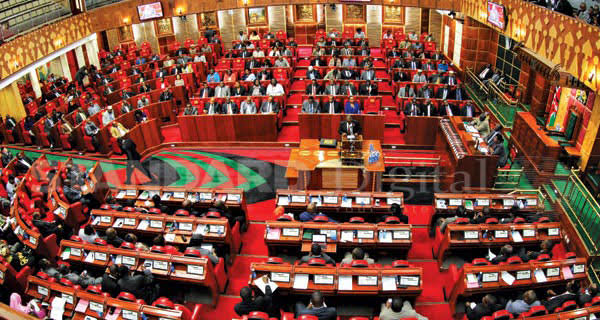
If the MPs were to approve the proposed changes by the National Treasury, earnings by the retirees will be subjected to a minimum tax of 10 percent for monthly payments of up to Sh33,333, or Sh400,000 a year, and a maximum of 25 percent for those earning more than Sh100,000 a month or Sh1.2 million a year.
Luckily enough, the 2020 Finance Bill sailed through the floor of the National Assembly as Members of Parliament shot down proposals by Treasury to raise taxes from pensioners and LPG gas.
In the vote subjected to the committee of the whole house, the Members of Parliament elected to keep the majority of ammendments as brought forth by the House Finance and National Planning Committee.
While the Treasury had sought to end part of tax exemptions by levying taxes on income from the National Social Security Fund (NSSF) and move LPG gas into the VAT-able category, MPS viewed the move as counter productive and elected to keep the relief.
“Through these ammendments we have returned the benefit to pensioners. We have had a lot of cries from the elderly over the proposal to tax them. What we are doing here is to save the pensioners,” said the Finance and National Planning Chairman Joseph Limo.
“We need to find more novel ways of cushioning the economy than going after vulnerable people,” added Suba North MP Millie Odhiambo.
Cheaper unga
At the same time, the National Assembly adopted reforms moving the supply of maize flour, wheat and cassava flour from exempt status into the zero-rated category.
The move desires to provide relief to Kenyans on the cost of unga by allowing flour processors to recover inputted VAT and pass-on the relief to Kenyans.
These ammendment is however expected to be scrutinized again by the House after a six-month lapse as MPS argue for a review of the plans near-term merits and demerits.
The vote on unga is a reversal from 2019, when MPs pushed the supply of the staple from zero-rated to exempt.
The review of the supply of unga is expected to provide further cushioning to Kenyans through the Covid-19 pandemic.
Beer Tax
Alcohol manufacturers and their respective clients are however expected to feel the heat of the exchequer after MPs voted to lower the coverage of excise duty on both beers and spirits to products whose alcohol strength exceeds 6 percent by volume.
The review of the inflation adjusted levy will mean higher prices for certain beers and spirits and will lead to higher costs to consumers.
The higher taxes come even as the industry faces off with the exchequer over planned cuts to the remission of excise duty levied on beer made from locally sourced raw materials/kegs.
Other proposals carried in the Finance as proposed by Treasury Cabinet Secretary Ukur Yatani include the levying of a minimum tax charged at the rate of one percent of gross turnovers to loss making entities as the exchequer seeks to widen the tax net.
Digital firms are also set to account for a 1.5 percent tax on gross sales, a charge to be offset against other levies for companies operating locally.
Further, income generated from home ownership savings plans (HOSPs) will now be subject to taxation in spite of opposition over its impact on the government’s affordable housing initiative.
The bill is now the subject of scrutiny by President Uhuru Kenyatta who may chose to assent it as presented or send it back to the floor of the house with ammendments.
Proposals contained under the Income Tax Act and the Tax Procedures Act are expected to become effective from January 1 while all other ammendments will take effect upon the Presidential assent.
In its entirety, the 2020 Finance Bill had been aimed at raising an additional Ksh.38.9 billion from the exchequer, this projection is however diluted after running through changes in Parliament.
Kenya Insights allows guest blogging, if you want to be published on Kenya’s most authoritative and accurate blog, have an expose, news TIPS, story angles, human interest stories, drop us an email on [email protected] or via Telegram


Kenyan player wins a Ksh3.2 million jackpot

IEBC Sets August 10 Date For 2027 General Election

Furious Ruto Lashes Out at Gideon Moi Over Repeated ‘Blackmail, Extortionist’ Headlines on The Standard and KTN

Mombasa Gripped by ‘Male Organ Theft’ Panic as Social Media Fuels Mob Attacks and Fear

TOO MUCH PR, NOTHING TO SEE: How Gladys Wanga Built a Perfect Story of Transformation While Homa Bay Bled

Netanyahu Says Israel Must ‘Break Free from Dependence’ After Tensions With Trump Administration

Niger pulls Out Of International Criminal Court After Calling It Neo-Colonialist

Kenya Awards Sh154 Billion JKIA Upgrade Tender To Chinese Firm CRBC

The Untouchable: How KURA’s Silas Kinoti Has Survived A Decade Of Corruption Storms While Kenya’s Roads Bled

Fake Papers, Dirty Millions And The Analo Connect: How Kitisuru MCA Alvin Palapala Built a Shadow Empire Inside Nairobi’s Planning Machine

Businessman Philip Waithaka Kinuthia’s Minor Son Allegedly Drove Drunk, Killed Two Peponi Students in Ngong Road Horror Crash as Claims of Cover-Up Intensify

Inside NCBA’s Decline: How a Banking Giant Lost Its Strategic Edge

South Sudan: Adut Salva Kiir’s Shadow Treasury Exposed

Cement, Cash and Courts: How the Hashu Dynasty Crushed the Ramji Brothers for Fourteen Years and Why the Walls Are Now Closing In

Standard Chartered Ghosts Haunt Joshua Oigara At Stanbic As Whistleblower Spills Beans

Inside The Urban Planning Cartel That Owns Nairobi

THE VULTURE AND THE SCHEME How Nairobi West Hospital Became the Most Dangerous Institution in Kenya’s SHA Ecosystem and Why the Books Must Be Audited Now

The President’s Daughter and The Missing Witness: How Adut Salva Kiir’s Shadow Treasury Silenced Its Most Dangerous Critic

How Adil Popat Saved His Empire On The Eve Of Imperial Bank Collapse and Why Kenya’s Mainstream Media Buried The Story

Why John Ngumi Is Running From the EACC and Why the Sh415 Million Payday May Be the Least of His Worries
-
 News1 week ago
Businessman Philip Waithaka Kinuthia’s Minor Son Allegedly Drove Drunk, Killed Two Peponi Students in Ngong Road Horror Crash as Claims of Cover-Up Intensify
-
 Africa2 weeks ago
South Sudan: Adut Salva Kiir’s Shadow Treasury Exposed
-
 Business2 weeks ago
Standard Chartered Ghosts Haunt Joshua Oigara At Stanbic As Whistleblower Spills Beans
-
 Investigations6 days ago
THE VULTURE AND THE SCHEME How Nairobi West Hospital Became the Most Dangerous Institution in Kenya’s SHA Ecosystem and Why the Books Must Be Audited Now
-
 Africa2 weeks ago
The President’s Daughter and The Missing Witness: How Adut Salva Kiir’s Shadow Treasury Silenced Its Most Dangerous Critic
-
 Business2 weeks ago
How Adil Popat Saved His Empire On The Eve Of Imperial Bank Collapse and Why Kenya’s Mainstream Media Buried The Story
-
 Business2 weeks ago
Why John Ngumi Is Running From the EACC and Why the Sh415 Million Payday May Be the Least of His Worries
-
 Business5 days ago
Inside the Billion-Shilling Betrayal: How Senior Treasury Officials Plundered a UN Poverty Fund and Built a Real Estate Empire on the Backs of Kenya’s Rural Poor