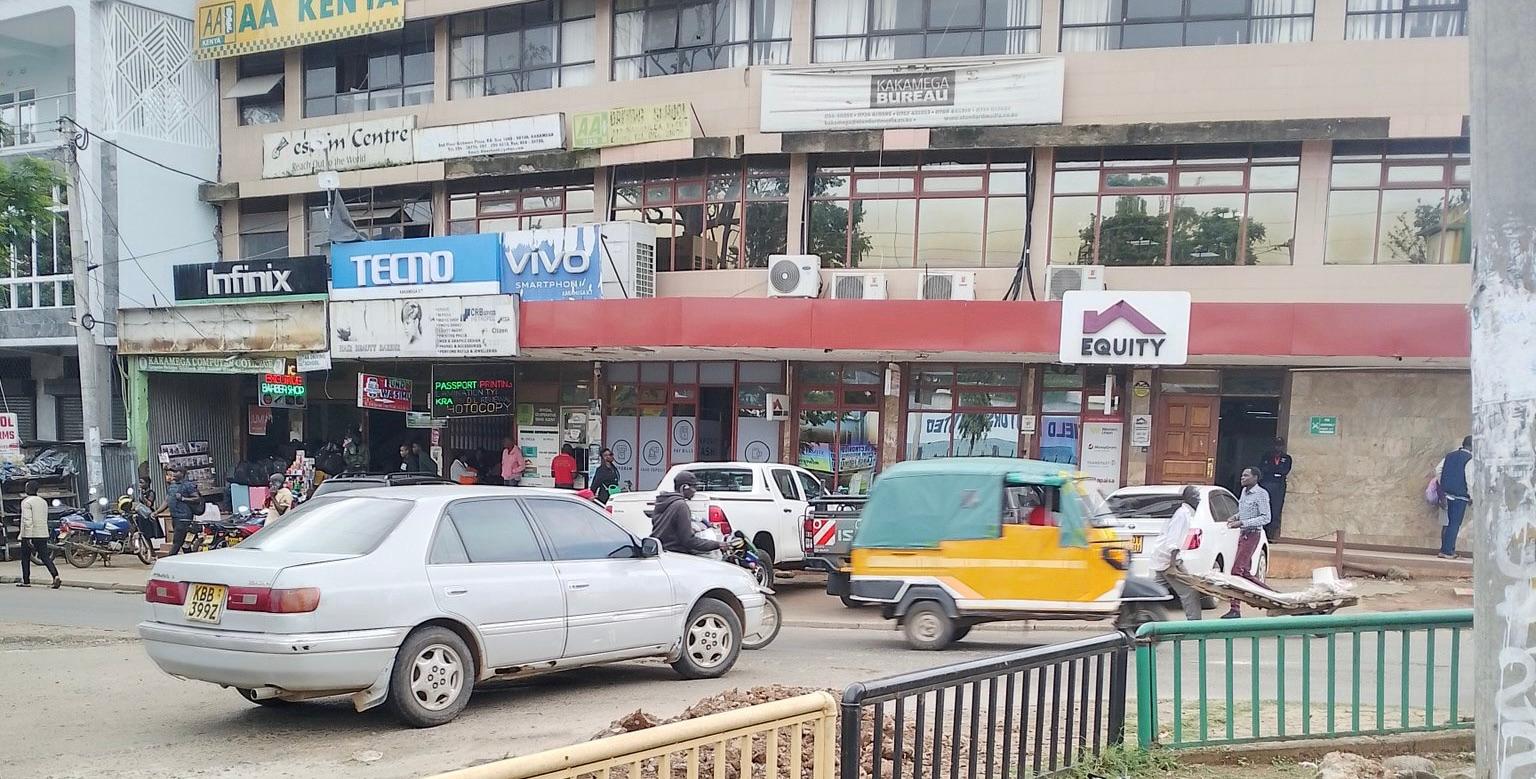
Police gun down two thugs in dramatic CBD shootout as Sh300,000 vanishes, raising fresh questions about Equity Bank’s insider leak crisis
The midday sun blazed over Nairobi’s bustling Central Business District on Tuesday when the crack of gunfire shattered the commercial calm, sending hundreds of shoppers and office workers scrambling for cover along Moi Avenue.
Two suspected thugs lay dead. Six accomplices vanished into the urban maze with Sh300,000 in stolen cash. And once again, all fingers pointed toward Kenya’s most scandal-plagued financial institution: Equity Bank.
The dramatic police shootout that transformed downtown Nairobi into a war zone for precious minutes has reignited a disturbing conversation that banking executives would rather see buried – are rogue bank employees leaking customer information to criminal gangs, effectively signing death warrants for unsuspecting clients?
THE KILLING GROUND
It was 11:47 AM when hell broke loose on one of Nairobi’s most congested thoroughfares.
An official from Embassava Matatu Sacco had just completed a routine withdrawal for office operations. The envelope containing Sh300,000 felt heavy in his hands as he stepped onto Kimathi Lane, his mind already on the paperwork awaiting him back at the office.
He never saw them coming.
Eight men, moving with the practiced precision of predators who had done this many times before, closed in from different angles. Within seconds, the victim was surrounded, strangled, and stripped of his money. His screams for help pierced the air as bystanders froze in shock.
But someone else had been watching too.
Plainclothes officers from Nairobi Central Police Station, deployed specifically to monitor suspicious activity around banking halls, had spotted the gang stalking their prey. When the robbery erupted, they moved in fast.
“They brandished knives at my officers,” Central Police Commander Philemon Nyakumbo told The Star at the crime scene, where blood still stained the pavement outside Contrast House. “We had no choice but to open fire.”
Two suspects fell – one collapsing outside the building, another stumbling through the entrance before dying inside. Six others scattered like cockroaches into the crowded streets, disappearing with their ill-gotten gains despite one reportedly sustaining gunshot wounds.
Police deployed tear gas to control the surging crowd of spectators who threatened to contaminate the crime scene. The bodies lay where they fell for nearly an hour as forensic officers photographed evidence and collected three knives, multiple mobile phones, and keys believed to belong to previous robbery victims.
“I thought it was firecrackers,” recalled a shop attendant at a nearby boutique, still visibly shaken hours later. “Then I saw people running and blood everywhere. It was terrifying.”
A PATTERN TOO DISTURBING TO IGNORE
But Tuesday’s bloodshed was no isolated incident. It was merely the latest violent chapter in a chilling pattern that has terrorized Nairobi’s banking customers for months – and the trail of evidence keeps leading back to Equity Bank.
The Star has established that just three weeks earlier, on November 13, another Embassava Matatu Sacco official was robbed of Sh500,000 immediately after leaving the same Equity Bank branch on Moi Avenue. The modus operandi was identical: gang members waiting outside, swift attack, immediate flight.
Detectives investigating both cases have uncovered a disturbing commonality – in nearly every instance, victims were targeted within minutes of completing large withdrawals, suggesting someone inside the banking halls was feeding information to criminals in real-time.
“These are not random muggings,” a senior DCI investigator told the media on condition of anonymity. “The precision, the timing, the knowledge of who is carrying cash – it all points to insider involvement. Bank employees or individuals planted in banking halls are the missing link.”
Commander Nyakumbo confirmed that the gang had been operating across the CBD for several months, specifically targeting customers leaving banks and forex bureaus with visible cash or suspicious packages.
“They’ve been hitting Tom Mboya Street, River Road, Kimathi Street, and Aga Khan Walk,” he revealed. “We believe they work in groups of four to eight, with spotters inside the banks signaling when high-value targets exit.”
Police have launched a manhunt for the six escaped suspects and are reviewing CCTV footage from buildings along their escape route. But the bigger question haunting investigators is one that Equity Bank has consistently failed to answer: Who is leaking customer information, and how deep does the rot go?
EQUITY BANK’S YEAR OF SCANDAL
For Kenya’s third-largest bank by assets, 2024 and 2025 have been nothing short of catastrophic from a security and reputation standpoint.
The institution has been rocked by a series of massive insider-driven heists that have exposed systemic vulnerabilities in its internal controls and raised serious questions about whether customer data is being weaponized by criminal networks.
The Sh1.5 Billion Nuclear Bomb
In July 2024, Equity Bank became the victim of the most sophisticated banking heist in Kenyan history when cybercriminals, working with internal accomplices, siphoned Sh1.545 billion from the bank’s salary suspense general ledger through 47 carefully orchestrated transactions.
The mastermind? According to DCI investigations, a network involving senior bank manager David Kimani Machiri, city lawyer Esther Bitutu Kadiki, and businesswoman Ruth Muthoni Kamau, who allegedly received over Sh800 million of the stolen funds.
The case exposed not just the vulnerability of Equity’s digital systems, but something far more sinister – the active participation of bank employees in facilitating the theft and potential attempts by powerful figures to cover up the crime.
Inspector Bonface Maina Kamau, the lead investigator, was mysteriously transferred to Baragoi in remote Samburu County after he pressed too hard for answers from Ruth Muthoni. His protest letters to the DCI boss and Inspector-General allege interference from senior officers attempting to protect the alleged mastermind.
The case remains in court, with over 200 bank employees dismissed in a purge that shocked the industry.
The Sh387 Million One-Man Show
Between May and June 2024, a single rogue Equity Bank employee illegally transferred Sh386.5 million to eight external accounts through unauthorized system entries. The fraud went undetected for nearly a month before internal audits flagged the suspicious transactions.
The Sh179 Million Hacker Attack
In April 2024, hackers breached Equity’s MasterCard systems, stealing Sh179.6 million and distributing it across 551 accounts. The bank’s leaked internal correspondence revealed the funds were quickly moved through M-Pesa to further obscure the trail.
Central Bank officials later confirmed that the attack involved insider cooperation to identify high-value targets and manipulate security systems.
The Mass Firing That Confirmed the Worst
Perhaps most tellingly, Equity Bank fired over 1,200 employees in 2024 in what insiders described as a desperate attempt to root out the cancer of insider fraud eating away at the institution.
One thousand two hundred people.
Let that sink in.
“When you’re firing over a thousand staff members, you’re not dealing with a few bad apples,” a former Equity Bank manager said. “You’re dealing with institutional rot. The question isn’t whether insider leaks are happening – it’s how many customers have been put in danger because of them.”
THE STREET-LEVEL TERROR
While Equity Bank battles multibillion-shilling heists in boardrooms and courtrooms, ordinary Kenyans are paying the price in blood on Nairobi’s streets.
The surge in violent robberies targeting bank customers has transformed the CBD from a commercial hub into a hunting ground. Between August and December 2025, police have arrested over 300 suspects in multiple crackdowns, yet the attacks continue with disturbing regularity.
The pattern is always the same: A customer completes a withdrawal. Within minutes, they’re confronted by knife-wielding thugs who seem to know exactly what they’re carrying. The attacks happen in broad daylight, often in crowded areas where help should be readily available.
Victims have reported being strangled, threatened with contaminated syringes, and even smeared with human feces when they resist. The psychological trauma extends far beyond the financial loss.
“I can’t go to the bank anymore without looking over my shoulder,” confessed a small business owner who was robbed of Sh200,000 outside a Nairobi bank last month. “Someone knew I was carrying that money. Someone told them. How else would they know?”
DCI’s Kakamega Regional Criminal Investigations Officer Christine Chemoss confirmed in April that investigators were probing bank staff involvement in robbery targeting.
“These robberies are either planned by bank employees or individuals who lounge in banking halls spying on those who make withdrawals,” she told reporters. “They easily monitor activities without raising suspicion and signal their accomplices waiting outside.”
Her words were prophetic. Eight months later, two bodies on Moi Avenue provided the bloody evidence.
THE UNANSWERED QUESTIONS
As forensic teams processed Tuesday’s crime scene and detectives pursued the escaped suspects, The Star sought comment from Equity Bank’s corporate communications office. Our calls went unanswered. Our emails received automated responses promising replies “within 24 hours.”
The silence is deafening.
Here are the questions Equity Bank needs to answer:
1. What internal controls exist to prevent staff from accessing and sharing customer withdrawal information?
2. How many employees have been investigated or dismissed specifically for suspected involvement in tipping off criminals about customer transactions?
3. What security protocols are in place to protect customers making large withdrawals?
4. Has the bank conducted comprehensive vetting of all staff with access to customer transaction data following the 2024 heists?
5. What compensation or support has been provided to customers who were robbed after making withdrawals from Equity Bank branches?
The bank’s failure to address these questions publicly while its customers continue to be targeted suggests either dangerous incompetence or willful negligence.
POLICE INTENSIFY OPERATIONS
Commander Nyakumbo announced that police have intensified patrols and deployed additional undercover units across the CBD, particularly around banking areas, as the festive season approaches.
“We’re not going to let these criminals terrorize innocent Kenyans,” he declared. “Anyone involved in these robberies, including bank staff who may be leaking information, will face the full force of the law.”
He urged customers making large withdrawals to:
- Request police escort services, which are available upon request
- Avoid displaying cash in public spaces
- Vary their routes when leaving banks
- Use mobile banking or cheques for large transactions whenever possible
- Report suspicious activity immediately
But these are band-aid solutions to a gaping wound. The real problem isn’t customer behavior – it’s institutional betrayal.
Tuesday’s shooting has crystallized a harsh reality that banking regulators and law enforcement can no longer ignore: Kenya’s financial institutions have become dangerous places for customers to conduct business, not because of the services they offer, but because of the criminals operating within them.
The Central Bank of Kenya, which oversees banking sector security, has remained conspicuously silent throughout the cascade of scandals. No public statements. No comprehensive investigations into industry-wide insider threats. No visible action to restore customer confidence.
Meanwhile, ordinary Kenyans face an impossible choice: Risk using banks and potentially becoming targets for robbery, or keep their money at home and face different security risks.
The two bodies removed from Moi Avenue on Tuesday afternoon represent more than just a successful police operation against street criminals. They’re symptoms of a disease infecting Kenya’s banking sector from the inside out.
Lost in the statistics and institutional failures are the human stories. The Embassava Matatu Sacco official who narrowly escaped with his life on Tuesday. The November victim who lost half a million shillings. The countless unnamed Kenyans who’ve been robbed, injured, or traumatized after simply trying to access their own money.
Each robbery represents a betrayal of trust – not just by the criminals who commit the act, but by the institutions that are supposed to safeguard customer information and instead may be weaponizing it for profit.
“Someone needs to be held accountable,” said a woman who witnessed Tuesday’s shooting, still shaking hours later. “Not just the thugs on the street, but the people in suits who are telling them where to strike. They’re the real criminals.”
WHAT HAPPENS NEXT?
The manhunt continues for six suspects who escaped with Sh300,000. Police are confident that CCTV footage and mobile phone data recovered from the dead suspects will lead to arrests within days.
But the larger investigation – into potential insider leaks from Equity Bank and other financial institutions – remains murky. Sources within the DCI indicate that such probes are often hampered by powerful interests, legal complications around bank confidentiality, and the sheer scale of trying to identify bad actors within massive institutions.
The court cases against alleged masterminds of the Sh1.5 billion heist continue to wind through Kenya’s judicial system, with lawyer Esther Bitutu Kadiki released on Sh300 million bond and businesswoman Ruth Muthoni Kamau successfully blocking parts of the investigation through legal maneuvers.
For ordinary Kenyans, justice seems perpetually delayed. Safety feels increasingly like a luxury only the well-connected can afford.
Two suspects are dead. Six remain at large with Sh300,000. An Embassava Matatu Sacco official is traumatized but alive. Equity Bank continues its silence. And somewhere in Nairobi right now, another criminal gang may be receiving a tip about their next target.
The violence on Moi Avenue this Tuesday wasn’t just a robbery gone wrong. It was a stark reminder that in Kenya’s current banking landscape, making a withdrawal can be a life-threatening decision – not because of the transaction itself, but because someone you trust with your financial data might be sharing it with someone who will hurt you for it.
Until Equity Bank and other institutions can guarantee that customer information isn’t being leaked to criminal networks, every withdrawal is a gamble. Every walk from the banking hall to your car is a risk. Every envelope containing cash is a potential death sentence.
The question isn’t whether more blood will be spilled on Nairobi’s streets.
It’s whose blood will be next.
Kenya Insights continues to investigate insider links to bank customer robberies. If you have information about suspicious activity involving bank staff, contact our investigations desk in confidence.







Comments