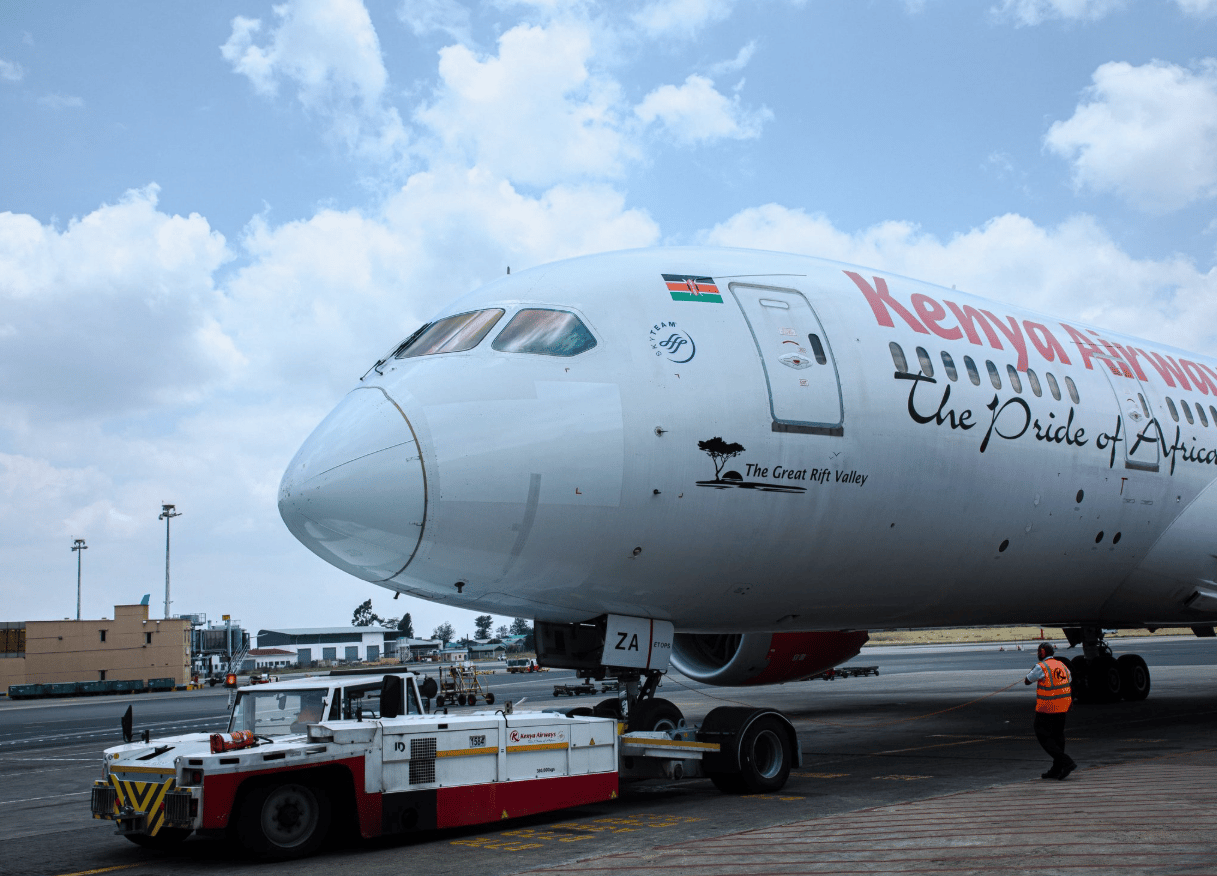
When crises disrupt global travel, governments often turn to a little-known aviation tool to protect citizens abroad: repatriation flights. Recent tensions in the Middle East have highlighted how essential these flights are and why a national carrier plays a critical role in safeguarding its citizens.
On March 4, Kenya Airways announced special flights between Nairobi and Dubai to assist Kenyans affected by regional disruptions. The airline flew from Nairobi to Dubai on March 4 and returned on March 5, after securing limited approval from Dubai airport authorities for humanitarian operations.
Being Kenya’s national carrier gives Kenya Airways unique advantages. The airline can rapidly deploy aircraft and crew while coordinating with diplomats to obtain landing rights, airspace clearance, and other approvals. Without a national carrier, repatriation efforts would face significant delays, regulatory hurdles, and potential financial constraints, making emergency evacuation far more complex.

Understanding Kenya Airways Repatriation Flights
Repatriation flights differ from regular commercial services. Airlines typically operate these missions in coordination with governments and immigration authorities, often requiring passengers to cover minimal costs or none at all.
The process starts with embassies and foreign missions identifying citizens stranded abroad. Governments then work with national carriers like Kenya Airways to deploy aircraft and crew, while diplomats secure flight slots, landing rights, and airspace clearance from host countries.
These flights often operate under unusual conditions. Passengers are prioritized based on vulnerability, including families, students, and those with medical needs. Unlike standard commercial operations, repatriation flights can be arranged on very short notice and may operate even when airports are partially closed or most airlines have suspended services.
The recent Middle East crisis is a prime example. Commercial flights were widely suspended, forcing countries across Europe and Asia to organize evacuation flights. France, Germany, Italy, Poland, the Netherlands, and the United Kingdom all coordinated emergency operations for their citizens. In Dubai, authorities allowed only limited flights for repatriation, and Kenya Airways was among the few airlines granted permission, demonstrating its critical role as Kenya’s national carrier.
National Carrier Advantage in Emergencies
A national carrier provides unparalleled agility in crises. Kenya Airways can deploy staff, aircraft, and logistical support faster than private operators while also coordinating with Kenyan diplomatic missions abroad. This ensures that citizens are evacuated efficiently and safely.
During the COVID-19 pandemic, Kenya Airways demonstrated this capability by repatriating stranded citizens, transporting medical supplies, and maintaining cargo services for farmers exporting produce. Without a national airline, Kenya would have depended on private carriers facing regulatory delays and coordination challenges, which could have slowed crucial operations.
Economic and Strategic Importance
National carriers serve more than just emergency purposes. Airlines like Kenya Airways are economic engines that attract investors, tourists, and global trade opportunities. Efficient operations by a national airline signal reliability and connectivity, reinforcing confidence in the country’s infrastructure.
Globally, carriers such as Emirates, Singapore Airlines, and Turkish Airlines have become symbols of national prestige. Emirates projects Dubai’s modernity, Singapore Airlines reflects precision and quality, and Turkish Airlines demonstrates Turkey’s global reach. Similarly, Kenya Airways represents Kenya on the international stage, reinforcing national identity while connecting the country to key global markets.
Former Prime Minister Raila Odinga highlighted Kenya’s potential as a continental hub due to its strategic location. He emphasized that a national carrier could operate at a loss if necessary, provided it brought investors, tourists, and shoppers into the country. Kenya Airways, therefore, is more than a business—it is a strategic tool for national growth.
Operational Challenges and Coordination
Running repatriation flights is complex. Airlines must navigate emergency clearances, shifting airport schedules, and logistical hurdles while prioritizing passenger safety. Diplomats play a key role, negotiating landing rights and coordinating with host countries to ensure smooth operations.
Financially, repatriation missions are rarely profitable. Governments often subsidize these flights to ensure citizens’ welfare. For Kenya Airways, this is an opportunity to showcase its operational capability, enhance brand reputation, and reinforce its role as a cornerstone of national resilience.
Conclusion
Kenya Airways repatriation flights highlight the indispensable role of a national carrier in global crises. Beyond emergencies, the airline strengthens Kenya’s economic positioning, national identity, and diplomatic reach. In situations like the recent Middle East disruptions, the airline’s ability to operate humanitarian flights demonstrates why strategic investment in a robust national carrier is not optional but essential.
Through timely intervention, Kenya Airways not only ensures the safety of stranded Kenyans but also underscores the broader strategic, economic, and symbolic significance of a national airline capable of responding in moments of urgent need.








Comments