
Business
KRA To Impose Mandatory 16pc VAT On All Small Traders In Move That Will Shoot Up Prices Of Basic Commodities
Millions of Kenyans buying soft drinks, cooking gas, cosmetics and mobile phones from neighbourhood kiosks face a brutal price spike as the taxman moves to bulldoze every last hawker, shopkeeper and wine-and-spirits outlet into the VAT register — with fines and jail awaiting those who refuse.

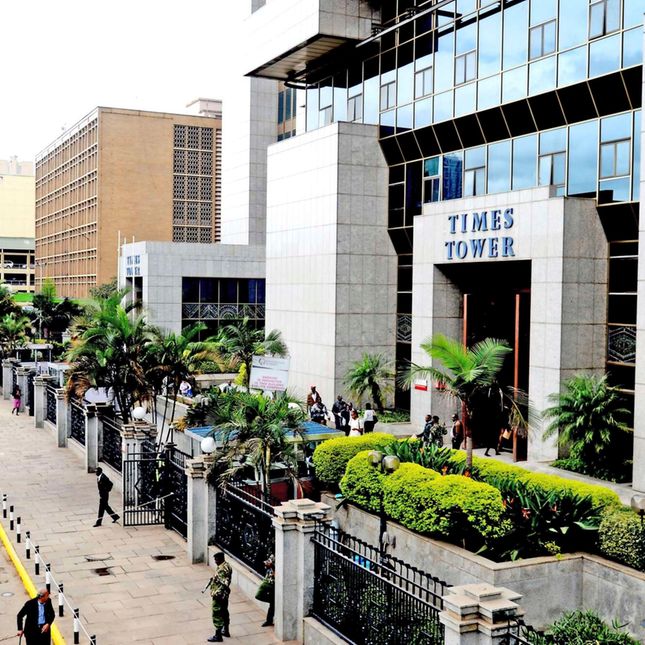
The Kenya Revenue Authority is preparing to detonate a tax bomb on the millions of small traders who form the beating heart of Kenya’s informal economy, plotting the total elimination of the Sh5 million annual turnover threshold that has for nearly two decades shielded hustlers, kiosk operators and mama mbogas from mandatory Value Added Tax registration.
A KRA policy document, seen by this newspaper’s sister publication Business Daily, proposes to cut the VAT registration threshold to zero, meaning that every business in Kenya, regardless of how small, would be legally required to charge customers the full 16 percent VAT on all goods and services not specifically exempted under the VAT Act. The directive, if adopted in the Finance Bill due before Parliament this July, would repeal Section 34(1)(a) of the VAT Act, which since 2007 has protected small traders from the compliance burden carried by larger commercial enterprises.
The immediate casualty will be the consumer. A customer walking into a neighbourhood kiosk to buy a Sh50 bottle of water, a Sh200 gas refill or a bundle of data could soon find those prices ratcheted upward to recover VAT charges that were never factored into the business model of traders who collectively turn over less than Sh5 million annually and have never issued a tax invoice in their lives.
The KRA document names the specific products that will feel the heat: mobile phones, soft drinks, bottled water, cosmetics, snacks, cooking gas and petroleum products. Freelance consultants and service providers below the current threshold would equally be roped in, required to slap a 16 percent surcharge on every invoice. The goods exempted from VAT, a thin list, include staples like maize flour, unprocessed green tea, raw milk, bread and select medical products such as syringes — cold comfort for consumers who spend the bulk of their household budgets on items that are not exempt.
The driving arithmetic at Times Tower is stark. Kenya currently counts only 230,000 registered VAT taxpayers against a projected base of 800,000, leaving the taxman nursing a Sh378 billion VAT gap that KRA Commissioner General Humphrey Wattanga has publicly committed to closing. The authority believes that zeroing out the registration threshold, combined with a crackdown on exemptions, could drive VAT collections above Sh1 trillion, nearly double the Sh653 billion collected in the most recent financial year.
The KRA document is unsparing in its diagnosis of the problem. “Key challenges in closing Kenya’s Sh378 billion VAT gap include threshold exclusion which limits the tax base; high VAT leakage through exemptions; weak visibility of the informal economy and a narrow tax base with just 230,000 VAT taxpayers registered,” the document states, making no apology for the scale of disruption the proposed remedy would unleash.
The compliance obligations awaiting newly conscripted small traders would be crushing by any standard familiar to Kenya’s informal sector. Registered traders would be required to file and pay VAT to KRA by the 20th of every month without fail, maintain detailed sales records to support their returns, notify the authority of any change in business name, address or nature of trade, and — crucially — integrate with the Electronic Tax Invoice Management System (eTIMS), transmitting every sales invoice to KRA in real time.
The eTIMS requirement is particularly savage in its irony. It was only in December 2024 that the government specifically freed small traders with annual sales below Sh5 million from the obligation to issue electronic invoices, having watched large corporations ruthlessly drop compliant micro-suppliers unable to generate digital tax receipts. The new proposal would reverse that relief at a stroke, dragging traders back into the very compliance maze that nearly strangled their supply relationships less than two years ago.
The KRA itself acknowledges the uphill climb: barely 41 percent of the non-VAT registered taxpayers it has already targeted have successfully onboarded eTIMS, a damning indictment of the digital readiness of Kenya’s micro-trader ecosystem. Instructing the remainder to register, file, invoice and remit simultaneously is a gamble that tax consultants say could generate mass non-compliance rather than the revenue bonanza the authority is banking on.
The political backdrop is equally combustible. The Treasury has been explicitly cautious about new or higher taxes since the Gen Z protests of 2024 forced President William Ruto to abandon the Finance Bill that year in humiliating retreat. That reluctance to be seen raising rates has pushed the KRA toward base-broadening instead, a strategy that technically avoids new taxes while materially increasing the tax burden on Kenyans who were previously outside the net. Critics argue the distinction is cosmetic.
The KRA’s own medium-term ambitions underline the scale of its appetite for the informal sector. The authority has set a target to grow the number of active taxpayers from the current seven million to 11.5 million by June 2027, and to increase annual income tax collections from micro and small businesses from Sh17 billion to Sh500 billion, a near thirty-fold escalation. The February 2026 roundtable between KRA Commissioner George Obell and the Institute of Certified Public Accountants of Kenya confirmed that eliminating the Sh5 million VAT threshold was among the reforms formally on the table, with KRA integrating artificial intelligence and machine learning to detect and pursue businesses operating below the radar.
The VAT Special Table introduced in June 2025 provides a glimpse of the enforcement machinery awaiting small traders who fail to comply once registered. Traders placed on the table by KRA are blocked from filing VAT returns and have their input VAT claims suspended, effectively freezing their ability to trade compliantly until the authority is satisfied. The categories of non-compliance targeted include repeated failure to pay, suspected VAT fraud and failure to transition to eTIMS invoicing.
The Sh5 million threshold has its roots in 2007, when it was raised from the previous Sh3 million mark. Eighteen years later, the KRA has decided that inflation, digital systems and aggressive revenue targets have overtaken whatever economic wisdom underpinned the exemption. The Finance Bill for the year commencing July 2026, expected to land in Parliament by end of April, will reveal whether the Treasury is willing to hand the taxman the legislative ammunition to carry out the most sweeping expansion of Kenya’s VAT net in living memory.
For the mama mboga in Mathare, the mitumba trader in Gikomba and the kiosk owner in Kibera, the question is simple and brutal: does a business that survives on margins thinner than the paper a KRA return is printed on have any chance of absorbing 16 percent VAT, monthly filings and digital invoicing without shutting its doors? The answer, economists warn, may not be what the taxman is hoping for.
Kenya Insights allows guest blogging, if you want to be published on Kenya’s most authoritative and accurate blog, have an expose, news TIPS, story angles, human interest stories, drop us an email on [email protected] or via Telegram


How Adil Popat Saved His Empire On The Eve Of Imperial Bank Collapse and Why Kenya’s Mainstream Media Buried The Story

South Sudan: Adut Salva Kiir’s Shadow Treasury Exposed

Wajir North MP Ibrahim Abdi Dissatisfied With2026/27 Budget, Claims It Totally Excludes North Eastern Region

The Eldoret Tax Fortress: How David Langat Turned an Industrial Park Dream Into Kenya’s Most Sophisticated Domestic Tax Haven

Why John Ngumi Is Running From the EACC and Why the Sh415 Million Payday May Be the Least of His Worries

Shiquo Hii Style Store Was Not Raided, Anti-Counterfeit Authority Confirms; Says Influencer Used Empty Shelves for Content as She Relocates

Treasury CS Mbadi Unveils Sh4.8 Trillion Budget Estimates

Fraud, Misrepresentation and A Decade Of Evasion: How Indo Africa Finance Pocketed Sh150 Million Youth Funds and Fought To Keep Every Cent

Kenya Picks Chinese Firm For Sh375 Billion JKIA Upgrade Project After Adani Fallout

The President’s Daughter and The Missing Witness: How Adut Salva Kiir’s Shadow Treasury Silenced Its Most Dangerous Critic

Cement, Cash and Courts: How the Hashu Dynasty Crushed the Ramji Brothers for Fourteen Years and Why the Walls Are Now Closing In

Inside The Urban Planning Cartel That Owns Nairobi

Standard Chartered Ghosts Haunt Joshua Oigara At Stanbic As Whistleblower Spills Beans

Inside NCBA’s Decline: How a Banking Giant Lost Its Strategic Edge

Why Ruto’s Favourite Candidate Adan Mohammed Could Be Locked Out of the KRA Top Job

LifeCare on the Brink: SHA Fraud, Stolen Wages, and the Rotten Empire Jayesh Saini Built

Betika Faces DCI Probe, Directors Arrest and License Revocation Over Massive 29.5 Million Safaricom Customers’ Data Breach

Este Medical Kenya Fights American’s Explosive Complaints

Fresh Move Launched to Remove Kenya Railways MD Mainga From Office After Awarding Sh817 Million Consultancy Contract

The Rot Inside Absa: How Bank Insiders Are Looting Nairobi’s Customers
-
 Investigations1 week ago
Cement, Cash and Courts: How the Hashu Dynasty Crushed the Ramji Brothers for Fourteen Years and Why the Walls Are Now Closing In
-
 Investigations7 days ago
Inside The Urban Planning Cartel That Owns Nairobi
-
 Business2 days ago
Standard Chartered Ghosts Haunt Joshua Oigara At Stanbic As Whistleblower Spills Beans
-
 Business3 days ago
Inside NCBA’s Decline: How a Banking Giant Lost Its Strategic Edge
-
 Investigations2 weeks ago
Betika Faces DCI Probe, Directors Arrest and License Revocation Over Massive 29.5 Million Safaricom Customers’ Data Breach
-
 Investigations1 week ago
Fresh Move Launched to Remove Kenya Railways MD Mainga From Office After Awarding Sh817 Million Consultancy Contract
-

 Business1 week ago
TRUST BETRAYED: How Senior DTB Bank Insiders Allegedly Looted Sh149 Million From a Customer’s Account Over Five Years
-
 News2 weeks ago
How Uhuru’s Deal With Obama In 2015 Paved Way For America’s Ebola Plan In Kenya