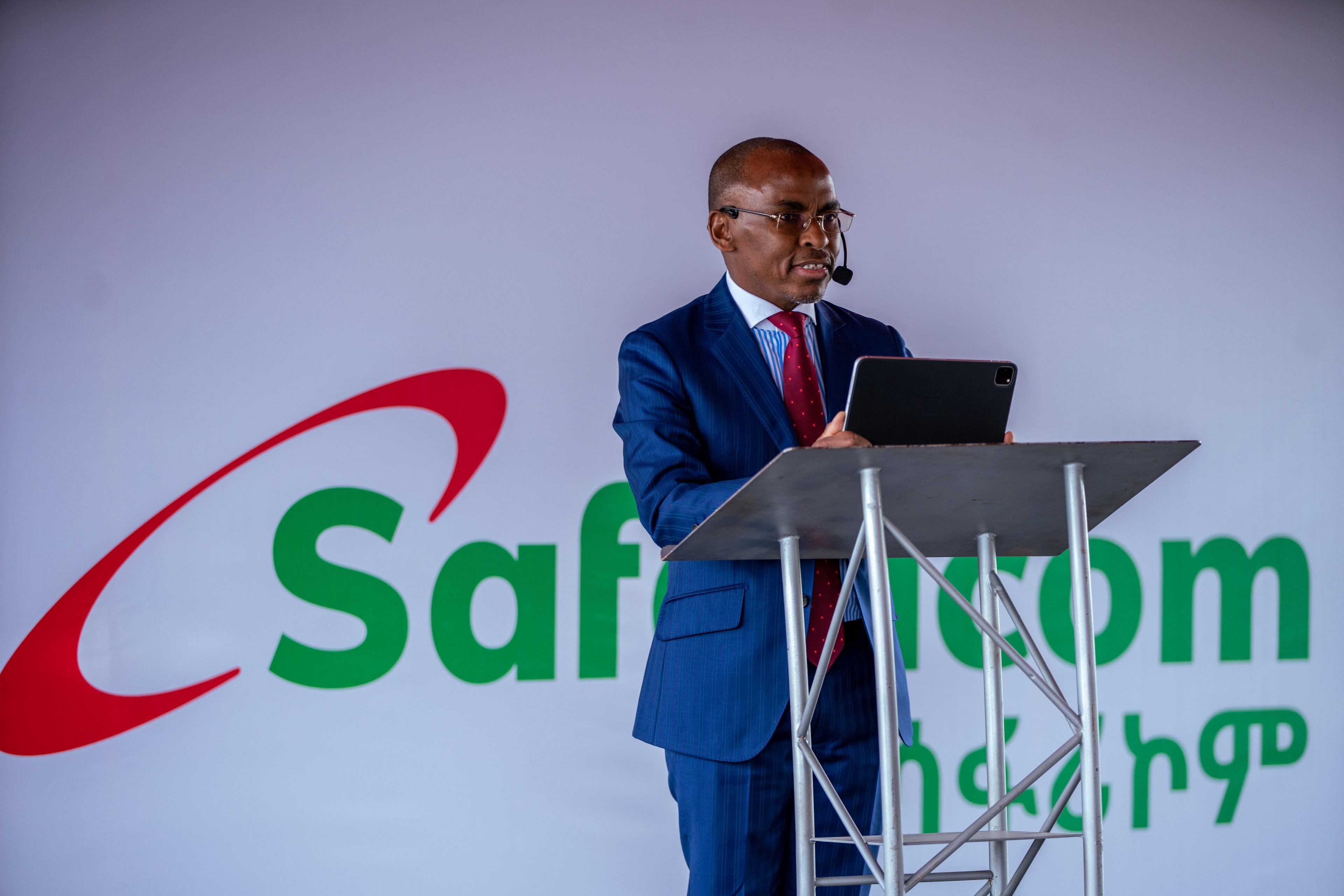
Ethiopians are spending just 50 cents per month on the mobile money platform, raising questions about the return on a $19.4bn bet
Safaricom’s flagship M-Pesa mobile money service is faltering in Ethiopia, generating barely enough revenue to buy a coffee per user each month and casting doubt on the Kenyan telecoms giant’s most ambitious international expansion.
The mobile money platform pulled in a meagre Sh12.2m ($94,000) across nine months to December 2025 from 2.36m active users in Ethiopia, translating to about 50 cents per user per month. The figure stands in stark contrast to Kenya, where M-Pesa users generate Sh374.83 monthly, more than 700 times Ethiopia’s rate.
The dismal performance threatens to undermine Safaricom’s growth strategy in Africa’s second most populous nation, where the company paid $150m for the mobile money licence alone after an $850m telecoms licence. Including total infrastructure investments, the consortium has ploughed more than $2.27bn into the venture.
“M-Pesa users in Ethiopia are mainly buying airtime products and data. Twenty per cent of sales go through the M-Pesa channel initiated by self-top ups,” said Wim Vanhelleputte, chief executive of Safaricom Telecommunications Ethiopia, acknowledging the platform’s limited monetisation.
The fundamental problem: Ethiopians are using M-Pesa for free transactions rather than fee-generating transfers and payments.
Instead of person-to-person money transfers that powered M-Pesa’s explosive growth in Kenya, Ethiopian subscribers primarily use the platform to purchase data bundles and airtime, services that carry no transaction fees.
The struggle highlights a more profound challenge. Cash remains overwhelmingly dominant in Ethiopia, with 99 per cent of small-value transactions conducted in physical currency. World Bank data shows 99 per cent of Ethiopians pay utility bills in cash, compared with just 12 per cent in Kenya.
“Banking penetration in urban areas is relatively high but 99 per cent of small value transactions are in cash,” Safaricom acknowledged in investor briefings, effectively admitting its bet on digital payments confronts entrenched consumer behaviour.
M-Pesa contributed a negligible 0.13 per cent of Ethiopia’s total service revenue of Sh9.7bn during the nine months, whilst data services accounted for 66.97 per cent. The imbalance underscores how the Ethiopian operation remains fundamentally a traditional telecoms business, not the transformative fintech platform investors expected.
The comparison with Kenya is sobering. During the year to March 2025, M-Pesa in Kenya generated Sh161.1bn from 35.82m monthly active customers, accounting for 44.2 per cent of total service revenue and cementing its position as Safaricom’s primary earnings engine. Even in 2010, when M-Pesa was three years old in Kenya as it is now in Ethiopia, monthly revenue per user averaged Sh79, far exceeding Ethiopia’s current 50 cents.
What worked spectacularly in Kenya appears to have stalled in Ethiopia. M-Pesa scaled rapidly after its 2007 launch by riding urban-to-rural remittance flows as workers in cities sent money to relatives in villages. But Ethiopia lacks that dynamic. World Bank research shows only 11 per cent of Ethiopians have accessed loans from formal financial institutions, with most relying on informal savings groups and family networks.
The monetisation crisis emerged despite some operational progress. M-Pesa revenue in Ethiopia has actually declined precipitously, plunging 64.3 per cent from Sh24.4m in September 2024 to just Sh8.7m by November 2025, even as the merchant base surged 358 per cent to 30,700 outlets.
Safaricom has positioned the shortfall as a long-term infrastructure investment aligned with Ethiopia’s financial sector reforms. In October, M-Pesa integrated with EthSwitch, Ethiopia’s national payment switch, connecting to more than 30 banks and enabling interoperable QR payments across 50,000 merchants as part of Ethiopia’s National Digital Payment Strategy 2026-2030.
But interoperability alone cannot overcome the fundamental barrier: Ethiopians do not yet see compelling reasons to pay fees for digital transactions when cash works perfectly well for their needs.
The stakes could hardly be higher. Ethiopia’s 120m population positions it as one of Africa’s biggest long-term growth opportunities, and Safaricom has staked its regional expansion strategy on cracking this market. The company targets break-even in Ethiopia by 2027, banking on gradual subscriber growth and improved revenue streams.
Investors have reason for scepticism. Annual licence costs alone total $66.7m, exceeding Safaricom Ethiopia’s entire FY2024 revenue of $53.6m, according to World Bank reports. The telco lost $325m in 2024, though losses narrowed 53 per cent year-on-year, providing some consolation.
During the six months to September 2025, a 59 per cent contraction in Ethiopia losses helped raise Safaricom’s half-year profit 52.1 per cent to Sh42.7bn. Yet Kenya’s business remained the main profit driver on M-Pesa’s back, whose revenue rose 14 per cent to Sh88.1bn.
For now, Ethiopia represents more hope than revenue. The question troubling investors is whether patience and infrastructure investment will eventually unlock Ethiopia’s digital payments potential, or whether Safaricom has fundamentally misjudged the market’s readiness for its transformative mobile money model.
The 50-cent-per-month reality suggests the latter possibility cannot be dismissed.




Comments