
CASE FILE: LCIA — TELKOM / JAMHURI HOLDINGS
|
Forum |
London Court of International Arbitration (LCIA) |
|
Claimant |
Jamhuri Holdings Ltd / Helios Investment Partners |
|
Stake |
Sh6.19 billion Telkom Kenya shares transaction |
|
Law firm engaged |
G&A Advocates LLP — Eric Gumbo, Ken Melly, Moses Kipkogei |
|
Contract value |
Sh358 million |
|
Procurement route |
Specially Permitted Procedure (SPP) — no open competition |
|
PPARB ruling |
March 9, 2026 — upheld G&A award over Okoth & Kiplagat |
CASE FILE: ICSID — TRAVIZORY BORDER SECURITY
|
Case reference |
ICSID Arbitration No. R20250103 / ARB/25/54 |
|
Claimant |
Travizory Border Security SA (Switzerland) |
|
Treaty invoked |
Kenya-Switzerland BIT (2006) |
|
Law firms engaged |
G&A Advocates LLP and MMA Advocates |
|
Procurement route |
Single-sourced — no competitive process whatsoever |
|
Protest filed |
Okoth & Kiplagat Advocates, March 31, 2026 |
|
Prior protest ignored |
February 10, 2026 letter — no response from AG’s office |
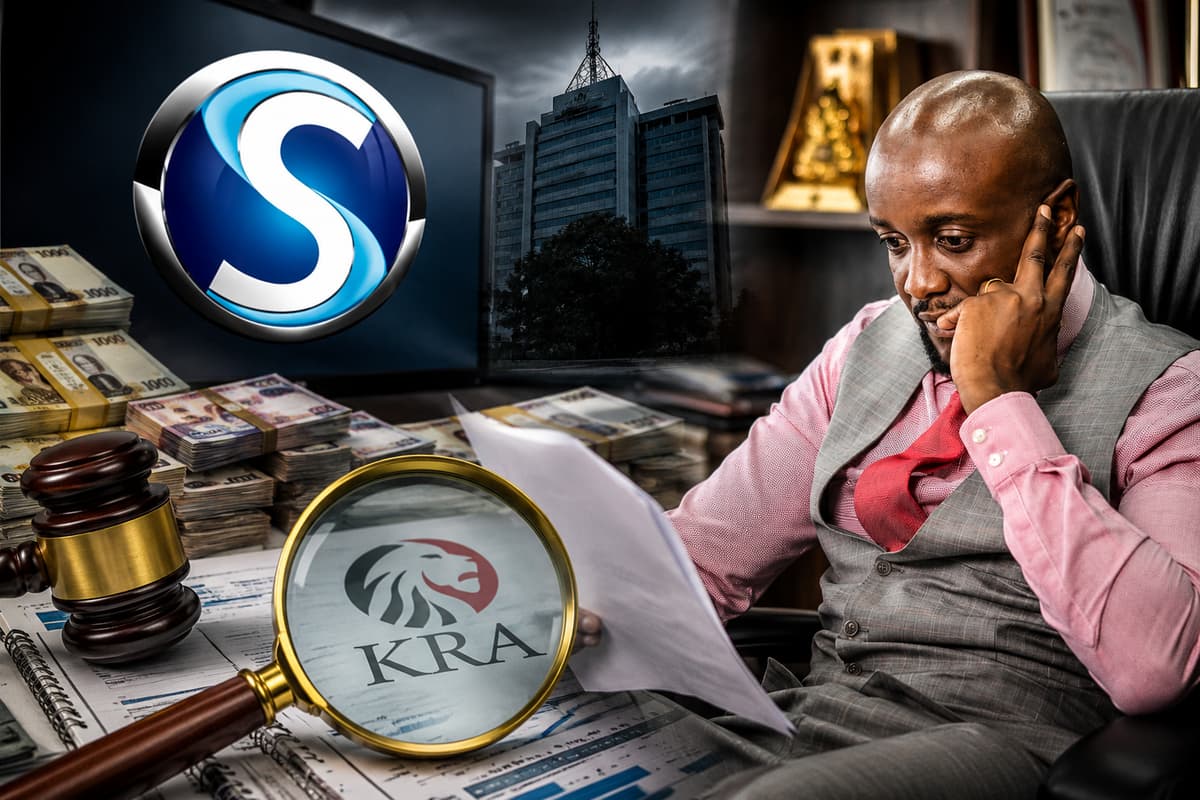
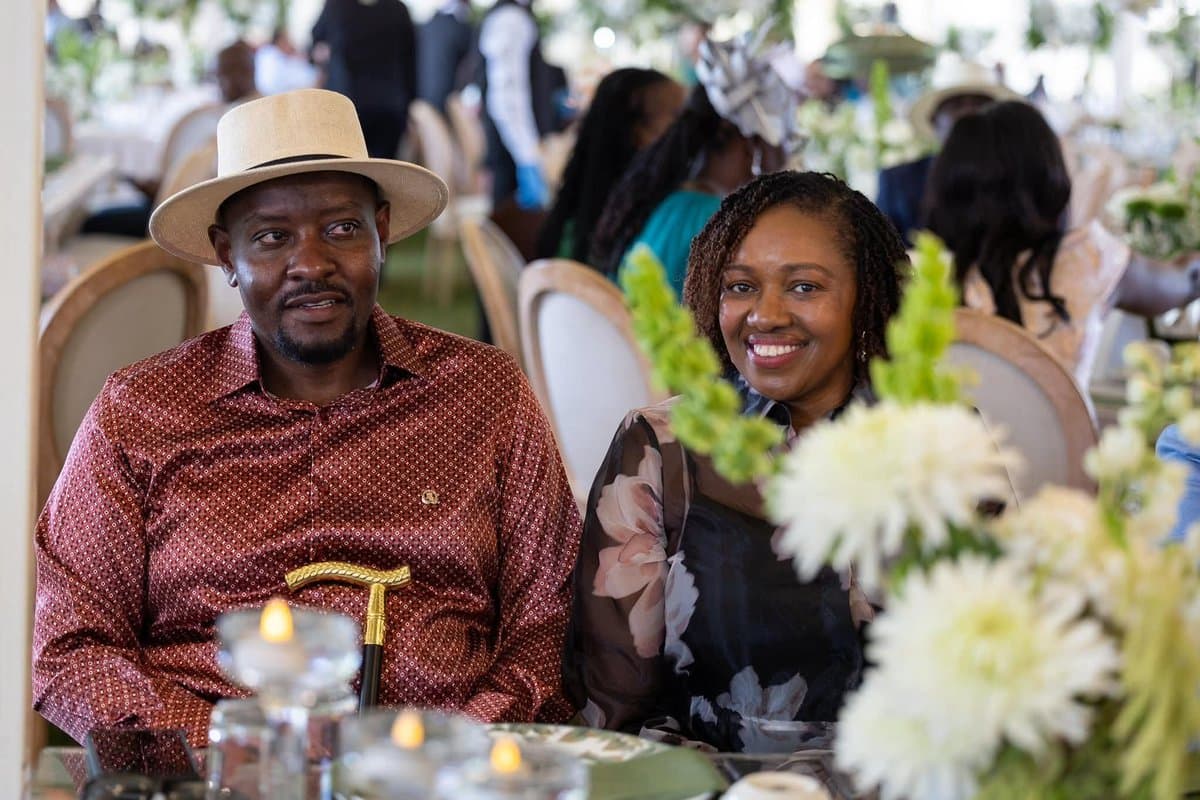
NAIROBI — There is a photograph circulating in Kenya’s legal and government circles that captures, without a word of explanation, the nature of the relationships now under public scrutiny. It shows Eric Onyango Gumbo, managing partner of G&A Advocates LLP, standing at the far left of a gathering that includes Attorney-General Dorcas Oduor, National Treasury Principal Secretary Chris Kiptoo, and PS Ouma Oluga. The occasion was a Huduma Mashinani event at Lwak Girls Secondary School in Rarieda. The location is in Siaya County, the political heartland of Kenya’s government-opposition axis. The photograph is not incriminating on its face. What makes it remarkable is its timing: it emerged at the precise moment that G&A Advocates was being handed, through non-competitive routes, sovereign legal mandates worth at least Sh716 million — with the Attorney-General’s personal approval.
That figure covers the Sh358 million brief to defend Kenya before the London Court of International Arbitration in the Jamhuri Holdings case, and the separately awarded ICSID mandate in the Travizory Border Security arbitration, whose fee has not been publicly disclosed but which, by the standards of international investor-state proceedings, will be substantial. Both awards went to G&A. Neither was subject to full open competitive tendering. And in the case of the Travizory ICSID matter, according to a formal protest letter now in public circulation, there was no competitive process at all.
On April 8, Senior Counsel Nelson Havi published his endorsement of that protest on X, asking pointedly why a sitting Attorney-General would bypass her own office’s advocates — advocates whose superior track record in exactly these proceedings is documented by a Jus Mundi certificate — to single-source a brief to what he called “little known abbreviated Advocates.” By Wednesday morning, the post had reached every senior lawyer, parliamentarian and government official in the country’s digital conversation. Sheria House had not responded.

THE LETTER THE AG CHOSE TO IGNORE
The formal paper trail begins in February. On February 10, 2026, Okoth and Kiplagat Advocates — a firm led by Dr. Kenneth Kiplagat — wrote to AG Oduor objecting to the appointment of G&A Advocates LLP and MMA Advocates to represent the Republic of Kenya in ICSID Arbitration No. R20250103, the case filed by Travizory Border Security SA of Switzerland. That letter received no response from the Attorney-General, the Solicitor-General, or any official at the State Law Office.
On March 31, 2026, Kiplagat wrote again. The second letter, delivered by recorded hand delivery to Sheria House and copied to Solicitor-General Hon. Shadrack Mose, CBS, is a document of extraordinary bluntness for a formal legal correspondence. It does not merely object to the procurement irregularity. It accuses the AG of being constitutionally prohibited from making the appointments at all, alleges that “incredulous agreements have been secretly reached to siphon off public funds as purported fees or amicable settlement,” and serves explicit notice of imminent court proceedings.
“The appointments are without any merit and are altogether not permitted by applicable statutory as well as constitutional imperatives.” — Okoth & Kiplagat Advocates, March 31, 2026
The letter’s constitutional argument is precise and, in the view of several senior advocates Kenya Insights consulted, legally sound. It invokes Article 156(7) of the Constitution, which confines the AG’s power of delegation to “subordinate officers acting in accordance with general or special instructions.” Kiplagat’s firm argues that G&A Advocates and MMA Advocates are not gazetted subordinate officers of the State Law Office and that there is therefore no constitutional authority for the AG to appoint them. This is not a procedural quibble about procurement regulations. It goes to the fundamental architecture of the Attorney-General’s constitutional mandate.
The letter further accuses the AG of inverting what it calls a foundational principle of the Commonwealth legal tradition: that private lawyers build expertise by cycling through government work, not the other way around. “What is now being compelled,” Kiplagat wrote, “is an absurd preposition in which public sector experience is being gained by private sector lawyers and state counsels, as public sector employees, are denied the very experience that attracted them to join the State Law Office in the first place.”
Point five of the letter ventures into territory that reads almost as an allegation of corruption: it claims that accounting officers are being “compelled to issue contracts for the payment of fees in excess of fees that we have disclosed,” that expenditure beyond the market rate Okoth and Kiplagat offered “would immediately invite an abuse of office charge,” and that the firm has been informed that “incredulous agreements have been secretly reached to siphon off public funds.” Kenya Insights is unable to independently verify the last of those claims, but its presence in a formal legal letter delivered to the AG and the Solicitor-General places it squarely on the public record.
THREE YEARS OF WARNING IGNORED — THEN A SH358 MILLION EMERGENCY
The Jamhuri Holdings LCIA case is, in a sense, the bill arriving for a transaction whose recklessness was apparent from the moment it happened. In August 2022, just days before the general election, the Kenyatta administration’s Treasury withdrew Sh6.09 billion from the Consolidated Fund without parliamentary approval to buy back a 60 per cent stake in Telkom Kenya from Helios Investment Partners through its Mauritius-registered vehicle Jamhuri Holdings Limited. The Controller of Budget, Dr. Margaret Nyakang’o, subsequently told Parliament she had been pressured to sign off on the withdrawal. The payment cleared without her proper authorisation.
The share purchase agreement, tabled before Parliament, contained a clause referring all disputes to the London Court of International Arbitration. That clause was flagged publicly at the time. The Ruto Cabinet formally rescinded the deal in October 2022. Parliament later declared the expenditure irregular. Investigators attempted to trace the money through Mauritius into Jersey, where Helios’s parent entity is registered, and ran into a wall. Former Treasury CS Ukur Yatani, former ICT CS Joe Mucheru and State House Chief of Staff Josphat Kinyua were summoned to explain the deal. Billions had already left the country.
For three full years after all of this, the government failed to organise a proper competitive tender for the legal representation it knew it would need. When Treasury finally moved in January 2026, it declared an emergency and invoked the Specially Permitted Procurement Procedure — a mechanism designed for genuine crises where normal tendering is truly impossible — to award the brief to G&A Advocates without open bidding. Treasury told the PPARB that the SPP was justified by “the urgency of the matter and the risk of financial exposure for the Government of Kenya.” The PPARB accepted this argument and upheld the award in its March 9 ruling.
For three full years, Kenya’s government sat on the knowledge that an LCIA confrontation with Helios was inevitable — then declared an emergency to hand the brief to a politically connected firm without open competition.
Okoth and Kiplagat Advocates, which had tendered Sh380 million for the same work — Sh22 million more than G&A’s winning quote of Sh358 million — were the losing bidder in that procurement dispute. The PPARB accepted Treasury’s position that G&A had the requisite experience in international commercial and investment arbitrations. That finding is supported by the record: Ken Melly, who will lead the dispute resolution work alongside Gumbo, was part of the legal team that defended Kenya in a multi-billion-dollar ICSID arbitration that the state won in 2018. He holds a Master of Laws in Dispute Resolution from the University of Cape Town and the designation of Fellow of the Chartered Institute of Arbitrators.
But the PPARB’s acceptance of G&A’s credentials in the LCIA matter does nothing to resolve the separate and more serious allegation in the ICSID matter: that in the Travizory arbitration, the AG’s office dispensed with any competitive process at all, handing the brief directly to G&A and MMA Advocates without testing the market, obtaining comparator quotes, or — on Kiplagat’s account — even responding to a formal objection lodged six weeks before the second protest letter.
WHO IS ERIC GUMBO AND HOW DEEP IS THE ENTANGLEMENT?
G&A Advocates LLP was founded in 2006 in Eldoret under the name Gumbo and Associates Advocates. It transitioned to a limited liability partnership in 2017 and now maintains offices in Nairobi and Eldoret. The firm is legitimately regarded: it holds recognition from the IFLR1000 guide to financial and corporate law firms, has signed an international partnership with South Korean firm Jipyong LLC, and has worked alongside global names including White and Case on sovereign transactions. Chambers and Partners and the Legal 500 both reference its dispute resolution and corporate practices.
Eric Gumbo himself is a technically accomplished lawyer. Over a twenty-one-year career, he has appeared in all three presidential election petitions filed before the Supreme Court of Kenya since the 2010 Constitution, including in 2022 — the election that brought President Ruto to power. He has served on the Council for Legal Education, chairs the board of the Legal Aid Centre for Eldoret, and has undertaken specialised training in financial markets at Yale University, arbitration at the Chartered Institute of Arbitrators, fintech law and policy at Duke University, and green business strategy in Hong Kong.
What distinguishes Gumbo from other accomplished lawyers, however, is the density and recency of his entanglement with the specific machinery of the Ruto state. In October 2024, he was the legislature’s lead counsel in the Senate proceedings to remove Deputy President Rigathi Gachagua — widely characterised at the time as a Ruto administration-driven political operation. He argued successfully. Gachagua was removed. Gumbo also appeared before the High Court resisting conservatory orders that would have blocked Kithure Kindiki’s swearing-in as the replacement Deputy President.
Within weeks of the Gachagua impeachment, G&A was co-appointed alongside TripleOKLaw as co-legal adviser on the Kenya Pipeline Company’s initial public offering — the first IPO in Kenya in nearly seventeen years, the centrepiece of the Ruto privatisation agenda, listed on the Nairobi Securities Exchange on March 9, 2026, after being 105.7 per cent oversubscribed. The KPC IPO advisory fee, shared between the two firms, was set at Sh31.9 million. Earlier, G&A had served as co-counsel to the National Treasury alongside an international firm in Kenya’s 2025 Eurobond liability management operation, which extended the country’s debt maturity profile.
Gumbo argued the Gachagua impeachment. He advised on the KPC IPO. He sits on a Treasury-linked state board. He hosts the AG at school events. And he now holds at least two sovereign arbitration mandates without open competitive bidding.
Gumbo also sits on the board of Kenya Reinsurance Corporation, a state-owned listed insurer whose board includes an alternate director nominated directly by the Cabinet Secretary for the National Treasury — the very ministry now writing G&A a Sh358 million cheque. He was additionally appointed by the President to the panel tasked with recruiting the Auditor-General, the constitutional officer responsible for oversight of public expenditure including Treasury’s own accounts. The photograph of Gumbo standing alongside Oduor, Treasury PS Kiptoo and PS Oluga at Lwak Girls Secondary School is a visual summary of these connections: the boundaries between the private practice and the public establishment, if they ever existed sharply, have become substantially blurred.
THE CONSTITUTIONAL GHOST OF THE NAKURU ORDER
Complicating the political and legal picture further is a court order that hovered over the entire G&A engagement from its earliest days. On January 12, 2026 — days after Treasury had already awarded G&A its brief under the SPP — the High Court sitting in Nakuru issued conservatory orders in Petition E001 of 2026, filed by activist Okiya Omtatah Okoiti and others. Justice Samuel Mukira ordered a suspension on public entities engaging or paying private advocates where in-house government lawyers already existed.
The Central Organisation of Trade Unions welcomed the orders, framing them as a blow against the billions routinely diverted to private law firms through what COTU called outrageous fee notes, at a time when public sector workers suffered delayed salaries and stalled collective bargaining agreements. The Law Society of Kenya mounted fierce resistance, with president Faith Odhiambo arguing that the Office of the Attorney General Act expressly provides for the retention of external counsel in specialised matters. Treasury justified the G&A appointment on exactly that basis: that LCIA proceedings before a specialist London tribunal required expertise the AG’s office could not supply. The PPARB accepted the argument.
But the Nakuru order’s ghost is not fully exorcised. Kiplagat’s letter invokes the constitutional framework directly, arguing that the AG has no authority to delegate to non-subordinate officers regardless of what any procurement board has held. If a High Court bench agrees — and Kenya Insights understands that Okoth and Kiplagat Advocates’ stated intention to “shortly advance court proceedings” is being acted upon — the result could be an injunction stopping G&A’s engagement in the ICSID Travizory matter, or even the LCIA Jamhuri Holdings case, at the precise moment Kenya most needs effective legal representation.
THE TRIPLEOKLAW THREAD AND THE WHISTLEBLOWER
Woven through this entire controversy is the name of another law firm: TripleOKLaw LLP, a top-tier Nairobi practice ranked by Chambers and Partners, Legal 500 EMEA and other leading directories, and a member of the Meritas worldwide alliance spanning ninety-two countries. TripleOKLaw was co-legal adviser with G&A on the KPC IPO. The Global Arbitration Review’s Kenya chapter is authored by TripleOKLaw’s leading partners. And TripleOKLaw has now become the centre of the most explosive allegation in this entire controversy.
Circulating widely on social media — reportedly shared by Havi himself — is a letter purportedly authored by a TripleOKLaw associate. The whistleblower claims that AG Oduor maintains a private office within TripleOKLaw’s premises and is conducting government business from within the firm’s offices. The letter alleges that classified files from the National Treasury and other ministries, some stamped “SECRET,” are visible on the premises, and that official government correspondence has been stamped with TripleOKLaw’s firm markings.
The implications, if the allegations are accurate, are severe. An Attorney-General operating her constitutional office from the premises of a private commercial law firm would be in potential breach of the Leadership and Integrity Act, the Office of the Attorney General Act, and multiple provisions of the Constitution governing conflicts of interest and the proper discharge of constitutional duties. The confidentiality of privileged state communications — in matters ranging from international arbitration to regulatory advice — would be fundamentally compromised if such files were accessible within a commercial law firm’s environment. Kenya Insights has not independently verified the whistleblower’s claims, but they are on the public record and demand an official response that has not materialised.
A whistleblower claims the AG conducts government business from TripleOKLaw’s offices, with Treasury files stamped ‘SECRET’ visible on the premises. Sheria House has not denied it.
WHAT KENYA IS ACTUALLY DEFENDING
Behind the procurement scandal and the political controversy lies a substantive legal exposure that no amount of institutional rearrangement will make disappear. In the LCIA case, Kenya is defending a claim brought by one of the most battle-hardened private equity operations on the African continent, arguing in effect that a completed commercial transaction can be unilaterally rescinded by a successor government on grounds of governance irregularity committed by its predecessor. Helios can credibly argue that it entered into a lawful contract, received payment, and has since watched Kenya’s government declare the expenditure irregular without paying back the money, returning the shares, or offering any compensation for the sudden termination of its investment.
In the ICSID Travizory case, Kenya is defending allegations of intellectual property theft and treaty breach brought by a Swiss technology company under a bilateral investment treaty signed by Kenya in 2006. Travizory, represented by Geneva-headquartered LALIVE — one of the foremost investor-state arbitration practices in the world — claims that the Kenyan government not only terminated its contract without compensation but replicated its proprietary technology in a replacement system procured from an undisclosed local vendor. The allegation, if proved before the ICSID tribunal, carries the risk of damages that could substantially exceed the original contract value, compounded by the treaty’s full-reparation standard.
Against Helios and LALIVE, Kenya has deployed Eric Gumbo, Ken Melly, Moses Kipkogei and an English barrister — a team whose credentials are genuine but whose selection process is mired in controversy. Whether the controversy around how G&A was chosen will impair its ability to mount an effective defence is a question that only time and tribunal proceedings will answer. What is certain is that if either arbitration is lost, and the damages paid from the public purse, the question of why a non-competitive procurement was used to select defence counsel will be asked with considerably greater force by Parliament, the Auditor-General, and the public alike.
A SILENCE THAT SPEAKS
As of Wednesday evening, April 9, 2026, the Attorney-General’s office has not responded to Nelson Havi’s public challenge, Kiplagat’s March 31 letter, the TripleOKLaw whistleblower allegations, or Kenya Insights’ request for comment. The Solicitor-General, copied on the March 31 protest, has maintained silence. The National Treasury, whose procurement decisions are at the heart of the LCIA controversy, has made no public statement beyond the filings submitted to the PPARB in February and March.
This silence, in a matter that now touches the constitutional authority of the AG’s office, the integrity of sovereign procurement, the handling of classified state files, and the management of international legal exposure worth billions, is not sustainable. Nelson Havi’s intervention, coming from a former Law Society president with a documented record of taking on both the judiciary and the executive, signals that the pressure will not diminish. Okoth and Kiplagat’s stated intention to file court proceedings signals that the matter will shortly pass from social media discourse into the formal record of the judiciary.
The photograph of Eric Gumbo standing alongside the Attorney-General and two Principal Secretaries will remain in circulation. The protest letter from Okoth and Kiplagat Advocates, with its formal accusations of unconstitutional delegation and secret agreements to siphon public funds, is on the public record. The whistleblower letter alleging a private office for the AG inside TripleOKLaw has not been denied. And Kenya, facing two simultaneous international arbitrations with opponents represented by world-class counsel, has chosen to defend itself through a procurement process that its own legal establishment is now challenging in court.
Kenya Insights will continue to report on all aspects of this matter as litigation proceeds and as further disclosures emerge.




Comments