The gleaming promise of gold beneath Kakamega’s red earth has turned into a blood-stained nightmare that threatens to derail Kenya’s mining ambitions just as the sector was poised for a historic breakthrough.
What should have been Western Kenya’s moment of economic transformation has instead descended into a deadly standoff that has left four people dead, scores injured, investors nervous and communities more divided than ever over who truly owns the treasures buried beneath their ancestral lands.
At the heart of this escalating crisis is Shanta Gold, a British mining firm now controlled by Indian billionaires from the powerful Patel family, which discovered gold deposits worth an estimated Sh683 billion in Ikolomani, Kakamega County. But the company’s aggressive push to begin mining operations by January 2026 has sparked violent resistance from local communities who see not opportunity but exploitation dressed in corporate respectability.
The violence reached its bloody crescendo on December 4 when a National Environment Management Authority public participation forum at Emusali Primary School turned into a warzone. Police opened fire on protesting residents, killing four people including 34-year-old Conrad Ashioya, a construction worker who had simply gone to fetch a tape measure from a nearby site when bullets caught him as he fled the chaos.
Western Regional Police Commander Issa Mohamoud confirmed the deaths and said six others, including two police officers, were hospitalized with serious injuries. More than 30 people suffered gunshot wounds and 63 were arrested in raids that continued into the night, with police breaking down doors to drag even elderly people and minors from their homes.
The tragedy has exposed the raw tensions that simmer beneath Kenya’s mining sector, where foreign investors backed by powerful political connections increasingly clash with impoverished communities who survive on artisanal mining and fear being swept aside by industrial-scale operations.
Shanta Gold’s environmental impact assessment reveals that the combined Isulu-Bushiangala sites contain 1.27 million ounces of high-grade gold, enough to produce 36,000 kilograms of the precious metal over eight years of mining. The company plans to invest Sh27 billion in capital expenditure with annual operating costs of Sh2.5 billion, deploying underground mining techniques across 337 acres that would require relocating 800 households.
But therein lies the fundamental problem that has turned Ikolomani into a powder keg. While Shanta Gold stands to extract Sh683 billion worth of gold, the Kenyan government will receive between Sh555 million and Sh607 million in annual royalties plus Sh193.8 million for the Mineral Development Levy. Kakamega County gets just 20 percent of those royalties, roughly Sh11 million annually, while affected communities receive a mere 10 percent, about Sh5.53 million per year divided among 800 households facing displacement. That works out to less than Sh7,000 per household annually from a Sh683 billion operation happening on their ancestral land.
The mathematics of extraction have infuriated local leaders. Trans Nzoia Governor George Natembeya and Kakamega Senator Boni Khalwale, speaking on behalf of leaders from five Western counties, accused the State of enabling a foreign-driven land grab dressed up as development. They argued that the proposed Sh3 billion compensation package defies logic when the gold beneath affected villages is valued at more than Sh680 billion.
Khalwale was characteristically blunt in his assessment, dismissing the eviction plans and vowing not to allow what he termed greedy leaders to take advantage of Ikolomani people. His statement that Ikolomani’s gold belongs to Ikolomani’s people has become a rallying cry for communities who feel steamrolled by a government more interested in pleasing foreign investors than protecting its own citizens.
Behind the corporate facade, Shanta Gold’s ownership structure raises uncomfortable questions about how such deals are fast-tracked through Kenya’s regulatory system. The company was acquired in May 2024 by ETC Holdings, a Mauritian conglomerate controlled by the Patel brothers Ketan, Birju and Mahesh, Indian investors with extensive business interests across Africa in agribusiness, hospitality and real estate. The takeover, valued at approximately £142 million, received rapid approval from Kenyan authorities in April 2024, with the Cabinet Secretary for Mining giving the green light with remarkable speed.
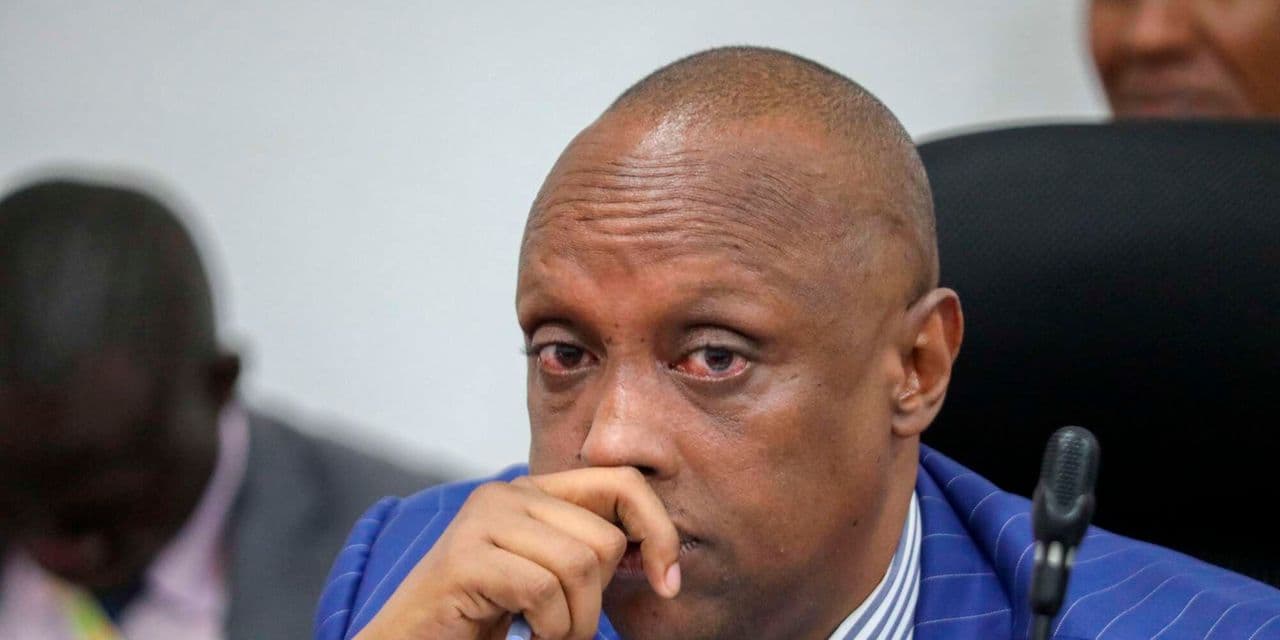
More troubling are persistent allegations, though impossible to fully verify, that powerful forces within State House have been actively facilitating the company’s path through Kenya’s regulatory maze. Sources within government circles claim that Felix Koskei, the influential Head of Public Service and Chief of Staff to President William Ruto, has been personally lobbying NEMA to expedite Shanta Gold’s environmental permit applications.
Koskei, widely described as Mr. Fix It within Ruto’s administration and arguably the second most powerful person in government after the President, wields enormous influence in coordinating government operations. His alleged involvement in smoothing the path for Shanta Gold has raised eyebrows particularly given his controversial past. He was forced out as Agriculture Cabinet Secretary in 2015 over corruption allegations involving sugar import permits, accusations that involved claims he was issuing permits under the table to importers without going through open tendering.
That he has returned to the center of power, now apparently using his position to facilitate mining permits for a foreign company in a deal that has sparked violent protests and widespread opposition from local communities, has deepened suspicions about whose interests are truly being served.
Mining Cabinet Secretary Ali Hassan Joho, the flamboyant former Mombasa Governor who took office in August 2024, is the official who will issue the definitive eight-year license for Shanta Gold to operate the two mining sites once environmental clearance is secured. He has remained conspicuously silent as communities in his ministry’s jurisdiction cry foul over lack of genuine consultation, though he held a consultative meeting with Kakamega Governor Fernandes Barasa following the deadly clashes.
On the ground in Ikolomani, the mood oscillates between rage and desperation. More than 10,000 households have vowed not to move out for the multi-billion shilling mining operation, accusing NEMA of secretly colluding with Shanta Gold to forcefully evict them without proper public participation. Residents carrying twigs in protest have accused the company of planning a land grab under the guise of development.
Nicholas Gambo, a local resident, captured the prevailing sentiment when he stated that they do not trust the investor because Shanta Gold has been exploiting them over the years. Lucy Mugala, who has educated her children through gold mining, accused NEMA of colluding with Shanta Gold to forcefully move residents out, pointing out that gold was discovered in Ikolomani in 1965 without triggering mass evictions.
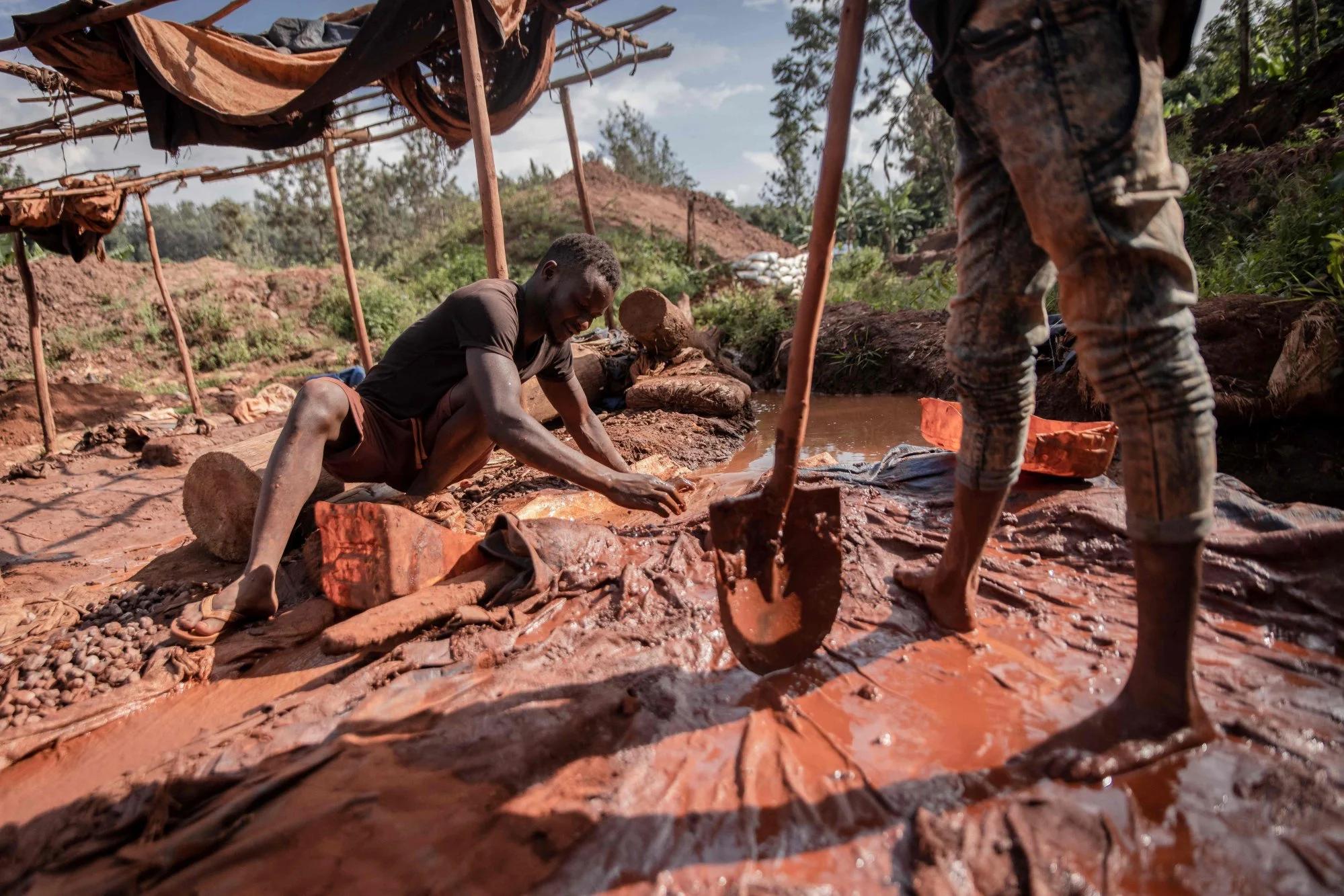
The artisanal miners at the center of this conflict represent a shadow economy that sustains thousands of families across Western Kenya. Recent estimates suggest Kenya is home to more than 250,000 artisanal miners, with over one million people depending on gold mining for their livelihoods. These are not wealthy prospectors but men and women who earn as little as Sh500 per day, digging in dangerous conditions with rudimentary tools, their survival dependent on whatever flecks of gold they can extract from the earth.
Yet artisanal mining carries its own deadly toll. A 2017 study found that 71 percent of sampled women miners from mining sites had very high levels of mercury in their hair. Mercury is widely used because it is cheap, accessible and effective at extracting gold from ore, but the amalgamation process produces toxic vapors that settle in households, exposing families particularly children and pregnant women to neurological damage, kidney problems and respiratory diseases.
Analysis of soil, sediment and water samples from 19 artisanal and small-scale gold mining villages in Kakamega and Vihiga counties found that 96 percent of soil samples from mining and ore processing sites had arsenic concentrations up to 7,937 times higher than EPA standards for residential soils. Chromium, mercury and nickel concentrations in a majority of samples exceeded safety standards.
The environmental devastation extends beyond health hazards. Just two days after the December 4 violence, another tragedy struck when three artisanal miners died after a shaft collapsed at Wangoto village in Ikolomani. Deputy Governor Ayub Savula immediately ordered the closure of the site, warning that the soil remained unstable and posed further danger. The incident highlighted the recurring hazards at artisanal mining sites in Kakamega, where collapses, flooding and poor structural support are common.
Government data shows that in the five years to 2022, Kenya lost 60 people in mining sites while 59 were injured. According to the Auditor General’s performance audit report, Kakamega was the worst affected county during that period, losing 27 people, followed by Kisumu and Migori with 15 deaths each. A tabulation based on media reports shows that at least 89 people have died in gold mines between 2015 and 2025 while 65 sustained injuries.
Central to the fury that exploded into violence is the community’s conviction that consultation has been a sham. Residents say issues raised in an earlier petition submitted in July 2025 have not been fully addressed, citing gaps in public participation including the absence of translated materials and limited engagement with women, elders and people with disabilities. A community survey conducted across 18 villages showed that many households had not reviewed the environmental impact assessment report, and residents are requesting that all documents be made available in Kiswahili, Luhya and accessible formats.
NEMA had previously cancelled a scheduled public hearing on November 12 at Bushiangala Technical Training Institute, citing unavoidable circumstances that would have hindered free, fair participation. The cancellation only deepened suspicions that authorities were avoiding genuine community engagement. When NEMA attempted to convene another forum on December 4, the community’s patience had run out and the meeting descended into violence almost immediately.
The situation in Kakamega mirrors resistance unfolding simultaneously in Siaya County, where residents of seven villages affected by the Ramula-Mwibona gold mine project have rejected Shanta Gold’s operations despite the government issuing a mining license. That project will cover approximately 1,154 acres and require the relocation of an estimated 1,560 households, roughly 5,500 people, from seven villages in Siaya and two in Vihiga.
On December 2, the Ministry of Mining confirmed that Shanta Gold had been granted approval to begin mining in Siaya and Vihiga. Principal Secretary Harry Kimtai announced the formation of a joint county project committee to oversee compensation and coordinate the venture, instructing Shanta Gold to ensure all affected families are compensated before mining begins in June 2026. But tellingly, no members of the affected communities attended the stakeholders’ workshop in Kisumu where these assurances were delivered, a stark illustration of the chasm between government pronouncements and community trust.
The escalating crisis has not gone unnoticed in Kenya’s business community. The Kenya Chamber of Mines issued a warning that growing political interference and escalating tensions in the Kakamega gold belt risk undermining investor confidence at a time the country is courting fresh capital for the extractives sector. The lobby’s chief executive Brian Simiyu emphasized that the Chamber’s position is guided by core principles of due process, impartiality, non-politicization, respect for all parties and the protection of Kenya’s investment climate.
The warning carries weight. International mining companies considering investments in Kenya are watching the Shanta Gold debacle closely, and the images of bodies in the streets of Ikolomani do not inspire confidence that Kenya can manage large-scale mining operations without descending into chaos.
Human rights groups have also weighed in forcefully. The Kenya Human Rights Commission registered its deep concern and outrage at the violence, loss of life and arbitrary arrests that occurred during the December 4 public participation session. KHRC emphasized that one of the central issues at stake is the fear among artisanal and small-scale miners that the entry of Shanta Gold will erase their livelihoods and criminalize their long-standing economic activities.
The organization noted that artisanal mining supports thousands of families in Kakamega and surrounding regions, yet these miners have been excluded from critical consultations and no transition or inclusion plan has been presented. KHRC warned that this disregard violates their rights, disrupts local economies and undermines national development frameworks that promote formalization and support of artisanal mining. As per the Mining Act of 2016, artisanal miners are not illegal actors but rights holders whose livelihoods must be protected, respected and integrated into Kenya’s mineral development agenda.
Governor Barasa has attempted to play mediator, calling on Shanta Gold to employ modern mining methods that would avoid relocating families. He stated that there is no way an investor can come to relocate people without consultation and emphasized that nowadays important technology in mining can create a win-win situation. But his interventions have done little to calm tensions on the ground.
The fundamental question that haunts this entire crisis is simple but profound: in whose interest is Kenya’s government truly governing? Is it serving the people whose soil contains this wealth, or the foreign investors positioned to profit from its extraction?
The pattern is depressingly familiar across Kenya’s resource extraction sector. Foreign companies with connections to the political elite secure sweetheart deals, communities are displaced, the environment is destroyed and a handful of politicians and fixers walk away with briefcases full of cash while counties receive tokens. Major resource extraction deals in this country rarely benefit ordinary Kenyans, and the Shanta Gold controversy threatens to become yet another case study in how not to manage natural resources.
President Ruto’s administration has repeatedly promised to fight corruption and ensure Kenyans benefit from their natural resources. The Shanta Gold deal in Western Kenya will be the ultimate test of that promise. Will the 10,000 artisanal miners and 800 families facing displacement get justice, or will State House connections once again trump the rights of ordinary citizens?
The clock is ticking toward January 2026, when Shanta Gold expects to begin full mining operations. The company has submitted its environmental impact assessment to NEMA and is preparing to obtain a mining license starting in the new year to operate for eight years. Unless there is urgent intervention, Western Kenya’s gold will flow into foreign accounts while local communities are left with nothing but dust, broken promises and the memory of neighbors killed for daring to resist.
For now, the bodies from the December 4 violence have been laid to rest, but the fundamental issues remain unresolved. Mothers and wives still crowd the gates of Kakamega Police Station, clutching birth certificates and pleading for the release of detained children, spouses and elderly relatives arrested in raids that many say were indiscriminate. Two MCAs, Aketiye Liyai of Idakho South Ward and nominated MCA Ann Mulwale, remain in custody, accused by police of bankrolling the confrontation, accusations local leaders have dismissed as a diversion from State brutality.
The Isulu-Bushiangala indigenous village has been home to hundreds of people for close to 200 years, with the Baashimuli, Baamusali and Bushiangala sub-clans peacefully coexisting. Now they face eviction so that billionaires, with apparent State House backing, can extract billions in gold and leave behind environmental devastation.
As Kenya attempts to position itself as an attractive destination for mining investment, the Kakamega gold crisis reveals the treacherous terrain that must be navigated when vast mineral wealth collides with poverty, political ambition and the rights of indigenous communities. The world is watching to see whether Kenya can find a path that benefits all stakeholders, or whether this golden opportunity will be squandered in bloodshed and recrimination.
The answer to that question will determine not just the fate of Ikolomani’s residents, but the future of Kenya’s entire mining sector and the credibility of a government that promised a new era of transparency and equitable development. Right now, with bodies in mortuaries and communities in revolt, that future looks anything but golden.







Comments