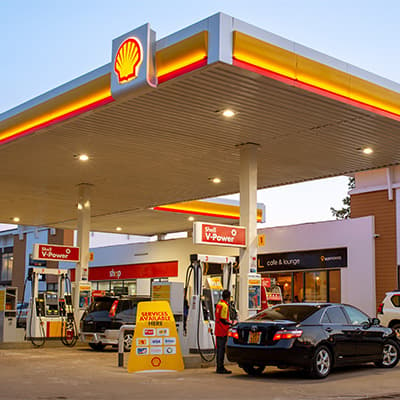
The queues are back. The dry pumps are back. The excuses are back. And, if the evidence emerging from Kenya’s petroleum sector is any guide, so too is the corporate playbook that transformed a localized supply concern into a nationally orchestrated shakedown in 2022. This time, the architects of the crisis have cloaked their operation in the fog of war, invoking the Middle East conflict as justification for what is, at its core, a premeditated squeeze on the Kenyan consumer.
Mohammed Hersi, the immediate past chairman of the Kenya Tourism Federation and one of the country’s most credible private-sector voices on matters of economic governance, has had enough. In a statement that detonated across social media and industry boardrooms with equal force, Hersi posed the question that government regulators appear to lack the courage to ask: has any new shipment, purchased at the higher war-era prices, actually landed in Kenya? The answer, as EPRA’s own data confirms, is an unambiguous no. The logical conclusion from that fact is one that the industry’s lobby groups would rather the public did not dwell upon.
“You should punish Shell Vivo heavily if they are playing games,” Hersi stated, directing his sharpest fire at the company whose green-and-yellow livery dominates Nairobi’s street corners. Hersi’s target was deliberate. So is ours.

THE ARCHITECTURE OF A MANUFACTURED CRISIS
To understand what is happening in Kenya’s forecourts, one must first understand what is not happening in the Strait of Hormuz as far as Kenyan consumers are concerned.
The Iran conflict is real. Its disruption of global shipping is real. Crude oil prices, having hovered near USD 63 per barrel in February 2026, rocketed past USD 100 per barrel in the weeks following the military strikes of February 28.
The closure of the Strait of Hormuz, through which roughly 20 percent of the world’s daily oil supply passes, is the most significant supply disruption the global energy market has witnessed in decades.
None of that justifies what is happening at Kenya’s pumps right now. None of it. And here is precisely why.
EPRA, in its March 14 price announcement, was admirably transparent about the data underlying its decision to freeze pump prices for the March 15 to April 14 cycle.
The regulator’s Director General, Daniel Kiptoo Bargoria, stated explicitly that the calculations were based on vessels received and discharged between February 10 and March 9, 2026. He then added the sentence that the industry does not want repeated: “Most of these vessels are February-priced cargoes and the effect of the situation in the Middle East has not had an effect on the prices yet.”
Read that sentence again. The fuel sitting in the tanks at Vivo’s Nairobi and Mombasa depots, the fuel that Rubis, TotalEnergies, Ola Energy and other marketers are rationing, was bought and imported at pre-war prices.
The conflict began on February 28. The bulk of Kenya’s March stock was already in transit or had already been discharged before that date. The “war premium” that Unepa chairperson Irene Kimathi is now screaming about does not apply to a single litre of fuel currently in the country. Charging Kenyans crisis prices on pre-crisis stock is not a market reality. It is profiteering.
Murban crude oil, Kenya’s pricing benchmark, stood at just USD 63.06 per barrel in February 2026, down sharply from USD 80.22 in March 2025. The exchange rate has held remarkably stable, with the shilling anchored near 129 to the dollar.
The EPRA price stabilization fund recorded a deficit on diesel of just Sh6.53 per litre and Sh6.66 on kerosene, figures well within manageable bounds before the war’s effects on new cargo manifested. The dealers are not bleeding money on current stock. They are sitting on inventory purchased at favorable prices while demanding that prices be reset to reflect a crisis that has not yet hit their balance sheets.
VIVO ENERGY: THE MARKET LEADER, THE LOUDEST SILENCE
In the Kenyan petroleum market, size confers power. Vivo Energy, the Vitol Group-owned operator of Shell-branded stations across 23 African countries, is the undisputed market leader in Kenya, controlling approximately 20 percent of the retail market by volume.
That dominance gives the company an outsized ability to shape supply conditions, pricing signals and public perception. It also gives the company an outsized responsibility that it is conspicuously failing to honour.
When fuel stations began running dry this week, the most affected outlets in Nairobi were, by multiple credible accounts, Shell-branded.
A spot check confirmed that the company’s outlet at Kipande House ran out of diesel on Monday morning, with petrol stocks expected to be depleted the same day.
Stations along Magadi Road and in Kiserian had been intermittently dry since the weekend. This was not an isolated malfunction at a single pump. It was a pattern.
Vivo Energy Kenya CEO Peter Murungi’s response to these developments was a masterclass in corporate deflection. High consumption over a long weekend, he said.
Supplies would be replenished. He was, he said, unaware of any fuel crisis. “I am not aware of any fuel crisis to be frank,” Mr Murungi told Business Daily. “It is just a long weekend with high consumption.”
This from the CEO of a company that, according to its own regulatory filings, is legally required to maintain minimum stocks of petrol and diesel lasting 20 and 25 days respectively.
This from the CEO of a company that, in April 2022, had executives summoned to the Directorate of Criminal Investigations to account for precisely this kind of market manipulation.
This from the CEO of a company whose parent group, Vitol, is one of the world’s largest independent energy traders, with the market intelligence to know exactly what is in its tanks, what is en route, and what the gap between purchase price and proposed selling price would yield on the order of millions of litres.
The silence of Vivo Energy in the face of mounting evidence of supply manipulation is not merely corporate caution. It is an insult to a country it has profited from for over a decade.
THE 2022 PRECEDENT: THIS SCRIPT HAS BEEN READ BEFORE
The most damning aspect of the current crisis is not that it is happening. It is that it has happened before, with the same actors, using the same methods, to the same effect. Those who forget their history, as the saying goes, are condemned to repeat it. Those who engineer their history are condemned by it.
In April 2022, Kenya was gripped by a fuel shortage that lasted three weeks. Motorists queued for hours. Diesel, critical for the transport sector that keeps food moving, was virtually impossible to find.
The Energy Cabinet Secretary at the time, Ambassador Monica Juma, stood outside the Kawi complex and called it what it was: economic sabotage. “We have been witness to an action that has distorted the market and supply chains, created artificial shortages, caused panic and anxiety, negatively affected productivity,” she said.
The government had the data to prove it. EPRA’s own stock records showed the country had over 212 million litres of petrol in strategic storage while forecourts were supposedly running dry. The fuel was there. It was simply not being moved.
The Directorate of Criminal Investigations was deployed.
Executives from ten oil marketing companies, including Vivo Energy, TotalEnergies, Ola Energy, Gapco Hass Petroleum, Petro Oil, Galana Oil, and Lake Oil Petroleum, were summoned and interrogated. The government invoked the Energy (Minimum Operational Stock) Regulations, 2008, which carry a penalty of two years in prison or a fine of up to Sh2 million.
The government invoked the Petroleum Act, which categorizes deliberate market manipulation as economic sabotage, a capital offence. The CEO of Rubis Energy Kenya, Jean-Christian Bergeron, was deported and had his work permit revoked.
What happened next is the most important lesson for 2026. Prices were reviewed upward. The “shortage” evaporated.
The fuel that had been invisible in Nairobi reappeared at filling stations across the country within days of the price hike.
There were no criminal convictions. There was no accountability. The playbook worked, and the industry knows it.
As Juma herself observed at the time, some marketers had even been diverting cargo earmarked for Kenya into the regional export market in Uganda, Rwanda, and the Democratic Republic of Congo, “to further enhance their abnormal profits.”
Fast forward to March 2026. Unepa’s Kimathi is using almost identical language to 2022, warning that prices are unsustainable and that dealers will halt sales.
Lawmaker Nelson Koech has publicly named “speculation, panic buying and hoarding, particularly hoarding by oil marketers in anticipation of a price jump” as the primary driver of current demand surges.
POAK chairman Martin Chomba has confirmed that dealers are likely to hold back stock in anticipation of a price hike.
The Petroleum PS, Mohamed Liban, delivered a statement during Koech’s live television interview confirming the government’s view: the shortages are primarily the result of hoarding, not genuine supply disruption.
The script is the same. The only question is whether the government’s response will also be the same, which is to say, toothless.
THE COMPENSATION SCANDAL: PAYING THE ARSONIST FOR FIGHTING THE FIRE
As if hoarding were not audacious enough, reports have now emerged that EPRA is considering a compensation mechanism for oil marketing companies, pegged at approximately Sh11 per litre on excess fuel volumes imported during the March pricing cycle.
The Consumers Federation of Kenya, COFEK, has fired a broadside at this proposal in a letter addressed directly to Energy Cabinet Secretary Opiyo Wandayi, and the federation’s concerns deserve to be treated as a matter of urgent national policy.
COFEK’s central argument is legally and morally sound: EPRA does not possess a compensatory mandate. Its role under the Petroleum Act 2019 is to regulate, not to subsidize.
By channeling public funds to oil marketing companies as a make-whole payment for inventory that was imported at pre-crisis prices, EPRA would effectively be converting a windfall opportunity for the companies into a taxpayer-funded guarantee. It would be rewarding behavior that the PS has already characterized as hoarding. It would be paying the arsonist to fight the fire they lit.
The optics are staggering.
Kenya is a country where the government is simultaneously asking ordinary citizens to absorb the cost of a housing levy, a social health insurance contribution, and a fuel levy of Sh7 per litre that MP Ndindi Nyoro has called deeply regressive.
Against that backdrop, the prospect of the regulator siphoning public money into the coffers of Vivo Energy, TotalEnergies, and Rubis is politically explosive and economically unconscionable.
THE REGIONAL REALITY: NOBODY ELSE IS BUYING THE STORY
The oil lobby’s argument that the war necessitates an immediate emergency price revision in Kenya collapses when measured against what is happening in the country’s immediate neighbors.
Uganda, Tanzania, and Rwanda all face the same global supply disruption.
All three are landlocked or near-landlocked economies heavily dependent on the same Indian Ocean shipping lanes through which Kenya’s fuel also passes. None of them have capitulated to the narrative that existing stock must be repriced at war-level rates.
In Tanzania, the Petroleum Bulk Procurement Agency has reported reserves of 230 million litres of petrol, sufficient for 38 days, and 180 million litres of diesel, sufficient for 47 days.
When accounting for incoming shipments already en route, Dar es Salaam’s effective cover extends to 78 days of petrol and 50 days of diesel.
The government has not entertained emergency price hikes on existing inventory. It has instead called a sectoral meeting, reviewed its supply chain, and communicated transparently with the public. Dar es Salaam is doing what Nairobi should be doing.
In Uganda, the government has gone further, publicly warning petroleum companies against what it has characterized as “superficial” pump price increases.
Kampala has maintained that immediate fuel supply remains secure and has made clear that it will not accept manipulation of market pricing on inventory purchased at pre-conflict rates.
That position, from a landlocked country that cannot even reach Mombasa without transiting Kenya, is a direct rebuke to the argument being made by Nairobi’s oil lobby.
The African fuel price survey for March 2026 presents a broader picture that is equally instructive. While the global average retail price per litre has nudged upward modestly to approximately USD 1.34, multiple African countries including Tanzania, Uganda, and Rwanda have avoided the dramatic spikes that the Kenyan oil lobby is now demanding. Some countries in the region have even recorded price declines.
The idea that Kenya alone must act immediately to protect oil marketer margins on pre-war stock is not a market argument. It is a negotiating position dressed up as one.
SHIPPING DATA: WHEN THE FACTS DON’T FIT THE NARRATIVE
The shipping data emerging from the Port of Mombasa is, admittedly, genuinely alarming, but not for the reasons the oil lobby would have you believe.
Reports indicate that of approximately 52 vessels expected at the port through early April, none is scheduled to carry petroleum products.
That is a real supply gap. It is a supply gap caused by the war, by the closure of the Strait of Hormuz, by the rerouting of vessels to the longer Cape of Good Hope passage that adds weeks to transit times and significantly inflates freight costs.
This is the legitimate face of the crisis, and it is a crisis that Kenya will eventually have to confront with an honest price conversation.
But here is what the lobby groups refuse to acknowledge: that future crisis is not this present manufactured shortage.
The oil marketers are using a real, looming problem as cover for a present, self-created one.
The incoming supply disruption, which will genuinely affect cargoes purchased at post-war pricing, is being conflated with the current stock, purchased at pre-war pricing, to create the impression that an emergency price hike must happen now, on existing inventory, before the actual crisis materially arrives. It is a bait-and-switch of extraordinary cynicism.
It is also worth noting that the International Energy Agency, which has characterized the current situation as the greatest energy security challenge in its history, has coordinated the release of nearly 400 million barrels of emergency crude from member country reserves specifically to stabilize global prices.
That intervention is designed to moderate precisely the kind of price shock that the Kenyan oil industry is trying to pass on to the consumer in unmodified form. Kenya may not be an IEA member, but the stabilizing effect of that release on global markets benefits Kenyan importers whether they acknowledge it or not.
KENYA’S STRATEGIC VULNERABILITY: THE STRUCTURAL PROBLEM NOBODY WANTS TO SOLVE
The current crisis exposes a structural weakness in Kenya’s energy security architecture that has been talked about, reported on, and ignored for years. Kenya’s legal framework requires oil marketing companies to maintain operational stocks of 20 days of petrol and 25 days of diesel.
In practice, most marketers maintain reserves of between 15 and 18 days, leaving the country dangerously exposed to any disruption lasting more than a fortnight.
The National Oil Corporation, which holds the statutory mandate to maintain 90-day strategic reserves, has been financially paralyzed for years and holds virtually nothing of consequence.
This is not a regulatory accident. It is a regulatory failure that is structurally advantageous to the major oil marketing companies. Thin strategic reserves create scarcity conditions faster, scarcity conditions justify price hikes faster, and faster price hikes on existing stock translate directly into windfall margins. If Kenya held 90-day strategic reserves as international standards require, no oil marketer could manufacture a shortage in the space of a weekend.
The structural failure is, in a very meaningful sense, the business model.
By comparison, Tanzania’s PBPA centralized procurement model has delivered buffers exceeding 47 days on diesel without emergency measures. Uganda has maintained functional reserves.
Both countries are poorer than Kenya on a per capita basis. The difference is not resources. It is political will and regulatory courage.
THE TOURISM SECTOR PAYS THE PRICE. AGAIN.
Mohammed Hersi’s fury is not merely the outrage of a Twitter commentator. It is the anguish of an industry that depends on cheap, reliable fuel in ways that the petroleum boardrooms prefer not to contemplate.
Tourism is, by the Tourism Research Institute’s own data, Kenya’s second-largest source of foreign exchange after diaspora remittances, contributing over 10 percent of GDP.
It is an industry built on game drives, bush flights, airport transfers, generator-dependent lodges and cold chains that cannot afford interruption.
Hersi has watched the cost of fuel rise by over 70 percent in the two years preceding this latest crisis. His contracts with tour operators, signed months or years in advance, leave him exposed when input costs shift suddenly.
Every artificial shortage, every manufactured price hike, every weekend of rationed diesel is a cost that tourism operators cannot pass on in real time. It is a cost absorbed by the margins of businesses that already operate under intense competitive pressure from regional destinations.
It is a tax on Kenya’s ability to position itself as a world-class destination, levied not by the government but by oil marketers in pursuit of abnormal profits.
Hersi’s call to “punish Shell Vivo heavily” is therefore not irrational anger. It is the rational demand of a sector participant who has run out of patience with a recurring pattern of market manipulation that inflicts disproportionate harm on businesses that cannot hedge, cannot diversify their energy sources overnight, and cannot wait for regulatory courage to materialize at the pace of bureaucratic comfort.
WHAT THE LAW ACTUALLY SAYS, AND WHAT MUST NOW HAPPEN
Kenya is not without legal tools.
The Energy Act 2019 grants EPRA sweeping powers to investigate, sanction, and where warranted, revoke the licenses of companies found to be in breach of minimum stock requirements or found to be manipulating supply. Section 99 of the Petroleum Act explicitly prohibits the sale of fuel above regulated maximum prices. Show-cause letters were issued in 2022.
Deportations were ordered in 2022. The apparatus of enforcement exists. It has simply not been applied with sufficient consistency to create a deterrent.
Energy Cabinet Secretary Opiyo Wandayi has assured the public that Kenya holds adequate reserves and that supply is secure.
If that assurance is accurate, and the government’s own data suggests it is, then the shortages being reported at filling stations across Nairobi, Eldoret, Kitale, and rural areas of the North Rift are not a supply problem.
They are a conduct problem. They are the product of deliberate decisions by oil marketing companies to withhold product from the retail market in anticipation of a price hike. That is the definition of economic sabotage under Kenyan law. It should be prosecuted as such.
EPRA must not compensate oil marketing companies for existing stock. That proposal should be withdrawn immediately. What EPRA must do, instead, is dispatch inspection teams to the bulk storage depots of every major oil marketer in the country, cross-reference actual stock levels against EPRA’s own data, and prosecute every company found to be holding stock below the required minimum while simultaneously withholding product from the retail market. The law is clear. The mandate is clear. The only thing that is unclear is whether the regulator has the political backing to use it.
Wandayi must make that backing explicit, in public, and today. CS Monica Juma did it in 2022. It worked. The fuel appeared. The lesson is available. The question is whether this government has the stomach to apply it.
CONCLUSION: THE NATION IS WATCHING
Kenya stands at a precipice whose contours should by now be familiar. The oil cartel is running the same play it ran in 2022. The lobby groups are using the same language. The Vivo pumps are running the same dry-station theater.
The government is issuing the same assurances of adequate supply while the industry ignores them. The difference in 2026 is that the public has a longer memory, a shorter tolerance for corporate impunity, and a louder platform from which to demand accountability.
The fuel in Kenya’s tanks was bought at prices that reflect a world before February 28, 2026. Selling it at prices that reflect a world after February 28, 2026, is not market economics. It is extraction.
It is a transfer of wealth from Kenyan consumers and businesses to the balance sheets of multinational petroleum corporations that have, in the case of at least one company, faced criminal investigation in this country for doing precisely this before and suffered no lasting consequence.
Mohammed Hersi is right. The punishment must fit the crime. And the crime, if the evidence leads where it appears to lead, is economic sabotage, not a market adjustment. EPRA has the law. The government has the mandate.
The public has the patience of a country that is watching very closely. The only remaining question is whether the “thugs in suits” will be held to account this time, or whether they will once again be rewarded with an upward price review and walk away with the country’s money in their pockets.
This publication will be watching.





Comments