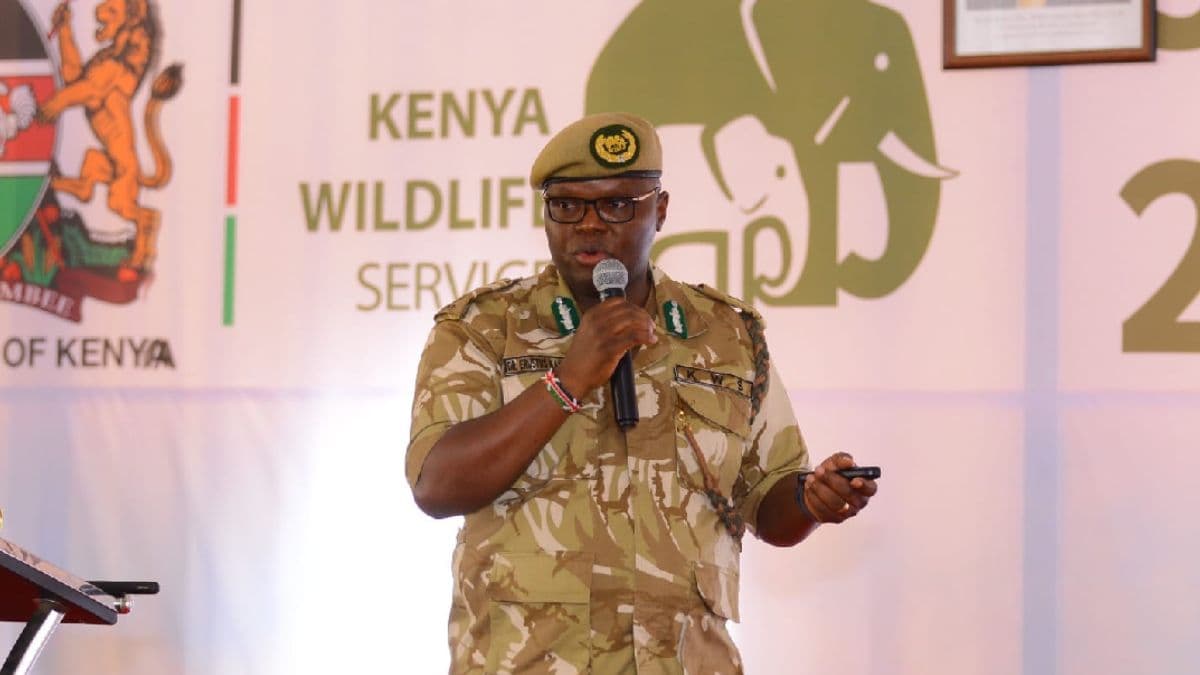
Director General faces mounting accusations of presiding over systematic rot as Kenya’s premier conservation agency descends into chaos
Dr Erustus Kanga, the Director General of Kenya Wildlife Service, is fighting for his professional survival as a perfect storm of corruption allegations, internal rebellion and damning official reports threatens to bring down one of Kenya’s most critical conservation institutions.
The decorated conservationist, who took office in August 2023 with a sterling academic background and two decades of field experience, now stands accused of transforming KWS into a personal fiefdom where bribery, intimidation and ethnic favouritism have replaced the professionalism that once defined the agency.
At the heart of the crisis is a shocking Ethics and Anti-Corruption Commission report released in August 2025 that crowned KWS as Kenya’s most corrupt institution.
The findings are nothing short of explosive.
Job seekers at KWS were forced to cough up over Sh200,000 in bribes to secure employment, dwarfing the national average bribe of Sh4,878.
The agency alone accounted for a staggering 35.73 percent of all bribe money exchanged across the entire country during the survey period.
But the EACC bombshell is just the tip of the iceberg.
A confidential internal dossier compiled by anonymous whistle-blowers and now in the hands of corruption investigators paints an even darker picture of systematic abuse under Kanga’s watch.
The petitioners accuse the Director General of personally orchestrating the sabotage of the Wildlife Conservation and Management Act review, allegedly deploying wardens to disrupt public participation meetings and threatening staff who dare support the reform process.
The whistle-blowers describe a toxic work environment where fear has replaced consultation, where technical expertise is routinely ignored and where a small cabal of loyalists makes decisions that affect Kenya’s entire wildlife heritage.
They allege that Kanga has weaponised transfers and promotions to punish dissent, turning personnel movements into instruments of intimidation rather than operational necessity.
The human cost is devastating.
Staff report that uniforms have not been issued for three years, boots are unavailable and internal meetings have been abandoned.
Officers are battling depression, alcoholism and family breakdowns caused by sudden transfers with little support.
Female officers say they have been shut out of top management entirely, while seasoned experts watch in frustration as unqualified juniors are parachuted into sensitive positions.
The ethnic dimension is particularly explosive.
The dossier alleges that key parks have been captured along ethnic lines, deployment patterns suggest systematic imbalance and the traditional practice of hiring lower-cadre staff from surrounding communities has been abandoned, weakening the very local cooperation that conservation depends on.
But perhaps nothing illustrates the alleged rot better than the Sh740 million staff medical insurance tender scandal.
The Public Procurement Administrative Review Board made damning findings that KWS evaluators relied on a forged authorization letter purportedly from Jubilee Health Insurance to disqualify the company from bidding.
Even more suspicious, the winning bidder’s quote mysteriously ballooned from Sh710 million to Sh740 million in the final award letter.
The Board was forced to nullify the entire process and order a fresh evaluation.
The whistle-blowers point to this as a textbook example of the procurement games being played under Kanga’s leadership.
They also flag disturbing reports of mining activities creeping into protected areas like Tsavo, Kora and Meru/Bisanadi, alleging that commercial cartels have been allowed to penetrate conservation zones through deals that benefit a connected few while undermining community interests and environmental protection.
The strategic plan launched with much fanfare appears dead in the water.
Departments working on conflict mitigation, tourism development, security and community relations report paralysis caused by confusion, resource shortages and unclear guidance from the top.
The marketing division is accused of focusing on ceremonial events rather than the hard work of boosting tourism revenue.
Training opportunities abroad have allegedly been restricted to a small circle of favourites.
Formal oversight committees have gone dormant. Disciplinary actions are inconsistent and selective.
Donors and international partners, once treated as allies in conservation, are being smeared and pushed out instead of engaged constructively.
The petitioners describe what they call a deliberate leadership style that rewards loyalty over competence and punishes anyone who questions decisions.
They say this is not bureaucratic incompetence or administrative oversight but a calculated system of control that has concentrated power in the hands of the Director General and a few close aides who shape decisions without wider participation.
The timing could not be worse.
Kenya faces escalating human-wildlife conflict, climate change pressures on ecosystems, recovery challenges in the tourism sector and intensifying scrutiny from the global conservation community.
KWS needs to be at its strongest and most professional.
Instead, the whistle-blowers warn, the institution is on the brink of collapse.
The implications stretch far beyond KWS headquarters.
The agency is responsible for protecting wildlife that generates billions in tourism revenue and supports thousands of jobs.
It maintains national parks that are global treasures.
It represents Kenya’s commitment to environmental leadership on the world stage. Corruption and mismanagement here damages the country’s international reputation, risks donor funding and threatens conservation programs that took decades to build.
For Kanga, the convergence of the EACC report, the internal dossier and the procurement board findings creates an almost impossible situation.
While he has not been directly accused of pocketing bribes, the systematic nature of the problems suggests either active complicity or catastrophic failure of leadership. Neither explanation offers him much refuge.
The whistle-blowers are demanding that EACC open a direct probe into Kanga’s conduct, subject contested tenders and contracts to forensic audit, protect insiders who come forward with evidence and ensure that where wrongdoing is proved, responsibility is placed on individuals rather than quietly written off as institutional mistakes.
They argue that Kenya cannot afford to lose KWS to the kind of corruption and dysfunction that has destroyed other government agencies.
The wildlife will not wait for bureaucratic excuses.
The tourists will not keep coming to a country that cannot manage its conservation crown jewels. The international community will not continue supporting an agency that has become a byword for bribery and ethnic capture.
The question now is whether Kanga will use his undeniable expertise and field experience to clean house and restore institutional integrity, or whether his tenure will be remembered as the period when one of Kenya’s most respected agencies descended into the kind of rot that seems all too familiar in the Kenyan public sector.
What is clear is that the clock is ticking. The whistle-blowers have spoken. The corruption watchdogs have published their findings.
The procurement board has exposed the tender manipulations.
The choice facing Dr Erustus Kanga is stark: lead genuine reform from the front or be swept away by the corruption storm that is now rocking KWS to its foundations.





Comments