
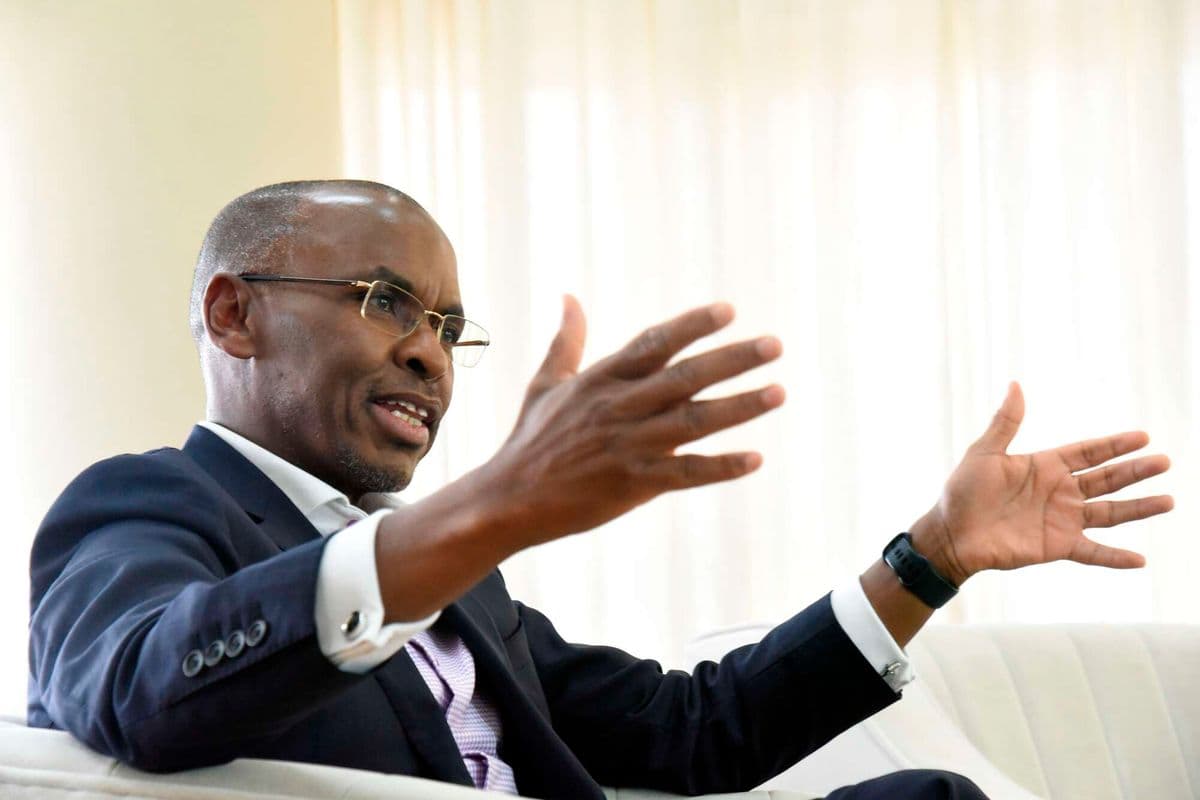
When the ballots were counted and the figures flashed across screens, the verdict from the bar was emphatic. Senior Counsel Charles Kanjama had not merely edged past his rivals. He had carved out a decisive mandate to become the 52nd president of the Law Society of Kenya.
With 3,728 votes against Peter Wanyama’s 2,616 and Mwaura Kabata’s 2,086, Kanjama’s victory was as much about arithmetic as it was about psychology.
He read the mood of the profession with forensic precision and built a coalition that cut across generations at a time when the society appeared poised for an internal culture war.
The 2026 race was framed as a battle for the soul of the bar. The Young Bar, restless and numerically significant, had become the focus of aggressive courtship. Both Wanyama and Kabata directed considerable political capital toward younger advocates, promising welfare reforms and relief from the weight of Continuous Professional Development requirements.
Kanjama did not ignore them. He simply refused to reduce his campaign to them.
Instead, he executed a quieter, more calibrated strategy. While his opponents competed for dominance within the youth vote, he consolidated the Middle and Senior Bar, constituencies often underestimated in raw mobilisation calculus. As a Senior Counsel admitted to the bar in 2003, he spoke their language of institutional memory, professional discipline and constitutional guardianship. He framed the election not as a generational rebellion but as a moment demanding sobriety.
That message resonated.
At campaign forums and office visits, Kanjama projected steadiness in contrast to the sharper rhetoric that defined parts of the contest. His RIPE agenda, shorthand for Rule of Law, Integrity and Independence, Practice and Engagement, was marketed less as a slogan and more as a governance blueprint. For many seasoned practitioners anxious about the society’s posture ahead of the 2027 General Election cycle, the promise of structured leadership carried weight.
The symbolism mattered. Outgoing president Faith Odhiambo had cultivated an image of a bar willing to confront executive overreach. Senior figures, including former LSK president Okongo Omogeni and political heavyweight Kalonzo Musyoka, openly underscored the need for independence and constitutional vigilance. Kanjama aligned himself squarely within that tradition, positioning continuity of institutional courage as a central plank of his candidacy.
Yet the election was not merely about high constitutional theory. Welfare politics ran through the campaign like a live wire. Kanjama promised to professionalise mentorship, expand partnerships with the LSK Sacco and the Advocates Benevolent Association, and complete the long delayed Wakili Towers project under transparent procurement discipline. He pledged to establish a training institute to systematise Continuing Professional Development. These were not abstract ideals. They addressed bread and butter anxieties in a profession grappling with uneven earnings and mounting regulatory demands.
Crucially, his final campaign meeting reportedly drew about 850 lawyers across the generational spectrum. In a contest where only about 8,600 advocates voted out of more than 26,000 registered members, turnout mechanics were decisive. While critics lamented voter apathy, Kanjama’s camp ensured that its supporters converted enthusiasm into ballots.

His acceptance speech was calibrated to reinforce legitimacy. He invoked the sanctity of the members’ will and rejected the notion that internal politics could bend it. The subtext was clear. In a society often entangled in national political crosscurrents, the bar had chosen leadership it believed could not be easily intimidated.
For Wanyama and Kabata, the postmortem will likely centre on vote fragmentation within the Young Bar. By splitting a constituency both had aggressively targeted, they inadvertently opened space for a candidate who had already banked the confidence of more established practitioners and still managed to siphon a slice of the youth vote.
Kanjama’s challenge now shifts from campaign choreography to institutional delivery. The presidency of the Law Society is less a ceremonial honour and more a constitutional office in waiting. As the country inches toward another charged electoral season, the bar’s independence will again be tested in courtrooms and public squares.
In clinching the presidency, Charles Kanjama persuaded lawyers that he offered steadiness without passivity and reform without theatrics. Whether that coalition endures will depend not on campaign rhetoric but on how effectively he translates RIPE from manifesto to measurable governance.








Comments