
Business
CBK Willing To Offer Emergency Cash To Bank That Was Sold As A Shell To Teachers

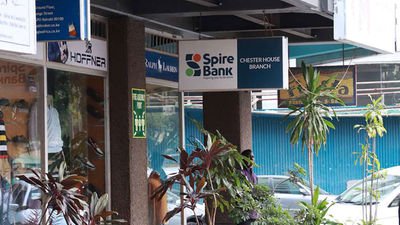
The Central Bank of Kenya (CBK) is open to offer emergency cash support to distressed Spire Bank whose core capital and shareholder funds have been wiped out by eight years of back-to-back losses.
CBK governor Patrick Njoroge said the regulator would grant the teachers-owned bank access to its discounted loan facility if it falls short of cash for its day-to-day operations in the short-term, including meeting customer demand.
“Any bank that is facing liquidity challenges has at its disposal all sorts of tools [but] of course it also depends on the source of the liquidity challenges,” Dr Njoroge told an online press conference when asked if the financial services regulator was concerned about the liquidity situation at Spire Bank.
“In case of emergencies — because they cannot adhere to the CRR (cash reserve ratio) — then, of course, there’s emergency window in the context of the CBK. The central bank, after all, is the lender of last resort in some of those extreme cases if indeed it gets to that.”
The CBK “discount window” facility is traditionally a last resort for distressed banks after exhausting all other avenues, including borrowing from each other.
Banks can borrow from the regulator through the facility at charges currently at 13 percent.
Banks are required to hold an adequate amount of liquid assets, such as cash, to manage any potential bank run by clients. If a bank cannot meet these liquidity requirements, it will need to borrow money in the interbank market to cover the shortfall.
The larger banks have been reluctant to lend to their smaller counterparts since the collapse of the three smaller banks- Dubai Bank, Imperial Bank and Chase Bank — a few years ago, citing heightened risk.
Spire’s total customer deposits have fallen by 43.9 percent to Sh4.79 billion in December 2020 from Sh8.54 billion in 2016, signaling worsening liquidity situation at the bottom-tier lender.
The loss-making bank is not able to lend — denying it a key source of revenue —owing to its negative capital position over the last three years, with core capital standing at negative Sh2.63 billion last year from negative Sh1.41 billion in 2019 and negative Sh1.67 billion the year before.
The bank’s loan book has more than halved to Sh3.83 billion over the review period — 70.84 percent of which were non-performing last December.
The deteriorating financial health of the bottom-tier lender has prompted lawmakers to institute a probe into events that led to loss of investment by teachers through their giant umbrella union.
After taking over the reins at the CBK in June 2015, Dr Njoroge shut Dubai Bank, Imperial Bank and Chase Bank between August 2015 and April 2016 because of dire liquidity challenges which saw them struggle to meet client cash demands.
No bank has collapsed as a result of liquidity challenges since then. Resorting to the CBK, as a last option, may put a bank at risk of a fallout with investors and depositors.
Source: BD.
Kenya Insights allows guest blogging, if you want to be published on Kenya’s most authoritative and accurate blog, have an expose, news TIPS, story angles, human interest stories, drop us an email on [email protected] or via Telegram


SH2 BILLION HEIST EXPOSED: How Tatu City’s Foreign Masters Used Dirty Offshore Traps, London Arbitration & Mauritius Liquidation to Strip Local Investors of Their Stake

Dimba Accused of Extorting Bank Executives in Escalating Feud

Humiliated, Handed Sh1,000 and Sent Away: Furious Residents Return Nathif Jama’s Money, Accuse Governor of Arrogance and Inhumane Treatment of Sick Woman

ICC’s Karim Khan Suspended Over Sexual Misconduct Claims

The Conquest of Tatu City, A New Zealander Story

VANISHING ACT: How China Jiangxi International Pocketed Billions in Kenyan Public Contracts, Then Walked Away

THE GROUP CHAT THAT BROKE THE CARTEL: How Kenya’s Biggest Mattress Firms Used WhatsApp to Fix Your Prices, Then Used It to Destroy Themselves

Court Upholds Gachagua Impeachment, Awards Him Sh50M In Constitutional Damages To Be Paid By Senate

Somali FIFA Referee Denied Entry To US Ahead Of 2026 World Cup: Reports

David Maraga: Kenya’s Ex-Chief Justice Arrested At Protest Against Building On National Park

Cement, Cash and Courts: How the Hashu Dynasty Crushed the Ramji Brothers for Fourteen Years and Why the Walls Are Now Closing In

Inside The Urban Planning Cartel That Owns Nairobi

Why Ruto’s Favourite Candidate Adan Mohammed Could Be Locked Out of the KRA Top Job

LifeCare on the Brink: SHA Fraud, Stolen Wages, and the Rotten Empire Jayesh Saini Built

Este Medical Kenya Fights American’s Explosive Complaints

The Rot Inside Absa: How Bank Insiders Are Looting Nairobi’s Customers

Betika Faces DCI Probe, Directors Arrest and License Revocation Over Massive 29.5 Million Safaricom Customers’ Data Breach

Inside FAFSA Fraud: How Kenyan Cybercriminals Siphoned Millions from America’s Sh12 Billion Student Loan System

Fresh Move Launched to Remove Kenya Railways MD Mainga From Office After Awarding Sh817 Million Consultancy Contract

Court Confirms Safaricom Customers Data Was Sold To Betting Companies In Seven-Year Cover-Up
-
 Investigations4 days ago
Cement, Cash and Courts: How the Hashu Dynasty Crushed the Ramji Brothers for Fourteen Years and Why the Walls Are Now Closing In
-
 Investigations3 days ago
Inside The Urban Planning Cartel That Owns Nairobi
-
 Investigations1 week ago
Betika Faces DCI Probe, Directors Arrest and License Revocation Over Massive 29.5 Million Safaricom Customers’ Data Breach
-
 Investigations4 days ago
Fresh Move Launched to Remove Kenya Railways MD Mainga From Office After Awarding Sh817 Million Consultancy Contract
-

 News2 weeks ago
Eight Students Arrested In Kenya After Suspected Deadly School Arson Attack
-
 News1 week ago
How Uhuru’s Deal With Obama In 2015 Paved Way For America’s Ebola Plan In Kenya
-

 Investigations2 weeks ago
The Invisible Hand: Al Jazeera Further Exposes How Safaricom Became The Regime’s Most Powerful Spy
-

 Business5 days ago
TRUST BETRAYED: How Senior DTB Bank Insiders Allegedly Looted Sh149 Million From a Customer’s Account Over Five Years