
Investigations
Australian Investor Reveals How He Was Scammed Sh77 Million In Fake Gold Deal, Detained At JKIA And Now Wants Law Firm Probed
Andrew Adel Gaballa flew to Kenya for a 600-kilogram gold deal that dissolved into sham smelting ceremonies in Kilimani, forged insurance documents, and Ksh.63 million wired to the Ecobank account of Conrad Maloba Law Advocates in Westlands. Then, as he tried to leave, someone put a red alert on his passport. The same law firm’s account had already been used weeks earlier to receive stolen funds in the fake Harambee House ambulance tender scandal.

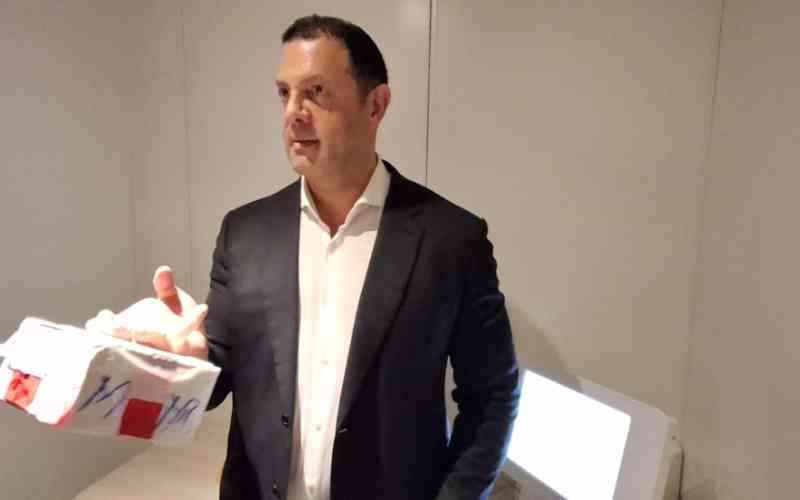
Andrew Adel Gaballa did not come to Kenya looking for trouble. He came for gold. Six hundred kilograms of it, supposedly mined in Tanzania, cleared for export, insured and ready for shipment to Dubai.
By the time the deal collapsed and he realised he had been robbed of more than Ksh.77 million, the Australian investor would find himself stranded in a Nairobi hotel, afraid to leave his room at night, fielding threatening phone calls in the early hours of the morning and, most remarkably of all, stopped at the departure gate of Jomo Kenyatta International Airport with a red alert on his passport that he says he had no part in generating.
This is not merely the story of a foreigner who fell for a Nairobi gold scam. It is the story of a law firm whose bank account has now appeared at the centre of two separate international fraud operations within the space of three months, and of a financial system that appears, according to Gaballa’s own lawyer, to have responded to an Ksh.80 million fraud with what that lawyer described as very little action.
The money was paid from our ADRB account to Conrad Maloba Law Advocates Ecobank accounts and their other respective companies’ trust accounts in Westlands.
Dubai, Tanzania and a Promise of Fortune
The fraud began, as so many of these operations do, far from Kenya. In October 2025, while in Dubai, Gaballa was introduced to a man presenting himself as Marshall Morrison, an American investor with access to an artisanal gold consignment sourced from Tanzania.
Morrison presented the deal as a straightforward commodity transaction: 600 kilograms of gold, ten of which would be held as collateral in Nairobi while 590 kilograms were shipped to Dubai.
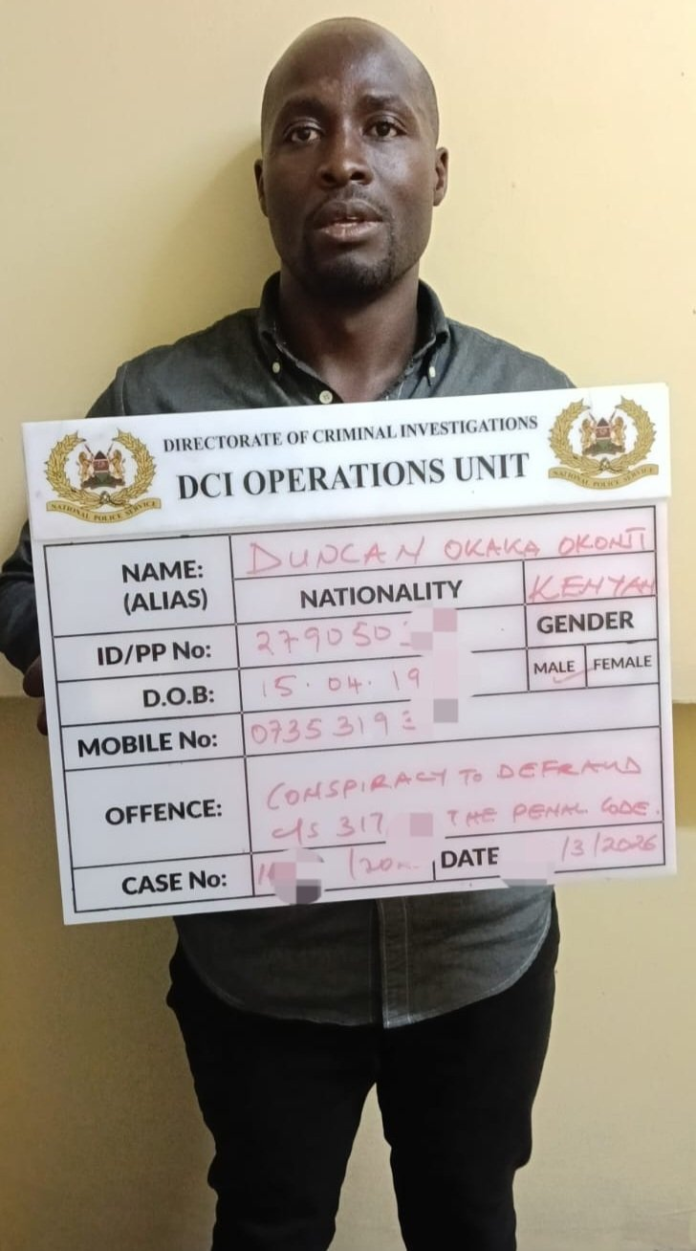
Morrison introduced Gaballa to Duncan Okaka Okonji, a Kenyan who presented himself as the facilitator for the consignment. The syndicate moved quickly and with apparent confidence. Gaballa was brought to Tanzania, where the group visited what appeared to be operational artisanal mining sites.
The excursion, his legal team now believes, was choreographed from the outset, a stage-managed tour designed to convince a foreign investor that the gold was real, the operation was legitimate, and the money being demanded was merely a procedural formality.
From Tanzania the operation shifted to Nairobi. In Kilimani, Gaballa was shown the ten-kilogram collateral consignment. In a house in the neighbourhood, small pellets of gold were melted in front of him.
His lawyer, Nabeel Khan, told Citizen Digital that Gaballa now believes the entire smelting exercise was staged to blackmail and trap him, to create the impression of a genuine commodity and simultaneously to implicate him in a transaction whose documentary trail could later be weaponised against him.
The Money Trail Through Conrad Maloba’s Ecobank Account
The financial architecture of the fraud was built on layers. A syndicate-linked insurance company valued the gold consignment at nearly one million dollars. Gaballa was told to pay half the insurance premium, amounting to Ksh.63.9 million, through a law firm. He complied.
In his own account of the transactions, Gaballa identified the recipient with striking precision. The money was wired from what he described as his ADRB account to the Ecobank accounts of Conrad Maloba Law Advocates, the firm’s offices located in Westlands, Nairobi. He confirmed the payment was made on the 17th and that his team held the SWIFT transfer records to document every transaction.
The total losses, as Gaballa set them out, break down as follows: Ksh.63 million in insurance payments through the law firm, Ksh.1.2 million in legal services, Ksh.5.1 million in cryptocurrency transfers, Ksh.517,000 for storage of what turned out to be fake gold at a sham customs facility allegedly run by known criminal operatives, and Ksh.6.4 million in travel and business expenses. The cumulative loss exceeds Ksh.77.5 million.
It is quite concerning to us to have an Ksh.80 million fraud and to have very little action at all taken against the criminals. It really tells us there is a larger gold fraud cartel operating here clearly.
Separately, Gaballa said his team also paid USDT cryptocurrency transfers totalling the equivalent of Ksh.70.4 million, or approximately USD 545,000, to a wallet associated with the operation. The combined figure from all channels approaches USD 600,000, the figure cited by the Directorate of Criminal Investigations in its own disclosure of the case.
Five Days, No Gold, and a Red Alert at JKIA
The syndicate’s final escalation came after Gaballa had already transferred the insurance money. With the shipment supposedly ready for dispatch to Dubai, the scammers produced a new obstacle: war conditions in the UAE, they claimed, had made delivery to Dubai impossible. An additional Ksh.5.1 million was demanded to reroute the gold to Oman. Gaballa paid. Five days passed. No gold arrived. The sellers went silent entirely.
Realising the full extent of what had been done to him, Gaballa reported the matter to the DCI. Within 24 hours, investigators arrested Duncan Okaka Okonji. He was arraigned at the Milimani Law Courts on March 25, 2026, charged with conspiracy to defraud contrary to Section 317 of the Penal Code. He denied the charge and was released on a bond of Ksh.5 million or cash bail of Ksh.1 million with two contact persons. The case is next before court on April 7.
But the arrest did not end Gaballa’s ordeal. On April 3, 2026, as he attempted to leave Kenya at Jomo Kenyatta International Airport, he was stopped at the departure gate. A red alert had been placed on his passport. Gaballa was detained for three hours before the Australian Embassy intervened and secured his release. The alert was not lifted until April 8, four days later, forcing him to remain in Kenya in circumstances he described as deeply threatening.
In his own words, Gaballa said he had been receiving unfriendly phone calls in the middle of the night, with callers hanging up without speaking. He said he had not felt safe in his hotel and spent most of his time confined inside it. Who placed the passport alert and why it was entered in the immigration system against a foreign victim who had himself filed the police complaint has not been explained by Kenyan authorities.
Conrad Maloba’s Firm: A Second International Fraud, One Account
The implications of the gold fraud for Conrad Law Advocates extend beyond a single case. The DCI had confirmed just weeks earlier, in a March 20, 2026 press statement, that USD 470,750 stolen from Swedish investor Talal Yousef Zaitoun in the Harambee House fake ambulance tender scandal had been wired to a Conrad Law Advocates LLP Ecobank Kenya account. In that case a lawyer connected to the firm remained at large and actively sought by investigators.
The firm’s Ecobank account has now been identified as the designated recipient of proceeds of crime in two separate transnational fraud operations within three months. In the ambulance case the victims were a Swedish timber exporter and his brother. In the gold case the victim is an Australian national whose losses across all payment channels approach the same USD 600,000 figure. The combined sum channelled through the firm’s accounts, across both known cases, now stands at the equivalent of approximately Sh138 million.
Nabeel Khan, Gaballa’s lawyer, said the scale of the fraud and the limited official response raised questions that went beyond his client’s individual losses. He described the operation as very elaborate and very well planned, beginning with an approach in Dubai, a trip to Tanzania, operational site visits, and extensive paperwork, and observed that no product had been delivered, the money had been paid and the money had disappeared. He said the gold fraud cartel was operating clearly and with very little disruption, and questioned whether there was genuine intent from authorities to act against it.
Court Records, Kiwipay and a History at Ecobank
Conrad Law Advocates LLP’s entanglement with Ecobank Kenya predates both the ambulance case and the gold fraud. Court records at the Milimani Commercial Division show that the firm, whose managing partner is Conrad Maloba, was previously retained by Kiwipay Kenya Limited, a Singapore-registered digital payments company whose Ecobank accounts were frozen by the Assets Recovery Agency in 2022 over money laundering and overseas credit card fraud suspicions. The ARA ultimately withdrew its forfeiture application in October 2022, but the aftermath produced years of litigation.
Conrad Law filed suit in January 2023 claiming USD 527,094.68 in unpaid legal fees from Kiwipay and sought to attach the company’s Ecobank accounts as security. Kiwipay and Ecobank both opposed the application. In a ruling issued on September 16, 2024, Justice J.W.W. Mong’are dismissed the firm’s applications, finding that the invoice for the claimed fees was a unilateral document that had never been countersigned by the client and therefore could not constitute an enforceable contract.
The wider Kiwipay litigation exposed Sh2.3 billion frozen at Ecobank, competing claims from foreign shareholders and local directors, and allegations from a Laotian investor named Monthida Rashi that up to Sh500 million had been paid to six Kenyan law firms in disputes she claimed had been engineered without her instructions. That application was placed before Presiding Judge Alfred Mabeya for directions.
The Systemic Question
What Gaballa’s case adds to the existing record is not merely a second fraud but a second victim’s first-person account of Conrad Maloba’s firm being named explicitly, account number and Westlands branch, as the designated payment destination. That specificity, combined with the DCI’s own confirmation of the same firm in the ambulance case, presents the Law Society of Kenya with a regulatory question it has not yet addressed publicly.
Under Kenya’s Proceeds of Crime and Anti-Money Laundering Act, advocates handling client funds are subject to enhanced due diligence obligations including source of funds verification, suspicious transaction reporting, and proper record maintenance. A law firm whose account appears in two separate DCI-confirmed international fraud investigations within a quarter is not, under that framework, in a position the regulator can credibly ignore.
The DCI has confirmed one arrest in the gold case and has stated that the lawyer connected to the ambulance case account remains at large. It has committed to dismantling transnational fraud syndicates and pursuing all available legal avenues to recover stolen funds. Whether that pursuit will extend upward through the law firm whose account sits at the nexus of both operations is the question that the victims, and the public, are now waiting to have answered.
Kenya Insights allows guest blogging, if you want to be published on Kenya’s most authoritative and accurate blog, have an expose, news TIPS, story angles, human interest stories, drop us an email on [email protected] or via Telegram


Australian Investor Reveals How He Was Scammed Sh77 Million In Fake Gold Deal, Detained At JKIA And Now Wants Law Firm Probed

Wattanga Fired Over Incompetence in Tech, Insiders Say

Why Kisumu Senator Tom Ojienda Is Suspected as the Hidden Hand Behind the Brutal Beating of Senator Godfrey Osotsi

Bia Tosha vs EABL: Why the Dispute Isn’t What You Might Have Been Told

The Lawyer at the Centre of Kenya’s State Machine: Eric Gumbo, the AG’s Bypassed Office, and the Half-Billion-Shilling Question

Mombasa Lawyer Exposed In Sh600 Million Alleged Double-Dealing Diani Property Transaction

THE POISON THAT WON’T GO AWAY: Why Rejected Fuel From One Petroleum May Still Be Circulating Despite Assurances

Eric Omondi Tops Kenya Influencers With Sh57mn Earnings

Both Sides Claim Victory After US, Iran Agree To 11th-Hour Truce

The Teflon Company: How Gulf Energy’s Insiders Built Billions on Kenya’s Fuel, and Walked Away Clean

Tuju Forcefully Removed From His Karen Property With Masked Officers In Unmarked Vehicles In Early Morning Raid

Named: Havi Says Mutava Confessed He Was Collecting The Bribe For Lady Justice Josephine Mongare, So Why Is JSC Still Silence?

‘They Will Eat You Alive’: Retired Teacher Warns Against Bashy African Credit as Sh500,000 Loan Spirals Into Sh1.5 Million Fight

THE HANDSHAKE THAT BECAME A NOOSE: How Tuju’s Alleged Intimate Access to EADB’s Yeda Apopo Produced a Sh294 Million Deal With No Written Contract, and Why That Trust Destroyed an Empire

Forged Legacy: How Kaplan and Stratton’s Peter Gachuhi Is Accused of Faking a Top AG’s Will as State Claims Damning Evidence

How Firm Linked To Mombasa Tycoon Jaffer Was Allowed To Import Fuel At Bloated Price And Set To Make Billions In Profits From Iranian War Crisis In Kenya

Sold And Abandoned: How Diageo and Asahi Are Locking Kenya’s EABL Minority Shareholders Out Of East Africa’s Biggest Corporate Heist

Men Linked to Akasha Drug Dynasty Charged With Death Threats and Assault at Nairobi Nightclub
The Teflon Company: How Gulf Energy’s Insiders Built Billions on Kenya’s Fuel, and Walked Away Clean

Poison at the Pump: How Kenya’s Fuel Marking System May Be Exposing Millions to Cancer-Causing Chemicals
-
 Investigations1 week ago
Forged Legacy: How Kaplan and Stratton’s Peter Gachuhi Is Accused of Faking a Top AG’s Will as State Claims Damning Evidence
-
 Business1 week ago
How Firm Linked To Mombasa Tycoon Jaffer Was Allowed To Import Fuel At Bloated Price And Set To Make Billions In Profits From Iranian War Crisis In Kenya
-
 Business1 week ago
Sold And Abandoned: How Diageo and Asahi Are Locking Kenya’s EABL Minority Shareholders Out Of East Africa’s Biggest Corporate Heist
-
 Investigations4 days ago
The Teflon Company: How Gulf Energy’s Insiders Built Billions on Kenya’s Fuel, and Walked Away Clean
-
 Business1 week ago
Poison at the Pump: How Kenya’s Fuel Marking System May Be Exposing Millions to Cancer-Causing Chemicals
-

 News1 week ago
Treasury Hands Sh358M Brief to Eric Gumbo’s Firm While Bypassing Standard Rules — and the Lawyer Is Already Deep Inside Ruto’s State Machine
-
 Investigations1 week ago
Inside Nyayo House: The Kitchen Cartel That Demands Sh100,000 for a Stove
-
 Business1 week ago
THE BANK THAT BROKE THE TRUCKER: How NCBA’s Asset Financing Empire Is on Trial Before London’s Most Feared Arbitral Tribunal