
Business
Wattanga Fired Over Incompetence in Tech, Insiders Say
The Harvard-trained KRA chief who refused to quit was shown the door after billions in technology investments yielded broken systems, missed targets, and a Treasury that had run out of patience

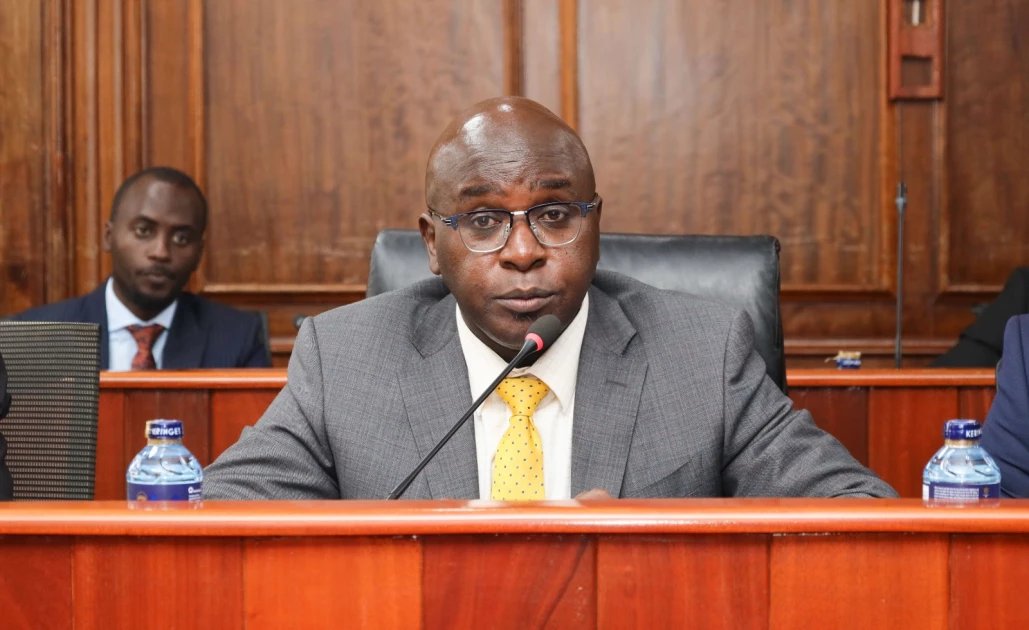
Humphrey Wattanga was given the morning to do the dignified thing. He declined. By early afternoon on Wednesday, April 8, 2026, the Kenya Revenue Authority Board of Directors had pulled the trigger, cutting short the tenure of one of the most credentialed officials ever to sit atop the country’s tax machinery — a man who had survived two years of public fury over aggressive taxation only to be felled, in the end, by the very technology he was hired to master.
The announcement that Wattanga would proceed on terminal leave with immediate effect — carefully worded to avoid the word ‘fired’ — was issued by KRA Board Chairman Ndiritu Muriithi in a terse statement that made no mention of the rupture that had preceded it. The public was told Wattanga had contributed to advancing KRA’s mandate. It was not told that hours before the statement, a senior Treasury official had placed a call ordering him to resign, and that Wattanga had flatly refused.
“He was asked in the morning to resign, but he declined. The board pulled the trigger early afternoon.”
Multiple sources with direct knowledge of the events, speaking to Kenya Insights on condition of anonymity, confirmed that the ouster was not a routine contract non-renewal but an act of institutional execution, triggered by Treasury frustration that had reached breaking point over Wattanga’s stewardship of the authority’s multi-billion-shilling technology transformation programme.
A WAGER ON TECHNOLOGY THAT THE NUMBERS COULD NOT JUSTIFY
When President William Ruto’s administration recruited Wattanga from the private sector in August 2023 — poaching him from Meghraj Capital, where he had served as managing director — the pitch was straightforward: bring a technocrat’s mind to Kenya’s chronically underperforming tax collection apparatus.
He arrived with a gleaming CV, straight As from Alliance High School, a biochemical sciences degree from Harvard University, and an MBA from the Wharton School of the University of Pennsylvania. He also brought a mandate to digitise, automate, and seal the revenue leaks that had long haemorrhaged Kenya’s public finances.
What followed was a period of frenetic and expensive restructuring. KRA invested heavily in its digital infrastructure, deploying the Electronic Tax Invoice Management System to crack down on VAT fraud, launching a WhatsApp-based tax filing chatbot named Shuru, introducing USSD services for taxpayers without smartphones, and embarking on an overhaul of its executive suite that concluded as recently as last July. The ambition was not in question. The returns were.
“Top Treasury officials felt he was not doing enough on the technological front to push for higher tax collections despite huge tech upgrades, The system downtimes had surged,” a source at the KRA Board told Kenya Insights. “He was fixed by tech. Treasury people complained that there was no return on huge technology investments.”
The most damaging episode came in November 2024, when the Integrated Customs Management System crashed, paralysing cargo clearance at the Port of Mombasa, Jomo Kenyatta International Airport, and inland container depots across the country. Tea exports stalled. Importers were stranded. Trade taxes, KRA’s most time-sensitive revenue stream, bled for days.
Treasury Cabinet Secretary John Mbadi publicly acknowledged the damage, describing the outage as having a major impact on revenue collection at a moment when Kenya was still recovering from the economic devastation of the 2024 youth-led protests.
Mbadi went further, disclosing that investigators were probing the outage amid claims that KRA staff had deliberately sabotaged the system — an insider job, as he put it, that pointed to deep institutional dysfunction within Times Tower.
SYSTEM FAILURE TIMELINE
November 2024: iCMS collapse halts Port of Mombasa cargo clearance for days. September 2025: iTax portal crashes nationwide. October 2025: 30-hour eCitizen-linked iTax outage locks out thousands of businesses. Treasury launches insider-job probe into repeated system failures.
KRA attributed the November collapse to aging infrastructure and promised an upgrade. But the outages did not stop. The iTax portal went dark again in September 2025. A month later, the system tied to eCitizen went down for more than thirty hours, locking thousands of small businesses out of invoicing and payment processing at a time when KRA was desperately trying to widen the tax net. Mbadi, speaking at the KRA Summit 2024, had been blunt to the point of embarrassment: ‘Our system, iCMS is not working. That is the truth. The iTax is outdated. This is the feedback I am getting from KRA staff.’ He said this while Wattanga sat in the same room.
THE REVENUE GAP THAT SEALED HIS FATE
The technological failures translated directly into the revenue shortfalls that ultimately made Wattanga’s position untenable. KRA missed its first-quarter target for FY2025/26 by Sh90 billion, an outcome severe enough to prompt Treasury to warn publicly of widening fiscal pressures and float the prospect of a supplementary budget to cut expenditure.
Ordinary revenues contracted by 2.9 percent in the period — a sharp reversal from the 10.1 percent growth recorded during the same quarter the previous year. The fiscal deficit in that quarter surged to Sh280.4 billion, well above the targeted Sh189.5 billion.
By the end of the nine months to March 2026, KRA had collected Sh2.038 trillion — a figure the authority proudly described as the first time it had crossed the Sh2 trillion mark within nine months of a financial year.
What the press statement buried was that the target had been Sh2.122 trillion, leaving a gap of Sh84 billion. With one quarter remaining and an annual target of Sh2.97 trillion, the authority now faces the staggering task of collecting Sh932 billion between April and June 2026. Treasury sources describe that projection as aspirational at best.
KRA missed the Q1 2025/26 target by Sh90 billion. The fiscal deficit ballooned to Sh280 billion — nearly Sh91 billion above target — in a single quarter.
Wattanga himself appeared to sense the pressure in his final week. On Tuesday, April 7 — one day before his ouster — he held a press conference announcing that KRA was ramping up enforcement and technology tools to collect Sh932 billion in the final quarter.
He spoke of WhatsApp chatbots, eTIMS, bank agents, and USSD services. He sounded like a man making his final pitch to a board that had already voted. The following morning, Treasury made the call. By afternoon, the statement was out.
CORRUPTION WITHIN, RESISTANCE TO REFORM
The technology failures at KRA did not occur in a vacuum. State House had for years accused KRA staff of systematically cutting government revenue through corruption, collusion with tax evaders, and the acceptance of bribes. President Ruto had gone further, accusing KRA personnel of actively resisting and sabotaging digitisation efforts — specifically to preserve the manual leakage points through which illicit money flowed.
In May 2025, KRA launched investigations into more than 400 of its own staff over suspected involvement in a multi-billion-shilling VAT fraud scheme involving fake invoices, ghost companies, and M-Pesa transactions with no corresponding payment records. More than Sh452 million was recovered from the exposed syndicate. Investigators warned the web was wider.
Against this backdrop, Wattanga’s position was precarious from multiple directions. He was fighting institutional sabotage from below, fiscal pressure from above, and a Treasury that measured competence in shillings.
When the systems he had been given billions to modernise continued to fail, the argument that more time was needed lost whatever remained of its persuasive force.
THE PRETORIA CONSOLATION PRIZE
What happened next confirmed what several sources at Times Tower had already suspected: this was not a dismissal in the conventional sense. Within hours of the KRA Board’s statement, President Ruto nominated Wattanga as Kenya’s High Commissioner to South Africa. Chief of Staff Felix Koskei conveyed the nomination to the National Assembly for approval.
The speed of the move was striking — Nairobi’s diplomatic and political circles read it as a face-saving arrangement designed to cushion the blow of a very public firing and reward a loyalist who had refused to go quietly.
The nomination has not been without controversy. Several lawmakers have questioned why a career foreign service officer was not given the Pretoria post, noting that South Africa remains one of Kenya’s most strategically important bilateral partners and a key trade corridor for the region.
The National Assembly must now approve or reject a nominee whose primary career experience sits in investment management and tax administration rather than diplomacy. Parliamentary scrutiny is expected.
Inside KRA, the mood on Thursday morning was described by several sources as a mixture of shock and quiet relief. Managers said they had not been warned. Lilian Nyawanda, Commissioner for Customs and Border Control — notably, one of the departments that had actually beaten its revenue target in the third quarter — was named acting Commissioner General. The board confirmed that a competitive recruitment process for a substantive replacement would begin immediately.
A LEGACY OF MISSED MARKS AND UNFINISHED BUSINESS
Wattanga leaves behind a complicated record. He was appointed to a role that would have tested any administrator. He inherited broken systems, a tax-averse public incensed by aggressive enforcement, and a fiscal environment in which KRA bore the political blame for every levy that Ruto’s government needed but could not push through parliament.
He survived the national fury over the Finance Bill 2024. He managed — at least on the surface — to grow collections each year, and for FY2024/25 KRA reportedly surpassed its revised target of Sh2.555 trillion by Sh16 billion, a rare achievement in a year of economic disruption.
But the revision of that target downward from Sh2.9 trillion told its own story.
And the pattern that Treasury found inexcusable was not simply the shortfalls — it was the technology investment that absorbed billions and kept delivering outages, not outcomes.
Plans to rebrand KRA as the Kenya Revenue Service remain unexecuted. The Intelligence Analysis Tool meant to centralise enforcement data was still being procured at the time of his departure. The iCMS upgrade that he promised after the November 2024 catastrophe remained a work in progress months later.
In the end, Wattanga was hired to be a transformer. What Treasury concluded was that the transformation had stalled — and that the bill for the delay was being paid by every Kenyan waiting for roads, hospitals, and salaries that a revenue-starved Treasury could not fund.
Kenya Insights allows guest blogging, if you want to be published on Kenya’s most authoritative and accurate blog, have an expose, news TIPS, story angles, human interest stories, drop us an email on [email protected] or via Telegram





How Adil Popat Saved His Empire On The Eve Of Imperial Bank Collapse and Why Kenya’s Mainstream Media Buried The Story

South Sudan: Adut Salva Kiir’s Shadow Treasury Exposed

Wajir North MP Ibrahim Abdi Dissatisfied With2026/27 Budget, Claims It Totally Excludes North Eastern Region

The Eldoret Tax Fortress: How David Langat Turned an Industrial Park Dream Into Kenya’s Most Sophisticated Domestic Tax Haven

Why John Ngumi Is Running From the EACC and Why the Sh415 Million Payday May Be the Least of His Worries

Shiquo Hii Style Store Was Not Raided, Anti-Counterfeit Authority Confirms; Says Influencer Used Empty Shelves for Content as She Relocates

Treasury CS Mbadi Unveils Sh4.8 Trillion Budget Estimates

Fraud, Misrepresentation and A Decade Of Evasion: How Indo Africa Finance Pocketed Sh150 Million Youth Funds and Fought To Keep Every Cent

Kenya Picks Chinese Firm For Sh375 Billion JKIA Upgrade Project After Adani Fallout

The President’s Daughter and The Missing Witness: How Adut Salva Kiir’s Shadow Treasury Silenced Its Most Dangerous Critic

Cement, Cash and Courts: How the Hashu Dynasty Crushed the Ramji Brothers for Fourteen Years and Why the Walls Are Now Closing In

Inside The Urban Planning Cartel That Owns Nairobi

Standard Chartered Ghosts Haunt Joshua Oigara At Stanbic As Whistleblower Spills Beans

Inside NCBA’s Decline: How a Banking Giant Lost Its Strategic Edge

Why Ruto’s Favourite Candidate Adan Mohammed Could Be Locked Out of the KRA Top Job

LifeCare on the Brink: SHA Fraud, Stolen Wages, and the Rotten Empire Jayesh Saini Built

Betika Faces DCI Probe, Directors Arrest and License Revocation Over Massive 29.5 Million Safaricom Customers’ Data Breach

Este Medical Kenya Fights American’s Explosive Complaints

Fresh Move Launched to Remove Kenya Railways MD Mainga From Office After Awarding Sh817 Million Consultancy Contract

The Rot Inside Absa: How Bank Insiders Are Looting Nairobi’s Customers
-
 Investigations1 week ago
Cement, Cash and Courts: How the Hashu Dynasty Crushed the Ramji Brothers for Fourteen Years and Why the Walls Are Now Closing In
-
 Investigations7 days ago
Inside The Urban Planning Cartel That Owns Nairobi
-
 Business2 days ago
Standard Chartered Ghosts Haunt Joshua Oigara At Stanbic As Whistleblower Spills Beans
-
 Business3 days ago
Inside NCBA’s Decline: How a Banking Giant Lost Its Strategic Edge
-
 Investigations2 weeks ago
Betika Faces DCI Probe, Directors Arrest and License Revocation Over Massive 29.5 Million Safaricom Customers’ Data Breach
-
 Investigations1 week ago
Fresh Move Launched to Remove Kenya Railways MD Mainga From Office After Awarding Sh817 Million Consultancy Contract
-

 Business1 week ago
TRUST BETRAYED: How Senior DTB Bank Insiders Allegedly Looted Sh149 Million From a Customer’s Account Over Five Years
-
 News2 weeks ago
How Uhuru’s Deal With Obama In 2015 Paved Way For America’s Ebola Plan In Kenya