
Africa
South African President Signs Controversial Land Seizure Law
The new law allows for expropriation without compensation only in circumstances where it is “just and equitable and in the public interest” to do so.

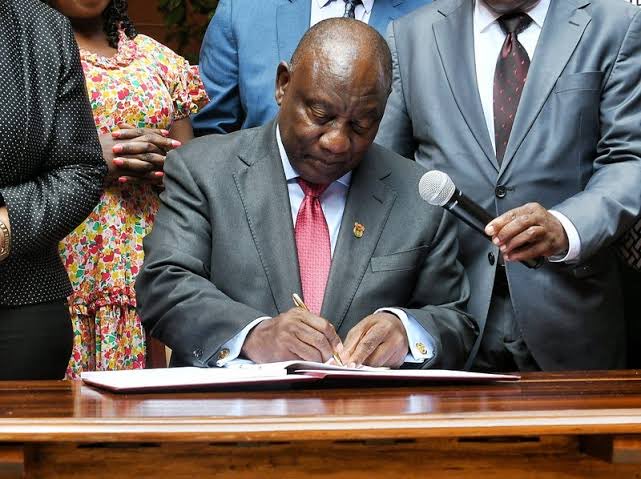
South African President Cyril Ramaphosa has signed into law a bill allowing land seizures by the state without compensation – a move that has put him at odds with some members of his government.
Black people only own a small fraction of farmland nationwide more than 30 years after the end of the racist system of apartheid – the majority remains with the white minority.
This has led to frustration and anger over the slow pace of reform.
While Ramaphosa’s ANC party hailed the law as a “significant milestone” in the country’s transformation, some members of the coalition government say they may challenge it in court.
The law “outlines how expropriation can be done and on what basis” by the state, the government says.
It replaces the pre-democratic Expropriation Act of 1975, which placed an obligation on the state to pay owners it wanted to take land from, under the principle of “willing seller, willing buyer”.
The new law allows for expropriation without compensation only in circumstances where it is “just and equitable and in the public interest” to do so.
This includes if the property is not being used and there’s no intention to either develop or make money from it or when it poses a risk to people.
The president’s spokesperson Vincent Magwenya said that, under the law, the state “may not expropriate property arbitrarily or for a purpose other than… in the public interest”.
“Expropriation may not be exercised unless the expropriating authority has without success attempted to reach an agreement with the owner,” he added.
The signing of the law comes after a five-year consultative process as well as the findings of a presidential panel set up to look into the issue.
The pro-business Democratic Alliance (DA), the second largest party in the government of national unity (GNU), says it “strongly opposes” the law and was consulting with its lawyers.
It says that while it supports legislation addressing land restitution, it takes issue with the process followed by the country’s parliament to enact this law.
The Freedom Front Plus, a party which defends the rights of the white minority and is also in the GNU, vowed to challenge the constitutionality of the law and do “everything in its power” to have it amended if it is found to be unconstitutional.
One of the sticking points for the party was the law’s possible threat to private ownership.
Outside of the coalition government, the Economic Freedom Fighters, known for its radical views on nationalisation and land distribution, has called the move a “legislative cop-out” by the governing party.
The party also says the law will not help resolve the contentious issue of land restitution in South Africa.
Kenya Insights allows guest blogging, if you want to be published on Kenya’s most authoritative and accurate blog, have an expose, news TIPS, story angles, human interest stories, drop us an email on [email protected] or via Telegram








CS Wandayi Convenes An Emergency Meeting With Oil Marketers Amid Fears Of Fuel Shortages in Kenya

Sh50 Billion Vanished: Audit Exposes Massive Looting Inside Kenya’s SHA

The Minnesota Blueprint: How a Global Healthcare Fraud Model Is Now Targeting Kenya’s SHA Funds

CS Kabogo Pushes for Stronger TikTok Regulation Ahead of Next Elections

Oil Prices Fall After Trump Warns Iran Over Strait Of Hormuz

TikToker ‘Billionaire Son’ Arrested After Filming Himself Tearing Sh100 Bank Notes

Waweru’s Bank Pockets Sh1.16 Billion from KPC IPO While Ordinary Kenyans Fled the Sale

The Man With The Golden Pen: How NLC’s Joel Ombati Is Accused Of Masterminding Kenya’s Biggest Infrastructure Land Heist

Putin Says Energy Crisis Has Arrived But Russia Is Ready To Work With Europe

Trump Hints End Of Iran War In Sight, Saying Operations ‘Very Complete’

Alleged Male Lover Claims His Life Is in Danger, Leaks Screenshots and Private Videos Linking SportPesa CEO Ronald Karauri

Russian Man’s Secret Sex Recordings Ignite Fury as Questions Mount Over Consent and Easy Pick-Ups in Nairobi

THE FIRM IN THE DOCK: How Kaplan and Stratton Became the Most Scrutinised Law Firm in Kenya

Multi-Million Dollar Fraud: Three Kenyans Face US Extradition in Massive Cybercrime Conspiracy

Iran Demands Arrest, Prosecution Of Kenya’s Cup of Joe Director Director Over Sh2.6 Billion Tea Fraud

Ex-Inchcape Kenya CEO Sanjiv Shah Charged With Bank Fraud

FBI Investigates Congresswoman Ilhan Omar’s Husband’s Sh3.8 Billion Businesses in Kenya, Somalia and Dubai

A UN Director Based in Nairobi Was Deep in an Intimate Friendship With Epstein — He Even Sent Her a Sex Toy

A Farm in Kenya’s Rift Valley Ignites a National Reckoning With Israeli Investment

Sifuna, Babu Owino Are Uhuru’s Project, Orengo Is Opportunist, Inconsequential in Kenyan Politics, Miguna Says
-
 News5 days ago
Ex-Inchcape Kenya CEO Sanjiv Shah Charged With Bank Fraud
-
 Development1 week ago
Kenya Strips Dutch Climate Body of Diplomatic Immunity Amid Donor Fraud Scandal and Allegations of Executive Capture
-

 Business2 weeks ago
American Investor Claims He Was Scammed Sh225 Million in 88 Nairobi Real Estate Deal
-
 Politics1 week ago
NIS Kismu Hotel Secret Tape That Sealed Gachagua’s Fate and MP Ng’eno Death in A Chopper Crash
-
 News1 week ago
Investor Sued Over Sh30,000 Fee to Access Runda Road
-

 Investigations2 weeks ago
Did Festus Omwamba Take the Fall? The Puzzle of a Senator’s Ouster and a Call to the CS
-

 Investigations1 week ago
I Swore Never To Hire The Chopper Again, Author Recalls Harrowing Experience in Helicopter That Killed MP Ng’eno Alleges Poor Maintenance By Owners
-

 Investigations1 day ago
SOLD TO THE BULLET: How the Bodyguard Handed MP Ong’ondo Were to His Killers