On a bulletin board inside a school staffroom in Kiambu, a notice once urged women teachers to embrace their new welfare association. The Kenya Women Teachers Association, it promised, would be their financial lifeline, their professional shield, their collective voice.
What nobody told those teachers was that by the time they looked at their payslips, Sh200 would already be gone, with or without their permission, transferred via the Teachers Service Commission straight into the accounts of an organisation they had never formally joined.
That was 2019. Six years and approximately Sh1.4 billion later, Kenya Insights has reviewed internal documents, payroll records, and financial correspondence that paint a deeply troubling picture of how a government-recognised welfare body became, by all available evidence, a family business funded by some of Kenya’s most underpaid public servants.
The documents show a payroll that reads less like a welfare association and more like a family reunion with a generous expense account.
The Architecture of a Monthly Extraction
The Kenya Women Teachers Association, registered in 2007 and formally structured over the years that followed, currently counts approximately 95,000 members across the country. Each member contributes Sh200 per month, a sum deducted directly from TSC payslips and transferred to the association.
That means Kewota receives approximately Sh19 million every month, or roughly Sh228 million every year. It is not a small operation.
The association’s stated mandate is unimpeachable in its ambition: financial empowerment, career development, mentorship, advocacy against gender-based violence, support for the girl child, and dignified exit from public service for women who have given their careers to the classroom.
On paper, Kewota occupies a unique and necessary space in Kenya’s education sector. On the ground, the story documents now tell is something altogether different.
Teachers across the country, from Taita Taveta to Kiambu to Kisumu, have been challenging the deductions for years.
As far back as 2019, fifty-four women teachers from Gatundu went to court over what they described as deductions made without their knowledge or consent. In 2023, more than 171 female teachers from Taita Taveta petitioned their county senator to demand the deductions be stopped and investigated.
Court filings reviewed by this publication show that some of those cases reached the Ethics and Anti-Corruption Commission, which confirmed the complaints had been received and entered into active investigation. Nothing visible has changed.
What changed instead, documents suggest, is who got paid.
A Payroll That Runs in the Family
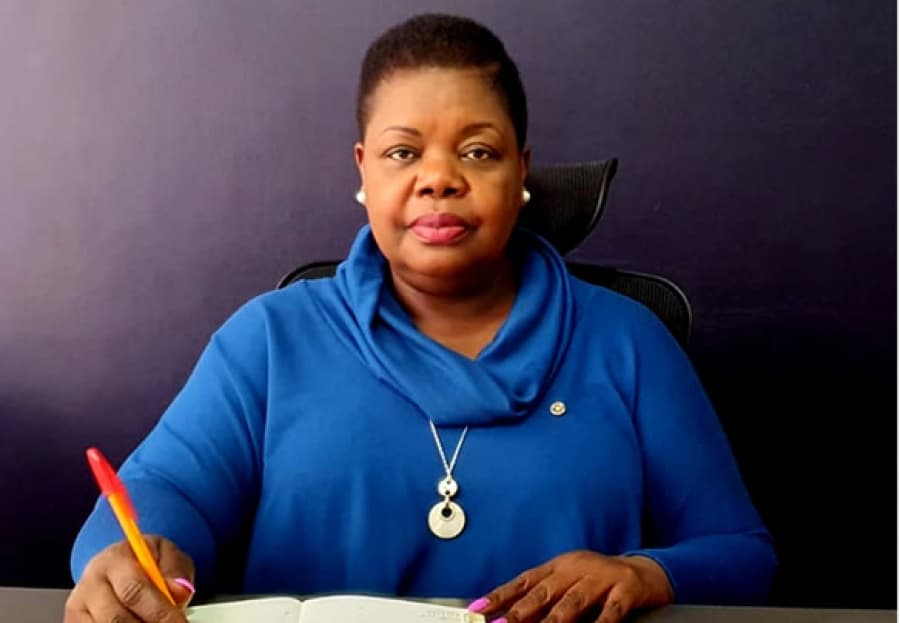
At the centre of the scandal is CEO Benta Oswago Opande, who has led Kewota since its formative years and built its public profile through press conferences on teacher mental health, advocacy against betting among educators, and lobbying at parliamentary committees.
In public, Opande has presented herself as a fierce champion of women in the profession. In private, documents suggest she constructed a compensation structure of remarkable generosity, primarily directed at herself and those who share her bloodline.
ALLEGED FAMILY PAYROLL BREAKDOWN
Benta Oswago Opande Chief Executive Officer Sh250,000 to Sh350,000/month
Dan Oswago Son Sh200,000/month
Daughter (1) Staff Sh200,000/month
Daughter (2) Staff Sh150,000/month
Former husband Consultant Sh100,000/month
Sister Kisumu coordinator Sh50,000/month
Niece Kisumu office head Sh40,000/month
Brother Managing director Sh40,000/month
Source: Internal Kewota payroll documents reviewed by Kenya Insights
The CEO’s family does not merely cluster in Nairobi. The nepotism, if the documents reflect reality, is geographically distributed with apparent intentionality. Her niece is placed at the head of the Kisumu office. Her sister coordinates activities from the same city. Her brother holds a managing director title in Kericho.
The effect is that key regional outposts of the association, through which millions in membership fees flow, are staffed at senior levels by people whose primary qualification appears to be their surname.
The web extends to the organisation’s second-most senior figure. National Treasurer Jacinta Ndegwa, who co-founded Kewota alongside Opande and has publicly defended the association against years of criticism, is herself reported to draw a monthly salary of approximately Sh270,000.
Documents reviewed by Kenya Insights further indicate that additional payments were routed to Ndegwa through multiple bank accounts, a dispersal pattern that raises questions about transparency and tax compliance. Ndegwa’s relatives, including her daughter and nephews, also appear on the payroll, according to documents seen by this publication.
Perhaps most extraordinary is what investigators found when they contacted some of the people listed as Kewota employees. Several individuals, when reached by reporters, reportedly said they had no knowledge of their employment at the organisation. Their names were on the payroll. Their salaries were, presumably, leaving the association’s accounts. They themselves were not aware they were working there.
Cash, Ghosts, and a Parking Lot Near KICC
The financial irregularities described in documents reviewed by Kenya Insights go beyond nepotism. They point to what appears to be a deliberate, multi-layered system for extracting cash from the organisation in ways designed to evade paper trails.
One method involves the overpayment of Kewota staff. According to the documents, employees were at various points paid amounts in excess of their stated salaries. The surplus, rather than being recovered through normal payroll correction, was withdrawn in cash and routed elsewhere. Who received the cash, and for what purpose, is not clearly documented, which appears to be precisely the point.
A second method, arguably more brazen, involved the fabrication of recruitment drives. Documents indicate that individuals at the association created fictitious membership campaigns, attaching made-up names of teachers to these drives, then used the invented activity to justify withdrawals from Kewota’s bank accounts. The phantom members never existed. The money did.
Cash was reportedly handed over in a parking lot near the Kenya International Conference Centre. No record of the transaction was kept.
The documents go further still. They allege that the CEO approved payments described as gestures of appreciation to at least one director at the Teachers Service Commission.
In January 2024, a TSC director is alleged to have received Sh100,000. Critically, subsequent payments of this nature were reportedly restructured to be made entirely in cash, outside any banking system, to prevent the transactions from leaving a traceable record.
One such handover, according to sources familiar with the matter, took place in a parking lot near the Kenya International Conference Centre in Nairobi. No bank statement records it. No Kewota receipt acknowledges it.
If accurate, these allegations constitute something far more serious than internal mismanagement. The payment of money to TSC officials, the government agency that administers the very payroll deductions that fund Kewota, would represent a textbook instance of regulatory capture: the corrupting of the oversight relationship between a state body and the private entity it is supposed to supervise at arm’s length.
It would explain, with uncomfortable neatness, why TSC has continued facilitating Kewota deductions even as court petitions, union complaints, and EACC referrals have piled up for years without resolution.
The June 2024 Payments
Among the most concrete findings in documents reviewed by Kenya Insights are transactions from June 2024. In that month alone, Opande reportedly received payments exceeding Sh900,000, dispersed across two separate bank accounts. The pattern of splitting payments across multiple accounts, rather than receiving a consolidated salary, is a commonly documented method for obscuring the true scale of compensation drawn from an organisation.
In the same month, Treasurer Ndegwa is alleged to have received approximately Sh700,000 across multiple accounts.
The combined sum extracted by the two most senior officials of a welfare association in a single month, according to documents, exceeds Sh1.6 million. That figure represents the equivalent of the monthly contributions of more than 8,000 ordinary teachers, women who trust that their Sh200 is building something for them.
Documents also raise questions about office expenditure. Kewota reportedly pays rent for premises in Kisumu that are, in practice, used by separate businesses linked to the CEO. The association’s members, whose contributions fund that rent, would have no reason to know that the space serving as a Kewota office in the lakeside city apparently doubles as commercial space for enterprises connected to their chief executive.
The Association Speaks
In a separate statement issued through its national secretariat, the association described allegations of financial misconduct as malicious, defamatory, and part of a coordinated attack on its reputation.
It vowed legal action against named individuals, including a blogger identified as Mr. Amunga, whom it accused of orchestrating the damaging narrative.
The statement maintained that the organisation operates transparently, accountably, and fully within the law. It described itself as firm, lawful, and unshaken.
Kenya Insights was unable to independently verify every specific figure in the documents reviewed. Some transactions cited in the material may be disputed by the organisation.
What can be said with confidence is that the documents reviewed raise serious and specific questions about the governance of an organisation entrusted with hundreds of millions of shillings belonging to tens of thousands of women who are, by the nature of their profession, unlikely to be in a position to individually audit where their money goes.
A Problem Years in the Making
What is not in dispute is the history. Since 2019, when Kewota first raided TSC payslips before even officially launching as an organisation, teachers have been fighting to understand what was happening to their money. Former KNUT Secretary-General Wilson Sossion wrote to the DCI and the EACC that year, accusing TSC of loading automatic deductions in collusion with Kewota without teacher authorisation. Teachers in Taita Taveta, Kiambu, and other counties went to courts and regulatory agencies.
The EACC confirmed it had opened investigations. The TSC defended itself in affidavits, arguing that teachers had the ability to cancel deductions through its online portal. The deductions continued.
None of Kenya’s oversight bodies, not the EACC, not the DCI, not the TSC, not any parliamentary committee with jurisdiction over education or public welfare, has yet produced any public accounting of how Sh228 million a year in mandatory contributions from working women teachers has been governed, spent, or safeguarded. That silence has been expensive.
Kenya’s oversight bodies have yet to produce any public accounting of how Sh228 million a year in mandatory contributions from working women teachers has been governed.
The association was built on a genuine need.
Women teachers in Kenya face unique professional pressures, financial vulnerabilities exacerbated by predatory lending, and career challenges that gender-neutral unions have historically handled inadequately. The founding logic of Kewota was sound. What the documents reviewed by Kenya Insights suggest is that the institution built to address those needs became, somewhere along the way, an instrument for addressing the financial needs of a much smaller group of people entirely.
The DCI has not confirmed or denied any current investigation into Kewota’s internal finances. The TSC has not responded to questions about the nature of its relationship with the association or whether it has reviewed the payment allegations involving its director. The EACC has not issued any public finding on the years of complaints lodged by teachers.
Meanwhile, on the first of every month, across Kenya, in classrooms from Turkana to Mombasa, Sh200 disappears from the payslips of 95,000 women who were told it was going to their welfare.





Comments